Business
The TopRanked.io Weekly Digest: What’s Hot in Affiliate Marketing [PureVPN Affiliate Program Review]
This week, we’re going to look at monetizing American freedom as affiliates. Specifically, we’ll be looking at selling VPNs to freedom-loving American’s as the race towards broad social media age verification laws starts ramping up again in the wake of Florida’s AG issuing Big Tech with a deadline. And while we’re at it, we’ll also do a quick review of the PureVPN Affiliate Program.


Quick Disclosure: We’re about to tell you the PureVPN Affiliate Program is pretty great. And we really mean it. Just know that if you click on a PureVPN Affiliate Program link, we may earn a small commission. Your choice.
Fellow affiliates.
As a non American, I’ve always found Americans to have a weird sense of freedom.
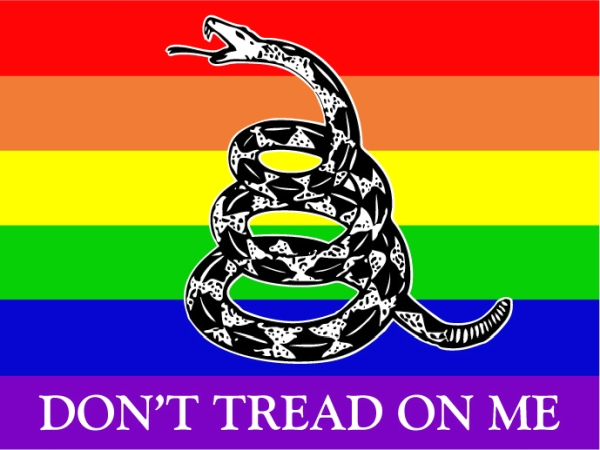
But, as most online marketers should know by now, just because something’s weird, it doesn’t mean you can’t make money with it.

So this week, we’re going to see if we can monetize one of the weirder sides of American freedom.
TopRanked.io Affiliate Partner Program of the Week — PureVPN Affiliates
If you’re going to monetize this week’s big affiliate opportunity, then you’re going to need the right type of affiliate program.
And this week, that type of affiliate program is a VPN affiliate program.
And one of the best in the business here is the PureVPN Affiliate Program.
Here’s why you’ll love the PureVPN Affiliate Program.
PureVPN Affiliate Program — The Product
By now, we should all know what a VPN is.
And we should also know that that’s exactly what you’re going to be selling in the PureVPN Affiliate Program.
So to keep this bit short, let me cut straight to the bits that make the PureVPN Affiliate Program product particularly interesting.
- PureVPN has thousands of servers in 78+ countries.
- PureVPN has been in the business for decades and has massive brand equity/credibility (great for conversion rates!)
- PureVPN is one of best value VPNs on the market (also great for conversions)
Now, of course, the PureVPN Affiliate Program does have plenty of other things to talk about.
There’s dedicated IPs, cross-platform apps, password managers, and a whole bunch more “add ons”.
But these days, so does every other VPN affiliate program.
But not every VPN affiliate program can compete with the PureVPN Affiliate Program on the three bullet points I outlined above.
And honestly, those three are big selling points.
PureVPN Affiliate Program — The Commissions
Alright, now for the good stuff — commissions in the PureVPN Affiliate Program.
Let’s start with the bad news — the PureVPN Affiliate Program commissions are a little more complicated than other single-rate no matter the case programs. That is to say, there’s multiple commission rates.
As for the good news, the PureVPN Affiliate Program commission plan is still quite simple. It looks like this:
- The PureVPN Affiliate Program pays you 35% recurring commission for the life of your referrals.
- The PureVPN Affiliate Program pays you 100% of first-bill revenue for monthly signups.
- The PureVPN Affiliate Program pays you 40 of first-bill revenue for yearly signups.
And that’s really all there is to it.
PureVPN Affiliate Program — Next Steps
Alright, if that little teaser was enough to get you interested in the PureVPN Affiliate Program, but not enough to answer all your questions, then head on over to TopRanked.io for our detailed PureVPN Affiliate Program review.
Or, if you wanna get started right away, then head here to sign up with the PureVPN Affiliate Program today.
Affiliate News Takeaways
No surprises here, but age verification is back in the news.
This week, the story that first got my attention was Florida’s AG giving platforms a scary-sounding deadline to implement age verification.

Now, for those of you who’re out of the loop and wonder why I’m talking about age verification being “back in the news”, that’s because we literally covered age verification barely a month ago.
Check out our Hosting.com Affiliate Program Review edition for all the details of that story.
And as for those of you who were already up to date, go check out that edition anyway. It covers a slightly different angle to what we’re going to look at today, along with a very different monetization angle.
Anyway, now that little preamble’s out of the way, let’s get to the actual news + the rest of what we’re going to cover.
First, let’s start with the news that kicked this off — the deadline.
The “deadline” Florida’s AG is imposing is tied to the semi-recent HB 3.
That bill bans under-14s from using social media at all, enforces parental consent for 14-to-15-year-olds, and, as a natural consequence, basically forces adult users to cough up some form of ID.
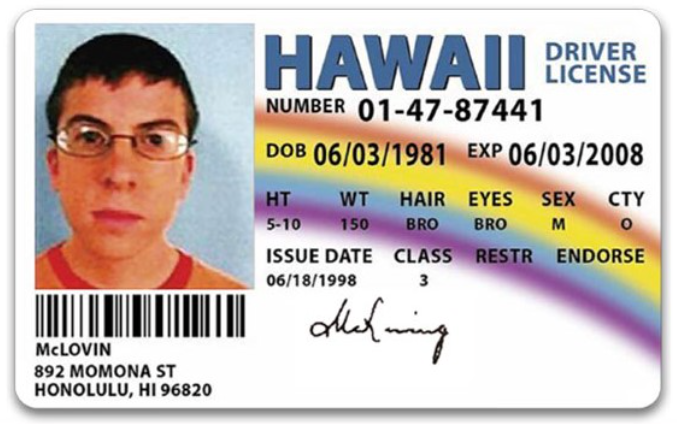
And, of course, as usual, it’s being billed as some sort of “save the kids” type of thing (see opening image).
But even sold as such, it does still seems like a bit of a government over-reach… particularly in a state which is known to pride itself somewhat on the whole “don’t tread on me” ethos.
After all, whatever happened to simply teaching kids not to take candy from strangers?

In any case, that’s the way things are headed in Florida.
And, as we’re going to see, it’s also the way things are headed everywhere else.
Now, the last time we covered the age verification thing back in our Hosting.com Affiliate Program Review edition, what we saw there was a very UK-specific opportunity, with some very global news coverage.
This week, I want to focus on something a little narrower — the biggest consumer market in the world.

Yep, we’re going to look at what’s happening with age verification in America right now.
And we’re doing it for a number of reasons.
First, last time we covered age verification, we more or less treated the USA as one giant homogenous blob. But, as we all know, a lot of what’s considered law in the USA actually happens at the state level. So it really deserves some slightly more granular attention.
Second, and as I’ve already said, America is the biggest consumer market in the world. So, if you’re going to sell a product as an affiliate, you might as well sell it to Americans.
And last but most definitely not least, the product we’re going to be selling this week is the sort of thing that Americans absolutely love.
That product is called…
Wait for it…
Freedom!

And boy is there a lot of Freedom just waiting to be sold in America right now, because Florida’s not the only one jumping on the age verification band wagon.
As for who’s on board and who’s not, that’s where the question gets super messy.
And it’s likely to remain that way for quite some time, and it’s not just because America is big.
So let’s start with the stuff that’s reasonably clean… but still messy.
For the most part, US states now require age verification to access “adult” websites.
But even here, things are still messy, with some states requiring full-blown government ID verification, others leave a lot to be desired (if the idea is to keep the kids out, that is…).

If you’re really curious to know who’s enforcing what, there’s a handy little tracker here that seems to be reasonably up to date.
But that only covers “adult” content bills.
Where things start to get really messy, however, is once you start getting into what states are doing to “protect the kids” from more nebulous harms such as algorithms, cyberbullying, and, of course, online predators.
Take the current age verification push in Florida, for instance.
What’s being rolled out there has more than a few things in common with what Arkansas tried rolling out back in 2023 when it tried to implement age verification requirements for social media accounts.
But that ended up getting knocked back by a federal judge who decided the whole thing was unconstitutional.
Something about free speech rights being violated or something like that.
And right now, there’s a similar challenge being mounted against Florida’s age verification laws.
Now, maybe this challenge will be successful.
After all, you’d think that if the federal courts ruled one way in the past, then they’re likely to rule the same way in the future, even if some people are becoming less sure about 1st Amendment rights these days…
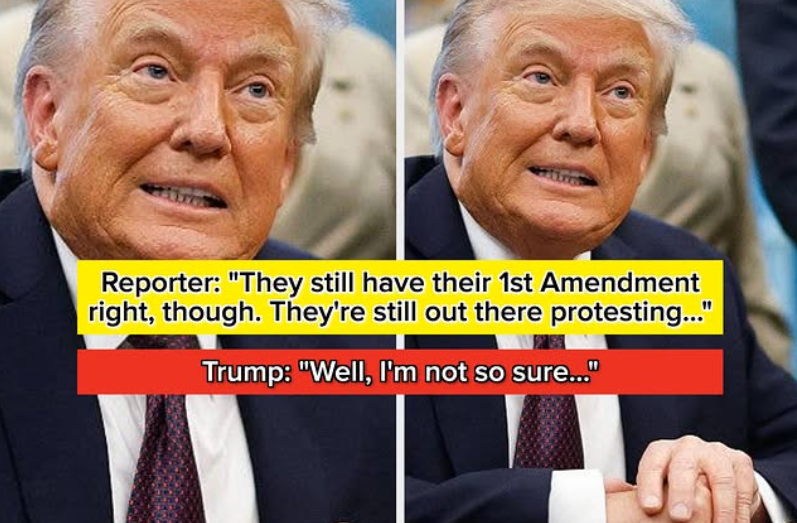
But, as with anything when lawyers get involved, this thing is extremely messy, and there’s a bunch of stuff that’s yet to be tested in the courts.
For instance, the Arkansas bill effectively introduced a blanket ID requirement across platforms.
But the Florida bill introduces a couple of twists.
First, it’s drafted so it sounds like it’s targeting “platform design” (‘adictive algorithms’ and what not) rather than “speech”.
And second, instead of introducing a clunky blanket age verification requirement, Florida’s all about “youth access restriction”.
And yeah, I know how that sounds.
The only way you can restrict youth is to identify the youth… and the only way you can identify the youth is to verify age…
So it is very potato-patata…

But, apparently, courts like that kinda stuff, and it’s part of the reason why Florida’s bill has managed to survive so far.
And this is the bit where it starts to get really interesting as an affiliate opportunity.
You see, Arkansas isn’t the only state to have taken a stab at bringing in broad, sweeping age verification laws.
A few other states have tried, too.
The full list (that I know of) looks like this:
- Arkansas
- Ohio
- California
- Florida
- Georgia
Of that list, only Florida and Georgia have yet to be struck down. (Both are at a similar stage.) The other three all got struck down in court.
And that brings me to the big point — the point that makes the Florida rollout worth actually paying attention to.
Or, at least, worth paying more attention to than usual…

Up until now, no attempt at rolling out broad age verification laws in the USA has ever reached the “enforceable” stage.
Arkansas, for instance, found itself with slapped with a preliminary injunction right from the get go.
Florida, however, seems to have been able to please the courts enough that it got past that stage. (That’s why Florida’s AG was able to issue a deadline this week.)
And if Florida’s able to go all the way (i.e., survive the court challenge), then that’s going to do one very, very big thing.
It’s going to lay out the blueprint for writing age verification laws in the United States.
And once that happens, you can bet other states will be falling over themselves to join in.
Takeaway
Right now, there’s an immediate opportunity for affiliates to start selling “freedom” (from age verification requirements) in Florida.
Actually, to be more precise, the opportunity doesn’t start until April 8 (the deadline Florida’s AG gave). But that’s next month, so it might as well be now.
However — and this is the big thing to takeaway here — if Florida survives the court challenge, expect this sort of thing to become much more normal across the United States.
And if it does, then suddenly a single-state opportunity becomes a much bigger, ongoing opportunity.
And yes, that opportunity is to start selling VPN access to the people.
Every single time age verification requirements go into effect anywhere in the world, VPN demand skyrockets. So you can bet the same thing’s going to keep happening.
And if it’s going to keep happening, then you might as well be ready to monetize it.
The PureVPN Affiliate Program should be able to help with that.
Closing Thought
Given all the stuff about freedom this week, I thought it was a good time to drop this quote by James Clear.
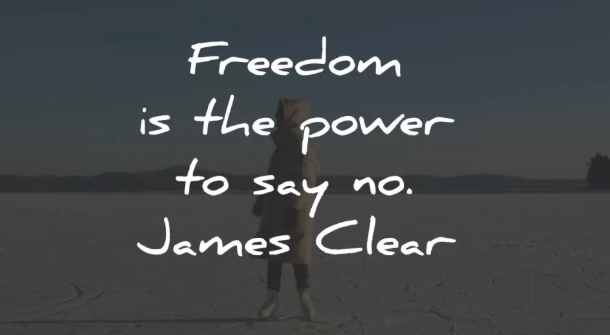
So why’s this actually useful?
Well, if you remember the principle, you can apply it to a bunch of situations.
Think of it like this — if you walk in to a negotiation, who’s generally got the upper hand?
Often, it’s the person with the ability to say “no”.
And the same logic applies to all sorts of things in affiliate marketing.
If you don’t believe me, then ask yourself which affiliate is likely going to make more money:
- The affiliate who’s stuck with a low-paying, low-converting affiliate program.
- The affiliate who can say no to sub-par affiliate programs.
Naturally, the affiliate who can say no to sub-par programs is likely going to do much better.
So, how do you put yourself in a position where you can actually say no?
Why, you give yourself options, of course.
So do yourself a favor this week. Increase your options this week by signing up with one of the best affiliate programs out there — the PureVPN Affiliate Program.
__
(Featured image by SevenStorm JUHASZIMRUS via Pexels)
DISCLAIMER: This article was written by a third party contributor and does not reflect the opinion of Born2Invest, its management, staff or its associates. Please review our disclaimer for more information.
This article may include forward-looking statements. These forward-looking statements generally are identified by the words “believe,” “project,” “estimate,” “become,” “plan,” “will,” and similar expressions. These forward-looking statements involve known and unknown risks as well as uncertainties, including those discussed in the following cautionary statements and elsewhere in this article and on this site. Although the Company may believe that its expectations are based on reasonable assumptions, the actual results that the Company may achieve may differ materially from any forward-looking statements, which reflect the opinions of the management of the Company only as of the date hereof. Additionally, please make sure to read these important disclosures.



The TopRanked.io Weekly Digest: What’s Hot in Affiliate Marketing [PureVPN Affiliate Program Review]
This week, we're going to look at monetizing American freedom as affiliates. Specifically, we'll be looking at selling VPNs to...


Novo Nordisk: Stable Growth and Defensive Biotech Stock for DACH Investors in 2026
Novo Nordisk A/S (ISIN: DK0062498333) is a stable, growth-oriented biotech stock in 2026, driven by blockbuster drugs Ozempic and Wegovy....


Italian Banks’ Green Asset Ratio Reaches €50 Billion in 2024 Amid Growing Sustainable Lending
Italian banks’ green assets surpassed €50 billion in 2024, raising the Green Asset Ratio (GAR) to 2.8%. Results vary widely...


Ripple Collaborates with Mastercard on Blockchain Innovation
Ripple continues expanding its business with Mastercard partnerships, acquisitions, and a $750 million share buyback that values the company at...


Stagflation Fears Rise as Energy Shock and Iran Conflict Shake Markets
Rising oil prices and weak jobs data pushed stocks toward stagflation fears. Unlike classic monetary stagflation, this stems from an...
 |
|
 |  |
 |
|
-
 Cannabis1 week ago
Canopy Growth Launches Cheaper 15g Medical Cannabis in Poland
-

 Crypto4 days ago
Ultimate Convenience: Why Consumers Expect Instant, Secure, and Borderless Payments
-

 Cannabis2 weeks ago
Aurora’s Electric Honeydew Debuts in Poland, But Shared Registry Raises Patient Caution
-

 Crypto1 day ago
XRP vs Solana ETFs: Retail Hype Meets Institutional Interest