Impact Investing
Antarctica Warming Reshapes Global Atmospheric Circulation
Antarctica warming is destabilizing lower atmosphere, increasing gravity waves that propagate into the stratosphere and reshape global circulation. Study shows reduced thermal stability over the Antarctic Peninsula enhances vertical motion and wave generation. These waves influence winds, the polar vortex, and midlatitude climate, highlighting polar regions as drivers of global climate change and its impacts.

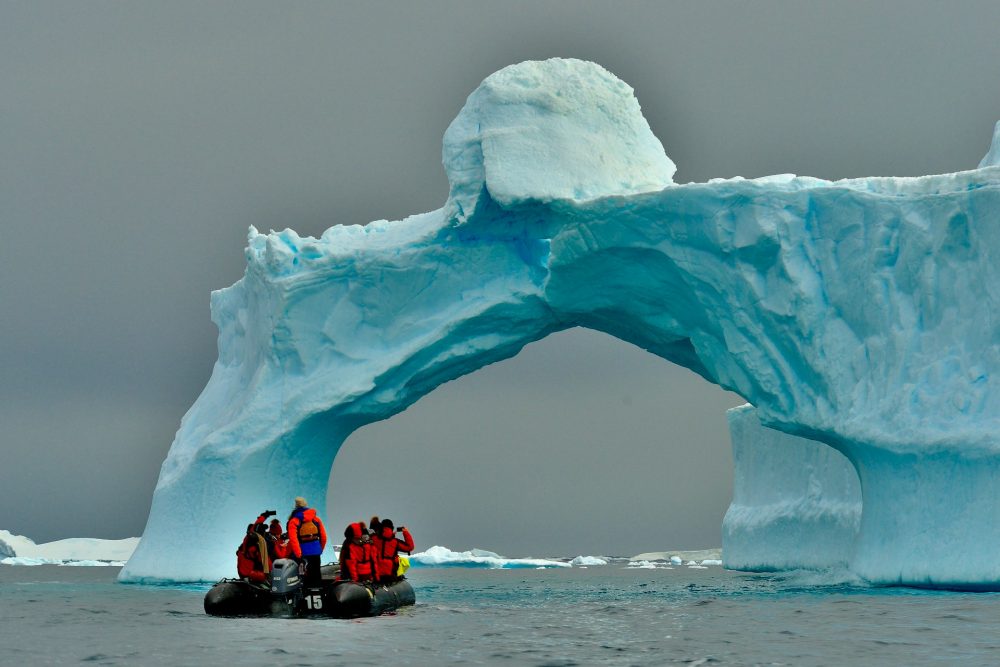
The effects of Antarctica’s surface warming are not confined to the land, but are generating waves that propagate into the stratosphere and beyond, helping to reshape atmospheric circulation with effects that go from local to global.
Climate change isn’t just impacting the polar ice caps, which are melting at an ever-increasing rate. Warming Antarctica is also beginning to alter the way Earth’s atmosphere moves and mixes.
A study coordinated by ENEA and published in the Journal of Climate shows that rising temperatures in Antarctica have made the lower layers of the atmosphere less stable, favoring the formation of atmospheric gravity waves: phenomena that can influence wind circulation, the polar vortex, and the climate well beyond the polar regions.
In other words, what happens at the edges of the Antarctica can propagate through the atmosphere and contribute to reshaping the climate balance of the entire planet.
The research combines meteorological observations, satellite data, climate reanalyses, and numerical simulations to reconstruct the evolution of atmospheric stability over recent decades. The result is that the progressive warming of the Antarctica surface is altering the thermal equilibrium between the frozen ground and the overlying air layers, making the atmosphere less stable and more subject to vertical movements. This apparently local transformation has implications that propagate to the mid-latitudes and contribute to reshaping global climate models.
Antarctica’s warming is changing the balance of the atmosphere
The Antarctic Peninsula is one of the regions of the planet that has warmed most rapidly in recent decades. Under stable climate conditions, very cold air in contact with the ice tends to remain trapped in the lower layers of the atmosphere, creating strong stratification that limits vertical mixing.
The study highlights, however, that this balance is weakening. Rising surface temperatures in Antarctica are reducing the thermal gradient between the ground and the atmosphere, facilitating the development of vertical air motion. The result is a more dynamic atmosphere, more sensitive to disturbances generated by the flow of winds over the region’s mountains and ice shelves.
“The progressive reduction in atmospheric stability near the ground, caused by rising surface temperatures, increases the formation of atmospheric gravity waves originating from the Antarctic Peninsula, one of the main ‘factories’ of these waves, which play a crucial role in the dynamics of the Earth’s climate,” explains the study’s first author, Maria Vittoria Guarino , a researcher at the ENEA Sustainability Department.
“A less stable atmosphere in Antarctica facilitates the formation and propagation of these wave-like signals that travel upward, and our research highlights for the first time an increase in these waves, linking it to a change in surface atmospheric flows.”
Impacts on global climate circulation
The work highlights how a regional change can produce much broader effects. Gravity waves generated above the Antarctic Peninsula can propagate into the stratosphere, transferring energy and momentum to the upper layers of the atmosphere. This process helps influence the circulation of winds on a hemispheric scale and the dynamics of the polar vortex.
“Atmospheric gravity waves aren’t just a local phenomenon; they can influence the polar vortex, ozone-related processes, and mid-latitude weather. And an increase in their presence in the skies indicates potentially profound changes in our planet’s climate dynamics,” Guarino concludes.
From this perspective, Antarctica warming is not only one of the most obvious indicators of climate change, but also a factor that can alter the very functioning of the Earth’s atmosphere. The polar regions, the study concludes, remain a key point for understanding how the global climate system is evolving.
__
(Featured image by Long Ma via Unsplash)
DISCLAIMER: This article was written by a third party contributor and does not reflect the opinion of Born2Invest, its management, staff or its associates. Please review our disclaimer for more information.
This article may include forward-looking statements. These forward-looking statements generally are identified by the words “believe,” “project,” “estimate,” “become,” “plan,” “will,” and similar expressions. These forward-looking statements involve known and unknown risks as well as uncertainties, including those discussed in the following cautionary statements and elsewhere in this article and on this site. Although the Company may believe that its expectations are based on reasonable assumptions, the actual results that the Company may achieve may differ materially from any forward-looking statements, which reflect the opinions of the management of the Company only as of the date hereof. Additionally, please make sure to read these important disclosures.
First published in ESG NEWS. A third-party contributor translated and adapted the article from the original. In case of discrepancy, the original will prevail.
Although we made reasonable efforts to provide accurate translations, some parts may be incorrect. Born2Invest assumes no responsibility for errors, omissions or ambiguities in the translations provided on this website. Any person or entity relying on translated content does so at their own risk. Born2Invest is not responsible for losses caused by such reliance on the accuracy or reliability of translated information. If you wish to report an error or inaccuracy in the translation, we encourage you to contact us.














Crypto Holds Steady as Tensions Rise and Regulatory Concerns Grow
Crypto markets remained cautious as a US ultimatum to Iran nears expiry. Bitcoin and Ethereum traded sideways despite strong ETF...


Toss Explores Blockchain Mainnet to Power Next-Generation Financial Services
Fintech company Toss, serving 30 million users, is exploring a blockchain mainnet to expand into on-chain financial services. It is...


Biobanks Drive Progress in Rare Disease Research Through Collaboration and Ethical Practice
Biobanks are vital for advancing rare disease research by enabling access to scarce biological samples. Experts highlighted their role in...


Global Coffee Market Faces Price Drops Amid Strong Supply and Export Challenges
Coffee prices in New York and London declined last week. While farm supplies remain strong, transporting coffee to market is...


Why 2026 Could Mark a Turning Point for Sustainability
Amid geopolitical crises and climate pressures, companies must seek alternative strategies, as sustainability becomes a key driver of value. By...
 |
|
 |  |
 |
|
-

 Impact Investing2 weeks ago
Ridemovi Secures Financing to Drive European Expansion and Sustainable Mobility Growth
-
 Crypto15 hours ago
Crypto Holds Steady as Tensions Rise and Regulatory Concerns Grow
-
 Crypto1 week ago
Bitcoin Slides, Ethereum EEZ Emerges, Worldcoin Hits Low
-

 Africa5 days ago
Casablanca Stock Exchange Profits Surge in 2025 as Growth Momentum Strengthens