Impact Investing
Battery Energy Storage Systems: Shaping the Future of Clean Energy
Battery Energy Storage Systems (BESS) are transforming the energy landscape by storing electricity for later use, stabilizing grids, and enabling greater integration of renewables like solar and wind. As core infrastructure, BESS enhance grid flexibility, support energy security, and reduce reliance on fossil fuels. Their growing deployment and market value signal a strategic shift toward a more resilient, clean energy future.

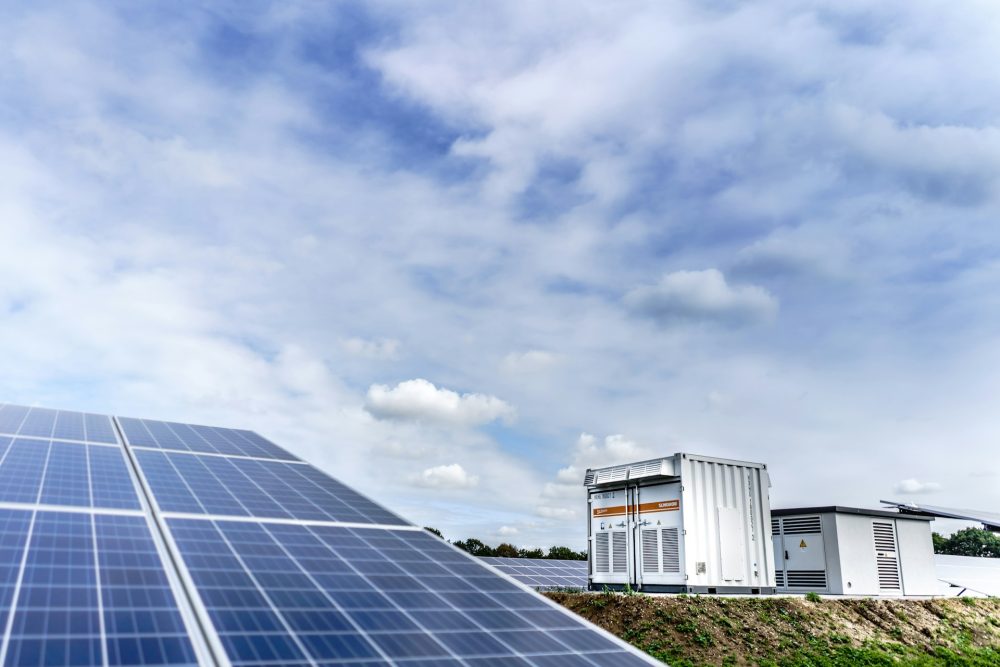
There’s a quiet but crucial infrastructure that’s changing the future of energy: battery energy storage systems (BESS ). No longer a niche technology, a “technological accessory,” they’re now the backbone of the energy transition, enabling the integration of renewables and ensuring the security of the electricity system. Indeed, the global battery storage market could exceed $43 billion by 2030, reaching up to 620 GWh of annual demand.
In Italy, where Terna launched the first MACSE auction, funds like FIEE Sgr are also beginning to look at the sector to catalyze private capital in storage and drive the energy transformation.
Energy security, grid flexibility, and the integration of renewables? The solution is battery energy storage systems (BESS). And Italy, thanks to ambitious goals and already operational market tools, is poised to become a leading player in the sector. The next five years will be crucial: those who invest today, riding the technological and regulatory wave, will secure a leadership role in the new energy ecosystem.
What are battery energy storage systems (BESS) and why do they matter for the energy transition?
Battery energy storage systems (BESS) allow electricity to be stored and released to the grid when needed, ensuring stability, flexibility, and resilience. They are essential for integrating non-programmable renewable sources such as wind and solar, ensuring continuity of supply and the ability to balance peaks in demand.
In a country like Italy, where renewables are growing rapidly, BESS are no longer an ancillary technology but a strategic infrastructure. It is no coincidence that operators such as Enel X, Engie, and Edison have already announced large-scale plants in Sardinia and Sicily, strategic regions for the integration of renewables.
Why Italy can be a leading player in BESS
September 30th, 2025, marked a crucial milestone for the Italian energy sector: Terna launched the first MACSE (Electric Storage Capacity Procurement Mechanism) auction, dedicated to the procurement of electricity storage capacity. The initiative allocated 10 GWh of storage capacity in the South and the Islands, representing 100% of the required needs. The plants contracted by this first auction will enter into operation by 2028 .
The auction not only marked a technical breakthrough, but also the birth of a structured and regulated market for battery storage systems in Italy, which could open up important development opportunities.
Battery energy storage systems: a rapidly growing global and European market
According to Market Research Future, the global BESS market, currently valued at approximately $13.7 billion, could reach $43.4 billion by 2030, growing at an average annual rate of 21.3%.
McKinsey estimates that, over the same time horizon, annual demand will reach 450,620 GWh, generating revenues of between $120 and $150 billion. In Europe, the trend is equally significant: SolarPower Europe estimates that by 2029, cumulative storage capacity could fluctuate between 66 and 183 GWh, with the majority covered by utility-scale plants.
Opportunities and ambitions for Italy
The updated National Energy and Climate Plan (PNIEC) sets a target of 50 GWh of storage capacity for Italy by 2030. According to Aurora Energy Research, 10.5 GW of new BESS will be installed over the next decade, with approximately 3 GW already in an advanced stage of development.
Key factors supporting this path include the favorable regulatory framework (capacity market and, now, MACSE), the rapid expansion of renewables, and the growing interest of international operators, who view our country as one of the most promising markets in Europe. So much so that several energy giants have announced that Italy will become one of their three main European markets.
Battery energy storage systems already installed around the world: from Tesla Megapack to SonnenBatterie
Battery energy storage systems are being applied at various scales. At the utility level, prime examples include the Tesla Megapacks installed in California, which ensure grid stability for several gigawatt hours, or the large-scale projects implemented by Fluence in Germany, now a leading global provider of storage solutions. In the industrial and commercial sectors, giants like Amazon and Google are using BESS to power their data centers with renewable energy, while retail chains like Lidl have installed storage systems combined with photovoltaic systems in their logistics warehouses, reducing costs and peak consumption.
In the residential sector, products like Tesla’s Powerwall or SonnenBatterie (a German company acquired by Shell) are increasingly widespread in Italy, often integrated into energy community projects that allow sharing of locally produced solar energy. In all cases, the rationale is the same: transforming storage capacity from a “technological accessory” to a key infrastructure for the security of the electricity system.
FIEE Sgr, the storage investment strategy
Technology is moving fast: lithium iron phosphate (LFP) batteries are gaining ground thanks to lower costs, greater safety, and a longer lifespan than nickel- and cobalt-based alternatives. On the geopolitical front, international tensions are reshaping the balance of power: US restrictions on imports from Foreign Entities of Concern (FEOC) and competition between China and Korea could shift production capacity to Europe, strengthening Italy’s position.
In this scenario, private markets offer extraordinary opportunities for investors in energy innovation. This is where FIEE SGR, a private equity firm founded in 2014 and one of the leading financial operators dedicated to the energy transition in Europe, is committed.
FIEE currently manages over €500 million through four funds—three closed-end and one open-end—including Energy Transition Fund III (ETF III), which has already raised €200 million in its first closing with the support of institutional investors such as the European Investment Fund (EIF) and CDP Real Asset.
The fund’s strategy aims to capitalize on the most promising decarbonization trends: battery energy storage, energy communities, efficiency in buildings and infrastructure, smart grids, electric mobility, biofuels, and the circular economy. In particular, energy storage, currently a key regulatory and industrial priority, represents one of the pillars on which FIEE Sgr intends to consolidate its role as a catalyst for private capital in the energy transition.
This market is also a rapidly expanding investment frontier. FIEE Sgr’s ability to identify and support innovative companies operating in this space demonstrates how private equity can be a true strategic driver of the energy transformation, creating value for investors while simultaneously contributing to a more sustainable future.
__
(Featured image by Sungrow EMEA via Unsplash)
DISCLAIMER: This article was written by a third party contributor and does not reflect the opinion of Born2Invest, its management, staff or its associates. Please review our disclaimer for more information.
This article may include forward-looking statements. These forward-looking statements generally are identified by the words “believe,” “project,” “estimate,” “become,” “plan,” “will,” and similar expressions. These forward-looking statements involve known and unknown risks as well as uncertainties, including those discussed in the following cautionary statements and elsewhere in this article and on this site. Although the Company may believe that its expectations are based on reasonable assumptions, the actual results that the Company may achieve may differ materially from any forward-looking statements, which reflect the opinions of the management of the Company only as of the date hereof. Additionally, please make sure to read these important disclosures.
First published in ESG NEWS. A third-party contributor translated and adapted the article from the original. In case of discrepancy, the original will prevail.
Although we made reasonable efforts to provide accurate translations, some parts may be incorrect. Born2Invest assumes no responsibility for errors, omissions or ambiguities in the translations provided on this website. Any person or entity relying on translated content does so at their own risk. Born2Invest is not responsible for losses caused by such reliance on the accuracy or reliability of translated information. If you wish to report an error or inaccuracy in the translation, we encourage you to contact us.















TopRanked.io Weekly Affiliate Digest: What’s Hot in Affiliate Marketing [1xBet Affiliate Program]
If you thought nobody liked cricket, then this week, we're proving you wrong. And by the time we're done, you'll...

Tether Seeks Big Four Audit to Boost USDT Transparency
Tether, issuer of USDT, plans a full audit by a Big Four firm to address transparency concerns over its $184...


H&M Advances Sustainability and Cuts Emissions by 2025
H&M Group reported that by 2025, 91% of materials were recycled or sustainably sourced, with recycled content reaching 32%. Emissions...


NHS Funds Breakthrough CAR-T Therapy Breyanzi for Lymphoma Treatment in Spain
Bristol Myers Squibb announced NHS funding for CAR-T therapy Breyanzi, enabling its use from April 1st in Spain for lymphoma...


Crypto Markets Volatile as Bitcoin Hovers, Solana Eyes AI Integration
Crypto markets remain volatile amid the Iran war, with Bitcoin near $70,000 and ETF inflows improving outlook. Ethereum faces declines...
 |
|
 |  |
 |
|
-
 Cannabis4 days ago
Aurora Shifts Strategy Toward Global Medical Cannabis Markets
-

 Biotech2 weeks ago
AI Boosts Cancer Detection While Cutting Radiologists’ Workload
-

 Crowdfunding1 week ago
Peru’s Crowdfunding Sector Shrinks Amid License Revocation
-

 Crowdfunding4 days ago
Cyberpunk Trading Card Game Surges Past Goals on Kickstarter