Markets
Cotton Prices Rise Amid War Tensions, Weather Risks, and Supply Concerns
Cotton prices rose last week amid the US–Iran conflict, production cost increases, and adverse weather. Hot, dry conditions in key US regions threaten yields, while high input costs may reduce planted area. Demand from the Middle East, Southeast Asia, and China persists. Despite output in India and Brazil, global production is expected to decline overall.

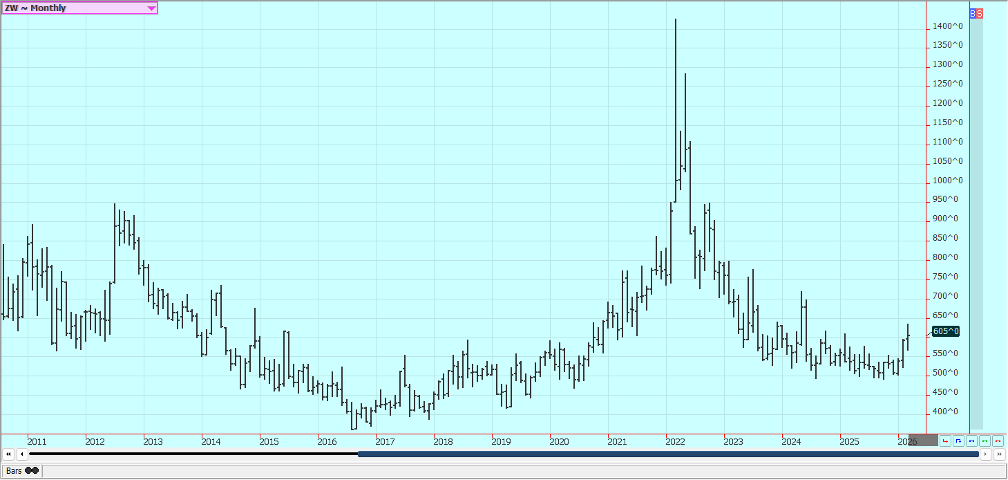
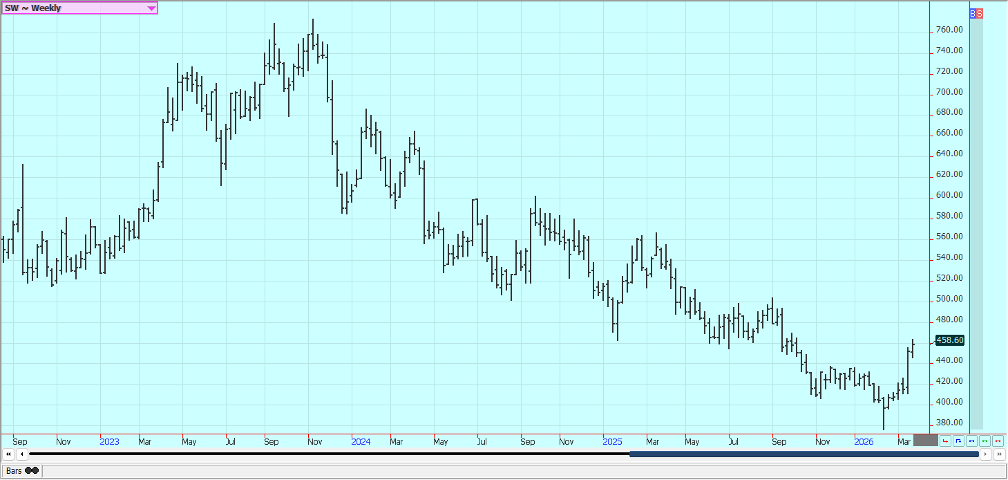
Wheat: Wheat closed higher in both markets last week, but failed to make any upside progress in response to what President Trump said about the war in Iran. Trump said that he was talking to Iran and was pausing some of the of the bombing Middle eastern countries are big buyers of world Wheat and many have been bombed by Iran now. Iran has denied the talks are happening, but the president announced a two week extension of the pause in hostilities to give negotiations more time to work.
Conditions are too dry in much of the US Great Plains and too wet in the US Midwest and in western Europe for best production and quality potential. Expected rain systems this week in the Great Plains could bring relief to crops produced there. The weather is now featuring precipitation is forecast for parts of the Midwest along with variable temperatures.
Weekly Chicago Soft Red Winter Wheat Futures
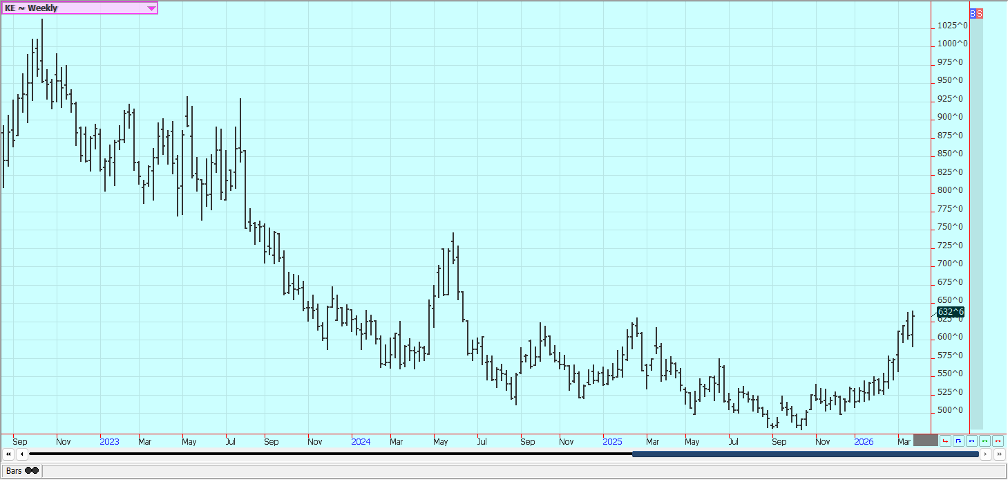
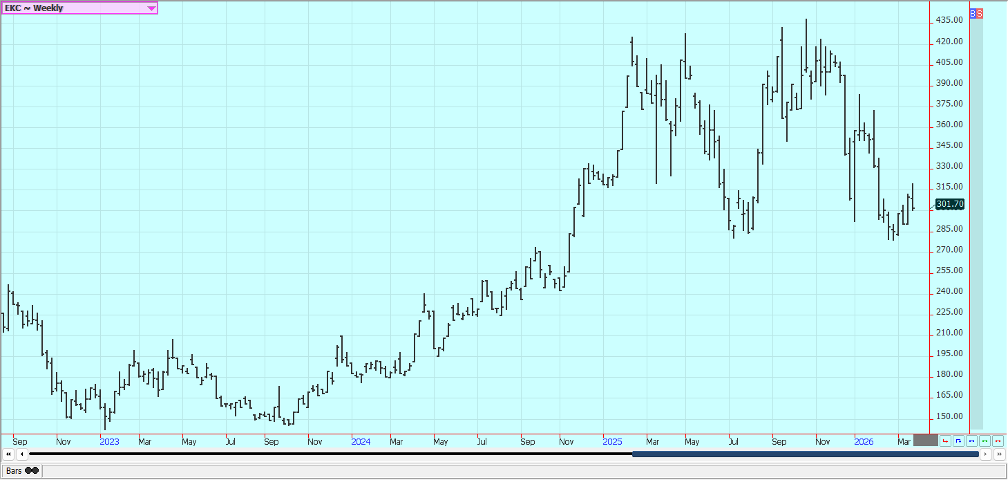
Weekly Kansas City Hard Red Winter Wheat Futures
Weekly Minneapolis Hard Red Spring Wheat Futures
Unavaiable today
Corn: Corn was a little lower last week. News that President Trump will hold his Ag Appreciation Day on Friday and was widely expected to announce new blending requirements for bio fuels became a disappointment. The Trump administration on Friday finalized new biofuel blending volumes mandates for the U.S. refining industry, setting the 2026 biofuel obligations at 26.81 billion RINs and the 2027 obligation at 27.02 billion RINs, and requiring large refiners to make up for 70% of volumes waived.
The US and Iran were supposed to be talking and Trump has paused some US bombing raids in an effort to get some peace. Iran has denied that talks are happening but the US has extended the pause by two weeks to give any negotiations a chance to work. Shipping has been halted at Hormuz and some ships have been blown up.
The Trump administration does not seem to have plans for the war moving forward. The war expanded yesterday when Iran bombed infrastructure in Gulf states Wire reports note that US Corn cash markets had been struggling to follow futures markets higher due to excessive supplies and the weekly export inspections report showed demand was in line with expectations.
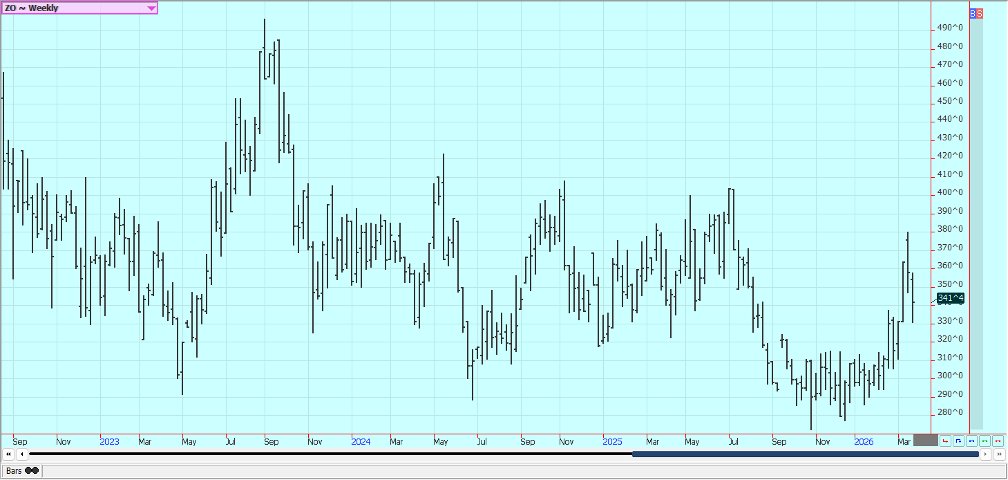
There are still excessive supplies as seen in the recent USDA reports after prices were trending higher on strong demand. Temperatures in the Midwest should variable for the next week. Conditions are called good in Argentina and big production is expected there. Oats were lower and trends are down on the daily charts and mixed to wn on the weekly charts.
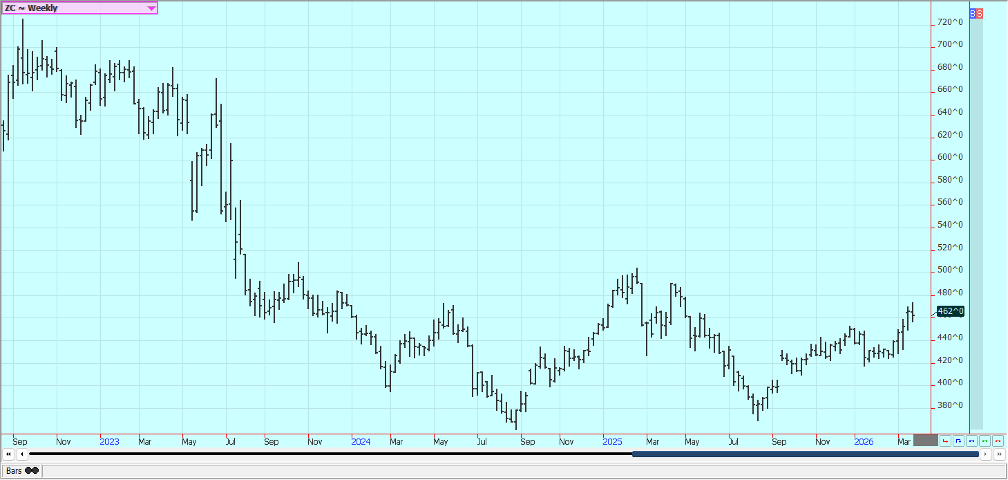
Weekly Corn Futures
Weekly Oats Futures
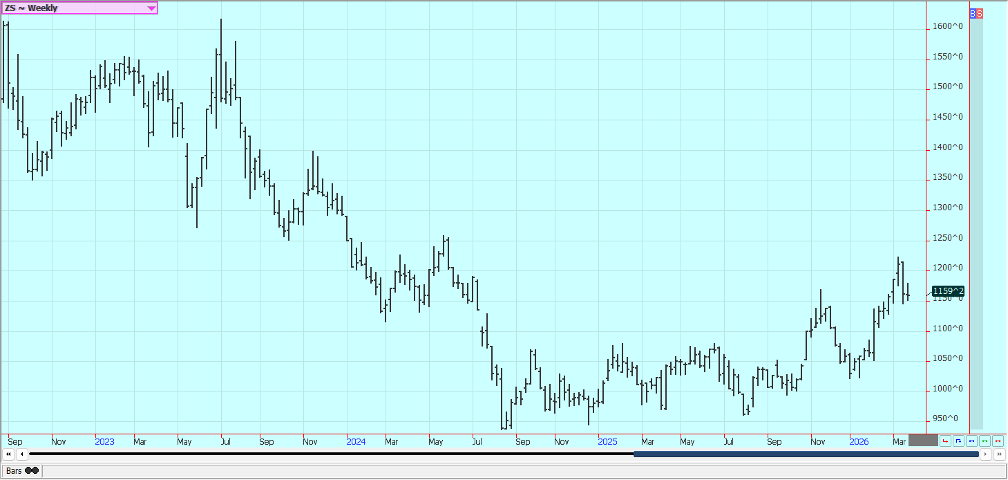
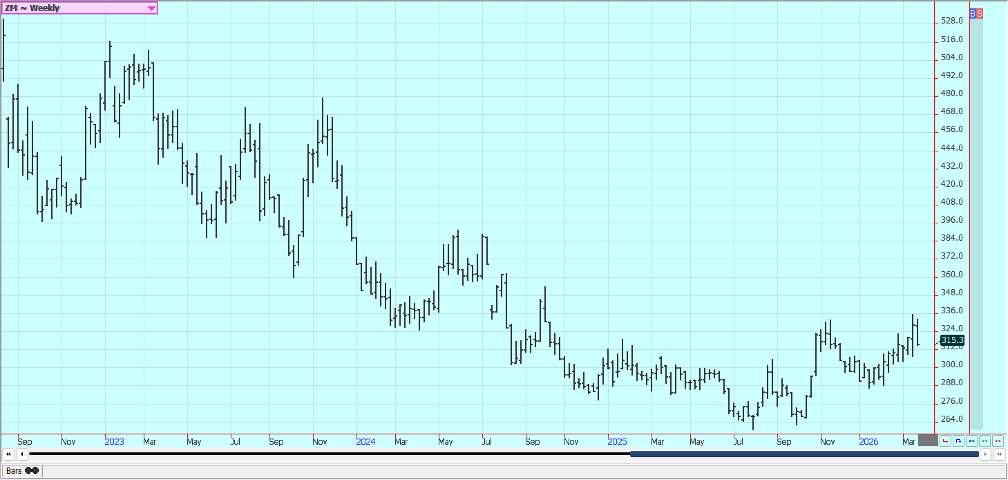
Soybeans and Soybean Meal: Soybeans and Soybean Meal were lower but Soybean Oil was higher. President Trump has paused bombing Iran as the two sides are talking against news that the administration has invited farmers and refiners to the White House for what is expected to be a bio fuels blending requirement announcement, Iean has denied that the talks are taking place but the US has extended the pause by two weeks to give a deal a chance o develop.
The Trump administration on Friday finalized new biofuel blending volumes mandates for the U.S. refining industry, setting the 2026 biofuel obligations at 26.81 billion RINs and the 2027 obligation at 27.02 billion RINs, and requiring large refiners to make up for 70% of volumes waived. The US-China summit has been postponed at the request of the US and because od the war. There was more news that Iran has laid mines in the straits of Hormuz and it bombed oil infrastructure in Gulf states. Shipping has been halted.
The US government apparently has no idea on how to manage risks in the Hormuz or how to end the war. Big South American crops are being harvested and ideas are that Chinese buying could be interrupted due to Iran war. China has imposed new phyto controls on Brazil Soybeans to cut the flow of imports to the country. South American sources said that the Brazil crops are now more than 50% harvested. The tariff wars between the US and other countries add to cost of US Soybeans. Temperatures will be variable in the Midwest this week.
Weekly Chicago Soybeans Futures
Weekly Chicago Soybean Meal Futures
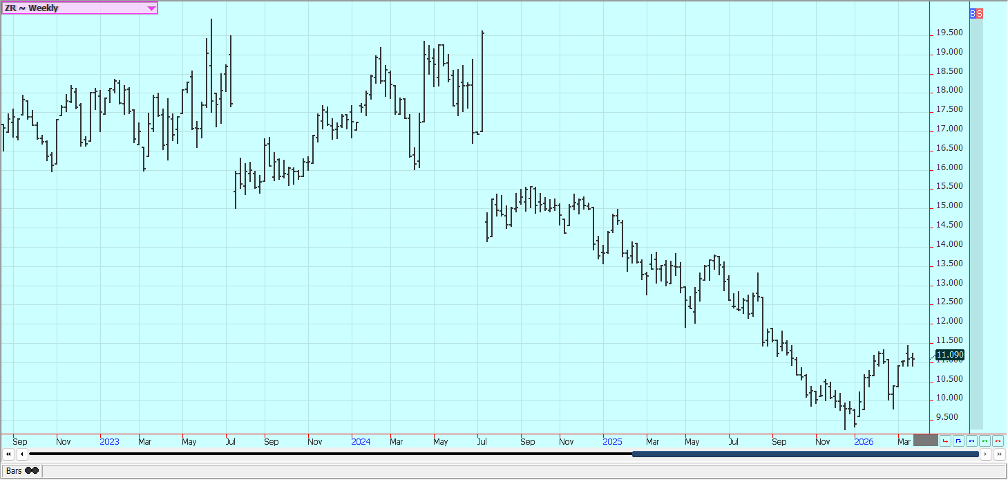
Rice: Rice closed a little lower last week and trends are mixed on the weekly charts. Trends are still up on the daily charts after a big war related rally with the war with Iran and the political problems with China not having much effect on prices.
Traders anticipate less production this year in the US and around the world due to low prices. Planted area could be down anywhere from 15% to 35% in the US this year. Asian Rice prices are higher due to war concerns. Demand remains moderate for US Rice.
Weekly Chicago Rice Futures
Vegetable Oils: Palm Oil futures was lower last week as the effects on demand from the Iran war keep bio fuels demand hopes active. Demand ideas are in a state of flux right now due to the war. Canola was higher last week despite the price action in Chicago and the new bio fuels blending requirements released by the US government.
The selling seen also came ideas of big crops in South America. The Trump administration on Friday finalized new biofuel blending volumes mandates for the U.S. refining industry, setting the 2026 biofuel obligations at 26.81 billion RINs and the 2027 obligation at 27.02 billion RINs, and requiring large refiners to make up for 70% of volumes waived.
Weekly Malaysian Palm Oil Futures:
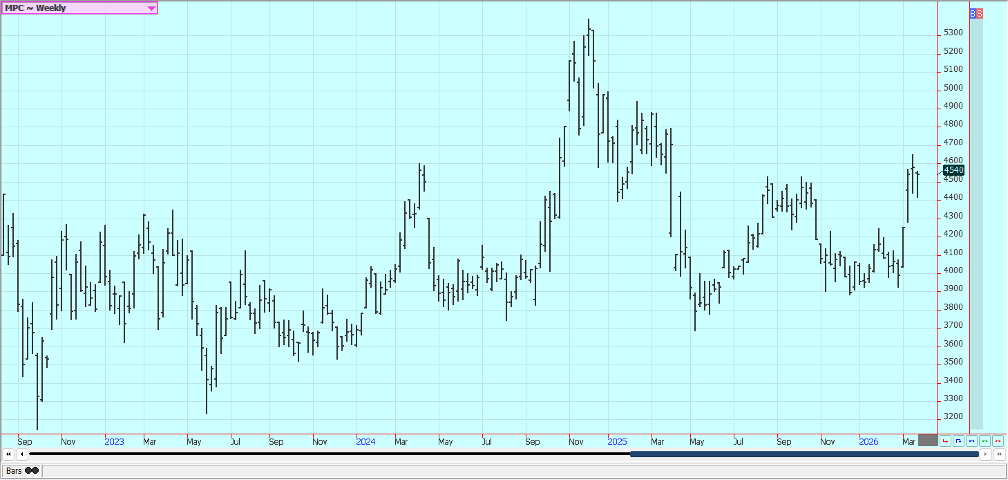
Weekly Chicago Soybean Oil Futures
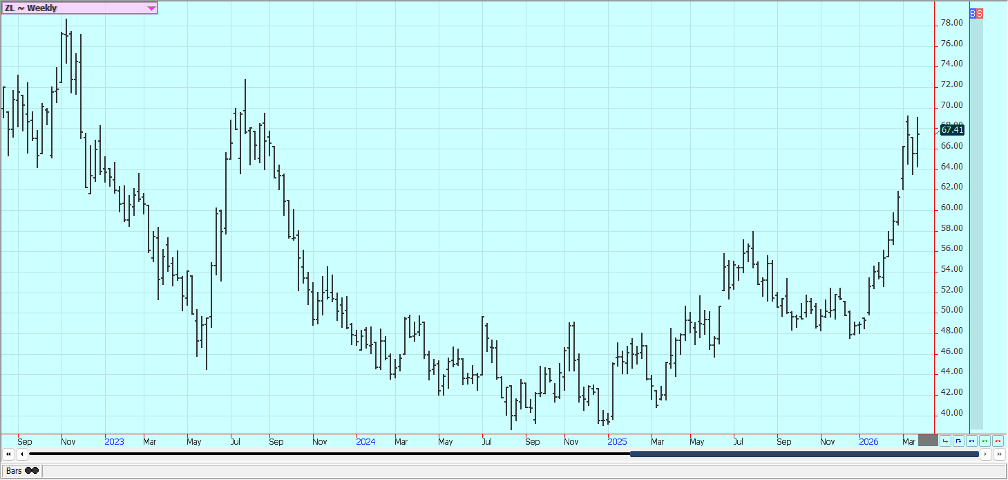
Weekly Canola Futures
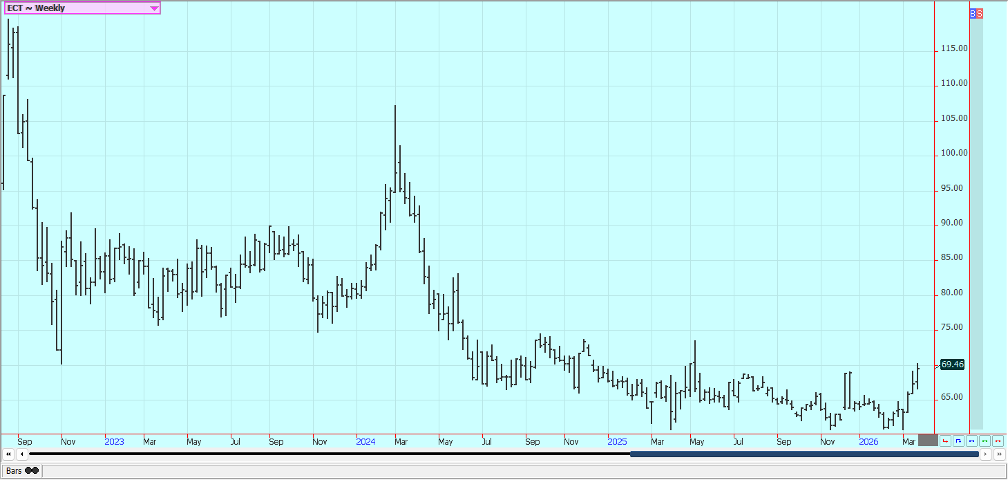
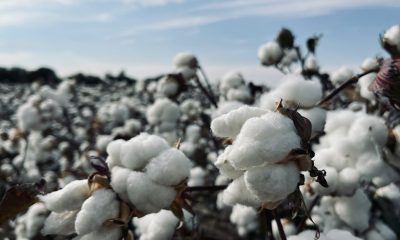
Cotton: Cotton was higher last week as the war with Iran continues but is not going well or getting better for the US and as the weather remains s problem for producers. Some buying came in ideas of reduced planted areas as costs have gone up a lot for producers. President Trump said this week that the US and Iran were talking and that the US would refrain from ramping up attacks this week. Iean has denied that talks are happening. The pause has been extended for two weeks by the US.
The market is worried about the weather that remains hot and dry in US Cotton areas, mostly from Texas to the west. Much of the demand for Cotton comes from the Middle East and Southeast Asia and the costs of production have increased dramatically because of the war.
The war is also increasing the costs for producing polyester products. Much of the rest of the cotton demand comes from China and Southeast Asia. Overseas cotton production in places like India and Brazil are expected to be high, but overall world cotton production is expected by USDA to fall on reduced global planted area and reduced yields. Trends are mixed on the daily charts.
Weekly US Cotton Futures
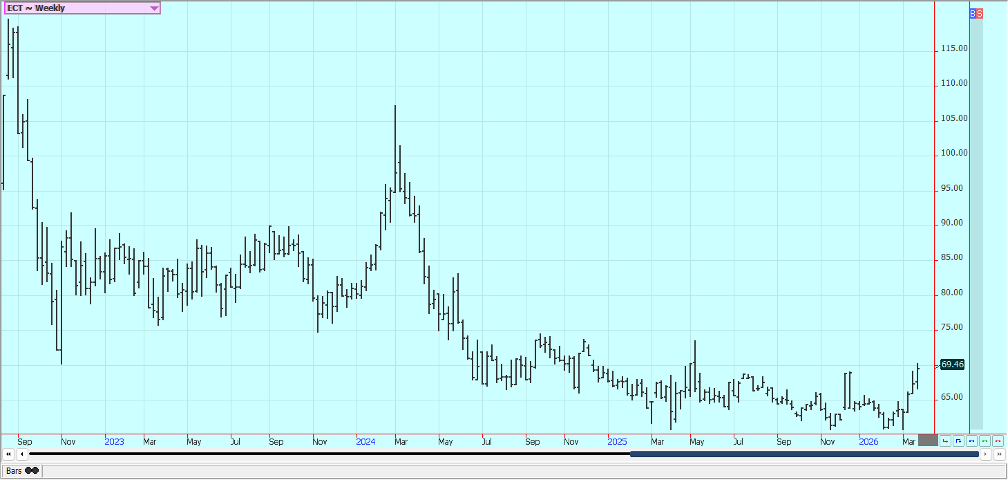
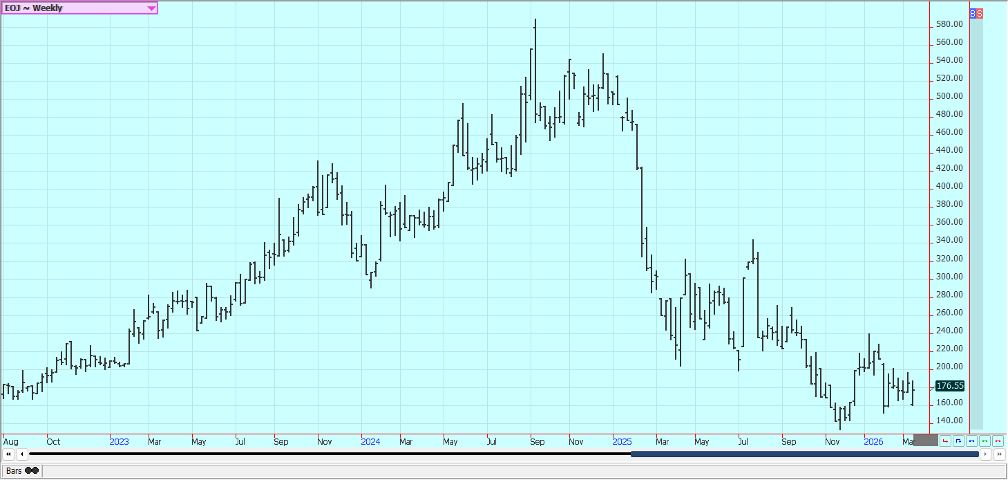
Frozen Concentrated Orange Juice and Citrus: Futures were lower last week on weather concerns Trends are mixed on the daily charts. The Florida harvest is about over and the conditions are mostly dry although isolated showers are now being reported. The weather for the next crop is dry but seasonal and some rains are starting to appear. Chart trends are mixed on the daily charts. The weather is considered good for production in Brazil and Mexico. Scattered showers are still reported in Brazil.
Weekly FCOJ Futures
Coffee: New York and London were lower last week and both markets closed near the lows od the week. There are still ideas of good supplies available on the farm, but getting Coffee from the farm to the market is another problem due to the war with Iran. Brazil said exports might not improve that much in March due to shipping costs and concerns. There are reports of very good conditions in Brazil and a large crop is forecast.
Brazil producers have stopped selling due to the recent fall in prices. World production conditions are generally good. Scattered showers are being reported now to improve tree condition in Brazil. Mexico is in good condition, as is Central America. Vietnam has scattered showers lately and conditions there are called good. Producers there hace stopped selling and exporters are now sourcing beans from Indonesia and Brazil
Weekly New York Arabica Coffee Futures
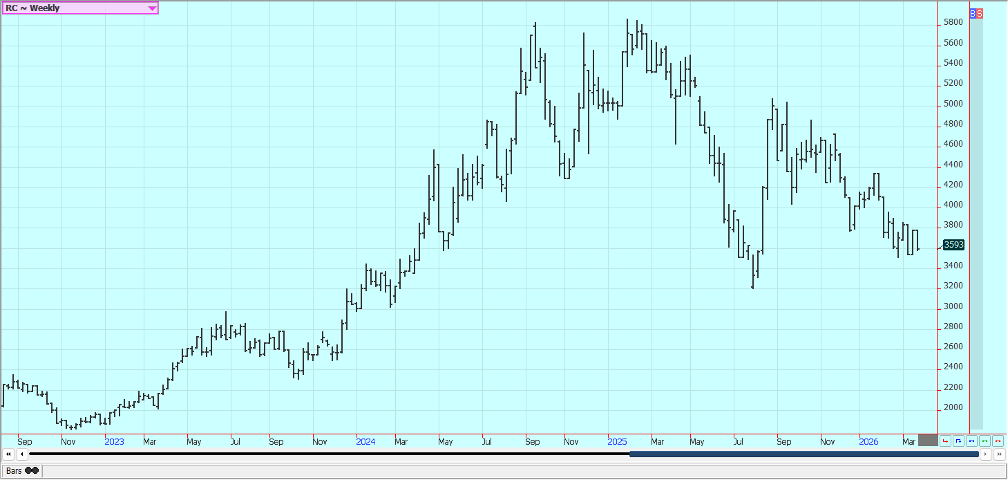
Weekly London Robusta Coffee Futures
Sugar: New York was lower and London was higher in reaction to price action in petroleum futures caused in part to statements by President Trump indicating that the US and Iran are talking. Iran gas denied that there are talks and even if the war ends soon analysts expect a long time for recovery of infrastructure in the Middle East. The US is now pausing new strikes on Iean to help the talks along. The war has increased world petroleum prices and could divert demand from Sugar production to production of ethanol. Trends are mixed on the daily charts in both markets.
There are good supplies for the market from good growing conditions for cane and beets around the world. The prospect of a big global surplus in the 2025/26 season was keeping the market on the defensive but a rise in production in India and Thailand being offset by the war *NICA saif on Friday that the sugarcane harvest for the first half of March was 1.31 million tons, down 30$ from last year. Sugar produced was just 6,000 tons, down 89% from last yesr. Ethanol produced was 460 million liters, up 4% from las year.
Weekly New York World Raw Sugar Futures
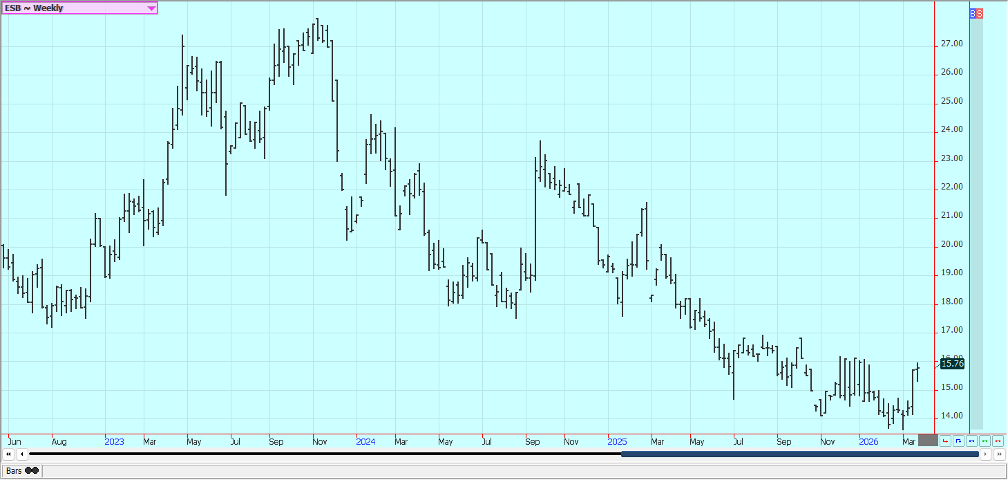
Weekly London White Sugar Futures
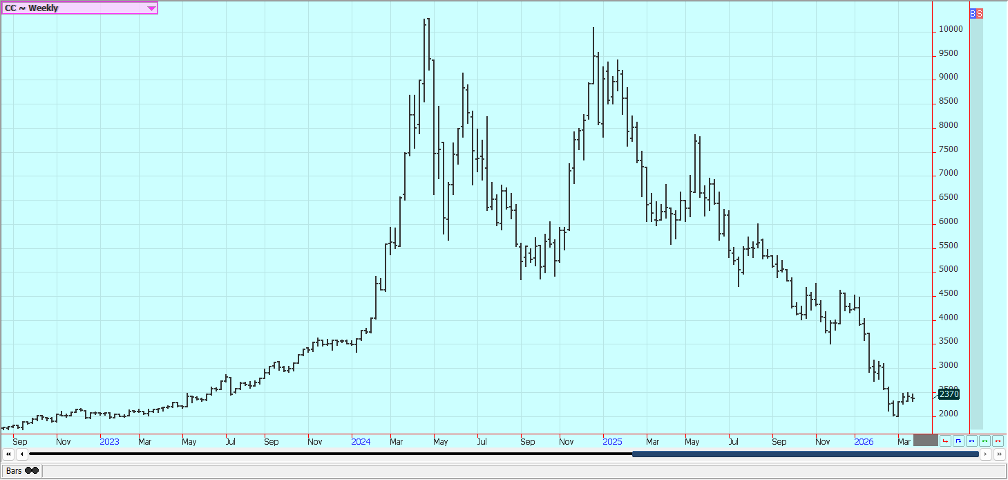
Cocoa: New York and London closed a little lower last week. Short term trends are mixed in both markets. A big main crop harvest has arrived in West Africa and rains have been positive for the next crop. There are still reports of increased production potential in other countries outside of West Africa, including Asia and Central America.
The market feels that there is less demand due to the high prices seen last year and the lack of demand is expected to continue. Weak demand has led to a build-up on unsold supplies in both Ivory Coast and Ghana, while the prospect of another global surplus in 2026/27 are real. Cocoa demand has fallen sharply after prices nearly tripled in 2024, prompting chocolate makers to reformulate ingredients and shrink the size of their bars.
Weekly New York Cocoa Futures
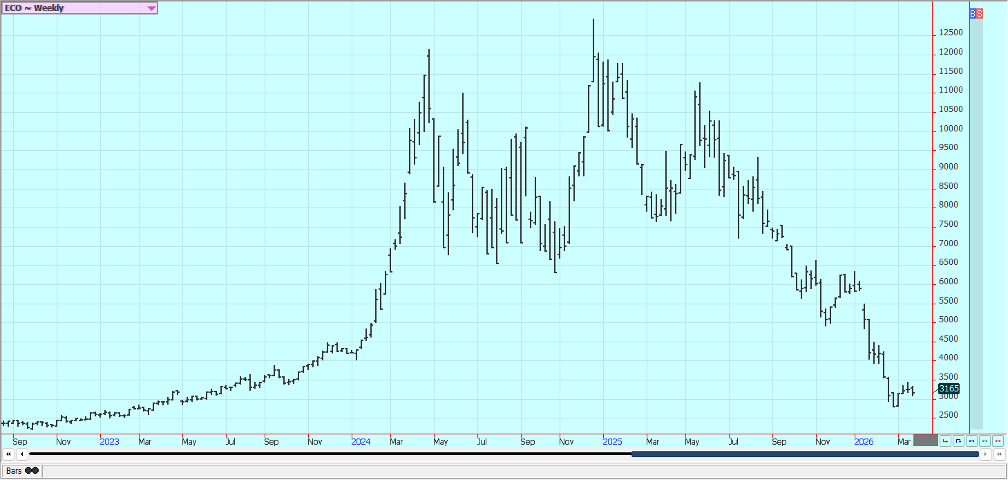
Weekly London Cocoa Futures
__
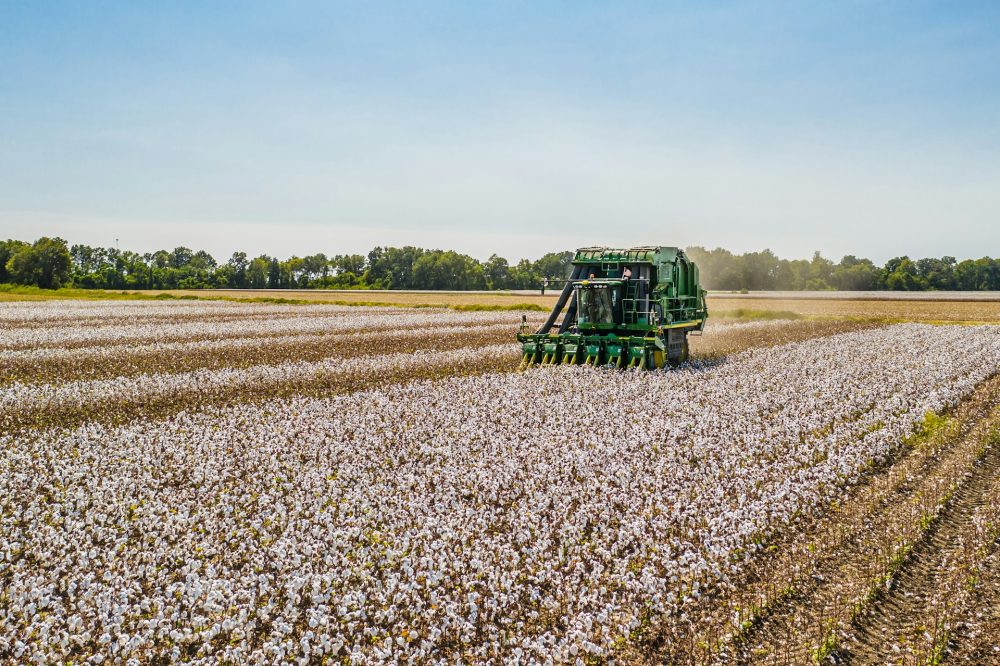
(Featured image by Karl Wiggers via Unsplash)
DISCLAIMER: This article was written by a third party contributor and does not reflect the opinion of Born2Invest, its management, staff or its associates. Please review our disclaimer for more information.
This article may include forward-looking statements. These forward-looking statements generally are identified by the words “believe,” “project,” “estimate,” “become,” “plan,” “will,” and similar expressions, including with regards to potential earnings in the Empire Flippers affiliate program. These forward-looking statements involve known and unknown risks as well as uncertainties, including those discussed in the following cautionary statements and elsewhere in this article and on this site. Although the Company may believe that its expectations are based on reasonable assumptions, the actual results that the Company may achieve may differ materially from any forward-looking statements, which reflect the opinions of the management of the Company only as of the date hereof. Additionally, please make sure to read these important disclosures.
Futures and options trading involves substantial risk of loss and may not be suitable for everyone. The valuation of futures and options may fluctuate and as a result, clients may lose more than their original investment. In no event should the content of this website be construed as an express or implied promise, guarantee, or implication by or from The PRICE Futures Group, Inc. that you will profit or that losses can or will be limited whatsoever.
Past performance is not indicative of future results. Information provided on this report is intended solely for informative purpose and is obtained from sources believed to be reliable. No guarantee of any kind is implied or possible where projections of future conditions are attempted. The leverage created by trading on margin can work against you as well as for you, and losses can exceed your entire investment. Before opening an account and trading, you should seek advice from your advisors as appropriate to ensure that you understand the risks and can withstand the losses.












Italian Unlisted Banks Lag on ESG Sustainability
Standard Ethics’ benchmark of 25 major unlisted Italian banks finds only 36% meet full ESG sustainability standards, while 60% lag...

Cotton Prices Rise Amid War Tensions, Weather Risks, and Supply Concerns
Cotton prices rose last week amid the US–Iran conflict, production cost increases, and adverse weather. Hot, dry conditions in key...


Bitcoin Slides, Ethereum EEZ Emerges, Worldcoin Hits Low
Bitcoin slipped to around $67,000 amid geopolitical tensions and ETF outflows, while high mining costs push miners toward AI deals...


Poland Proposes Cannabis Decriminalization: 15 Grams and One Plant Without Penalties
Poland’s Centre parliamentary group proposed a bill to decriminalize cannabis, allowing possession of up to 15 grams and one homegrown...


Markets Volatility, Geopolitics, and Signals of a Potential Trend Shift
Markets swung amid shifting statements from Trump and geopolitical tensions with Iran. Initial threats moved stocks, gold, oil, and yields...
 |
|
 |  |
 |
|
-

 Crypto5 days ago
Crypto Markets Volatile as Bitcoin Hovers, Solana Eyes AI Integration
-
 Cannabis2 weeks ago
Germany’s Medical Cannabis Market: Legal Reform, Falling Prices, and Rapid Expansion
-
 Business1 week ago
Global Markets on Edge as Iran Conflict, Inflation Pressures, and Financial Risks Intensify
-

 Impact Investing2 weeks ago
ESG Funds Still Hold BP Despite Shift Back to Fossil Fuels