Impact Investing
ECB Embeds Climate and Nature Risks at the Core of Monetary Policy
The ECB has completed its 2024–2025 Climate and Nature Plan, fully embedding environmental risks into monetary policy, banking supervision, and portfolio management. Climate change and ecosystem degradation are now treated as structural economic factors, influencing inflation, financial stability, and growth, with priorities focused on green transition, physical risks, and nature-related impacts.

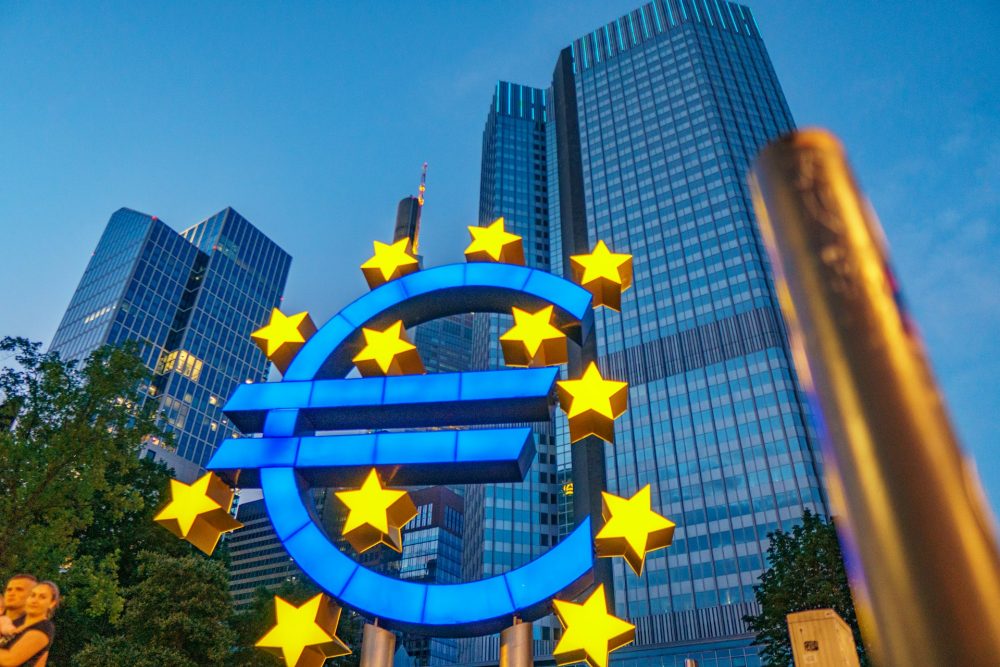
The European Central Bank (ECB) has finalized its plan on climate and nature: integrating environmental risks into monetary policy decisions, banking supervision, and portfolio management. The focus now shifts to the green transition, physical risks, and ecosystem degradation.
Climate and nature are firmly embedded in the Eurosystem’s monetary policy, banking supervision, and balance sheet management: no longer “ancillary” issues, they are now factors that influence inflation, bank stability, and economic growth. This is the message sent by the European Central Bank (ECB) in announcing the conclusion of its 2024-2025 Climate and Nature Plan, whose implementation has allowed the institution to take a decisive step in integrating climate and environmental risks into its core activities.
Over the past two years, the ECB has worked to translate its mandate into concrete actions, strengthening its ability to assess and manage risks that increasingly directly impact price stability, the functioning of the financial system, and the soundness of European banks. With the full implementation of the plan, climate change and ecosystem degradation are no longer considered external or long-term shocks, but structural factors capable of impacting Europe’s economic, financial, and social growth and stability.
In which areas has the ECB acted?
One of the cornerstones of the ECB’s action has been the strengthening of the integration of climate and environmental factors into the monetary policy framework. Climate-related considerations have been further incorporated into the Eurosystem’s operational framework, including the collateral framework, while the reduction of the carbon footprint of central banks’ corporate bond portfolios has continued. At the same time, transition policies, such as the introduction of the Emissions Trading System 2, have become fully integrated into macroeconomic assessments and official projections, marking a step change in the way monetary policy analyses the economic environment.
A second key area concerns improving data and risk analysis capabilities. The ECB has conducted and supported climate stress testing exercises and scenario analyses, including Fit for 55, and has taken a leadership role in developing climate scenarios within the Network for Greening the Financial System. Statistical climate indicators have been updated with new methodologies and databases, strengthening the monitoring of sustainable finance, decarbonization efforts, and the impact of climate-related physical risks, such as extreme events and water stress.
On the supervisory front, “the ECB’s work has contributed to improving the banking sector’s ability to identify and manage climate-related and natural risks,” a statement reads. “Euro area banks are now more aware of their exposures, thanks in part to ongoing supervision that, where necessary, has included the adoption of binding decisions.” The goal is to strengthen the financial system’s resilience in the face of increasingly frequent and intense shocks, preventing environmental risks from translating into systemic risks.
At the same time, internal operations have also made progress. The ECB continued to integrate climate criteria into the management of portfolios not directly linked to monetary policy and reduced emissions from its operations by 39% in 2024 compared to 2019 levels, in line with its 2030 environmental targets.
Finally , progress on the nature front is particularly significant . For the first time, the updated monetary policy strategy explicitly recognizes that ecosystem degradation can have direct implications for monetary policy. Research conducted by the ECB highlights a profound interconnection between nature and the euro area economy, identifying water-related risks, from water scarcity to floods, as one of the most critical factors for economic and financial stability.
The ECB’s three strategic priorities for the future on climate and nature
With the closing of the 2024-2025 plan, the ECB has identified three strategic priorities for the future:
accompany the transition to a low-carbon economy, through the assessment of banks’ prudential transition plans, ongoing analyses of energy and tax costs, and the exploration of how climate considerations can be further integrated into the operational framework;
Strengthen capacity to respond to the physical impacts of climate change , through strengthened macroeconomic analysis, improved data and risk monitoring, and further insights into banks’ capacity to address physical risk challenges;
deepen the analysis of the risks associated with nature loss and ecosystem degradation , including that of the impacts of risks associated with water resources.
These guidelines will complement ongoing work on monetary policy, banking supervision, and financial stability, including the evolution of stress test models and the continuous improvement of data and disclosures.
The message is clear: for the eurozone’s central bank, climate and nature are no longer external variables to monitor, but a structural dimension of the context in which it exercises its mandate. In an economy increasingly exposed to physical and transition risks, the ability to integrate them into decisions will be key to ensuring the stability, resilience, and credibility of the European financial system.
__
(Featured image by Masood Aslami via Unsplash)
DISCLAIMER: This article was written by a third party contributor and does not reflect the opinion of Born2Invest, its management, staff or its associates. Please review our disclaimer for more information.
This article may include forward-looking statements. These forward-looking statements generally are identified by the words “believe,” “project,” “estimate,” “become,” “plan,” “will,” and similar expressions. These forward-looking statements involve known and unknown risks as well as uncertainties, including those discussed in the following cautionary statements and elsewhere in this article and on this site. Although the Company may believe that its expectations are based on reasonable assumptions, the actual results that the Company may achieve may differ materially from any forward-looking statements, which reflect the opinions of the management of the Company only as of the date hereof. Additionally, please make sure to read these important disclosures.
First published in ESG NEWS. A third-party contributor translated and adapted the article from the original. In case of discrepancy, the original will prevail.
Although we made reasonable efforts to provide accurate translations, some parts may be incorrect. Born2Invest assumes no responsibility for errors, omissions or ambiguities in the translations provided on this website. Any person or entity relying on translated content does so at their own risk. Born2Invest is not responsible for losses caused by such reliance on the accuracy or reliability of translated information. If you wish to report an error or inaccuracy in the translation, we encourage you to contact us.













The TopRanked.io Weekly Digest: What’s Hot in Affiliate Marketing [LiveChat Affiliates Review]
Quick Disclosure: We’re about to tell you how LiveChat Affiliates run a top-notch affiliate program. And we really mean it....


German SMEs Face Tighter Bank Lending, Turn to Alternatives
Access to bank loans for German SMEs is tightening despite strong financing needs. About 37.8 percent face restrictive lending, driven...


Bitcoin Stalls as Geopolitical Risks and Crypto Industry Tensions Persist
Bitcoin is moving sideways near $72,000 amid ongoing Iran tensions, while ETF inflows remain strong. Quantum security debates continue. Ethereum...


Geopolitical Tensions and Trade Disruptions Reshape Global Commodities Markets
Geopolitical tensions and disrupted trade routes, especially around the Strait of Hormuz, are reshaping global commodities markets. Agriculture faces supply...

Germany Sees 413 Cannabis Cultivation Clubs Two Years After Partial Legalization
Two years after partial cannabis legalization in Germany, 413 cultivation clubs have been established nationwide. Lower Saxony leads in clubs...
 |
|
 |  |
 |
|
-

 Markets5 days ago
Global Coffee Market Faces Price Drops Amid Strong Supply and Export Challenges
-

 Markets2 weeks ago
Dow Jones Tests Correction Zone Amid Bullish Momentum and Bubble Concerns
-

 Crowdfunding3 days ago
Argentina Introduces Automatic Authorization to Boost Crowdfunding and Investment Growth
-

 Crowdfunding1 week ago
Democratizing Farmland Investment: The Rise of Farm Fractions in Agritech