Cannabis
Germany’s Cannabis Reform Shows Limited Risks but Calls for Regulatory Adjustments
Two years after Germany’s partial cannabis legalization, an evaluation finds no significant rise in consumption and some reduction in the black market. However, limited cultivation associations hinder progress. Researchers urge regulatory reforms to expand access. Concerns also grow over loosely controlled medical cannabis, especially high-THC prescriptions and online distribution practices requiring stricter oversight.

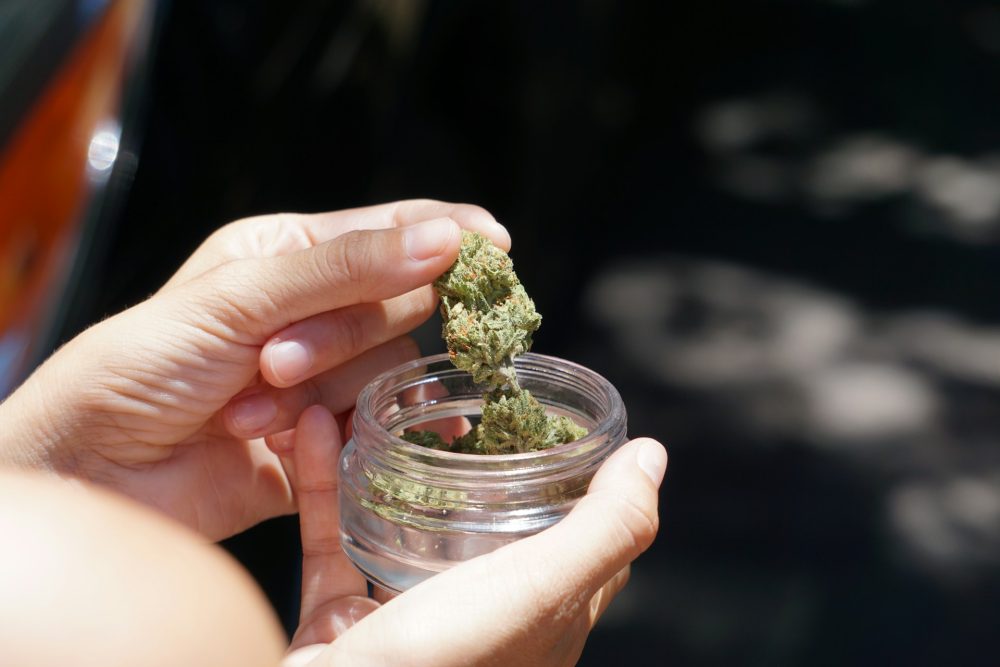
Cannabis enthusiasts can breathe a sigh of relief: An evaluation report from EKOCAN concludes that the negative effects of the partial legalization in effect since 2024 are manageable. However, the report states that legislators need to revisit the regulations concerning growers’ associations and medical cannabis.
When the Consumer Cannabis Act (KCanG) came into force on April 1st, 2024 , conservative politicians in particular reacted with outrage. Their fear: the decriminalization of possession of cannabis up to a certain quantity, as well as the permitted cultivation – either at home or, since July 2024, also collectively in so-called cultivation associations – would transform Germany into a drug den.
They predicted that cannabis use would explode, children and young people would not be adequately protected from the drug, and criminal dealers would be rubbing their hands with glee more than ever. The Christian Democratic Union (CDU/CSU), for example, maintains to this day that the liberalization must be reversed immediately.
Two years after its implementation, however, it is becoming increasingly clear that the worst fears of the reform’s critics have not materialized. This is the preliminary conclusion of the collaborative research project “Evaluation of the Consumer Cannabis Act” (EKOCAN), commissioned by the Federal Ministry of Health.
The EKOCAN research team, comprised of researchers from various disciplines at the University Medical Center Hamburg-Eppendorf (UKE), the Eberhard Karls University of Tübingen, and the University Hospital Düsseldorf (UKD), will present its second report on the effects of the partial legalization of cannabis on Wednesday. A first report on this topic was published in October 2025, as reported by LTO . A three-stage evaluation is mandated by law itself (§ 43 KCanG).
In its current study, EKOCAN focused on the societal impact of the KCanG (Cannabis Act) on organized crime. The cannabis market and child and youth protection were also examined.
Another focus of the study was on medicinal cannabis: This is because the handling of cannabis for medical purposes was liberalized as part of the reform through the Medicinal Cannabis Act (MedCanG). Since then, it has become significantly easier to prescribe medicinal cannabis flowers on a private prescription and subsequently obtain them from a pharmacy.
Here are the key findings of the EKOCAN study:
“No increase in consumption is apparent”
Scientists cannot confirm that the partial legalization of marijuana has led to increased cannabis use in the country. “An increase in consumption that could be attributed to the reform is not apparent at this time,” the interim report states. At the same time, it has been possible to partially curb the black market.
According to the researchers’ analysis, a moderately growing proportion of the cannabis consumed in Germany comes from legal sources. Since partial legalization on April 1st, 2024, an increasing number of consumers are growing their own cannabis or obtaining it from pharmacies.
However, the researchers criticize the fact that the very places created to disrupt the dealers’ business model have so far played only a minor role in displacing the black market.
For example, the cultivation associations, where adult members can purchase cannabis according to strict rules, have not yet realized their full potential. Too few of these associations have been approved so far; only 366 were authorized by October 31, 2025, the researchers point out.
Therefore, in 2025, only a maximum of 3.5 percent of consumers would have been able to obtain their cannabis from a cultivation association. Such an association exists in less than half of the districts in Germany.
More growers’ associations, less black market
The responsibility now lies with the legislature: EKOCAN recommends that it review the currently restrictive legal and institutional framework for the approval of cultivation associations.
“The cultivation and distribution of cannabis in cultivation associations should be strengthened so that the goal of displacing the black market can be achieved,” explains Dr. Jakob Manthey, coordinator of EKOCAN and head of a research group at the Center for Interdisciplinary Addiction Research at the University Medical Center Hamburg-Eppendorf (UKE).
EKOCAN sees a need for reform not only in the approval process of these associations. According to the scientists, the numerous legal regulations governing the cultivation and distribution of cannabis, as well as the consumption ban within these cultivation associations, also need to be reviewed.
Furthermore, growers’ associations must be allowed to provide neutral information about their products online. It also seems sensible to publish all approved growers’ associations in a nationwide whitelist. “The overarching goal of such an amendment to the Cannabis Act could be to enable all adult consumers to become members of a growers’ association,” the report states.
Medical cannabis: “Germany’s largest market in Europe”
Researchers are concerned about developments in medical cannabis. Together with domestic production capacity (2.6 tons), up to 200 tons of medical cannabis could be available in Germany by 2025. “This means that Germany has developed into the largest, in principle, legal commercial cannabis market in Europe.”
In qualitative interviews conducted by EKOCAN, adolescents and young adults who regularly consume cannabis stated that they primarily obtain it from online pharmacies. One reason for this trend is the now numerous online platforms for medicinal cannabis, which also market the prescription drug to recreational users. The researchers criticize the fact that cannabis with very high THC content is frequently prescribed through these platforms. This is not justified by studies and poses an increased health risk.
Against this background, EKOCAN proposes an “evidence-based” reform of the Medical Cannabis Act (MedCanG): “In light of the identified problems in the medical cannabis market, legislators should consider limiting the THC content of freely prescribed cannabis flowers. Furthermore, they should examine how effective enforcement of existing regulations governing the advertising of medicinal products can be ensured.”
__
(Featured image by Elsa Oloffson via Unsplash)
DISCLAIMER: This article was written by a third party contributor and does not reflect the opinion of Born2Invest, its management, staff or its associates. Please review our disclaimer for more information.
This article may include forward-looking statements. These forward-looking statements generally are identified by the words “believe,” “project,” “estimate,” “become,” “plan,” “will,” and similar expressions. These forward-looking statements involve known and unknown risks as well as uncertainties, including those discussed in the following cautionary statements and elsewhere in this article and on this site. Although the Company may believe that its expectations are based on reasonable assumptions, the actual results that the Company may achieve may differ materially from any forward-looking statements, which reflect the opinions of the management of the Company only as of the date hereof. Additionally, please make sure to read these important disclosures.
First published in LTO. A third-party contributor translated and adapted the article from the original. In case of discrepancy, the original will prevail.
Although we made reasonable efforts to provide accurate translations, some parts may be incorrect. Born2Invest assumes no responsibility for errors, omissions or ambiguities in the translations provided on this website. Any person or entity relying on translated content does so at their own risk. Born2Invest is not responsible for losses caused by such reliance on the accuracy or reliability of translated information. If you wish to report an error or inaccuracy in the translation, we encourage you to contact us.












ECSP Crowdfunding vs. eWpG Bonds: Overcoming SME Financing Limits
The ECSP Regulation limits annual crowdfunding per project promoter to €5 million, requiring a full prospectus for higher amounts, which delays...


Germany’s Cannabis Reform Shows Limited Risks but Calls for Regulatory Adjustments
Two years after Germany’s partial cannabis legalization, an evaluation finds no significant rise in consumption and some reduction in the...


Ortus Secures €97M Green Loan to Expand Solar Portfolio in Italy
Ortus Power Resources Italy secured a €97 million green, non-recourse loan to refinance 23 MW of operating solar plants and...


Foreign Exchange Markets Walk a Tightrope Amid Geopolitical Tensions and Policy Uncertainty
Foreign exchange markets remain fragile amid geopolitical tensions, monetary shifts, and persistent volatility. The dollar stayed a safe haven without...


Crypto Holds Steady as Tensions Rise and Regulatory Concerns Grow
Crypto markets remained cautious as a US ultimatum to Iran nears expiry. Bitcoin and Ethereum traded sideways despite strong ETF...
 |
|
 |  |
 |
|
-

 Africa2 weeks ago
Bank Al-Maghrib Launches Reforms to Boost Credit via Non-Performing Loan Market
-

 Fintech1 day ago
Toss Explores Blockchain Mainnet to Power Next-Generation Financial Services
-

 Cannabis1 week ago
Poland Proposes Cannabis Decriminalization: 15 Grams and One Plant Without Penalties
-

 Fintech6 days ago
Credibur Scales Rapidly: €2 Billion in Structured Debt Facilities in Six Months