Impact Investing
EU Expands Leadership in Sustainable Finance with Record Green Bond Impact
The EU strengthens its leadership in sustainable finance, issuing €78.5 billion in NGEU green bonds that avoid 14 million tonnes of CO₂ annually. Member States allocated €64.9 billion to green projects, with Italy leading. Investments focus on clean transport, energy efficiency, and renewables. Over 60% align with EU Taxonomy, reinforcing credibility and long-term climate impact.

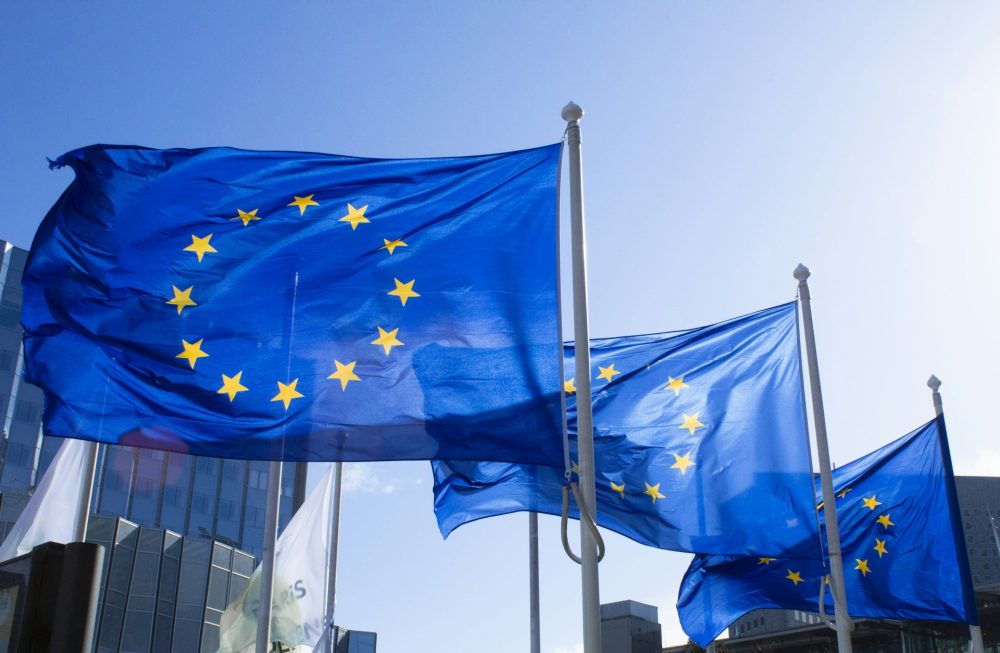
The EU confirms its position as a global leader in sustainable finance. Last year, NextGenerationEU green bonds reached €78.5 billion, which will prevent the emission of approximately 14 million tonnes of CO2 per year.
At least 37% of spending under Member States’ Recovery and Resilience Plans (NRRPs) will be allocated to sustainable investments and reforms in sectors such as green infrastructure and renewable energy.
The European Union is consolidating its role in sustainable finance
With €78.5 billion in NextGenerationEU green bonds issued , Brussels firmly ranks among the world’s largest issuers. This is according to the 2025 edition of the NGEU Green Bonds Allocation and Impact Report , the annual report on the allocation and impact of NextGenerationEU (NGEU) green bonds.
These green bonds are the EU’s tool for supporting green investments and reforms, while enabling investors and markets to participate in the transition. The bonds therefore finance projects across the European Union, offering support in areas such as clean and efficient energy, biodiversity, and clean transport. According to the report, the bonds issued avoid around 14 million tonnes of CO₂ each year, while, if fully implemented, the overall climate package could reduce greenhouse gas emissions by 53.4 million tonnes annually , equivalent to 1.5% of total EU emissions in 2022.
NGEU green bonds are not a sustainable finance exercise, the Commission emphasizes in the report, but an industrial instrument : unlike other climate mechanisms based on tax incentives or carbon pricing, NGEU green bonds physically finance infrastructure, construction sites, technological innovation, and production chains. Avoided emissions are not an abstract goal, but a technical consequence of the continent’s concrete and operational transformation.
Between August 1st, 2024 and August 1st, 2025, expenditure declared (i.e., proceeds allocated) by Member States for projects eligible for green bond financing reached a total of €64.9 billion, an increase of €20.9 billion . In total, 26 Member States declared expenditure financed by NGEU green bond proceeds, compared to 19 in 2024.
A growing and evolving market: allocations and dominant sector
At the beginning of August 2025, NGEU green bonds issued amounted to €75.1 billion, with €64.9 billion already allocated to projects active or under implementation in the PNRR (National Recovery and Resilience Plans); this value will rise to €78.5 billion by the end of the year. This represents an increase of €14.9 billion compared to August 1, 2024. Unallocated proceeds, amounting to approximately €10 billion (down from €16.2 billion in 2024), are considered normal and are expected to decline as the national plans progress through 2026.
In the overall Green Bond Pool , that is, the mass of potentially financeable projects, the picture is clear: 262.8 billion , with three sectors that dominate in an almost structural way.
Clean infrastructure and transport are the largest investment areas (€71.6 billion), followed by energy efficiency (€67.9 billion) and clean energy & networks (€62.2 billion). Together, they represent the strategic heart of the European transition, where emissions reduction is immediately measurable and scalable.
It should be noted, however, that not all projects are at the same stage—many are already operational, others are in the implementation phase, and still others are scheduled to run until 2026. However, the size of the pool indicates the Union’s political horizon: not a one-off intervention, but a multi-year industrial plan, with permanent effects on emissions and production systems.
The Italian situation
As already mentioned, 64.9 billion euros of the proceeds from green bonds have already been allocated.
Geographically, Italy reported the highest share of environmental investments in absolute terms. The size of the national plan, combined with the structure of the planned energy and infrastructure projects, positions the country as one of the main hubs of European green spending, alongside economies such as Spain, France, and Poland.
EU Taxonomy: Over 60% of the green bond pool is aligned with European sustainability rules.
One of the most debated issues in the ESG world is reliability. The EU has chosen to address this issue with the Taxonomy , the classification that distinguishes what is truly sustainable from what is not. The report shows that over 63.6% of the Green Bond Pool is fully or substantially compliant with the European climate taxonomy ; a further 34.2% of the NGEU green bond pool is assessed as partially aligned (compared to 33.6% in 2024), and the remaining 2.2% is not covered or aligned (compared to 3.0% in 2024).
Of the €64.9 billion earmarked proceeds , the extent of full or substantial alignment to the taxonomy is slightly lower than for the Total Pool, but stands at 56.7% (slightly up from 2024: 53.5%), while partial alignment represents 41.5% (2024: 44.0%) and the uncovered or aligned share 1.8% (2024: 2.5%).
This is not a foregone conclusion: it means that most investments not only reduce emissions, but do so while respecting verifiable, technical environmental criteria.
This is particularly important because the taxonomy is not intended to be just a compliance exercise, the Commission points out, but also a competitiveness exercise. Aligned projects attract private capital, reduce reputational risk for issuers, and make EU green bonds a premium instrument in the global sustainable debt market.
__
(Featured image by Alexandre Lallemand via Unsplash)
DISCLAIMER: This article was written by a third party contributor and does not reflect the opinion of Born2Invest, its management, staff or its associates. Please review our disclaimer for more information.
This article may include forward-looking statements. These forward-looking statements generally are identified by the words “believe,” “project,” “estimate,” “become,” “plan,” “will,” and similar expressions. These forward-looking statements involve known and unknown risks as well as uncertainties, including those discussed in the following cautionary statements and elsewhere in this article and on this site. Although the Company may believe that its expectations are based on reasonable assumptions, the actual results that the Company may achieve may differ materially from any forward-looking statements, which reflect the opinions of the management of the Company only as of the date hereof. Additionally, please make sure to read these important disclosures.
First published in ESG NEWS. A third-party contributor translated and adapted the article from the original. In case of discrepancy, the original will prevail.
Although we made reasonable efforts to provide accurate translations, some parts may be incorrect. Born2Invest assumes no responsibility for errors, omissions or ambiguities in the translations provided on this website. Any person or entity relying on translated content does so at their own risk. Born2Invest is not responsible for losses caused by such reliance on the accuracy or reliability of translated information. If you wish to report an error or inaccuracy in the translation, we encourage you to contact us.















The TopRanked.io Weekly Digest: What’s Hot in Affiliate Marketing [++ KuCoin Affiliate Program Review]
X now allows people to block certain topics from their feed. This week, we're going to tell you how to...


Hotel Stay Project Supports Wildlife Conservation in Japan
Iwate Prefecture launched a project linking hotel stays to conservation through Morioka Zoological Park Zoomo. A themed room at Yunomori...


Bitcoin Leads Modest Crypto Rebound Amid Mixed Signals
Bitcoin rose 2 percent to above 77000 as ETFs saw 15 million inflows and April gains of 12.2 percent. Ethereum...


Major Pharma Advances: EU Approvals, Vaccine Progress, and Breakthrough Clinical Results
Johnson & Johnson has EU approval for nipocalimab for generalized myasthenia gravis, showing superior control and sustained benefits. Sanofi reported...

Agential Cannabis 2026 to Drive APAC Market Growth and Global Industry Collaboration
Agential Cannabis 2026 will take place September 23–24 in Bangkok, bringing global experts together to advance the APAC medical cannabis...
 |
|
 |  |
 |
|
-
 Business1 week ago
The TopRanked.io Weekly Digest: What’s Hot in Affiliate Marketing [uMobix Affiliates Review 2026]
-
 Biotech2 weeks ago
Beeline Medicines Launches with $300M to Advance Precision Therapies for Autoimmune Diseases
-

 Crypto2 days ago
Crypto Markets Steady as US Bitcoin Reserve Plans and MegaETH Debut Take Focus
-

 Fintech1 week ago
Fintech Investment Rebounds in 2025 Amid Cautious Optimism for 2026