Impact Investing
EU Industrial Accelerator Act: Boosting Clean Industry and Resilient Supply Chains
The Industrial Accelerator Act proposed by the European Commission reforms public procurement by adding emissions, supply chain resilience, and production origin to price criteria. Part of the Clean Industrial Deal, it aims to strengthen European clean-tech industries, reduce external dependence, attract responsible investment, and ensure decarbonization drives industrial growth rather than deindustrialization.

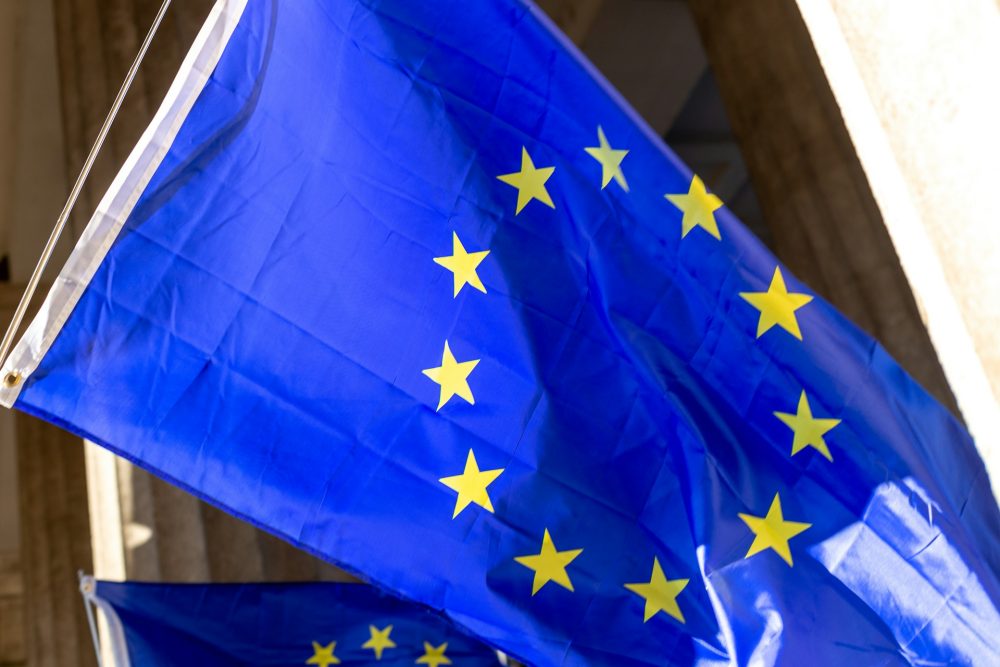
The Commission has adopted a new legislative proposal, the Industrial Accelerator Act. It introduces new criteria for public procurement: not just price, but also emissions, supply chain resilience, and production origin. The aim is to support European clean technologies and prevent decarbonization from translating into deindustrialization.
Part of the Clean Industrial Deal, the Industrial Accelerator Act supports Europe’s transition to a carbon-neutral economy
New public procurement criteria and industrial aid to support the production of clean technologies: the European Commission has adopted the long-awaited legislative proposal to strengthen the Union’s industrial capacity in sectors strategic to the transition.
This is the Industrial Accelerator Act, which is part of the Clean Industrial Deal, the Commission’s strategy to strengthen the competitiveness of European businesses in the transition to a carbon-neutral economy. It will apply to selected sectors, including steel, cement, aluminum, automobiles, and net-zero emission technologies. However, the framework may be extended, if necessary, to other energy-intensive sectors such as chemicals.
The goal is to prevent decarbonization from leading to deindustrialization or production relocation —that is, from pushing production and investment out of Europe—and to transform the climate transition into a driver of new industrialization. To do this, the Commission proposes a change in the way European public authorities select suppliers for major industrial and infrastructure projects.
Price will no longer be the sole decision-making criterion: emissions, supply chain resilience, and product origin will all play a role , benefiting European or partner country industrial chains.
What limits European industrial development in strategic sectors of transition according to the EU Commission?
The Commission identifies three structural problems that currently limit European industrial development in strategic sectors of transition:
Vulnerabilities of supply chains in strategic sectors and technologies for the energy transition.
Demand for European low-carbon industrial products remains limited, making it more difficult to sustain investments in decarbonisation.
Difficulties in the large-scale diffusion of clean industrial technologies, mainly due to lengthy, fragmented and uncertain authorization procedures.
These critical issues stem from a broader context in which several European industrial sectors are facing strong competitive and structural pressures, with declining production and slower investment in decarbonization compared to other parts of the world.
At the same time, some key technologies for the energy transition are now predominantly produced outside Europe, often in markets characterized by strong public support policies , as in the case of China, which concentrates much of the global production capacity in areas such as batteries and photovoltaics.
Public procurement, emissions and “Made in Europe ” requirements
The core of the Industrial Accelerator Act proposal concerns the way European public authorities select suppliers for large industrial and infrastructure projects.
The Commission proposes to introduce new evaluation criteria into public procurement processes and public support schemes that take into account not only economic data, but also factors related to environmental sustainability, industrial resilience and the security of supply chains.
In particular, the Industrial Accelerator Act introduces:
preference criteria for low-emission products , with the aim of favoring technologies and materials produced with less carbon-intensive industrial processes;
industrial resilience requirements , which aim to reduce the Union’s dependence on suppliers concentrated in a limited number of countries;
production origin criteria, often summarised in public debate as “Made in Europe” requirements.
According to the European Commission’s proposal, price will no longer be the sole deciding factor in public procurement for certain strategic energy transition technologies. Administrations will also have to consider the origin and resilience of production chains, favoring products made in the European Union or in partner countries with which the EU maintains close economic ties.
In this regard, the Commission’s definition of “Made in Europe ”, adopted in the text, is not limited to products manufactured within the Union, but also includes those coming from third countries that have concluded agreements with the EU establishing a free trade area or a customs union.
The Industrial Accelerator Act defines specific rules for large investments in strategic sectors
The concept proposed by the European legislator is therefore not strictly territorial, but rather reflects a logic of economic integration and reliability of production chains . In this way, the Commission seeks to strengthen European industrial production without closing the market, keeping supply chains open with strategic trading partners.
However, while remaining open to foreign direct investment, the Industrial Accelerator Act defines specific rules for large investments in strategic sectors exceeding €100 million, especially when a single third country controls more than 40% of global production capacity. In these cases, investments must make a tangible contribution to the European economy: creating high-quality jobs, stimulating innovation and growth, transferring technologies and skills, and complying with local content requirements.
They must also ensure that at least half of the jobs generated remain in Europe, ensuring that businesses and citizens derive tangible benefits from access to the single market. In this way, the IAA strengthens the EU’s economic security and increases the resilience of supply chains.
The regulatory effect on global value chains
The proposal also introduces another element that is increasingly characterising recent European legislation: the ability to indirectly impact global value chains .
Although this legislation is formally intended for the internal market, the approach adopted by the Commission has implications that extend beyond the Union’s borders. The criteria of origin, sustainability, and resilience of supply chains tend to guide the behavior of companies along the entire production chain, including those located in third countries.
In this respect, the Industrial Accelerator Act fits into a broader trend in European regulation, already evident in instruments such as the Corporate Sustainability Due Diligence Directive (CSDDD) . Here too, the European legislator has adopted an approach that transcends the formal boundaries of legal subjectivity and territoriality, extending due diligence and liability obligations to activities carried out along global value chains and also to companies established in third countries but economically integrated into the European market.
The result is a form of regulatory projection of the European legal system , in which access to the Union market becomes the instrument through which the legislator exercises normative moral suasion on global supply chains.
In this sense, the Industrial Accelerator Act also seems to confirm a now consolidated trend: the European Union’s ability to use its economic and regulatory weight to progressively shape industrial, environmental, and production standards well beyond its borders.
From profit maximization to industrial responsibility
When economist Milton Friedman wrote in the New York Times in the autumn of 1970 that “the social responsibility of business is to increase its profits,” it was difficult to imagine the regulatory framework that characterizes the European economy today.
In recent years, in fact, the European legislator has progressively overcome a strictly shareholder-centric vision of business , recognizing that the great contemporary challenges, from the climate crisis to geopolitical insecurity, require the integration of the logic of profit with environmental, social and governance objectives.
This is not about modifying the economic function of business, nor assigning it tasks traditionally reserved for the state, thus risking a politicization of corporate law. On the contrary, it is necessary to recognize that the great challenges of our time require shared responsibility and structured cooperation between the state and business, aimed at achieving the objectives of ecological transition and protecting widespread interests.
It is precisely in light of these considerations that the Commission’s proposal defines specific rules for large investments in strategic sectors proposal for the Industrial Accelerator can be better understood: an attempt to create regulatory tools capable of strengthening European industrial competitiveness without compromising climate objectives.
__
(Featured image by Tetiana SHYSHkina via Unsplash)
DISCLAIMER: This article was written by a third party contributor and does not reflect the opinion of Born2Invest, its management, staff or its associates. Please review our disclaimer for more information.
This article may include forward-looking statements. These forward-looking statements generally are identified by the words “believe,” “project,” “estimate,” “become,” “plan,” “will,” and similar expressions. These forward-looking statements involve known and unknown risks as well as uncertainties, including those discussed in the following cautionary statements and elsewhere in this article and on this site. Although the Company may believe that its expectations are based on reasonable assumptions, the actual results that the Company may achieve may differ materially from any forward-looking statements, which reflect the opinions of the management of the Company only as of the date hereof. Additionally, please make sure to read these important disclosures.
First published in ESG NEWS. A third-party contributor translated and adapted the article from the original. In case of discrepancy, the original will prevail.
Although we made reasonable efforts to provide accurate translations, some parts may be incorrect. Born2Invest assumes no responsibility for errors, omissions or ambiguities in the translations provided on this website. Any person or entity relying on translated content does so at their own risk. Born2Invest is not responsible for losses caused by such reliance on the accuracy or reliability of translated information. If you wish to report an error or inaccuracy in the translation, we encourage you to contact us.




H&M Advances Sustainability and Cuts Emissions by 2025
H&M Group reported that by 2025, 91% of materials were recycled or sustainably sourced, with recycled content reaching 32%. Emissions...

NHS Funds Breakthrough CAR-T Therapy Breyanzi for Lymphoma Treatment in Spain
Bristol Myers Squibb announced NHS funding for CAR-T therapy Breyanzi, enabling its use from April 1st in Spain for lymphoma...


Crypto Markets Volatile as Bitcoin Hovers, Solana Eyes AI Integration
Crypto markets remain volatile amid the Iran war, with Bitcoin near $70,000 and ETF inflows improving outlook. Ethereum faces declines...


Crowdfunding Evolves into Core Financial Infrastructure in Europe
European crowdfunding has matured under ECSPR, growing to 254 platforms by 2026 despite operational challenges. Key shifts include debates on...


DZ Bank Pioneers Blockchain Bond Issuance, Advancing Tokenized Finance
DZ Bank issued a bond via a public blockchain, marking a major step in tokenized bank bonds. The move could...
 |
|
 |  |
 |
|
-

 Business7 days ago
The TopRanked.io Weekly Digest: What’s Hot in Affiliate Marketing [NiftyPM Affiliate Program Review]
-
 Biotech2 weeks ago
Novo Nordisk: Stable Growth and Defensive Biotech Stock for DACH Investors in 2026
-

 Impact Investing1 day ago
Ridemovi Secures Financing to Drive European Expansion and Sustainable Mobility Growth
-
 Impact Investing1 week ago
Antarctica Warming Reshapes Global Atmospheric Circulation