Impact Investing
Italian Banks’ Green Asset Ratio Reaches €50 Billion in 2024 Amid Growing Sustainable Lending
Italian banks’ green assets surpassed €50 billion in 2024, raising the Green Asset Ratio (GAR) to 2.8%. Results vary widely across institutions, led by Banca Mediolanum. Larger banks generally show higher GAR values, and new lending is increasingly green. However, GAR remains a partial measure because limited sustainability reporting excludes many exposures, especially to SMEs today.

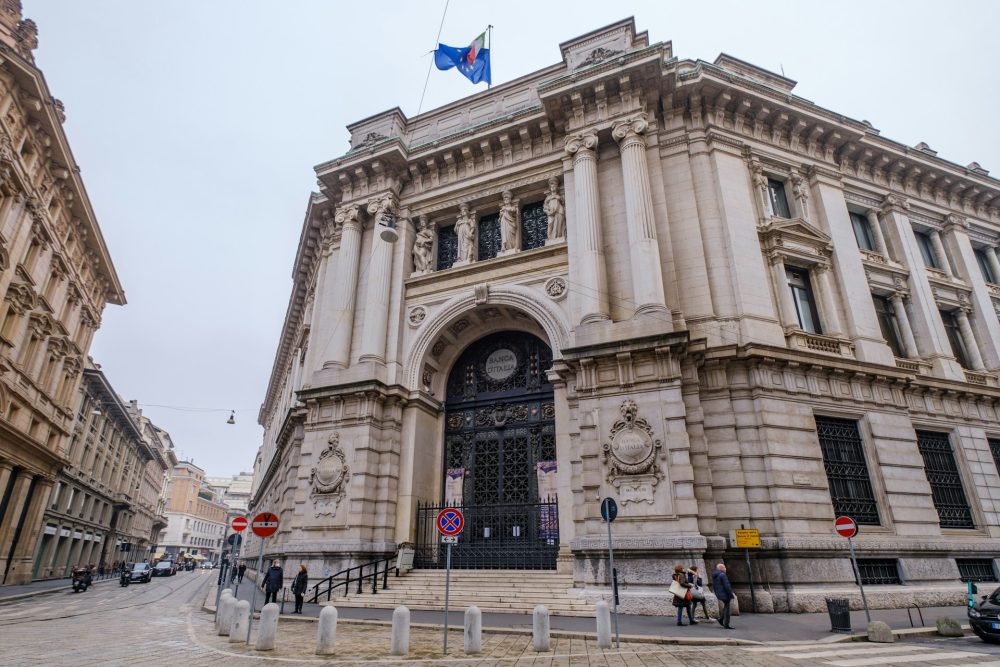
The RSM analysis on the evolution of the Green Asset Ratio reveals that in 2024, Italian banks will have exceeded €50 billion in green assets, primarily represented by credit exposures to businesses and households.
Italian banks are increasing their financing for the ecological transition. In 2024, green assets exceeded €50 billion, and the Green Asset Ratio (GAR), the European indicator that measures the share of portfolios aligned with the EU Taxonomy, rose to 2.8% . Despite this growth, the weight of sustainable assets on bank balance sheets remains limited.
The most significant Italian Banks regarding GAR
Significant differences emerge among the Italian banks analyzed in terms of their alignment with the European Taxonomy. Banca Mediolanum recorded the highest value, with a GAR of 6.69%, calculated using the Capex-based method. Among the larger institutions classified as “Significant”, Intesa Sanpaolo followed with a value of 4.36%, followed by BPER (3.01%) and BPM (2.84%).
UniCredit ‘s percentage, however, falls below 2% at 1.91%, while MPS recorded the lowest value (1.15%). Among the smaller banks, grouped in the “Less Significant” group, the one with the highest GAR is Banca Generali at 3.34% , followed by illimity at 2.80%. At the bottom is BCP with a GAR of 0.07% .
Banca Mediolanum’s Green Asset Ratio depends not only on its sustainability strategy, but above all on the composition of its portfolio, which is characterized by financial assets at fair value and a significant weight of exposures to households , particularly mortgages for residential property renovations. Exposures to businesses, however, are low.
Overall, the data confirms a progressive increase in financial exposures attributable to economic activities aligned with the European Union’s environmental objectives.
These numbers, however, should be interpreted with caution. The RSM report emphasizes that the Green Asset Ratio is still a partial indicator and not fully representative of banks’ actual exposure to sustainable activities. The main reason is data availability: the GAR calculation is based on Taxonomy information published by banks’ corporate clients in their sustainability statements.
Since only a portion of European companies are currently subject to the reporting requirements set by European regulations, many credit exposures, particularly to small and medium-sized enterprises, remain outside the scope of the calculation. This means that a potentially significant share of financing for sustainable activities is not yet captured by the indicator.
Green Asset Ratio: What It Is and How to Calculate It
The Green Asset Ratio is one of the tools introduced by the European Union to measure the financial system’s degree of alignment with the ecological transition. The indicator measures the share of a bank’s financial assets, whether loans or investments, allocated to financing economic activities considered sustainable according to the technical criteria defined by the European Taxonomy.
In operational terms, the GAR compares the value of the institution’s exposures aligned with environmental objectives to its total assets. The higher the indicator’s value, the greater the share of the banking book allocated to financing activities compatible with the Union’s climate and environmental objectives.
European Regulation 2021/2178 also provides for two different calculation methodologies. In the Capex-based method , used as the primary reference in RSM’s analysis, corporate exposures are weighted based on the share of client companies’ capital investments that are aligned with the Taxonomy. In the Turnover-based method, however, the reference is the share of companies’ revenues derived from sustainable economic activities.
The difference between the two approaches reflects the fact that a company may not yet be fully sustainable in terms of revenue, but can still allocate a significant portion of its investments to environmental transition.
The level of sustainability of Italian banks’ assets, measured precisely through the Green Asset Ratio (GAR), shows signs of growth in 2024. According to RSM’s analysis based on the mandatory disclosure required by the European Taxonomy, the average GAR of the Italian banking system stands at 2.8% with the Capex-based method and 2.4% with the Turnover-based method, up from 2.1% and 1.7% recorded in 2023.
The GAR grows with the size of the banks
The analysis highlights a fairly clear correlation between institution size and GAR value. Larger Italian banks tend to record higher GAR values than smaller banks. In 2024, for example, banks classified as significant, i.e., those directly supervised by the European Central Bank, showed higher average values than less significant banks , which generally operate on a more limited geographical scale.
This result partly reflects the different composition of credit portfolios, but also the greater presence of large corporates among the customers of larger banks, which are more likely to publish Taxonomy data.
An interesting finding also emerges from the analysis of new financing. If we consider the Green Asset Ratio applied to the flows of new loans granted by banks, the values are significantly higher than those calculated on the overall asset stock. This suggests that more recent financing tends to be progressively more oriented towards activities compatible with the ecological transition.
Among significant banks, for example, Intesa Sanpaolo recorded a GAR on new flows of 11.32%, while among less significant banks, the highest value is that recorded by BAPS (Banca Agricola Popolare di Sicilia), at 7.8%.
Climate drives sustainable finance
A further factor concerns the distribution of financial activities aligned with the Taxonomy among the various European environmental objectives. The analysis highlights a strong concentration of investments in the first climate objective: climate change mitigation . In 2024 , 98.8% of Italian banks’ green activities are associated with this objective, while just over 1% is attributable to the other four environmental objectives set by the European Taxonomy, which include the protection of water resources, the transition to a circular economy, pollution prevention, biodiversity protection, and climate change adaptation.
This strong concentration partly reflects the greater maturity of metrics and technical criteria related to decarbonization, but it also suggests that a truly integrated approach to environmental sustainability is still under development. Many green investments are still primarily focused on climate objectives, while other areas of the ecological transition remain, at least for now, less represented in banking portfolios.
Overall, the analysis suggests that the Green Asset Ratio is still an evolving indicator. With the entry into force of the European Directive on Corporate Sustainability Reporting (CSRD) and the progressive expansion of the number of companies required to publish Taxonomy data, the availability of information is likely to improve in the coming years. This should make the GAR an increasingly representative tool of the banking system’s actual contribution to financing the environmental transition.
__
(Featured image by Enrico Frascati via Unsplash)
DISCLAIMER: This article was written by a third party contributor and does not reflect the opinion of Born2Invest, its management, staff or its associates. Please review our disclaimer for more information.
This article may include forward-looking statements. These forward-looking statements generally are identified by the words “believe,” “project,” “estimate,” “become,” “plan,” “will,” and similar expressions. These forward-looking statements involve known and unknown risks as well as uncertainties, including those discussed in the following cautionary statements and elsewhere in this article and on this site. Although the Company may believe that its expectations are based on reasonable assumptions, the actual results that the Company may achieve may differ materially from any forward-looking statements, which reflect the opinions of the management of the Company only as of the date hereof. Additionally, please make sure to read these important disclosures.
First published in ESG NEWS. A third-party contributor translated and adapted the article from the original. In case of discrepancy, the original will prevail.
Although we made reasonable efforts to provide accurate translations, some parts may be incorrect. Born2Invest assumes no responsibility for errors, omissions or ambiguities in the translations provided on this website. Any person or entity relying on translated content does so at their own risk. Born2Invest is not responsible for losses caused by such reliance on the accuracy or reliability of translated information. If you wish to report an error or inaccuracy in the translation, we encourage you to contact us.










Credibur Scales Rapidly: €2 Billion in Structured Debt Facilities in Six Months
Infrastructure fintech Credibur has added over two billion euros in structured debt facilities within six months. Its platform connects lenders,...


EU Taxonomy 2025: Progress in ESG Reporting, Gaps in True Sustainability
EY’s EU Taxonomy Barometer 2025 shows improved ESG reporting among European companies, but a major gap remains between “eligible” and...


Democratizing Farmland Investment: The Rise of Farm Fractions in Agritech
Farm Fractions is a Chilean startup that enables individuals to invest in farmland from US$100 through fractional ownership. Using fintech...


Crypto Markets Edge Up as Caution Persists and April Fools’ Scams Loom
Bitcoin and Ethereum rise slightly amid geopolitical easing and renewed ETF inflows, with BTC near $68,000 and ETH above $2,100....


Lowryder: The Autoflowering Revolution in Cannabis Cultivation
Lowryder is a groundbreaking cannabis strain that introduced autoflowering, allowing plants to flower automatically without light changes. Created by The...
 |
|
 |  |
 |
|
-

 Crypto2 weeks ago
BlackRock’s $94M Crypto Move Signals Rising Institutional Momentum
-
 Cannabis1 day ago
Lowryder: The Autoflowering Revolution in Cannabis Cultivation
-
 Biotech1 week ago
SPECT-CT: Advanced Imaging for Precise Cardiac Assessment
-

 Business6 days ago
TopRanked.io Weekly Affiliate Digest: What’s Hot in Affiliate Marketing [1xBet Affiliate Program]