Business
The TopRanked.io Weekly Digest: What’s Hot in Affiliate Marketing [K4G Affiliates Review]
Call it sacrilegious if you want, but this week we’re going to look at monetizing people switching to Linux. Why? Because adoption by regular noobs is starting to pick up steam (it almost doubled its first 30-years of adoption in the last 3 years). And before you say “but Linux is free, how do I monetize”, let me shoot one word your way: K4G. Be sure to check out the review while you’re here.


We independently review products to bring you the best of the best. When you click a K4G Affiliates link, we may earn a small commission.
Hey there, affiliates.
This week, we’re going to talk about people getting frustrated with computers.
Specifically, we’re going to talk about a certain type of computer.
Why?
Because there’s an opportunity to tap into something monetizable here.
TopRanked.io Affiliate Partner Program of the Week — K4G Affiliates
In a minute, we’re going to get to this week’s big affiliate opportunity.
But before we get there, you’re going to need a program to help monetize with.
And, without giving anything away, one of the best programs here would have to be K4G Affiliates.
What’s so great about K4G Affiliates?
Here, let me tell you.

K4G Affiliates — The Product
The K4G Affiliate Program product is pretty simple to describe.
In one word, K4G is all about software.
Mostly games. But K4G has plenty of other stuff, too.
You know, antivirus software, video editors, Microsoft Word, etc. etc.
Oh, and you can also pick up a bunch of “cloud” service subscriptions at K4G, too. You know, like Spotify, a few VPNs… you get the point.
So, you might be wondering, if that’s all K4G’s selling, then what makes K4G so special?
The answer to that is simple.
K4G is, hands down, one of the cheapest places on the internet to buy any of it.
K4G is cheaper than Steam for most titles.
K4G is cheaper than buying stuff directly from Microslop or whoever else wants to sell you something.
And K4G is also cheaper than many other “discount” platforms out there, too.
And when it’s not, it wins out in terms of sheer trustworthiness.
And both of those points (trust and price) count for a lot if you wanna get conversions.
K4G Affiliate Program — The Commissions
The commissions at K4G Affiliates are simple.
You get a 5% cut of whatever your referrals end up spending on K4G.
Simple as that.
Also, fun fact — that’s one of the highest commission rates out there in this space.
For comparison, if you promote digital goods through Amazon “Associates”, you’ll only earn 2%. That extra 3% K4G’s paying you adds up to quite a lot over time.
K4G Affiliates — Next Steps
So, you like the sounds of K4G Affiliates? Here are two options to help you take the next step.
Option 1: If you want a little more info, head on over to TopRanked.io for our detailed K4G Affiliates review.
Option 2: If you wanna get started right away, head here to sign up with K4G Affiliates today.
Affiliate News Takeaways
It’s not often that I’ll start the news off with a personal anecdote.
Afer all, we’re here to talk about actual news — stuff you can read about, then take (monetizable) action on.
But this week, I’m making an exception.
Why?
Because it led me down a (monetizable) rabbit hole.
Anyway, let’s start with my anecdote.
Last week, Windows 11 applied yet another update that I didn’t ask for.
I have no idea what the update was supposed to do.
But I do know what it did — it changed all my settings.
Not literally all of my settings. But enough to annoy me.
Particularly the bit where it decided to mess with my keyboard.

Okay, so it wasn’t that dramatic. But it did change my “keyboard profile” to a UK layout.
Then, after I found how to set it back to a US layout so I could reliably find the $$$ sign again (the most important key on the keyboard), Windows decided behind my back that “actually, I think you do have a UK keyboard, so I’m going to set it back to that behind your back.”
And it was at that point where, for the first time in my life, I seriously considered abandoning Windows and trying out Linux for the first time in my life.
Now, just to be clear, it wasn’t just this one issue that finally did it for me. There are plenty of other annoyances…

But, like a camel, I have a straw that breaks my back. And messing with my keyboard layout (even when I told it what I wanted) was that straw.
So, why am I telling you this story?
Well, I think it’s illustrative of an affiliate opportunity that’s quietly bubbling away under the surface.
And yeah, that opportunity is totally Linux.
And yeah, I know that sounds crazy — after all, Linux is free, so what is there to monetize — but hear me out.
The trick here is not to think of Linux as the monetization vector.
Rather, the trick is to think of it as the attention vector. Then, once you’ve got attention…

…that’s when you layer monetization on top.
But more on this later.
For now, I want to show you a little bit of what I found once I started going down the Windows 11 → Linux rabbit hole.
First, let’s start with my favorite thing.
Numbers.
Here are three quick facts I copy-pasted from somewhere else:
- Linux desktop market share stands at 4.7% globally as of 2025, up from 2.76% in 2022.
- The United States recorded 5.03% Linux desktop market share in June 2025.
- Steam Survey reported 3.05% Linux users among gamers in October 2025.
Now, let’s focus on that first number. Because that’s the one that’s the big tell.
In 2022, Linux’s “desktop market share” stood at 2.76%.
And, FYI, 2022 was the 30th anniversary of the Linux desktop.
In other words, it took Linux 30 years to acquire a 2.76% share of the desktop market.
Now look at the number from 2025 — just three years later.
Suddenly, Linux had a 4.7% share of the global desktop market.
In other words, Linux pulled off 20 years’ worth of growth in just three years.
That’s not nothing… even if Linux’s share of the desktop market is still, relative to Windows, basically nothing.
And here’s where it gets really interesting.
The numbers I just shared were from December last year.
If you rewind the clock on 2025 a little, all the way back to February 2025, Linux was only sitting at 3.81%.
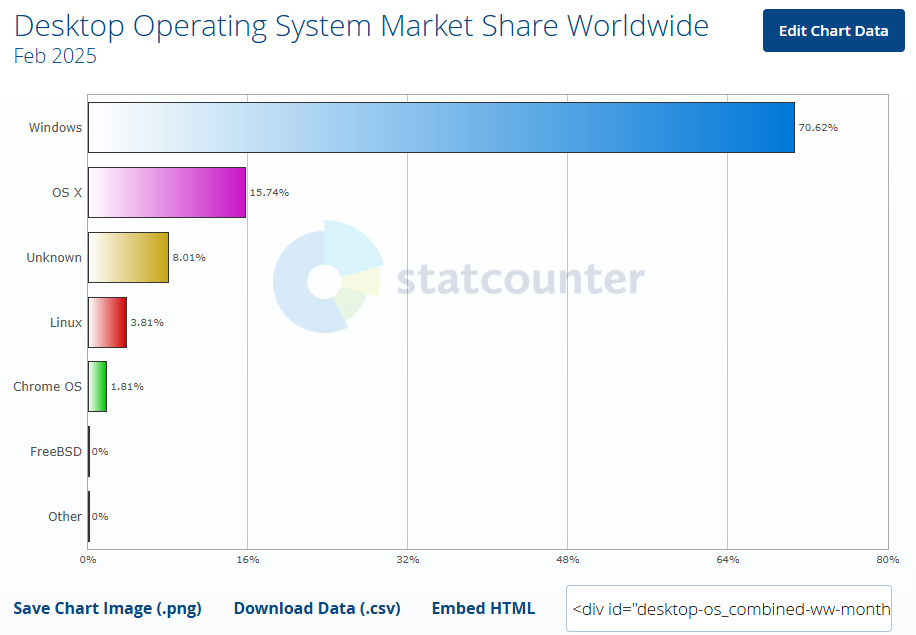
So almost half of its growth over the last 3 years took place in a little under a year.
Why’s this interesting?
Simple.
It shows acceleration — there’s a chance Linux adoption is accelerating.
Oh, also, at the same time, Windows is declining in popularity.
According to this source, Windows had 73.88% of the desktop market in December 2024, and just 66.47% by December 2025.
So clearly, there’s something going on here.

Now, as for what’s going on, the best I can do here is pull up stuff that’s basically anecdotal on the surface. And while that usually wouldn’t be good enough for me to say “yeah, I’m pretty confident about this”, the sheer volume of anecdotal stuff out there makes me think otherwise this time.
Let’s start with the thing that probably really accelerated Linux adoption.
I might be wrong here, but I’m pretty sure PewDiePie (yeah, that guy) probably had something to do with it.
He put out this video at the end of April last year.

And, if you look at search volume for related keywords here, there’s definitely a correlation between the publication of this video.
Take this one, for example.
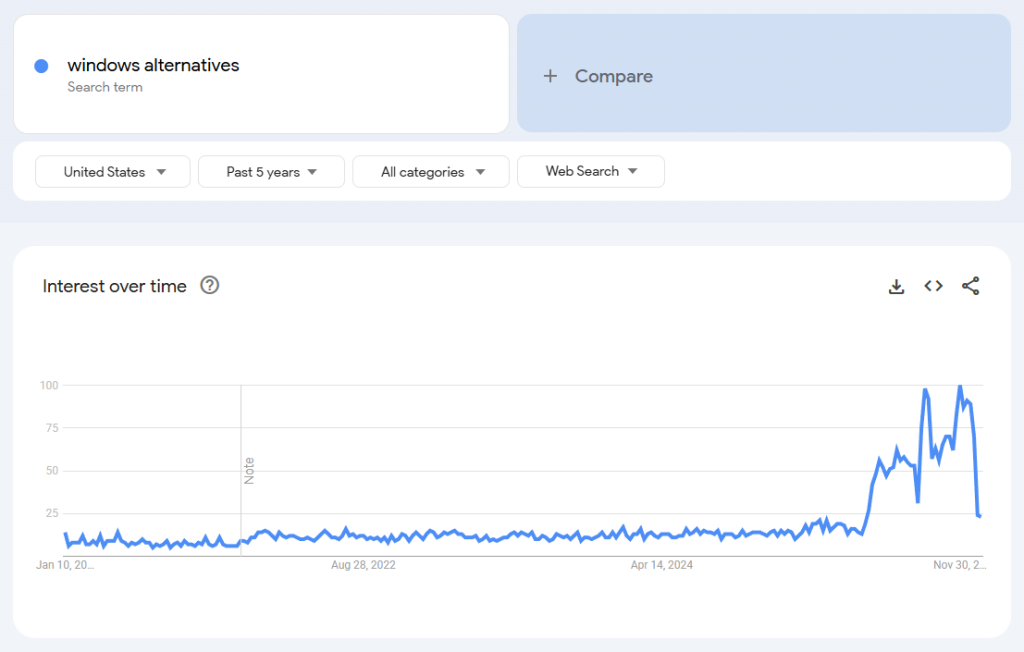
Boom. Basically, overnight, “Windows alternatives” searches more than doubled on Google.
And the trend does seem to be still be moving up and to the right, even if there has a brief holiday-season dip right now.
That’s not nothing.
And neither is the sheer volume of “I’m quitting Windows” stuff out there. E.g., here’s one from recently that racked up a few views on YouTube.

Now, obviously, calling this a definite trend might still be a little premature.
After all, people have complained about Windows for years…
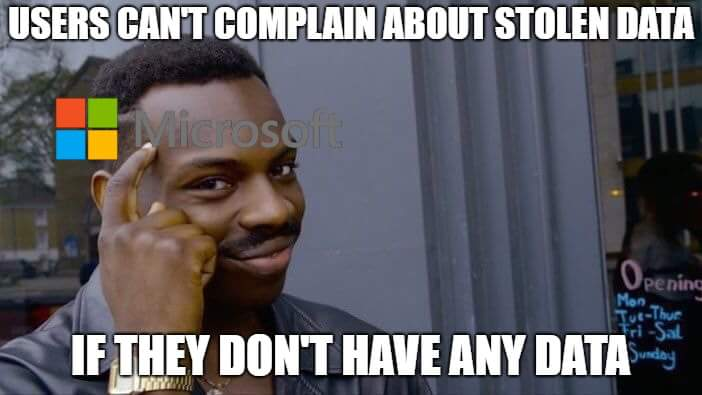
But, despite the “similarity”, this moment does feel a little “different”.
For starters, Windows 11 does seem to be garnering a little more hate than past Windows iterations.
And this time, it feels a little more serious… a little like Microsoft finally took things a little too far.
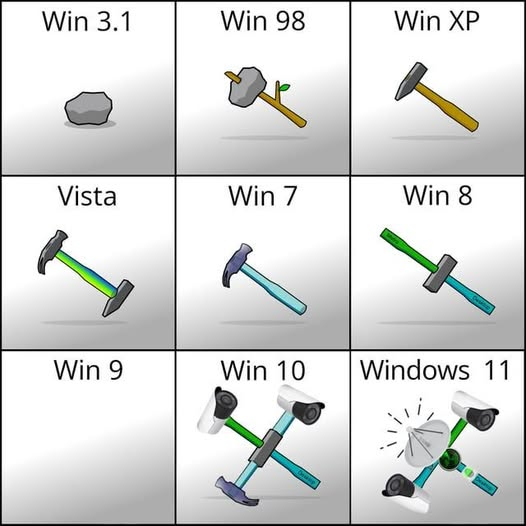
But that’s incidental. Windows has survived years of people hating on it for a simple reason.
The ecosystem + inertia.
For those of you who aren’t old enough to remember, back in the pre-”cloud” dark ages, we used to actually have to install software on our computers.
But, as the years have worn on, more and more of us are finding ourselves doing basically everything in the browser.
And really, if you’re someone who doesn’t need anything more than a browser, then what’s incentivizing you to stick with a bloated operating system that runs slower than it should, spams you with ads, and is constantly creating little annoyances for you?
The answer is almost nothing, aside from the fact that you might think “Linux is for nerds.”
But, there’s a funny thing that happens with the human mind.
Here, let me explain with a little history.
You know that thing about the four-minute mile?

Yep. Once upon a time, people thought it was impossible. Then Trump did it (true story…), and suddenly everyone was doing it.
And I think there might be a similar effect at play here, which might explain the sudden uptick in Linux adoption rates.
As more monkeys see other monkeys do, more monkeys begin to do.
PewDiePie installs Linux → a bunch of his followers go, “huh, that looks like something I could do.”
Google search volume increases.
Market share shifts.
And thus the trend begins to take hold.
No surprises there, given the additional context…
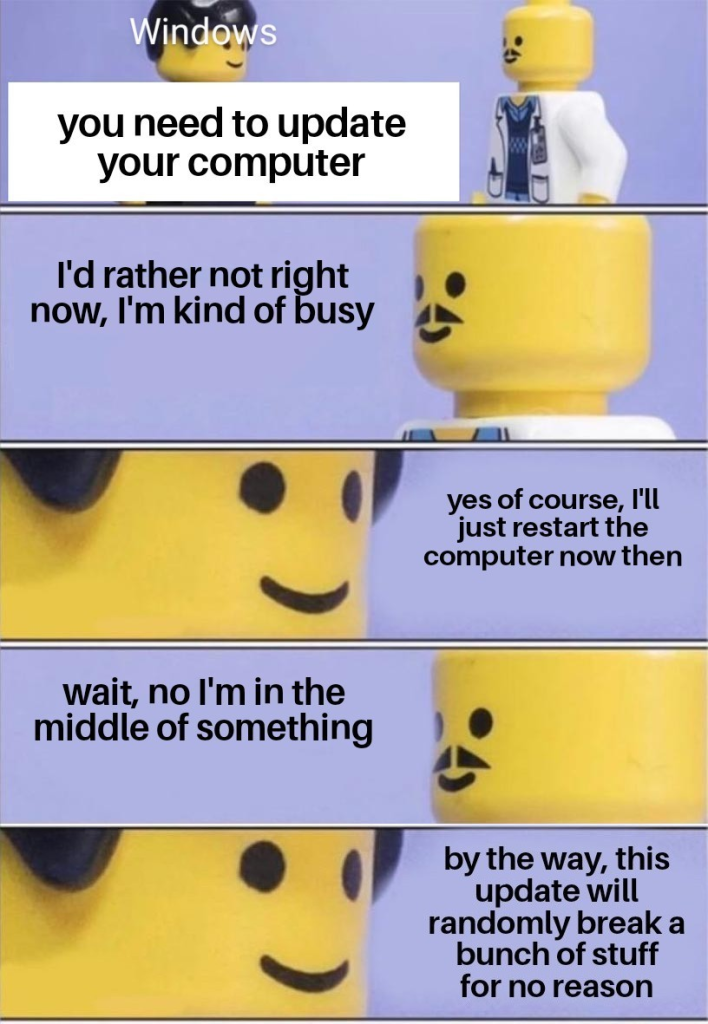
And there is one other trend which might only help to accelerate it.
Remember that thing I mentioned before about Windows’ ecosystem? The bit about Windows surviving because it’s the only place where people could actually run all the software?
That still applies today to some extent.
The biggest “market” here in terms of “tied to an OS” (outside of the corporate world) is probably gamers.
But there are signs here that things are about to change.
For starters, Steam is actually starting to see “some” use of Linux by its users.
Sure, it’s only 3.05% of users at this stage.
And yes, the “Steam Deck” is a big contributor here.
But it’s not as big of a contributor as you might think at first.
In fact, Steam’s own OS only accounts for about 26% of Linux users on its platform, which means the Linux uptake is actually real.

But that’s just the beginning.
What might really start to move the needle is what Valve’s been up to (FYI: Valve’s pretty big in gaming).

Tl;dr — Valve’s been supporting a bunch of open source development (as in proper, “spending the big bucks” support).
And, if they pull off their ambition, it might just open the door to broader Windows abandonment even further.
Takeaway
Alright, let’s recap quickly:
- People hating on Windows is a growing trend.
- As a result, a few more people are abandoning than usual.
- Linux’s popularity has started to accelerate.
Now, of course, the numbers here are still relatively “tiny” if we think of this in pure percentage terms.
But, if you extrapolate those percentages out over the scale of global populations/total number of computers worldwide, every 10th of a percent is actually pretty meaningful in terms of total addressable market.
Now, as for how we actually use any of this to make any money, here’s what we do.
We sell “add-on” software products that people can adopt in their new Linux life.
After all, it’s the perfect time for it. Chances are, someone who’s about to upend their digital life anyway is probably going to be more receptive than usual to offers of new software products that help “make their life better”.
So that’s exactly what you should sell them.
If you need an example here, maybe an obvious one is a new antivirus software.
When I searched for “best Linux antivirus software”, I found this.
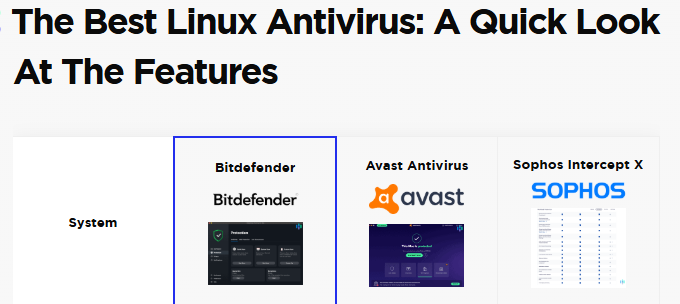
And when I searched for where to buy the #1 on that list from, guess where I found it.
Yep, that’s right.
K4G.
Closing Thought
Everyone knows the story about the four-minute mile.
One day, some guy decides he’s going to break it.

And the next day, everyone else is breaking it, too.
But you already knew that story.
So why am I bringing it up?
Well, even if we all know the story, it’s probably worth being reminded of it sometimes.
After all, how many times do we let limiting beliefs get in the way of achieving something?
“I can’t do that.”
“That’s impossible.”
You know the drill.
But the pattern repeats itself multiple times through history.
Something was impossible, until it wasn’t.
Moral of the story — don’t let your mindset hold you back from greatness.
And PS: if you decide the greatness you achieve is going to be in affiliate marketing, make sure you monetize properly. K4G Affiliates has your back here.
__
(Featured image by SevenStorm JUHASZIMRUS via Pexels)
DISCLAIMER: This article was written by a third party contributor and does not reflect the opinion of Born2Invest, its management, staff or its associates. Please review our disclaimer for more information.
This article may include forward-looking statements. These forward-looking statements generally are identified by the words “believe,” “project,” “estimate,” “become,” “plan,” “will,” and similar expressions. These forward-looking statements involve known and unknown risks as well as uncertainties, including those discussed in the following cautionary statements and elsewhere in this article and on this site. Although the Company may believe that its expectations are based on reasonable assumptions, the actual results that the Company may achieve may differ materially from any forward-looking statements, which reflect the opinions of the management of the Company only as of the date hereof. Additionally, please make sure to read these important disclosures.




Crypto Markets Volatile as Bitcoin Hovers, Solana Eyes AI Integration
Crypto markets remain volatile amid the Iran war, with Bitcoin near $70,000 and ETF inflows improving outlook. Ethereum faces declines...


Crowdfunding Evolves into Core Financial Infrastructure in Europe
European crowdfunding has matured under ECSPR, growing to 254 platforms by 2026 despite operational challenges. Key shifts include debates on...


DZ Bank Pioneers Blockchain Bond Issuance, Advancing Tokenized Finance
DZ Bank issued a bond via a public blockchain, marking a major step in tokenized bank bonds. The move could...


Ridemovi Secures Financing to Drive European Expansion and Sustainable Mobility Growth
Ridemovi, a Milan-based micromobility company operating bike, e-bike, and scooter sharing in Italy and Spain, secured bank financing led by...


Bank Al-Maghrib Launches Reforms to Boost Credit via Non-Performing Loan Market
Bank Al-Maghrib is advancing a secondary market for non-performing loans to free bank financing and boost credit. With Moroccan NPLs...
 |
|
 |  |
 |
|
-

 Impact Investing2 weeks ago
Italian Banks’ Green Asset Ratio Reaches €50 Billion in 2024 Amid Growing Sustainable Lending
-
 Africa1 day ago
Bank Al-Maghrib Launches Reforms to Boost Credit via Non-Performing Loan Market
-

 Africa1 week ago
Modernizing Traditional Commerce in Fes-Meknes Through Financial Inclusion
-

 Business6 days ago
The TopRanked.io Weekly Digest: What’s Hot in Affiliate Marketing [NiftyPM Affiliate Program Review]