Biotech
AI and Liquid Biopsy Enable Personalized Immunotherapy for Lung Cancer
Lung cancer is the leading cause of cancer death, and many patients do not respond to immunotherapy. Researchers from IBIMA Biomedical Research Institute of Málaga and Virgen de la Victoria University Hospital developed an AI-based liquid biopsy method to predict treatment response. Published in the Journal for ImmunoTherapy of Cancer, it identifies tumor profiles to personalize therapy and improve outcomes.

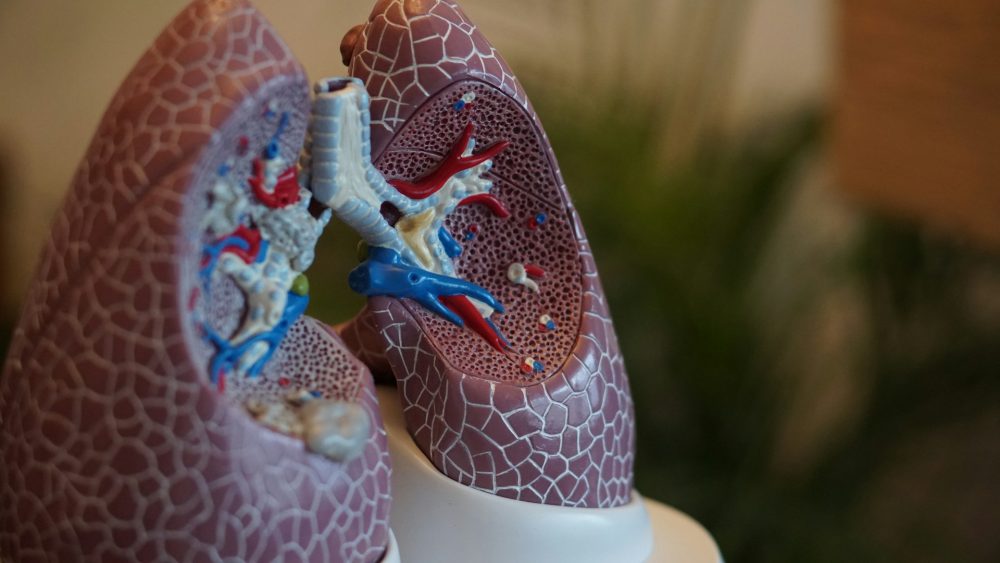
Lung cancer remains the leading cause of cancer-related death worldwide. In recent years, the emergence of immunotherapy has brought about a paradigm shift, offering real hope and extending the lives of thousands.
However, this “magic bullet” is not infallible: clinical statistics reveal that between 20% and 45% of patients do not experience any therapeutic benefit from these treatments. The major challenge today is not only treating the disease, but also knowing who to treat in order to avoid ineffective procedures and unnecessary side effects.
Faced with this unmet medical need, a consortium of researchers from Malaga, led by IBIMA (Biomedical Research Institute of Malaga) and the Virgen de la Victoria Hospital, has developed a pioneering method that uses liquid biopsy and artificial intelligence to personalize immunotherapy with unprecedented precision.
The multi-omics approach: analyzing the hidden layers of the lung cancer
The key to this advance lies in an approach called multi-omics. Unlike conventional tests that analyze a single marker, this system integrates different biological layers of the tumor, such as cell-free DNA (cfDNA) methylation and extracellular vesicle microRNAs, extracted simply from a blood sample.
Through the use of artificial intelligence algorithms, researchers have managed to process this complex amalgam of data to classify patients with non-small cell lung cancer (NSCLC), which represents the most frequent type of the disease.
“This analysis allows us to drastically reduce diagnostic uncertainty and move towards precision medicine where each treatment is tailored to the patient’s unique biological profile.”
The molecular “ID”: three paths to survival
The most disruptive finding of the study, led by researcher Isabel Barragán (IBIMA) and oncologist Antonio Rueda Domínguez (Hospital Virgen de la Victoria), is the identification of what they have dubbed the “molecular DNA” of the tumor. By analyzing samples from 79 patients with metastatic lung cancer, the team identified three distinct profiles that allow them to anticipate the evolution of the disease from its initial stages:
Excellent prognostic profile. Patients whose biological signature indicates a high probability of a positive response, potentially achieving survival of more than 40 months.
High-aggressiveness lung cancer profiles. Two other profiles identify tumors with a much more hostile behavior and an intrinsic resistance to immunotherapy.
This classification is not limited to the time of diagnosis. Thanks to the non-invasive nature of liquid biopsy, physicians can monitor the tumor in real time , observing how it changes under the pressure of treatment without subjecting the patient to repeated tissue biopsies or aggressive surgeries.
This project is a successful example of knowledge transfer from the laboratory to the patient’s bedside. It has been made possible through the synergy between the Biomedical Research Institute of Malaga and the Nanomedicine Platform (IBIMA BIONAND Platform), the Virgen de la Victoria University Hospital, the Regional University Hospital of Malaga, and the University of Malaga.
The robustness of the results, which have already been validated in other lung cancer patient groups to confirm their clinical reliability, has led to their publication in the scientific journal Journal for ImmunoTherapy of Cancer. Furthermore, the research has received institutional and financial support from the Carlos III Health Institute, the Spanish Society of Medical Oncology (SEOM) , and the Spanish Association Against Cancer (AECC).
__
(Featured image by Robina Weermeijer via Unsplash)
DISCLAIMER: This article was written by a third party contributor and does not reflect the opinion of Born2Invest, its management, staff or its associates. Please review our disclaimer for more information.
This article may include forward-looking statements. These forward-looking statements generally are identified by the words “believe,” “project,” “estimate,” “become,” “plan,” “will,” and similar expressions. These forward-looking statements involve known and unknown risks as well as uncertainties, including those discussed in the following cautionary statements and elsewhere in this article and on this site. Although the Company may believe that its expectations are based on reasonable assumptions, the actual results that the Company may achieve may differ materially from any forward-looking statements, which reflect the opinions of the management of the Company only as of the date hereof. Additionally, please make sure to read these important disclosures.
First published in GACETA MEDICA. A third-party contributor translated and adapted the article from the original. In case of discrepancy, the original will prevail.
Although we made reasonable efforts to provide accurate translations, some parts may be incorrect. Born2Invest assumes no responsibility for errors, omissions or ambiguities in the translations provided on this website. Any person or entity relying on translated content does so at their own risk. Born2Invest is not responsible for losses caused by such reliance on the accuracy or reliability of translated information. If you wish to report an error or inaccuracy in the translation, we encourage you to contact us.










TopRanked.io Weekly Affiliate Digest: What’s Hot in Affiliate Marketing [1xBet Affiliate Program]
If you thought nobody liked cricket, then this week, we're proving you wrong. And by the time we're done, you'll...


Tether Seeks Big Four Audit to Boost USDT Transparency
Tether, issuer of USDT, plans a full audit by a Big Four firm to address transparency concerns over its $184...


H&M Advances Sustainability and Cuts Emissions by 2025
H&M Group reported that by 2025, 91% of materials were recycled or sustainably sourced, with recycled content reaching 32%. Emissions...


NHS Funds Breakthrough CAR-T Therapy Breyanzi for Lymphoma Treatment in Spain
Bristol Myers Squibb announced NHS funding for CAR-T therapy Breyanzi, enabling its use from April 1st in Spain for lymphoma...


Crypto Markets Volatile as Bitcoin Hovers, Solana Eyes AI Integration
Crypto markets remain volatile amid the Iran war, with Bitcoin near $70,000 and ETF inflows improving outlook. Ethereum faces declines...
 |
|
 |  |
 |
|
-

 Africa5 days ago
Bank Al-Maghrib Launches Reforms to Boost Credit via Non-Performing Loan Market
-

 Africa2 weeks ago
Modernizing Traditional Commerce in Fes-Meknes Through Financial Inclusion
-
 Business1 week ago
The TopRanked.io Weekly Digest: What’s Hot in Affiliate Marketing [NiftyPM Affiliate Program Review]
-

 Impact Investing4 days ago
Ridemovi Secures Financing to Drive European Expansion and Sustainable Mobility Growth