Africa
MASI Surge Exposes Market Blind Spot: The SAMIR Freeze and Hidden Risks
Despite record MASI highs and IPO growth, Casablanca’s market split between star stocks and neglected ones like SAMIR, suspended since 2015. Reports rarely address forced delisting. From 2019–2025, listings rose, several firms exited voluntarily, and capitalization surged, yet SAMIR remained frozen, trapping shareholders and exposing gaps in oversight, transparency, and regulatory action across the market.

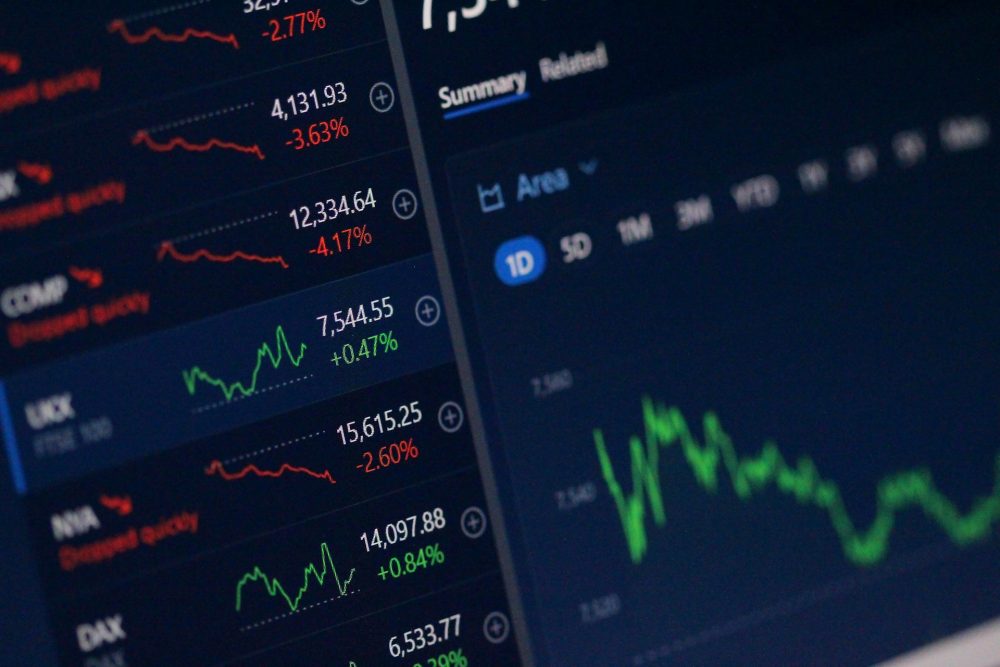
Behind the MASI’s record highs and the resurgence of IPOs, a two-tiered stock market has emerged. One tier is dominated by the stars, who capture the lion’s share price and investor attention. The other is dominated by the forgotten companies, whose shares are barely traded. One of these, SAMIR, embodies ten years of institutional silence.
Shareholders are trapped, the share price is frozen, and no forced delisting is highlighted in the public reports consulted. Meanwhile, in London, Singapore, Paris, and Johannesburg, delistings are governed by specific mechanisms. In Casablanca, the subject is rarely, if ever, addressed. This investigation explores what the annual reports for the six fiscal years from the start of the Covid-19 pandemic to the end of 2025 reveal, albeit implicitly.
There were 75 listed companies in 2019. Between 2021 and 2025, eight new companies joined the stock exchange, raising a total of nearly 9.8 billion dirhams in IPOs. Five others (Nexans, Centrale Danone, Lydec, and Timar) were delisted. All were delisted amicably; none were presented as resulting from an automatic decision by the regulator.
While the MASI index rose by approximately 41% over the entire period, and market capitalization surpassed 1 trillion dirhams for the first time, only one stock remained suspended, with no announcement, no transactions, and no future outlook. This investigation examined six years of annual reports and scrutinized listing statistics. It searched hundreds of pages for even the slightest mention of SAMIR’s fate. It found almost nothing.
2019-2025, a period in two acts for the MASI Index
The 2019-2021 period opens with a quiet triumph. In 2019, the Casablanca Stock Exchange celebrates its ninetieth anniversary. For ninety years, as its annual report proudly reminds us, it has been “the oldest stock exchange in Africa and one of the continent’s leading financial platforms.” The tone is one of ambition. The demutualization of 2016 has borne fruit.
ISO 9001, 27001, and 22301 certifications are piling up. A three-year roadmap, simply titled “Ambition 2021,” is intended to complete the modernization of the market. The 2019 annual report is a breviary of optimism: ninety glossy pages, colorful charts, celebrating the 7.11% growth of the MASI index, the 75 listed companies, and the 627 billion dirham market capitalization. It details the successes of the Elite Maroc program and applauds the fourth edition of the Morocco Capital Markets Days in London. But there is no mention of SAMIR.
Yet, the Moroccan Refining Industry Company (Société anonyme marocaine de l’industrie du raffinage) has been suspended from trading since August 6, 2015. For four years, its share price has remained frozen at 127.80 dirhams. For four years, it has published no results, held no general meetings. For four years, its shareholders have been waiting for a resolution. The 2019 annual report says nothing. Then came Covid, in March 2020. The MASI index plummeted by 26% in just a few days.
The stock exchange, however, did not close. Its systems held up, its teams switched to remote work, and its traders continued to trade. The business continuity plan, certified ISO 22301, was functioning. Resilience was hailed as a victory. The 2020 annual report celebrated it in glowing terms.
“The market has proven its strength,” wrote the CEO. The report details the seven webinars organized with the APSB (Association Professionnelle de Solidarité du Bourse) to support investors during the crisis. It also praises the launch of the new MSI20 index, designed to “better capture market liquidity.” Still, there is no section dedicated to the prolonged suspension of SAMIR. In 2021, the market rebounded and teh MASI index was up.
The MASI index ended 2021 up 18.4%
Market capitalization reached 691 billion dirhams, its highest level in ten years. The IPO of TGCC was a success: oversubscribed twenty-two times, it raised 600 million dirhams and attracted 11,833 subscribers. The new development model places the Casablanca Stock Exchange at the heart of the economic recovery.
The 2021 annual report celebrates “an exceptional year.” It reviews partnerships with the Ministry of Higher Education, new trading floors in universities, and the 24th ASEA Annual Conference. And still not a word about SAMIR, which has been suspended for six years.
However, in that same year, 2021, Nexans Maroc was the subject of a public delisting offer and was delisted. This was followed in 2022 by Centrale Danone and Lydec (takeover bids followed by public delisting offers), and in 2023-2024 by Timar. Four delistings in four years, initiated by majority shareholders. None of these are presented in the reports consulted as resulting from disciplinary proceedings for lack of liquidity or persistent non-compliance with obligations.
The exit mechanism therefore exists, but it is only activated when the majority shareholder decides to do so. From 2022 onwards, the long-awaited IPOs made a strong comeback. Akdital raised 1.2 billion dirhams and became the first company in the healthcare sector to go public. Disty Technologies, the first SME on the alternative market, raised 171.6 million dirhams.
CFG Bank went public in 2023, raising 600 million dirhams from 23,634 subscribers. CMGP raised 1.1 billion dirhams in 2024. In 2025, Cash Plus (750 million dirhams), SGTM (4.83 billion dirhams), and Vicenne (500 million dirhams) brought the year’s total fundraising to over 6 billion dirhams. With the capital increases of CIH, SOTHEMA, and TGCC, the total funds raised in 2025 exceeded 10 billion dirhams, a level not seen since 2008.
The MASI index jumped 27.6%
Market capitalization has surpassed $1 trillion for the first time. But how many forced delistings occurred during the same period? The annual reports consulted reveal none. How many suspended stocks were permanently removed from the stock exchange at the regulator’s initiative? The public documents examined mention no cases during the period studied. How many companies were delisted for persistent non-compliance with disclosure requirements? None are explicitly presented as such in the analyzed reports. The contrast is striking.
On one hand, a perfectly oiled admissions machine: eight IPOs in five years, well-oiled procedures, triumphant communication. On the other, the absence of a formalized forced exit policy in public reports. No published minimum liquidity threshold. No detailed annual report on extended suspensions.
The Players: Three Circles, Three Diagnoses
On the market, three circles of companies coexist. The first circle is that of the undead. These are the companies that are no longer there without ever having truly disappeared. Those whose names have been erased from the screens, but which remain legally listed. The stock exchange calls them suspended securities. SAMIR is the oldest – and the only true case – in this silent graveyard. On August 6, 2015, the Moroccan Capital Market Authority (AMMC) suspended the listing of SAMIR.
The country’s sole refiner’s debt had reached 40 billion dirhams. Its creditors had stopped supplying it with crude oil. Financial results were no longer published. Although placed in receivership in 2016, it remained listed on the stock exchange. Ten years later, on December 31, 2025, the company was still listed – at least administratively. Its share price remained at 127.80 dirhams. Its theoretical market capitalization was still around 1.5 billion dirhams. Its transactions had been nil for ten years. Its publications had been nonexistent since 2015. Its shareholders? Thousands, mostly individuals, held shares they could not sell.
SAMIR does not appear in the main summary tables of the 2025 annual report, but its last closing price (127.80 dirhams) theoretically remains the prevailing price, in the absence of an actual delisting. The stock legally exists, but it no longer exists economically. Article 30 of the AMMC circular concerning suspensions and delistings stipulates that the prolonged maintenance of a suspension may lead to delisting, after formal notice has been given.
The public reports consulted make no mention of the application of this provision in SAMIR’s case. Why? Market professionals offer three hypotheses. The first is procedural: deregistration implies a cascade of consultations and appeals. The second is judicial: as long as insolvency proceedings are underway, the company’s fate falls under the jurisdiction of the commercial court, not the regulator. The third, and most troubling, is that, until now, no one has been willing to take responsibility for making the decision. The second circle is that of the dying.
Alongside the “living dead,” there are those that aren’t suspended, not officially bankrupt, but whose stock is slowly dying. Maghreb Oxygène, the industrial gas producer, has never been a star performer. Its financial communication is minimal. In 2025, Maghreb Oxygène traded 28,650 shares for the year, barely a hundred per session. Not a death throes, but a slow erosion that no one is stopping. Stroc Industrie, on the other hand, presents a more complex case. The metal construction company saw its revenue triple between 2014 and 2024, but without ever turning a profit.
According to published accounts, its equity stood at -341 million dirhams at the end of 2024. Technically, it is insolvent. But it is neither suspended, nor delisted, nor officially warned. Even better: in 2025, its share price soared by 482%, attracting 386 million dirhams in trading volume. A speculative survival, fueled by investors betting on a turnaround. But the fundamentals are not holding up.
These two companies have not been deregistered, suspended, or officially questioned. The first is slowly dying, the second survives only intermittently. Not a single line in their annual reports. No crisis communication. Finally, the third circle is that of the silent majority. These are companies that are not in difficulty, that publish their results, that boast solid fundamentals, but whose shares are almost never traded. Their ownership is tightly controlled: families, core groups, controlling holding companies. Afriquia Gaz, on February 11, 2026, had a share price of 4,099 dirhams and a market capitalization of 14.09 billion. Zero shares traded that day. Zero the day before. Zero the day before that.
Yet, throughout 2025, 163,032 shares changed hands – a drop in the ocean compared to the 3.5 million listed shares. Dari Couspate, on the same day: 4,300 dirhams, 1.28 billion dirhams market capitalization. Zero shares traded that day. 4,560 shares for the entire year. Should we see this as a malfunction? Not entirely. These companies don’t need the market to raise capital. But then, what is the point of their being listed? Not for investors, who cannot acquire shares in them. Not for the companies themselves, which don’t use the market to raise funds. Not for the stock exchange either. The troubling question is whether to wake them up or let them sleep.
The role of the regulator:
The AMMC has extensive powers. Between 2019 and 2025, it issued 147 suspension notices. The vast majority are technical, lasting a few hours or a few days. Only one suspension lasted more than a year: that of SAMIR. Was the delisting of this company ever considered? The AMMC’s annual reports do not mention it. Nor do its press releases. In the hundreds of pages of the Casablanca Stock Exchange’s annual reports, the word “delisting” does not appear even once in connection with a prolonged suspension.
However, delistings have indeed occurred (Nexans, Centrale Danone, Lydec, Timar), but always at the initiative of a majority shareholder, never by a decision of the market authority. The difference is fundamental. It reveals that the stock exchange and its regulator know how to organize a delisting when a private entity requests it, but that the status quo is the most common scenario in the face of a deadlock where no one takes responsibility for delisting.
What to do with forgotten stocks?
It must be said that Morocco is not the only country facing illiquidity. The difference lies less in the existence of the phenomenon itself than in how it is addressed. In this respect, Casablanca stands out as a silent exception. In London, the Stock Exchange has created a market dedicated to delistings. Companies that no longer meet liquidity criteria are transferred to a simplified segment before their eventual delisting.
In Singapore, voluntary withdrawals are encouraged through expedited procedures and tax advantages. In Paris, the AMF (French Financial Markets Authority) regulates situations of prolonged illiquidity through specific regulatory mechanisms.
In Johannesburg, a progressive alert system transfers illiquid assets to a dedicated compartment with the obligation to publish a recovery plan. In Casablanca, no equivalent mechanism is detailed in the public reports consulted. No thresholds are published. No simplified procedures are in place. No forced delisting has been highlighted since the creation of the AMMC.
Three approaches, already proven elsewhere, deserve to be explored. The first would be to set a minimum liquidity or free float threshold. If this threshold is not met for two consecutive financial years, the company would be transferred to a dedicated segment, with the obligation to publish a recovery or exit plan.
The second option is to implement automatic delisting after a three-year suspension. After this period, delisting would be automatic, unless the AMMC (Moroccan Capital Market Authority) decides otherwise with justification. Finally, it would be possible to encourage voluntary withdrawals through an attractive tax framework and an expedited procedure, less stigmatizing than a complex takeover bid.
__
(Featured image by Anne Nygard via Unsplash)
DISCLAIMER: This article was written by a third party contributor and does not reflect the opinion of Born2Invest, its management, staff or its associates. Please review our disclaimer for more information.
This article may include forward-looking statements. These forward-looking statements generally are identified by the words “believe,” “project,” “estimate,” “become,” “plan,” “will,” and similar expressions. These forward-looking statements involve known and unknown risks as well as uncertainties, including those discussed in the following cautionary statements and elsewhere in this article and on this site. Although the Company may believe that its expectations are based on reasonable assumptions, the actual results that the Company may achieve may differ materially from any forward-looking statements, which reflect the opinions of the management of the Company only as of the date hereof. Additionally, please make sure to read these important disclosures.
First published in LES ECO.ma. A third-party contributor translated and adapted the article from the original. In case of discrepancy, the original will prevail.
Although we made reasonable efforts to provide accurate translations, some parts may be incorrect. Born2Invest assumes no responsibility for errors, omissions or ambiguities in the translations provided on this website. Any person or entity relying on translated content does so at their own risk. Born2Invest is not responsible for losses caused by such reliance on the accuracy or reliability of translated information. If you wish to report an error or inaccuracy in the translation, we encourage you to contact us.













TopRanked.io Weekly Affiliate Digest: What’s Hot in Affiliate Marketing [1xBet Affiliate Program]
If you thought nobody liked cricket, then this week, we're proving you wrong. And by the time we're done, you'll...

Tether Seeks Big Four Audit to Boost USDT Transparency
Tether, issuer of USDT, plans a full audit by a Big Four firm to address transparency concerns over its $184...

H&M Advances Sustainability and Cuts Emissions by 2025
H&M Group reported that by 2025, 91% of materials were recycled or sustainably sourced, with recycled content reaching 32%. Emissions...

NHS Funds Breakthrough CAR-T Therapy Breyanzi for Lymphoma Treatment in Spain
Bristol Myers Squibb announced NHS funding for CAR-T therapy Breyanzi, enabling its use from April 1st in Spain for lymphoma...


Crypto Markets Volatile as Bitcoin Hovers, Solana Eyes AI Integration
Crypto markets remain volatile amid the Iran war, with Bitcoin near $70,000 and ETF inflows improving outlook. Ethereum faces declines...
 |
|
 |  |
 |
|
-
 Fintech2 weeks ago
Swiss Fintech Sector Enters Maturity as AI and Infrastructure Take the Lead
-
 Business2 days ago
TopRanked.io Weekly Affiliate Digest: What’s Hot in Affiliate Marketing [1xBet Affiliate Program]
-
 Biotech1 week ago
EU Biotechnology Law Aims to Boost Innovation and Cut Trial Delays
-
 Cannabis5 days ago
Aurora Shifts Strategy Toward Global Medical Cannabis Markets