Africa
Morocco’s Industrial Activity Stalls in January 2026
According to Bank Al-Maghrib, industrial activity stagnated in January 2026, with a capacity utilization rate of 77 percent. Production rose in agrifood and mechanical sectors but declined in textiles and chemicals. Overall sales fell in domestic and foreign markets. Orders were stable, and manufacturers expect moderate growth, despite persistent uncertainty.

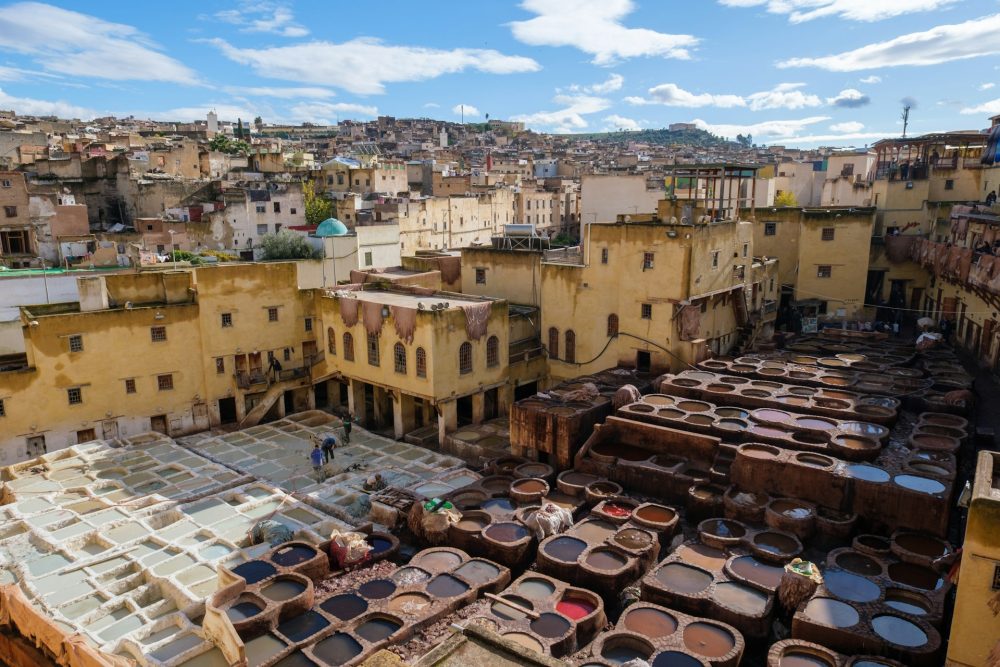
According to the latest monthly industry survey by Bank Al-Maghrib, economic activity in Morocco showed signs of stagnation in January 2026, marked by flat production levels and a decline in overall sales.
The findings highlight a mixed performance across sectors, reflecting uneven momentum within the industrial landscape.
Production and Capacity Utilization in Morocco
Under these conditions, the Capacity Utilization Rate in Morocco stood at 77 percent. While some industries managed to post gains, others experienced notable slowdowns, balancing overall output at a near standstill.
Production increased in the agrifood as well as the mechanical and metallurgical sectors. In contrast, activity declined in the textile and leather industry and in the chemical and parachemical sector. This divergence illustrates the varied sectoral dynamics that shaped the month’s industrial performance, with gains in certain branches offset by contractions in others.
Sales, Orders, and Short-Term Outlook
Sales trends also differed by sector in Morocco. Growth was recorded in agrifood and in textiles and leather, while sales stagnated in mechanical engineering and metallurgy. Meanwhile, chemicals and related industries reported a decline. Overall, total sales in Morocco fell when considering both domestic and foreign markets, indicating softer demand at home and abroad.
Orders followed a similar pattern of stagnation overall. Increases were observed in agrifood and mechanical and metallurgy activities, whereas textiles and leather, along with chemicals and parachemicals, registered declines. Despite these fluctuations, order books were generally considered to be at normal levels. They were above normal in agrifood and mechanical and metallurgical industries, but below normal in textiles and leather and in chemicals and parachemicals.
Looking ahead to the next three months, manufacturers in Morocco expect a general rise in both production and sales across most sectors. The exception remains textiles and leather, where production is projected to stagnate. However, uncertainty persists, as nearly one quarter of surveyed companies report limited visibility regarding future production trends, underscoring cautious sentiment within the industrial sector in Morocco.
__
(Featured image by Nichika Sakurai via Unsplash)
DISCLAIMER: This article was written by a third party contributor and does not reflect the opinion of Born2Invest, its management, staff or its associates. Please review our disclaimer for more information.
This article may include forward-looking statements. These forward-looking statements generally are identified by the words “believe,” “project,” “estimate,” “become,” “plan,” “will,” and similar expressions. These forward-looking statements involve known and unknown risks as well as uncertainties, including those discussed in the following cautionary statements and elsewhere in this article and on this site. Although the Company may believe that its expectations are based on reasonable assumptions, the actual results that the Company may achieve may differ materially from any forward-looking statements, which reflect the opinions of the management of the Company only as of the date hereof. Additionally, please make sure to read these important disclosures.
First published in LES ECO.ma. A third-party contributor translated and adapted the article from the original. In case of discrepancy, the original will prevail.
Although we made reasonable efforts to provide accurate translations, some parts may be incorrect. Born2Invest assumes no responsibility for errors, omissions or ambiguities in the translations provided on this website. Any person or entity relying on translated content does so at their own risk. Born2Invest is not responsible for losses caused by such reliance on the accuracy or reliability of translated information. If you wish to report an error or inaccuracy in the translation, we encourage you to contact us.















The TopRanked.io Weekly Digest: What’s Hot in Affiliate Marketing [LiveChat Affiliates Review]
Quick Disclosure: We’re about to tell you how LiveChat Affiliates run a top-notch affiliate program. And we really mean it....


German SMEs Face Tighter Bank Lending, Turn to Alternatives
Access to bank loans for German SMEs is tightening despite strong financing needs. About 37.8 percent face restrictive lending, driven...


Bitcoin Stalls as Geopolitical Risks and Crypto Industry Tensions Persist
Bitcoin is moving sideways near $72,000 amid ongoing Iran tensions, while ETF inflows remain strong. Quantum security debates continue. Ethereum...


Geopolitical Tensions and Trade Disruptions Reshape Global Commodities Markets
Geopolitical tensions and disrupted trade routes, especially around the Strait of Hormuz, are reshaping global commodities markets. Agriculture faces supply...


Germany Sees 413 Cannabis Cultivation Clubs Two Years After Partial Legalization
Two years after partial cannabis legalization in Germany, 413 cultivation clubs have been established nationwide. Lower Saxony leads in clubs...
 |
|
 |  |
 |
|
-
 Biotech1 week ago
Gilead Sciences Advances Growth Strategy with Focus on HIV, Oncology, and Innovation
-
 Impact Investing5 days ago
Ortus Secures €97M Green Loan to Expand Solar Portfolio in Italy
-

 Impact Investing2 weeks ago
Italian Unlisted Banks Lag on ESG Sustainability
-
 Business2 days ago
The TopRanked.io Weekly Digest: What’s Hot in Affiliate Marketing [LiveChat Affiliates Review]