Africa
Morocco Launches Meknes Oilseed Center to Boost Food Sovereignty
Morocco launched the Meknes Oilseed Technical Center to cut heavy dependence on imported oils and oilseed cakes, which exceed 90%. Backed by French cooperation, the center targets 15% domestic production by 2030, revitalizing rapeseed and sunflower farming through research, technical support, crop diversification, and improved profitability amid drought, rising costs, and market volatility.

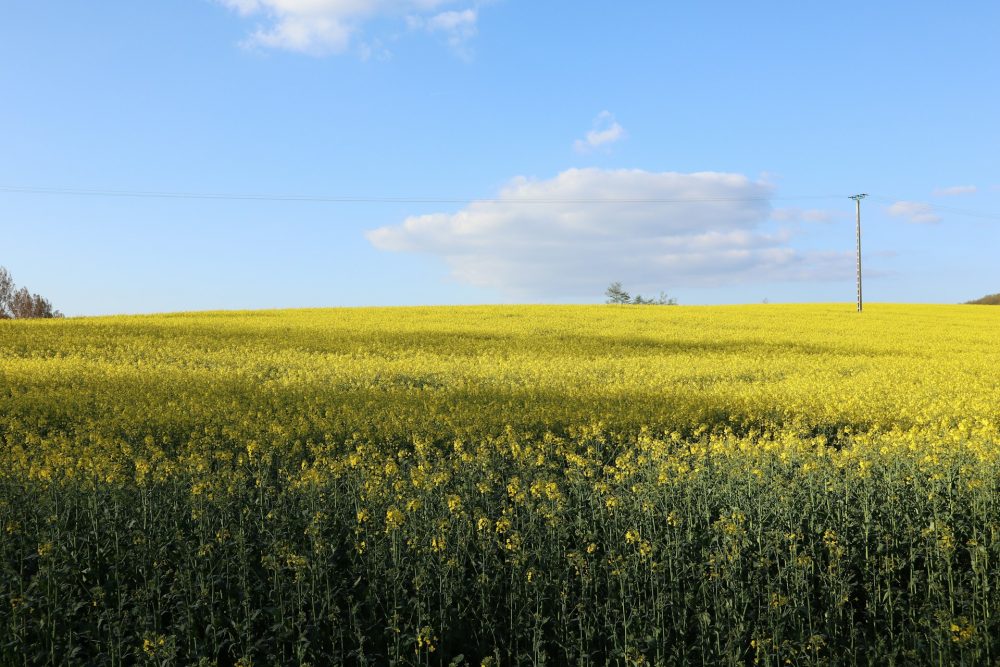
Faced with a dependence on imports of oils and oilseed cakes exceeding 90%, stakeholders in the oilseed sector in Morocco officially launched the Oilseed Technical Center in Meknes on Thursday. Supported by French cooperation, this center aims to strengthen food sovereignty by targeting 15% domestic production of oilseeds in Morocco by 2030.
The official launch of the project to create the Meknes Oilseed Technical Center (CTOM) took place on Thursday at the Meknes Agropole. The meeting brought together key stakeholders in the sector, including the Moroccan Confederation of Agriculture and Rural Development (COMADER), the Interprofessional Federation of Oilseeds (FOLEA), the Group of Oilseed Industrialists of Morocco (GIOM), as well as representatives from the Ministry of Agriculture and the French Embassy.
The event marks the beginning of a technical structuring process aimed at revitalizing rapeseed and sunflower cultivation in Morocco, in a context marked by drought and the volatility of international markets. The objective is to strengthen the Kingdom’s food sovereignty in terms of cooking oils and oilseed cakes for livestock feed.
Over 90% of Morocco’s dependence on imports:
The urgency of the situation is evident in the foreign trade figures. Morocco currently depends on foreign countries for over 90% of its vegetable oil consumption and for almost all of its animal protein in the form of oilseed cakes.
Rachid Benali, president of COMADER, emphasizes that these products are essential for both human consumption and the viability of the national livestock sector. Beyond the commercial aspect, the revival of oilseed production addresses an agronomic imperative in Morocco. The current model, dominated by cereal monoculture across 5 million hectares of rainfed land, is showing its limitations.
The lack of crop rotation depletes the soil and jeopardizes the sustainability of harvests. Mohammed El Baraka, president of FOLEA, emphasizes that integrating oilseeds into cropping systems is a necessary lever for diversifying farmers’ incomes and improving the overall performance of farms. The stated ambition of industry professionals is to reduce this costly external import bill by seizing the existing local market opportunity.
Four Structural Obstacles Identified in Morocco:
The diagnosis made by professionals highlights four main obstacles hindering the sector’s development. The first concerns the climate, characterized by structural drought observed over the last two decades, making rapeseed and sunflower cultivation more complex. The second point raised by Rachid Benali relates to economic profitability. With yields capped between 18 and 20 quintals and stable selling prices in the face of a fourfold increase in input costs, farmers struggle to generate a profit margin. The third obstacle relates to the lack of mechanization.
Investment in equipment has collapsed, as illustrated by the absence of combine harvester sales in the last five years, contrasting with the volumes of the 1980s.
Finally, competition between sectors plays a decisive role in Morocco. Farmers with water resources often favour market gardening or sugar crops, which generate significantly higher incomes.
Kamal Hidane, regional director of agriculture for Fes-Meknes, notes that the areas cultivated in the region are only around 5,000 hectares for an average production of 25,000 quintals, results considered below the real potential of the territory.
The ambition to cover 15% of needs by 2030
Faced with these observations, the new Technical Center in Morocco has been given a precise roadmap. The strategic objective is to cover approximately 15% of national needs for oils and oilseed cakes by 2030. To achieve this, the structure will not be limited to an administrative role but will act as a local resource.
Kamal Hidane emphasizes that the success of agricultural sectors depends as much on the quality of advice and support as on material investments. The center’s mission is to develop applied research to improve yields and adapt technical approaches to current water constraints.
The aim is to provide producers in Morocco with concrete solutions and responsive advisory services. Stakeholders agree that subsidies alone cannot be a sustainable solution, as past experience with other crops has shown. The strategy is based on a systemic approach combining technical support, varietal innovation, and economic measures to restore farmers’ profitability within a competitive value chain.
Funding of €487,000 for bilateral cooperation
The project’s realization relies on close international cooperation, particularly with France. Xavier Pacholek, agricultural advisor at the French Embassy, explains that the center’s launch is part of the momentum of the framework agreement for agricultural and forestry cooperation recently signed by the two countries. The project benefits from €487,000 in funding from the French Ministry of the Economy.
Operational implementation involves the National Office for Agricultural Advice (ONCA) and the French association Agropol, supported by the expertise of the technical organizations Terres Univia and Terres Inovia.
This partnership aims to transfer French research and development expertise while adapting it to the specificities of the Moroccan context. The implementation process will span two years and should lead to the creation of a sustainable tool by 2026. The initiative reflects the shared commitment to strengthening bilateral and continental food security in the face of the climate challenges of the coming decades.
__
(Featured image by Balint Miko via Unsplash)
DISCLAIMER: This article was written by a third party contributor and does not reflect the opinion of Born2Invest, its management, staff or its associates. Please review our disclaimer for more information.
This article may include forward-looking statements. These forward-looking statements generally are identified by the words “believe,” “project,” “estimate,” “become,” “plan,” “will,” and similar expressions. These forward-looking statements involve known and unknown risks as well as uncertainties, including those discussed in the following cautionary statements and elsewhere in this article and on this site. Although the Company may believe that its expectations are based on reasonable assumptions, the actual results that the Company may achieve may differ materially from any forward-looking statements, which reflect the opinions of the management of the Company only as of the date hereof. Additionally, please make sure to read these important disclosures.
First published in LES ECO.ma. A third-party contributor translated and adapted the article from the original. In case of discrepancy, the original will prevail.
Although we made reasonable efforts to provide accurate translations, some parts may be incorrect. Born2Invest assumes no responsibility for errors, omissions or ambiguities in the translations provided on this website. Any person or entity relying on translated content does so at their own risk. Born2Invest is not responsible for losses caused by such reliance on the accuracy or reliability of translated information. If you wish to report an error or inaccuracy in the translation, we encourage you to contact us.















The TopRanked.io Weekly Digest: What’s Hot in Affiliate Marketing [++ KuCoin Affiliate Program Review]
X now allows people to block certain topics from their feed. This week, we're going to tell you how to...


Hotel Stay Project Supports Wildlife Conservation in Japan
Iwate Prefecture launched a project linking hotel stays to conservation through Morioka Zoological Park Zoomo. A themed room at Yunomori...


Bitcoin Leads Modest Crypto Rebound Amid Mixed Signals
Bitcoin rose 2 percent to above 77000 as ETFs saw 15 million inflows and April gains of 12.2 percent. Ethereum...


Major Pharma Advances: EU Approvals, Vaccine Progress, and Breakthrough Clinical Results
Johnson & Johnson has EU approval for nipocalimab for generalized myasthenia gravis, showing superior control and sustained benefits. Sanofi reported...

Agential Cannabis 2026 to Drive APAC Market Growth and Global Industry Collaboration
Agential Cannabis 2026 will take place September 23–24 in Bangkok, bringing global experts together to advance the APAC medical cannabis...
 |
|
 |  |
 |
|
-

 Africa1 week ago
Record State Funding Strengthens Support for Moroccan Associations in 2024
-

 Fintech3 days ago
Splint Invest Expands Access to Alternative Assets with Strong Growth and Data-Driven Strategy
-

 Business2 weeks ago
Understanding the Bear’s Eye View: A Clearer Perspective on Market Trends
-
 Biotech8 hours ago
Major Pharma Advances: EU Approvals, Vaccine Progress, and Breakthrough Clinical Results