Business
The TopRanked.io Weekly Digest: What’s Hot in Affiliate Marketing [PureVPN Affiliate Program Review]
Between Australia, the UK, half of the U.S., and a bunch of other countries, the internet’s rapidly transitioning into an age-gated, ID-required place. And it’s only going to get worse from here. So what’s a humble affiliate meant to do? That’s right, we make money. This week, we look at the opportunity here, along with a great way to monetize it with our Pure VPN Affiliate Program review.


Quick Disclosure: We’re about to tell you the PureVPN Affiliate Program is pretty great. And we really mean it. Just know that if you click on a PureVPN Affiliate Program link, we may earn a small commission. Your choice.
If I say “online privacy”, there’s a good chance that some of you won’t care.
After all, if you ain’t got nothing to hide…
But this week, I wanna tell you why you should care.
And yes, the reason is absolutely tied to a great affiliate opportunity.
TopRanked.io Affiliate Partner Program of the Week — PureVPN Affiliates
Before we get to the big affiliate opportunity this week, let’s get the monetization bit out of the way first.
Spoiler alert — you’re gonna wanna monetize with a good VPN affiliate program.
That’s why we’re looking at the Pure VPN Affiliate Program this week.
Pure VPN Affiliate Program — The Product
Look, we all know what a VPN is by now, so I’m not going to dwell too long on the product behind the
Pure VPN Affiliate Program.
What I will do instead is just rattle off three quick highlights of the Pure VPN Affiliate Program’s VPN offering.
- The Pure VPN Affiliate Program lets you pitch the advantages of 6500 servers in 78+ countries.
- The Pure VPN Affiliate Program is backed by a company that’s been in business for almost 20 years! (Est. 2007)
- The Pure VPN Affiliate Program has one of the better value VPN products out there (great for conversions!)
Of course, there’s plenty more to the Pure VPN Affiliate Program than just this. For instance, there are other features you can promote, like the fact it has multiple VPN “modes” which users can connect with — some are more “privacy” focused, others are more “speed” focused.
But as for the complete Pure VPN Affiliate Program feature suite — I’ll leave that as an exercise for the reader. Right now, I wanna get to the good part — the Pure VPN Affiliate Program commissions.
Pure VPN Affiliate Program — The Commissions
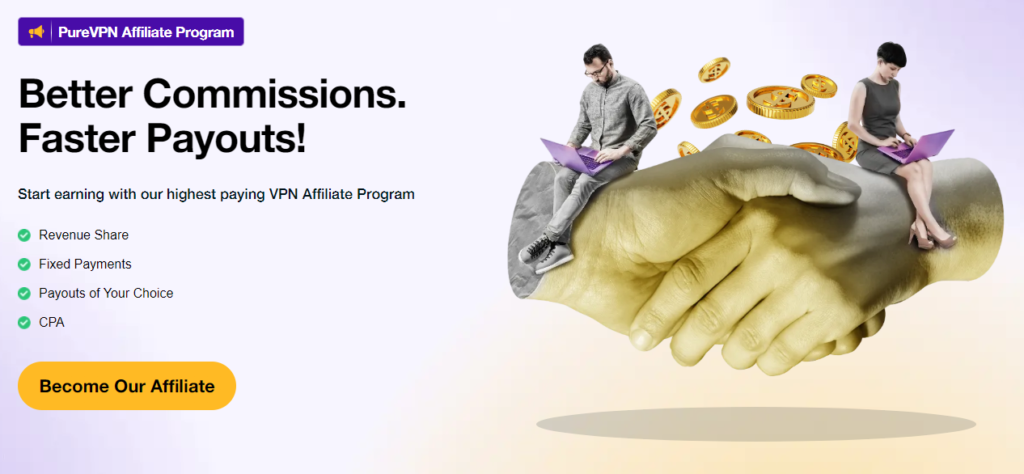
The Pure VPN Affiliate Program commission plan is simple. It works like this.
- Sign up a user on a monthly plan: The Pure VPN Affiliate Program pays you 100% of their first payment.
- Sigup a user on a yearly (or longer) plan: The Pure VPN Affiliate Program pays you 40% of their first payment.
Now, as for subsequent billings, yes, you absolutely get ongoing commissions in the Pure VPN Affiliate Program. And that parts even simpler:
- The Pure VPN Affiliate Program pays you 35% commissions for life.
Sweet, right?
Pure VPN Affiliate Program — Next Steps
As usual, this one’s just a quick take. There’s plenty more in the Pure VPN Affiliate Program we didn’t cover — 90-day tracking cookies, monthly payouts, etc., etc.
But, if you really want all those details, we’ve already made that available in our detailed Pure VPN Affiliate Program review over on TopRanked.io. If you want, you can check that out here:
As for the rest of you who know a good thing when you see it, you can jump straight to signing up with the Pure VPN Affiliate Program here.
Affiliate News Takeaways
This week, a U.S. House subcommittee held a hearing on something to do with kids.
And no, it’s probably not what you’re thinking…
What I’m talking about here is this hearing held by the Subcommittee on Commerce, Manufacturing, and Trade titled “Legislative Solutions to Protect Children and Teens Online.”
That was a mouthful.
So what’s it all about?
tl;dr — it’s all the usual “protecting the kids” stuff.
Specifically, protecting kids online.
Now, as you’d expect, most of this was pretty boring. And also, covering it all is well beyond the scope of what we’re doing here.
But to give the gist of what went on, basically they all sat around, discussed 19 different legislation proposals, and lot with a bunch of fear-mongery language. You know, stuff like, “We’re living through a crisis right now.” That was Neal Dunn’s [Rep.] line.
And as for the proposed solutions to this so-called crisis… well, no surprises here — many of them basically fall back on the ol’ “age gating” thing, which is basically just a euphemism for identity-linked online behavior.
But hey, so far, this is all just talk. It was, after all, little more than a subcommittee having a bit of a chin wag. So, for now, nothing much changes.
So what’s so interesting about this, then?
Well, it also comes during the same week that new age verification laws in Missouri went into effect.
And yeah, as you probably guessed by now, Pornhub did it’s usual thing where it put up a splash screen with a friendly message.
As for what people in Missouri are now greeted with — that would be a video of Cherie DeVille delivering a speech…
“As you may know, your elected officials in Missouri are requiring us to verify your age before allowing you access to our website. While safety and compliance are at the forefront of our mission, giving your ID card every time you want to visit an adult platform is not the most effective solution for protecting our users, and in fact, will put children and your privacy at risk,”
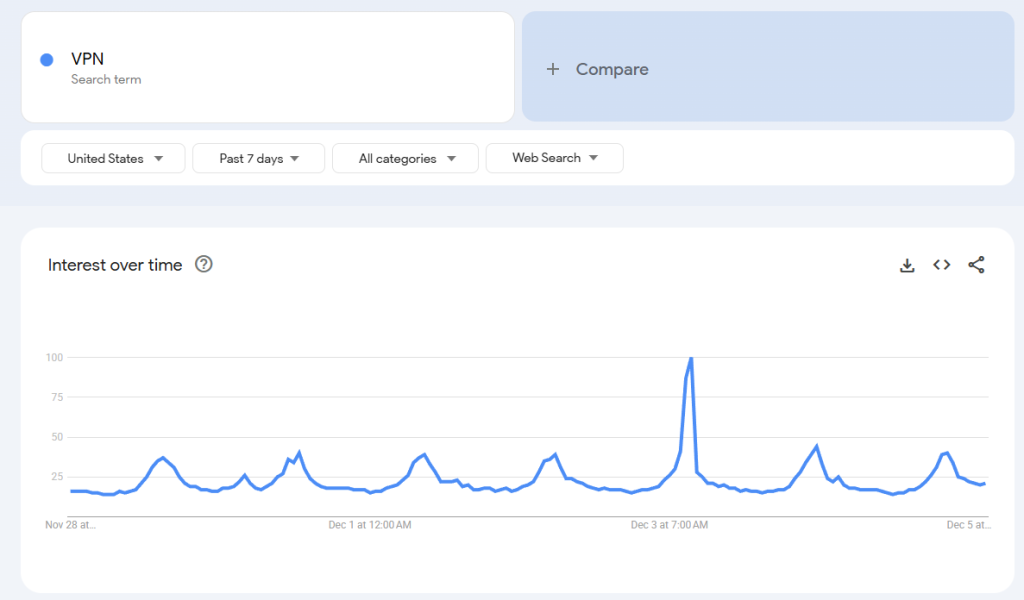
And, as you can probably also guess by now, certain types of Google searches spiked massively when the whole age-verification thing went into force.
[PS: To give you some idea of just how big the spike in the following chart is, that data isn’t just for Missouri — it’s for all of the United States. That’s how big the spike was — Missouri massively moved the needle for the entirety of the US.]
Anyway, by now you’re probably wondering why I’m even telling you any of this.
After all, I basically just said the whole House Committee thing doesn’t really matter (for now).
And then I basically told you a bunch of stuff you probably could have guessed about the whole Missouri thing.
So what’s so significant about any of this?
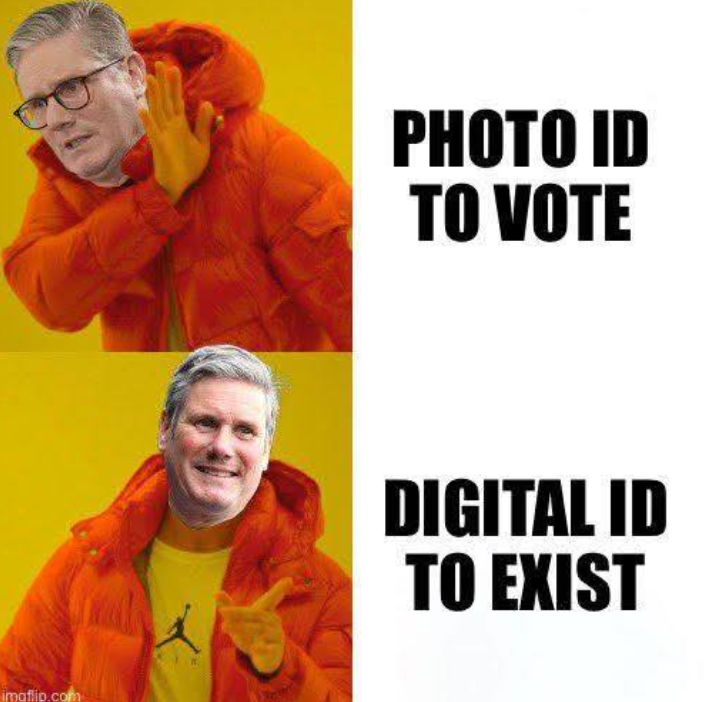
Well, here’s the thing — it’s kinda starting to feel a bit like we’re hitting a major milestone in governments finally realizing a certain fever dream they’ve had ever since the internet became a thing — requiring ID verification online.
Now, just to put some perspective on the “significance” of the moment, Missouri marks a sort of halfway point.
By that, I mean it marks the point where literally half of all 50 US states now require ID verification for at least some online activity. The other states are:
- Alabama
- Arizona
- Arkansas
- Florida
- Georgia
- Idaho
- Indiana
- Kansas
- Kentucky
- Louisiana
- Mississippi
- Montana
- Nebraska
- North Carolina
- North Dakota
- Ohio
- Oklahoma
- South Carolina
- South Dakota
- Tennessee
- Texas
- Utah
- Virginia
- Wyoming
Now, how this affects people in each state varies depending on which state you pick. Some, for instance, aren’t just targeting pure-play pr0n sites, but anything that might happen to host “adult” content. And that means people in states like Wyoming, South Dakota, Mississippi, and Ohio also have to hand over ID to access other, more “vanilla” platforms like BlueSky.
And this could just be the beginning of something much bigger.
To put some context on this, none of this is a “new” idea, despite the fact that it’s all happened so fast. Since the dawn of the internet, lawmakers have been trying to find ways to tie identity to online activity. The only thing that’s stopped them is a mix of political pressure, big tech lobbying, and the courts.
Yeah. The courts.
Take Georgia, for instance. It’s on the list of states now requiring ID to access pr0n. But this isn’t the first time it’s dabbled in this space.
For those of you who are long-time fans of the United States District Court for the Northern District of Georgia might remember the infamous American Civil Liberties Union v. Miller case.
tl;dr — Georgia passed legislation that would ban anonymous posting online. The ACLU challenged it, and the court upheld the ability of people to use the internet anonymously.
And that’s the way things remained for decades. And, in a way, they still mostly kinda do remain that way.
But here’s the thing. Once a cascade starts, it generally keeps cascading. And this cascade’s not showing any signs of being contained anytime soon. And I’m not just talking about the US, either.
Take Australia, for instance.
According to its government, it doesn’t need to protect kids from this:

But they do need to stop kids from doing this:
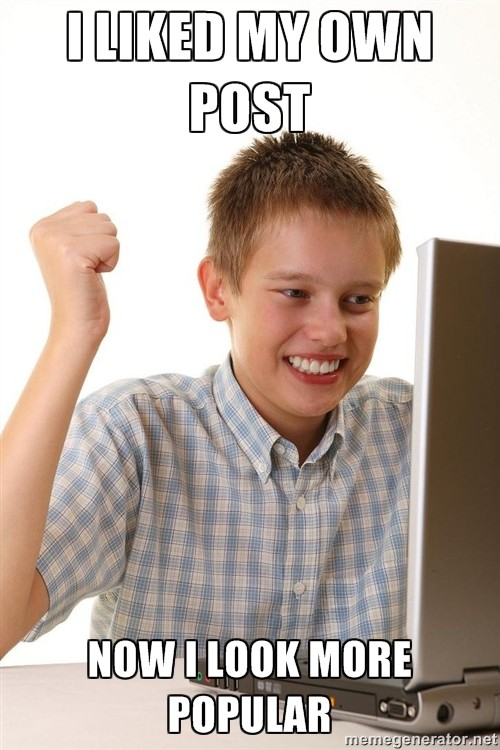
In case you missed it, starting in just a few days, Australia will be enforcing an age limit on social media use.
And this isn’t just limited to pr0n like most of what we’re seeing in the United States. This is a full-blown age verification scheme that basically requires ID to exist on the internet — Facebook, Instagram, Kick, Reddit, Snapchat, Threads, TikTok, X, and YouTube are all targeted under the Australian initiative.
Now, just to be “fair” here, this isn’t an “ID required by default” scheme. And, for the most part, it’s likely not going to have a huge impact on “adults”.
The way Australia is rolling out age verification is to first rely on platforms — they’ll need to identify underage users based on usage patterns. Anyone deemed underage will be logged out. If they then want to log in again, then they’ll have to provide a government-issued ID.
Oh, and since we’re on the topic — Australia’s not the only one with such laws.
Malaysia’s planning on rolling them out next year.
The UK’s had them for a few months now. In fact, OFCOM just issued AVS Group a million-pound fine for not having sufficiently “robust” age checks.
And the EU, just last week, issued this press release about its “grave concern over physical and mental health risks to minors online.”
And yeah, the proposal to address this “grave concern” absolutely includes “an EU-wide minimum age of 16.”
So basically, expect plenty more action on this front in the months and years to come.
Takeaway
Look, I’m not telling you all of this because I want you to care about online privacy.
You’re free to believe whatever you want. Either way.
But here’s what I absolutely do want you to care about — the massive opportunity here.
If there’s one consistent pattern across all of these stories that we see time and time again, it’s that interest in VPNs spikes massively every time.
And that, if you’re prepared to do a little forward-planning, is an absolutely massive affiliate opportunity.
Only question is, who are you going to monetize with?
If you care about our opinion, then you might wanna check out the Pure VPN affiliate program.
Closing Thought
Anytime you speak about privacy online, you’ll often hear a familiar trope rolled out. It usually starts a little like this:
“If you ain’t got nothing to hide…”
And you know what? Maybe these people are right. Maybe we shouldn’t care about online privacy so much. After all, talking about potential tyrannical governments and whatnot is total crazy talk… right…?
Right…?

Anyway. Jokes aside, why’s this interesting?
Well, I think it’s a nice little example of how we often like to over-index the present, and under-estimate the future.
You see things the way they are, project them forward +/-5%…
We all do it. Maybe I just did it earlier when I started talking about a potential cascade of ID verification online.
And I’m not just making this up, either. There are dozens of smart people who’ve said similar things.
Take Amara’s Law, for instance:
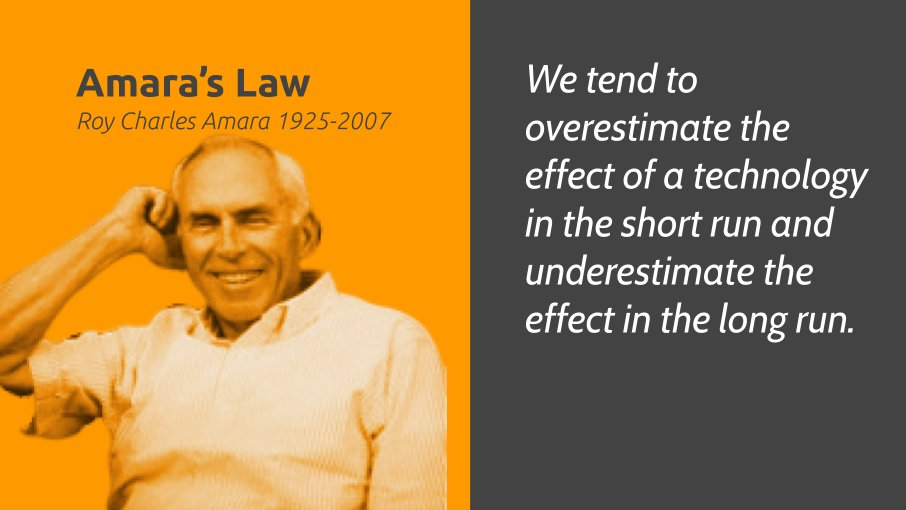
Same cognitive bias playing out.
So what’s the point here?
Well, the point is to identify this pattern in our own thinking and ask questions.
Am I basing my predictions about the future on good information? Or am I just going off the vibes of today?
And here’s where this gets really powerful — it your initial instinct was based on your “gut” — that is, what’s happening today — and you discover good information indicating the contrary, then you might have just found an opportunity.
What do I mean?
Well, if everyone’s building businesses because they expect the future to look a certain way, and that future doesn’t play out as expected, where does that leave them?
That’s right — they’re behind you, who correctly saw the future.
Just make sure that, if you see the future, you’re correctly prepared to monetize it, too. The Pure VPN affiliate program might help.
__
(Featured image by SevenStorm JUHASZIMRUS via Pexels)
DISCLAIMER: This article was written by a third party contributor and does not reflect the opinion of Born2Invest, its management, staff or its associates. Please review our disclaimer for more information.
This article may include forward-looking statements. These forward-looking statements generally are identified by the words “believe,” “project,” “estimate,” “become,” “plan,” “will,” and similar expressions. These forward-looking statements involve known and unknown risks as well as uncertainties, including those discussed in the following cautionary statements and elsewhere in this article and on this site. Although the Company may believe that its expectations are based on reasonable assumptions, the actual results that the Company may achieve may differ materially from any forward-looking statements, which reflect the opinions of the management of the Company only as of the date hereof. Additionally, please make sure to read these important disclosures.



TopRanked.io Weekly Affiliate Digest: What’s Hot in Affiliate Marketing [1xBet Affiliate Program]
If you thought nobody liked cricket, then this week, we're proving you wrong. And by the time we're done, you'll...


Tether Seeks Big Four Audit to Boost USDT Transparency
Tether, issuer of USDT, plans a full audit by a Big Four firm to address transparency concerns over its $184...


H&M Advances Sustainability and Cuts Emissions by 2025
H&M Group reported that by 2025, 91% of materials were recycled or sustainably sourced, with recycled content reaching 32%. Emissions...


NHS Funds Breakthrough CAR-T Therapy Breyanzi for Lymphoma Treatment in Spain
Bristol Myers Squibb announced NHS funding for CAR-T therapy Breyanzi, enabling its use from April 1st in Spain for lymphoma...


Crypto Markets Volatile as Bitcoin Hovers, Solana Eyes AI Integration
Crypto markets remain volatile amid the Iran war, with Bitcoin near $70,000 and ETF inflows improving outlook. Ethereum faces declines...
 |
|
 |  |
 |
|
-

 Markets4 days ago
Cocoa Markets Steady as Weak Demand and Rising Supply Signal Potential Surplus
-

 Crowdfunding2 weeks ago
ProQuote Launches Crowdfunding to Continue Media Gender Census
-
 Impact Investing21 hours ago
H&M Advances Sustainability and Cuts Emissions by 2025
-

 Biotech1 week ago
Eli Lilly Warns of Safety Risks in Compounded Tirzepatide Mixed with Vitamin B12