Crypto
Ripple in 2025: Legal Victory, RLUSD Growth, and XRP’s Uncertain Future
Ripple’s 2025 marked legal closure with the SEC, a brief XRP price peak above $3.65, and strong ETF inflows, yet ended with stagnation near $1.90. RLUSD gained traction, reaching a $1 billion market cap. Aggressive acquisitions and RWA ambitions signal transformation, but XRP’s role remains unclear heading into 2026, amid intensifying competition and regulatory scrutiny.

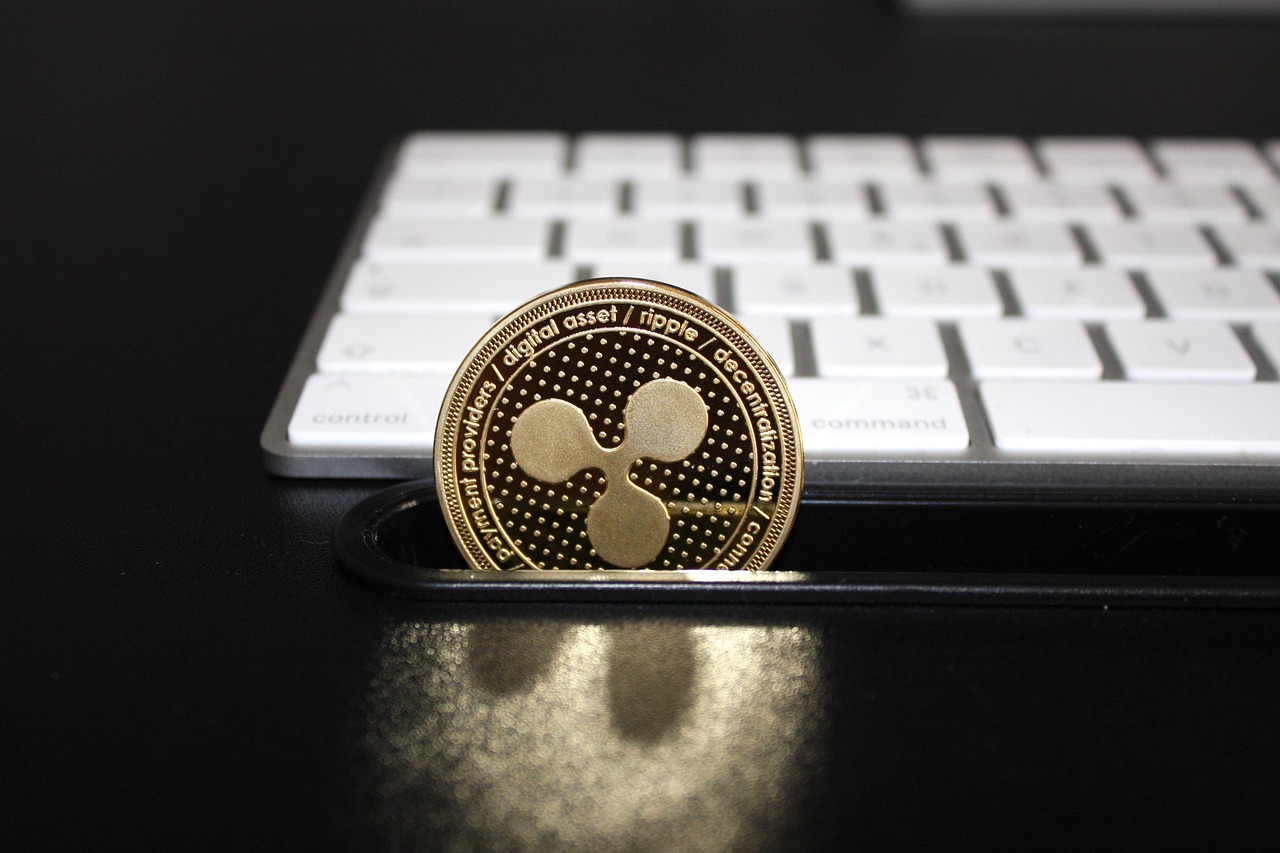
For Ripple, 2025 was an encouraging year for cryptocurrencies. The legal battle with the US Securities and Exchange Commission (SEC) finally ended, and XRP experienced a surge in popularity. The new Ripple stablecoin, RLUSD, is growing – and the plans for 2026 are ambitious.
By 2025, the crypto scene had become accustomed to a more nuanced view of Ripple. In addition to its original altcoin, XRP, the crypto company now also offers its own stablecoin, RLUSD. Billions of dollars in investments, driving Ripple’s transformation into a financial services provider, have also attracted considerable attention. However, investors need to be cautious: XRP’s place within this overall strategy remains unclear.
XRP: Soaring prices in summer, disillusionment at the end of the year
XRP started 2025 with great optimism; Donald Trump’s election victory had laid the groundwork for a solution to Ripple’s long-standing conflict with the US Securities and Exchange Commission (SEC). When Trump took office on January 20th, XRP briefly approached a new all-time high . In July, XRP actually managed to surpass its historical high of $3.40 from 2018 – now $3.65 stands as the all-time high for the Ripple cryptocurrency.
However, in retrospect, this proves to be a temporary momentum. On January 1st, 2025, XRP was trading at just over $2, and now, a few days before Christmas, it’s at around $1.90. While the altcoin, with a market capitalization of approximately $115 billion, has re-established itself among the top five cryptocurrencies worldwide, it hasn’t experienced a sustained upward trend.
On the positive side, Ripple can be pleased that XRP successfully entered the market as an ETF in the US in mid-November. The five XRP ETFs now available are performing exceptionally well; not a single trading day has passed without inflows, which now total over $1 billion. However, this hasn’t (yet) had a noticeable impact on the XRP price curve, and that should give investors pause for thought.
RLUSD stablecoin gained momentum in 2025
In the crypto year 2024, Ripple launched its own stablecoin, RLUSD, at the last minute. An interim report on RLUSD after six months failed to meet Ripple’s high expectations. However, RLUSD’s presence is growing steadily, and it reached its first billion dollar market capitalization in early November.
The company continues to aim to compete with market leaders Tether (USDT) and Circle’s USDC with RLUSD. These cryptocurrencies, with market capitalizations of $186 billion (Tether) and $77 billion (USDC) respectively, operate on a completely different scale. Ripple is leveraging its expertise and contacts to secure regulatory approvals for RLUSD, opening up opportunities beyond the crypto industry. Examples include Dubai and Singapore.
However, an EU-compliant version of RLUSD is still pending. Just before Christmas, Ripple’s bid for a banking license in the US was granted , a positive sign for RLUSD.
Ripple is expanding its capabilities – an IPO remains just an idea for now
As early as 2024, Ripple outlined its plans to combine blockchain expertise with financial services. The acquisition of prime broker Hidden Road in May 2025 costthe company $1.25 billion, and the company shelled out $1 billion for the financial manager GTreasury. Ripple CEO Brad Garlinghouse sees the crypto company’s future on Wall Street, with 2026 marking the practical test.
A Ripple funding round in late autumn brought in $500 million in investments from traditional financial firms such as Citadel Securities, Fortress Investment Group, and Brevan Howard. They were prepared to value Ripple at $40 billion. But whether Garlinghouse is secretly considering an IPO remains unclear. Discussions about this are reminiscent of Ripple’s enormous XRP reserves, which represent about 40 percent of the total supply and, at current prices, would be worth almost $80 billion on their own.
Tokenization and RWAs will become a key objective for Ripple in 2026
In April, Ripple published a forecast predicting a $10 trillion market for tokenized assets by the end of the decade. These Real World Assets (RWAs) are intended to be represented as tokens and tradable on the XRPL network, thus bringing assets such as US Treasury bonds to the blockchain. Ripple has already established initial partnerships with BlackRock , Ondo , Guggenheim , and others.
But the results remain modest. The data service rwa.xyz counts only slightly more than 200 million US dollars that have flowed into RWAs on the Ripple XRPL network so far – that’s not even 1 percent market share. The stablecoin RLUSD and the company acquisitions are expected to generate more momentum for RWAs on Ripple in 2026, but the competition is fierce.
Also important: XRP EVM and Ripple legend David Schwartz (“JoelKatz”)
In the new year, Ripple will have to manage its day-to-day operations without its long-time CTO, David Schwartz, who enjoyed considerable trust in the XRP community under his nickname “JoelKatz.” Schwartz is moving to the Ripple board of directors at his own request and remarked during his partial farewell that he finally wants to have time for hobbies and family again. The tech enthusiast in his mid-fifties often served as a liaison to external developers and the community; “JoelKatz” was known for his witty yet technically sound arguments.
One of David Schwartz’s projects that didn’t quite pan out is the XRPL EVM . This standard module for decentralized finance (DeFi) was launched on the Ripple network in early July and was intended to enable new uses for XRP. However, DeFiLlama has only logged $46 million in DeFi funds, and on many days, virtually nothing happens on the XRPL EVM.
Conclusion: Ripple needs to balance XRP, RLUSD and services in 2026
Since August, the legal battle with the SEC for Ripple and XRP has officially ended, bringing a nightmare to a close. However, in Ripple’s restructuring, it’s hard to see where XRP stands out. DeFi with XRP isn’t generating any demand, RLUSD is now serving as the bridge currency, and Ripple hasn’t found a way to meaningfully utilize the long-established altcoin.
While fees on the XRPL network must be paid with XRP, these typically amount to less than $1,000 on a typical day. As Ripple enters 2026, it appears to have a pressing need to catch up in integrating its XRP, services, and RLUSD stablecoin business units.
__
(Featured image by salesblog_at via Pixabay)
DISCLAIMER: This article was written by a third party contributor and does not reflect the opinion of Born2Invest, its management, staff or its associates. Please review our disclaimer for more information.
This article may include forward-looking statements. These forward-looking statements generally are identified by the words “believe,” “project,” “estimate,” “become,” “plan,” “will,” and similar expressions. These forward-looking statements involve known and unknown risks as well as uncertainties, including those discussed in the following cautionary statements and elsewhere in this article and on this site. Although the Company may believe that its expectations are based on reasonable assumptions, the actual results that the Company may achieve may differ materially from any forward-looking statements, which reflect the opinions of the management of the Company only as of the date hereof. Additionally, please make sure to read these important disclosures.
First published in BLOCK-BUILDERS.DE. A third-party contributor translated and adapted the article from the original. In case of discrepancy, the original will prevail.
Although we made reasonable efforts to provide accurate translations, some parts may be incorrect. Born2Invest assumes no responsibility for errors, omissions or ambiguities in the translations provided on this website. Any person or entity relying on translated content does so at their own risk. Born2Invest is not responsible for losses caused by such reliance on the accuracy or reliability of translated information. If you wish to report an error or inaccuracy in the translation, we encourage you to contact us.













The TopRanked.io Weekly Digest: What’s Hot in Affiliate Marketing [++ KuCoin Affiliate Program Review]
X now allows people to block certain topics from their feed. This week, we're going to tell you how to...


Hotel Stay Project Supports Wildlife Conservation in Japan
Iwate Prefecture launched a project linking hotel stays to conservation through Morioka Zoological Park Zoomo. A themed room at Yunomori...


Bitcoin Leads Modest Crypto Rebound Amid Mixed Signals
Bitcoin rose 2 percent to above 77000 as ETFs saw 15 million inflows and April gains of 12.2 percent. Ethereum...


Major Pharma Advances: EU Approvals, Vaccine Progress, and Breakthrough Clinical Results
Johnson & Johnson has EU approval for nipocalimab for generalized myasthenia gravis, showing superior control and sustained benefits. Sanofi reported...


Agential Cannabis 2026 to Drive APAC Market Growth and Global Industry Collaboration
Agential Cannabis 2026 will take place September 23–24 in Bangkok, bringing global experts together to advance the APAC medical cannabis...
 |
|
 |  |
 |
|
-

 Africa3 days ago
Why Small Businesses in the MENA Region Struggle to Scale Despite Access to Finance
-

 Africa2 weeks ago
Middle East Crisis Threatens Africa’s Growth and Economic Stability
-
 Business1 week ago
The TopRanked.io Weekly Digest: What’s Hot in Affiliate Marketing [uMobix Affiliates Review 2026]
-

 Biotech2 weeks ago
Beeline Medicines Launches with $300M to Advance Precision Therapies for Autoimmune Diseases