Cannabis
US Signals Shift to Evidence-Based Medical Cannabis Policy
A December 2025 US executive order signals a major policy shift by treating medical cannabis as a public health issue rather than a tolerated exception. It pushes faster reclassification, expands research, addresses CBD regulation, and legitimizes state programs without full legalization. The focus moves from punishment to evidence-based regulation, aiming to align federal policy with science, patient needs, and real-world data.


The American case offers a lesson that transcends borders: the real dilemma is not to legalize or prohibit, but to regulate medical cannabis with evidence, control and institutional consistency.
On December 18th, 2025, the White House issued an executive order that, without legalizing cannabis or dismantling the federal drug control regime, marks a quiet but profound turning point in US public policy: for the first time in decades, medicinal cannabis ceases to be treated as a tolerated anomaly and begins to be addressed as a matter of public health, scientific evidence, and health regulation.
The executive order stems from an uncomfortable truth for the traditional prohibitionist approach: millions of Americans already use cannabis for medical purposes, a large number of states have extensively regulated it, and science has produced sufficient evidence to justify a paradigm shift. The lag lies not in society or medical practice, but in federal regulation.
A structural dissonance
Currently, more than forty states and the District of Columbia have medical cannabis programs. It is estimated that more than six million patients receive medically prescribed treatment for conditions such as chronic pain, chemotherapy-induced nausea, or anorexia associated with serious illnesses. The Food and Drug Administration (FDA) itself recognizes the existence of strong scientific evidence for these uses.
However, at the federal level, cannabis remains classified as a Schedule I substance under the Controlled Substances Act (CSA) of 1970: the same category reserved for drugs “with no accepted medical use.” This contradiction has had practical consequences: obstacles to clinical research, a lack of clear medical guidelines, a shortage of approved medications, and a system that pushes many patients—especially older adults—to use cannabis without adequate medical supervision.
The result is a paradoxical scenario: widespread use without sufficient knowledge, exactly the opposite of what a responsible public health policy should promote.
The heart of the measure: investigate before punish
The executive order does not propose broad legalization or an ideological shift. Its approach is more technical—and therefore more powerful—: to unlock scientific research.
Since 2023, the Department of Health and Human Services (HHS) has recommended reclassifying cannabis as Schedule III of the CSA, recognizing its accepted medical use and a lower risk profile than historically attributed to it. This recommendation was supported by the FDA and the National Institute on Drug Abuse (NIDA). In 2024, the Department of Justice formally proposed the change, which is still under administrative review.
The order instructs the attorney general to expedite this process, with a clear argument: regulatory delays are no longer compatible with either scientific evidence or patients’ needs. Reclassification does not mean “liberalization,” but it does mean reducing bureaucratic barriers that currently hinder clinical trials, access to standardized samples, and the generation of robust data.
States with medical programs: more legitimacy, not more automatic freedom
dfc One of the key points of the document is what it doesn’t do: it doesn’t federalize state markets or automatically legalize medical cannabis nationwide. Even if it moves to Schedule III, cannabis will remain a controlled substance, subject to federal criminal prohibitions and FDA regulations.
However, the indirect effects could be significant. By reducing barriers to research, states with medical programs could have better clinical evidence to develop safer prescribing guidelines. Furthermore, a technical but relevant change is the potential fiscal impact: by being removed from Schedule I, the severe tax regime currently levied on legal operators could cease to apply, thus improving the economic sustainability of the regulated sector.
In political terms, the order also legitimizes what already exists: it recognizes that state programs are not an anomaly, but a response to real health needs.
States without regulation: fragmentation persists
For states that have not regulated medical cannabis, the order creates neither rights nor imposes obligations. Access will continue to depend on local criminal and health codes. This perpetuates a territorial fragmentation that particularly affects patients with chronic illnesses, forcing them, in some cases, to travel or resort to the informal market.
(As an aside: In December 1933, the Federal Government repealed the prohibition of alcohol; however, even today there are counties in some states that maintain it.) Nevertheless, the federal message—focused on evidence and health—may alter the internal political debate. Not through a legal mandate, but through a change in narrative.
CBD and hemp: the other major regulatory gap
The executive order pays particular attention to cannabidiol (CBD) and hemp-derived products, whose use is even more widespread than that of medical cannabis. One in five adults in the United States reports having used CBD in the past year.
Here, the diagnosis is severe: inaccurate labeling, variability in THC levels, confusion between full-spectrum and isolated products, and legislative changes that could make currently available products illegal. All of this without clear safety standards or medical guidance.
The order proposes moving toward a regulatory framework that establishes THC limits per serving and per container, criteria for the CBD-to-THC ratio, and inter-institutional coordination to define standards of care. It is an implicit acknowledgment that the market has outpaced regulation, with clear risks for consumers.
Real-world evidence: govern with data, not dogma
Perhaps the most innovative element of the text is its emphasis on real -world evidence . Policy should not be limited to traditional clinical trials, but should incorporate data derived from existing regulated use: prescriptions, adverse events, and patient-reported outcomes.
This approach allows for something fundamental: dynamic regulation, adjusting rules and guidelines based on real data and not ideological assumptions.
And what about international law?
One of the recurring fears in this debate is the potential conflict with the UN Conventions on Drugs. The document is cautious: it does not intend to remove cannabis from the international control system. Globally, cannabis remains on Schedules I and IV of the 1961 Single Convention.
The legal key lies not in the internal labeling, but in substantive compliance: limiting use to medical and scientific purposes, maintaining effective controls over production and distribution, and preventing diversion to illegal markets. The order clearly falls within this framework. The strongest international tension remains regarding recreational use, not medicinal use.
Photo: Kindel Media The executive order pays special attention to cannabidiol (CBD) and hemp-derived products, whose use is even more widespread than that of medicinal cannabis.
Lessons from beyond the US
The American case offers a lesson that transcends borders: the real dilemma is not to legalize or prohibit, but to regulate with evidence, control and institutional consistency.
For countries like Colombia—which already have an advanced framework for medicinal cannabis—the message is clear: expanding access without strengthening pharmacovigilance, medical training, and quality standards can generate more risks than benefits. International legitimacy is not built on rhetoric, but on data, traceability, and verifiable health outcomes.
A silent but profound change
The December 2025 executive order doesn’t make sensational headlines. It doesn’t promise revolutions or break treaties. But it introduces something more lasting: a change in language. Cannabis ceases to be, at least in the medical field, a moral issue or a matter of the war on drugs, and begins to be treated as what it already is for millions of people: a public health issue that demands knowledge, intelligent regulation, and state responsibility.
__
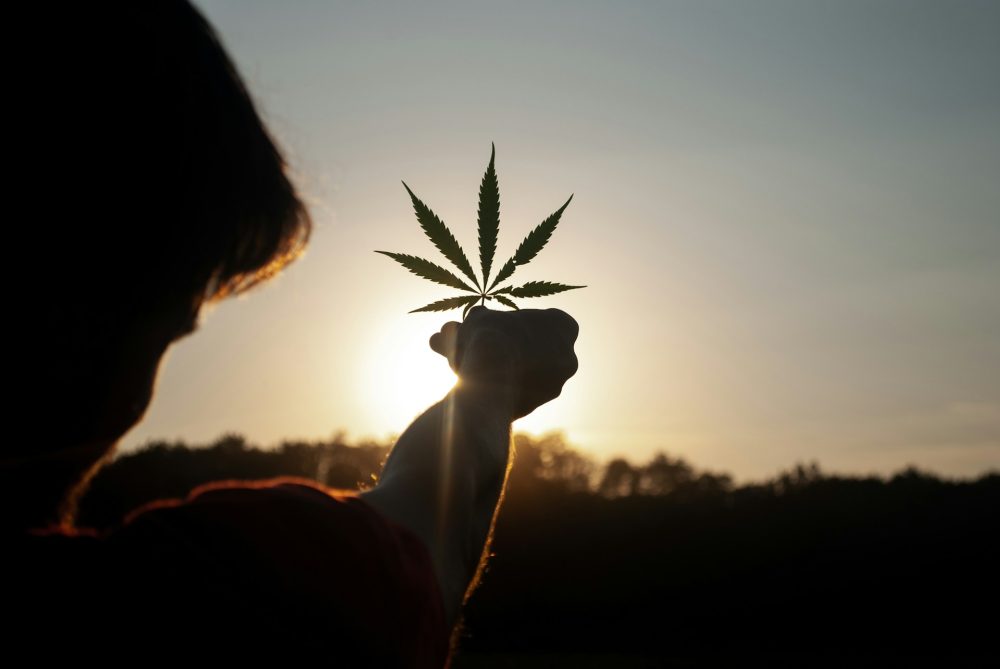
(Featured image by CRYSTALWEED cannabis via Unsplash)
DISCLAIMER: This article was written by a third party contributor and does not reflect the opinion of Born2Invest, its management, staff or its associates. Please review our disclaimer for more information.
This article may include forward-looking statements. These forward-looking statements generally are identified by the words “believe,” “project,” “estimate,” “become,” “plan,” “will,” and similar expressions. These forward-looking statements involve known and unknown risks as well as uncertainties, including those discussed in the following cautionary statements and elsewhere in this article and on this site. Although the Company may believe that its expectations are based on reasonable assumptions, the actual results that the Company may achieve may differ materially from any forward-looking statements, which reflect the opinions of the management of the Company only as of the date hereof. Additionally, please make sure to read these important disclosures.
First published in razonpublica. A third-party contributor translated and adapted the article from the original. In case of discrepancy, the original will prevail.
Although we made reasonable efforts to provide accurate translations, some parts may be incorrect. Born2Invest assumes no responsibility for errors, omissions or ambiguities in the translations provided on this website. Any person or entity relying on translated content does so at their own risk. Born2Invest is not responsible for losses caused by such reliance on the accuracy or reliability of translated information. If you wish to report an error or inaccuracy in the translation, we encourage you to contact us.













The TopRanked.io Weekly Digest: What’s Hot in Affiliate Marketing [++ KuCoin Affiliate Program Review]
X now allows people to block certain topics from their feed. This week, we're going to tell you how to...


Hotel Stay Project Supports Wildlife Conservation in Japan
Iwate Prefecture launched a project linking hotel stays to conservation through Morioka Zoological Park Zoomo. A themed room at Yunomori...


Bitcoin Leads Modest Crypto Rebound Amid Mixed Signals
Bitcoin rose 2 percent to above 77000 as ETFs saw 15 million inflows and April gains of 12.2 percent. Ethereum...


Major Pharma Advances: EU Approvals, Vaccine Progress, and Breakthrough Clinical Results
Johnson & Johnson has EU approval for nipocalimab for generalized myasthenia gravis, showing superior control and sustained benefits. Sanofi reported...


Agential Cannabis 2026 to Drive APAC Market Growth and Global Industry Collaboration
Agential Cannabis 2026 will take place September 23–24 in Bangkok, bringing global experts together to advance the APAC medical cannabis...
 |
|
 |  |
 |
|
-
 Cannabis2 weeks ago
Misiones to Close State Cannabis Firm to Cut Costs and Boost Efficiency
-

 Biotech2 days ago
Johnson & Johnson Expands U.S. Biomanufacturing Amid Policy Shifts and Rising Demand
-

 Crowdfunding1 week ago
Pelorias Sea Sound 2026 Launches Community-Driven Crowdfunding Campaign
-

 Markets4 days ago
Markets Rally Amid War Strains and Blockade Uncertainty