Cannabis
US Hemp Regulation Overhaul Sparks Global Impact
A new US appropriations bill effectively redefining hemp tightens THC limits, bans synthetic cannabinoids, and could dismantle much of the current hemp-derived products market. Critics call it a de facto industry ban. The shift will reshape global trade, heavily impact small producers, and force countries like Colombia to adapt while pursuing CBD-focused opportunities.

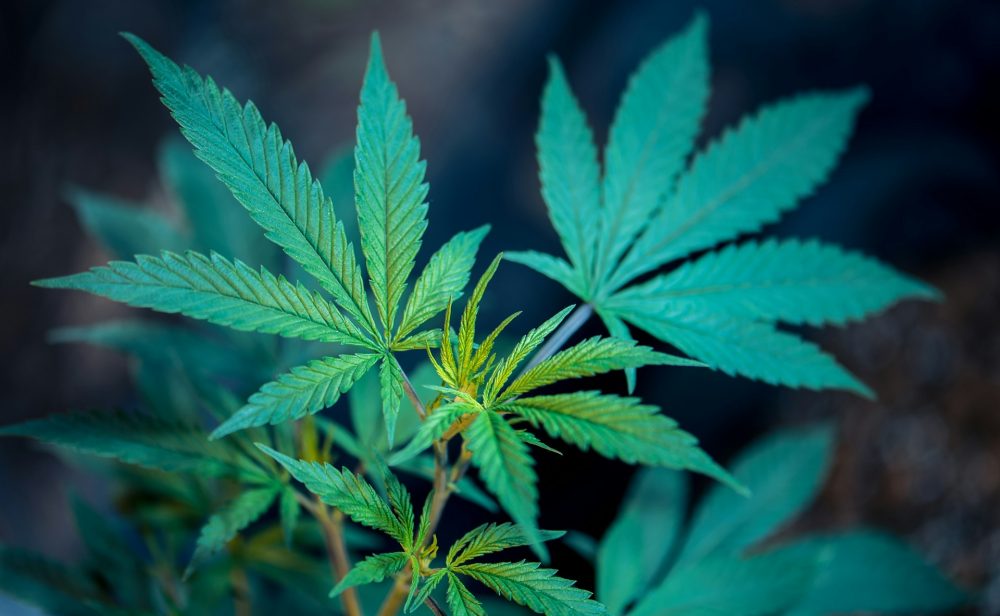
The approval of a federal appropriations bill in the United States, HR 5371 – titled ‘Continuing Appropriations, Agriculture, Legislative Branch, Military Construction and Veterans Affairs, and Extensions Act, 2026’ – promoted by Mitch McConnell, senator from Kentucky since 1985, has sparked an intense debate in the hemp and medicinal cannabis industry.
McConnell justified the change by claiming it closes an “unintentional loophole” in the 2018 Farm Bill, which allowed the rise of delta-8 and other psychoactive compounds derived from hemp. However, lawmakers like Rand Paul have denounced the measure as “amounting to banning an entire industry under the guise of safety,” and organizations like the US Hemp Roundtable are calling it “the most extreme federal criminalization of hemp since 1937.”
In reality, this change responds mainly to three motivations: concern for safety and public health in the face of adverse incidents and mislabeled products detected by the Federal Drug Administration (FDA) and the Centers for Disease Control and Prevention (CDC); pressure from the regulated recreational cannabis industry seeking to protect itself from competition from psychoactive hemp; and the push from conservative political sectors, led by figures like McConnell, who intend to restrict access to psychoactive substances despite having previously supported the hemp industry.
Although formally a budget bill, its content introduces a substantial redefinition of the concept of hemp and the regulatory framework for cannabinoids nationwide. The change, which will take effect in November 2026, represents the most significant overhaul of the sector since the 2018 Farm Bill and could transform—and even dismantle—much of the current market for cannabidiol (the compound known as CBD), minor cannabinoids (compounds found in the plant at low concentrations), and hemp-derived products such as fibers.
This regulatory shift has implications that extend beyond the US border. For countries like Colombia, Canada, Uruguay, Germany, and Malta, where the medicinal cannabis industry is a strategic asset for public health, exports, and rural development, the new restrictions in the US market could reshape the landscape of international trade, pricing, innovation, and regulation.
De facto ban
HR 5371 –section 781– contains a relevant amendment to the use and classification of hemp derived from the Cannabis sativa L. plant, which implies direct regulatory changes to certain uses of cannabis derivatives. The text of the law modifies the definition of hemp, applicable at the federal level. Thus: “(A) IN GENERAL.
The term ‘hemp’ means the Cannabis sativa L. plant and any part of that plant, including its seeds and all its derivatives, extracts, cannabinoids, isomers, acids, salts, and salts of isomers, whether growing or not; provided that the total concentration of tetrahydrocannabinol (THC, the psychoactive compound in cannabis) of such plant, part, derivative, extract, cannabinoid, isomer, acid, salt, or salt of isomer does not exceed 0.3 percent on a dry weight basis.”
This definition broadens the scope of what is regulated as hemp and, by contrast, what might be left out by including forms of THC that previously operated in a gray area – for example, delta-8 THC and other isomers – under the umbrella of legal hemp.
The law also includes an article concerning hemp-derived products containing cannabinoids intended for human or animal use (by ingestion, inhalation, topical application, etc.). Among the most relevant aspects are:
– A “hemp-derived cannabinoid product” is defined as any hemp-derived intermediate or finished product that contains one or more cannabinoids – except for FDA-approved drugs – and is intended for human or animal consumption.
– Products containing cannabinoids that cannot be produced naturally in the Cannabis sativa L. plant or that have been synthesized or manufactured outside the plant are prohibited.
– A maximum limit of 0.4 milligrams of total THC – and of cannabinoids with effects similar to THC – is set per package (container) of the final product for the consumer.
This substantially changes the operating margins for cannabis/hemp-derived products – especially those seeking intoxicating effects – and may restrict or eliminate the legality of many consumer products that previously operated in gray areas of the hemp sector.
The uses of cannabis that are affected by the above can be classified as follows:
– Agricultural/industrial uses (fiber, grain, hemp seed): remain more protected, provided that the plant and its derivatives comply with the new definition of hemp (<= 0.3% total THC on a dry basis).
The use of hemp-derived cannabinoids for human or animal consumption, including products for ingestion, inhalation, or topical application, is subject to new restrictions (synthesis, isomers, a 0.4 mg limit per container, etc.). This means that many products previously sold legally may no longer meet the new federal definition.
– Recreational/intoxicating uses of cannabis (e.g., plants with high levels of THC, products seeking a high ): Although not explicitly addressed in this text to the cannabis plant, which is not hemp, modifications to the boundary and definition of hemp could further isolate the legal pathway for such uses at the federal level.
– Medical-therapeutic research uses: the law does not appear to directly modify the status of FDA-approved drugs or research policies in this hemp section, although other laws could.
The law grants a one-year grace period after its enactment for the changes to fully take effect. During this period, stakeholders in the hemp-derived products industry have time to adapt, reformulate products, adjust packaging, or cease marketing those that no longer comply with the new definition.
Once that deadline has passed, products that do not comply could fall outside the federal definition of hemp and therefore be subject to different regulations, state control, or even federal prohibition. Industry reports estimate that this could displace a large portion of the current market for hemp-derived cannabinoids.
Among the potential positive impacts, albeit limited, is the greater regulatory clarity provided by the new definition, as it eliminates the ambiguity between hemp and psychoactive cannabis. This change could facilitate the development and marketing of medical products based on isolated CBD, ensuring that they are strictly non-psychoactive.
In Colombia, the market is limited to pharmaceutical and cosmetic products (moisturizing creams and shampoos).
Furthermore, this opens a window of opportunity for innovation in the sector, especially in the development of nanometric formulations and THC-free products, which could foster differentiation and added value in the legal market.
Among the most significant negative impacts is the potential collapse of small and medium-sized businesses, especially those that depend on the sale of full-spectrum or minor cannabinoid products, which would affect both producers and distributors in the legal market. Some analysts indicate that the industry estimates losses of billions of dollars and thousands of jobs, as well as a shift of consumers toward illicit markets, a phenomenon already documented during the prohibition of delta-8 in states like New York and Colorado.
This situation could lead to higher prices and a contraction of the regulated market, which would encourage consumers to turn to the black market and further erode competition. Furthermore, farmers would be particularly hard hit by the loss of marketing channels, jeopardizing their economic sustainability.
Finally, there is the danger that large pharmaceutical companies or conglomerates will monopolize the sector, favoring monopolization and limiting business diversity , which could restrict opportunities for small entrepreneurs.
Challenges for Colombia
In the case of Colombia, the reform presents a series of challenges and risks for the sector. Among the most notable is a projected significant reduction in the US market for full-spectrum cannabis products , as these typically contain trace amounts of THC exceeding 0.4 mg per package, which will now face stricter regulations.
Furthermore, certification requirements are intensifying, forcing Colombian companies to undergo more rigorous laboratory tests and to demonstrate more accurately the genetic traceability and purity of their products, especially given the FDA’s new powers to define permitted cannabinoids.
However, this scenario also presents significant opportunities: Colombia can solidify its position as a leading supplier of high-purity CBD isolates, a category still permitted under the new regulations. Furthermore, the development of international Good Manufacturing Practices (GMP) certifications can enhance the competitiveness of Colombian products against the demanding standards of the U.S. market.
Finally, there is the possibility of promoting bilateral regulatory equivalence agreements, especially regarding laboratory analysis and THC control, which could facilitate access to and continued presence in this important international market.
On the other hand, the US industry anticipates a wave of constitutional litigation that could revolve around the possible violation of the Interstate Commerce Clause, the excessive delegation of powers to the FDA, and the disproportionate nature of the proposed regulation.
Meanwhile, states like California, Colorado, and Minnesota are already working on developing regulatory frameworks that seek to regulate, rather than prohibit, minor cannabinoids. If a clash ultimately occurs between the more permissive state laws and the federal ban, the issue could escalate and be debated before the Supreme Court, adding a layer of legal and political complexity to the future of the industry.
This scenario reflects both the regulatory tension and the dynamism of state actors in the search for solutions that balance innovation , safety and responsible access to cannabis derivatives.
Congress has been unable to approve projects such as the one seeking to regulate cannabis.
Why is Congress resisting regulating issues such as euthanasia and cannabis?
The new federal regulation of hemp in the United States marks a global turning point. Although its stated goal is to control unregulated psychoactive products, its real impact will be much broader, affecting CBD producers, farmers, and wellness companies. The measure promises to reshape the market, but it also risks pushing millions of consumers toward informal channels.
For Colombia, the challenge is twofold: adapting to a stricter US market and seizing the opportunity to consolidate itself as a reliable supplier of high-purity medical supplies.
The next decade will determine whether hemp in the United States becomes a highly regulated, pharmaceutical market, or whether pressure from consumers and states forces a relaxation of the THC threshold. The only certainty is that the impact will be international , and that countries developing policies focused on innovation, traceability, and regulatory differentiation will have an advantage in the new geopolitics of cannabis.
__
(Featured image by Roberto Valdivia via Unsplash)
DISCLAIMER: This article was written by a third party contributor and does not reflect the opinion of Born2Invest, its management, staff or its associates. Please review our disclaimer for more information.
This article may include forward-looking statements. These forward-looking statements generally are identified by the words “believe,” “project,” “estimate,” “become,” “plan,” “will,” and similar expressions. These forward-looking statements involve known and unknown risks as well as uncertainties, including those discussed in the following cautionary statements and elsewhere in this article and on this site. Although the Company may believe that its expectations are based on reasonable assumptions, the actual results that the Company may achieve may differ materially from any forward-looking statements, which reflect the opinions of the management of the Company only as of the date hereof. Additionally, please make sure to read these important disclosures.
First published in EL TIEMPO. A third-party contributor translated and adapted the article from the original. In case of discrepancy, the original will prevail.
Although we made reasonable efforts to provide accurate translations, some parts may be incorrect. Born2Invest assumes no responsibility for errors, omissions or ambiguities in the translations provided on this website. Any person or entity relying on translated content does so at their own risk. Born2Invest is not responsible for losses caused by such reliance on the accuracy or reliability of translated information. If you wish to report an error or inaccuracy in the translation, we encourage you to contact us.











Germany Sees 413 Cannabis Cultivation Clubs Two Years After Partial Legalization
Two years after partial cannabis legalization in Germany, 413 cultivation clubs have been established nationwide. Lower Saxony leads in clubs...


Argentina Introduces Automatic Authorization to Boost Crowdfunding and Investment Growth
The national government introduced automatic authorization for crowdfunding platforms, simplifying registration under CNV rules to speed investments and reduce bureaucracy....


Gilead’s $5 Billion Tubulis Deal Boosts Evotec Stake
Gilead is acquiring German biotech firm Tubulis for up to $5 billion, benefiting Evotec, which holds a 3.14 percent stake...


Switzerland Aligns Corporate Sustainability Rules with EU Standards
Switzerland proposes new sustainability rules to align with European Union standards. The law targets large companies, requiring ESG reporting and...


Bitcoin Leads Crypto Rally as Iran Ceasefire Boosts Markets
The US and Iran agreed to a two-week ceasefire, boosting crypto markets. Bitcoin surged above $71,500, Ethereum topped $2,200, while...
 |
|
 |  |
 |
|
-

 Impact Investing4 days ago
Why 2026 Could Mark a Turning Point for Sustainability
-

 Business2 weeks ago
TopRanked.io Weekly Affiliate Digest: What’s Hot in Affiliate Marketing [1xBet Affiliate Program]
-
 Biotech23 hours ago
Gilead’s $5 Billion Tubulis Deal Boosts Evotec Stake
-

 Crypto1 week ago
Crypto Markets Edge Up as Caution Persists and April Fools’ Scams Loom