Impact Investing
High Awareness, Low Adoption: The VSME Challenge for European SMEs
Although 95% of European stakeholders know the VSME standard, adoption remains limited. EFRAG’s survey shows partial implementation driven by financing and value-chain benefits, but constrained by regulatory uncertainty, skills gaps, reporting burdens, and fragmented digital tools. Aligning ESG data demands and strengthening the support ecosystem are essential for wider SME uptake across Europe going forward.

Ninety-five percent of stakeholders are aware of the VSME standard, but only a fraction fully implement it. Between access to finance, operational burdens, and digital fragmentation, a systemic challenge emerges for European SMEs.
The voluntary sustainability reporting standard for SMEs (VSME) is now well-known to industry insiders: 95% of European stakeholders are familiar with it. Yet, just over a year after its publication and five months after its formal adoption by the European Commission, only a fraction of companies are fully implementing it.
Amid regulatory uncertainty, operating costs, skills shortages, and still-fragmented digital tools, a systemic challenge emerges that goes beyond the single standard. This is highlighted by EFRAG’s first evaluation report , the Market Acceptance Progress Survey Report , which paints a clear picture: the VSME works and delivers concrete benefits, but for it to truly become the reference tool for European SMEs, a qualitative leap in the ecosystem surrounding it is needed.
In the report, EFRAG has put the initial market findings on paper: the document represents the first real test to understand whether and how VSME is becoming an operational and recognized tool along the value chain. The emerging message is that interest is growing, use is advancing, but the standard’s potential remains partially untapped, hampered by regulatory uncertainties, operational limitations, and a market demand that is not yet fully aligned.
High awareness, but adoption still selective
The most solid finding emerging from the report concerns awareness of the standard. 95% of the 282 respondents stated they were aware of the European Commission Recommendation on VSME , a result far from predictable for a voluntary and recent standard.
Specifically, more than 60 % of the stakeholders involved have been following the EFRAG project since the early development stages , started in November 2022, a sign of an ecosystem that is already mature in terms of technical debate.
Awareness, however, does not automatically translate into full adoption. Among SMEs and other preparers, i.e., those who actually prepare sustainability reports according to the VSME, 43% have already fully implemented the standard , while a further 23% are only partially using it. The remaining group is divided between those who plan to adopt it within the next twelve months and those who, at least for now, prefer to wait and see, awaiting greater regulatory clarity and more structured market demand.
On the user side , such as banks, large companies, investors, only 16% declare they use it fully , even if over a third use it as a guideline for collecting ESG information.
Regulatory uncertainty is particularly weighing on this gradual adoption. The lengthy political debate over the Omnibus and the revision of the CSRD scope has generated a general wait-and-see effect, with many companies reluctant to invest time and resources in a framework that could evolve. It is no coincidence that interest in the VSME has also grown among companies with more than 250 employees , which are preparing to use a voluntary standard based on the VSME from 2026, as envisaged by the European agreement.
Concrete benefits for SMEs, but still structural obstacles
When VSME is effectively adopted, the benefits perceived by operators are concrete and measurable. According to the EFRAG report, one of the most cited advantages is improved access to financing , with 25% of preparers citing the ability to respond to information requests from banks and investors as a key driver of adoption, a percentage that rises even higher among consultants and other stakeholders.
This is coupled with the ability to meet the ESG requirements of large corporate clients in a more orderly and standardized manner , a benefit highlighted by over 40% of respondents, confirming the role of VSME as a dialogue tool along the value chain.
In addition to external benefits, positive internal impacts also emerge. 18% of SMEs report improved management of sustainability issues, while many operators highlight greater awareness of resource use, opportunities for cost optimization , and initial strategic alignment on ESG issues, facilitated by the absence of the dual materiality analysis required by the ESRS. For companies new to reporting, the VSME is thus perceived as a structured yet proportionate entry point.
On the other hand, however, critical issues remain significant and structural . The main barrier to adoption is the lack of training and technical skills , cited as the priority obstacle by 21% of preparers, followed by the limited availability of digital tools (20%) and the complexity of some reporting (16%). In particular, the calculation of greenhouse gas emissions , reporting on biodiversity, water, and the circular economy , areas for which simple methodologies and easily accessible data are lacking, are problematic .
Not surprisingly, almost half of SMEs report taking between one and three weeks to prepare the VSME report, while approximately 29% spend more than a month preparing the report, a commitment still perceived as burdensome for organizations with limited structures and resources.
Another critical issue concerns digital fragmentation. 57% of VSME reports are still produced in non-digital formats, predominantly PDF, while only 43% use digital tools.
Awareness of the solutions developed by EFRAG remains low, with only 45% of those interviewed using the official VSME digital template, which they consider useful but still has room for improvement in terms of usability, translations, and customization. The majority of companies therefore continue to rely on internal models or templates provided by consultants , a sign of a demand for simpler, more integrable, and immediately operational tools.
The real challenge of VSME: aligning supply and demand for ESG data
The report highlights a structural tension that goes beyond the single standard. On the one hand, the VSME is increasingly used as a framework for collecting sustainability data along the value chain: 67% of users say they have already started using it in this way. On the other hand, banks and large companies often continue to require additional information not covered by the VSME, such as detailed Scope 3, product carbon footprint, human rights due diligence, and alignment with the EU Taxonomy.
This disconnect risks reducing the effectiveness of the standard, especially if the VSME is not perceived as the “maximum limit” of information requirements for SMEs. It is therefore not surprising that the most common proposals to strengthen its acceptance include the idea of a certification mechanism, the provision of free and accessible tools, and, above all, greater convergence of ESG requirements from end users.
Overall, the VSME appears to have passed its first real market test, demonstrating that it meets a concrete need of SMEs and value chain stakeholders. To establish itself as a widespread reference standard, however, the tool still requires operational support and a strengthening of the support ecosystem. The recent publication of three new EFRAG practical guidelines , dedicated to disclosures on transition practices and policies (C2), emissions reduction targets and climate transition (C3), and serious human rights incidents (C7), areas identified as among the most complex by practitioners, is a step in this direction.
Based on the survey’s findings, EFRAG will also evaluate the development of further operational guidelines on specific and possibly sector-specific disclosures, in coordination with the European Commission. At the same time, a structured collection of completed VSME report examples is planned to disseminate best practices, as well as continuing work on the VSME digital model and further mapping of digital tools and platforms supporting SME sustainability reporting. Finally, the ecosystem’s progress will be monitored through a second VSME market acceptance survey, scheduled for 2026.
__
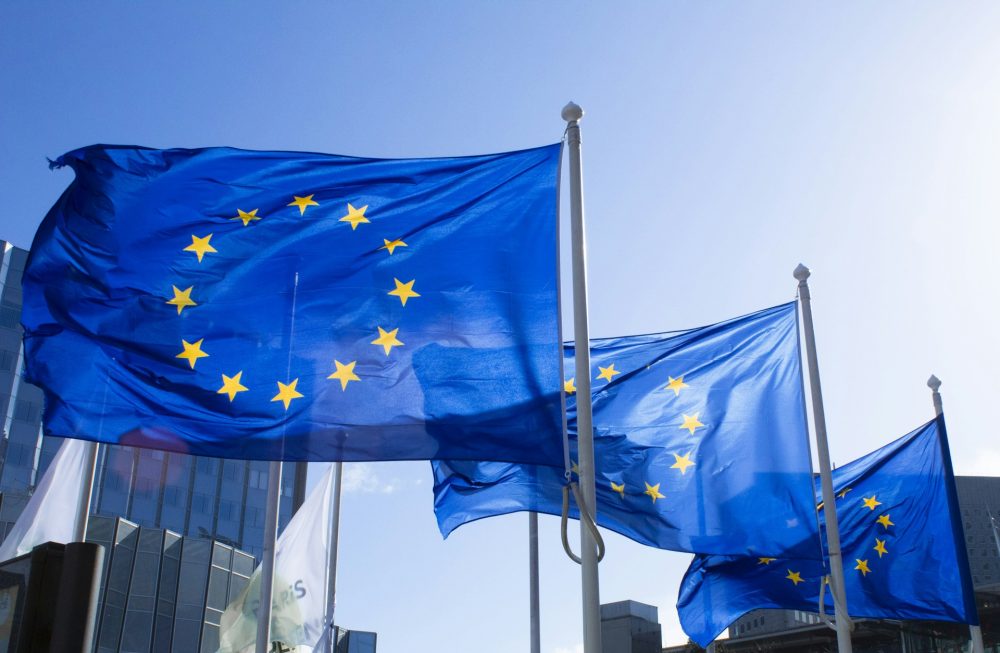
(Featured image by alexandre lallemand via Unsplash)
DISCLAIMER: This article was written by a third party contributor and does not reflect the opinion of Born2Invest, its management, staff or its associates. Please review our disclaimer for more information.
This article may include forward-looking statements. These forward-looking statements generally are identified by the words “believe,” “project,” “estimate,” “become,” “plan,” “will,” and similar expressions. These forward-looking statements involve known and unknown risks as well as uncertainties, including those discussed in the following cautionary statements and elsewhere in this article and on this site. Although the Company may believe that its expectations are based on reasonable assumptions, the actual results that the Company may achieve may differ materially from any forward-looking statements, which reflect the opinions of the management of the Company only as of the date hereof. Additionally, please make sure to read these important disclosures.
First published in ESG NEWS. A third-party contributor translated and adapted the article from the original. In case of discrepancy, the original will prevail.
Although we made reasonable efforts to provide accurate translations, some parts may be incorrect. Born2Invest assumes no responsibility for errors, omissions or ambiguities in the translations provided on this website. Any person or entity relying on translated content does so at their own risk. Born2Invest is not responsible for losses caused by such reliance on the accuracy or reliability of translated information. If you wish to report an error or inaccuracy in the translation, we encourage you to contact us.
















The TopRanked.io Weekly Digest: What’s Hot in Affiliate Marketing [uMobix Affiliates Review 2026]
With the age verification movement accelerating, big tech's trying to get back control by rolling out a bunch of "parental...


Lutech Acquires Talentomobile to Boost European Fintech Expansion
Lutech acquired Spanish fintech Talentomobile in April 2026 to strengthen its European expansion, especially in Spain. The deal enhances capabilities...


BB Biotech Accelerates Portfolio Overhaul and Outperforms NAV in Strong Q1 2026
BB Biotech actively restructured its portfolio in early 2026, adding eleven stocks and expanding investment guidelines. Its share price outperformed...


Closing the Gap: From Climate Commitments to Urgent Action
Deloitte analysis warns urgent action is needed to close the gap between climate commitments and implementation. Emissions hit record levels...


Bitcoin Strong as Market Sentiment Turns Bullish Amid Industry Developments
Bitcoin holds above $78,000 despite geopolitical tensions, supported by strong ETF inflows. A documentary suggests Hal Finney and Len Sassaman...
 |
|
 |  |
 |
|
-

 Crowdfunding3 days ago
Pelorias Sea Sound 2026 Launches Community-Driven Crowdfunding Campaign
-

 Markets2 weeks ago
Rice Market Weakens as Global Supplies Rise and Demand Softens
-

 Crowdfunding1 week ago
Music for All: Rossini Philharmonic Launches Inclusive Concert Campaign
-

 Impact Investing3 days ago
Italy Confronts Rising Youth Isolation with Nationwide Crowdfunding Initiative