Impact Investing
Waste Treatment as a Pillar of the Circular Economy and Resilient Growth
Waste treatment is a key pillar of the circular economy and environmental transition, according to LFDE analysts. Investing in plastic recycling and biogas recovery can turn climate risks into stable revenues while supporting industrial growth. Rising waste volumes and stricter regulations drive demand for better sorting, reuse, and energy recovery, creating resilient, locally dominant utility-like businesses with long-term value potential.

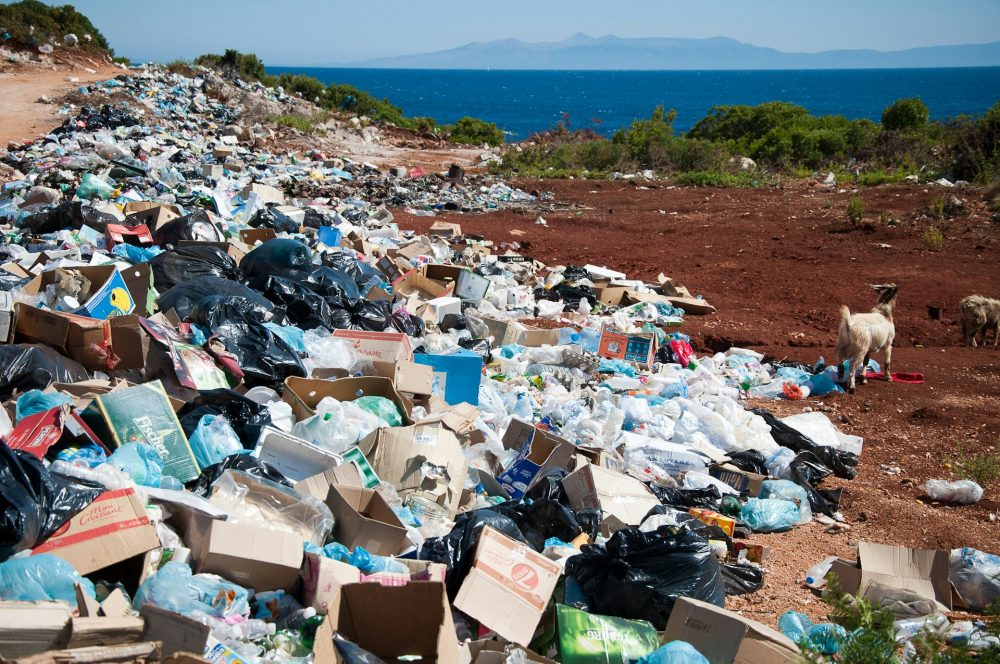
Waste treatment is a cornerstone of the environmental transition and the circular economy. According to Pierre Schang, manager, and Jisia Ranaivosoa, manager/analyst at LFDE, investing in plastic recycling and biogas energy recovery transforms climate risks into recurring revenues, offering resilience and industrial growth.
Collecting, sorting, recovering, and treating increasingly large and complex waste streams: these are the long-term needs determined by population growth, climate change, the cost of raw materials, and tightening health regulations. Without significant intervention, global household waste production could reach 3.4 billion tons by 2050, equivalent to the city of Brussels buried under 25 meters of garbage.
Waste treatment is now a central link in the environmental transition. Some pioneering investors have addressed these challenges, supporting the companies involved so they can consider them as true strategic and competitive levers.
Circularity at the heart of the ecosystem
The environmental damage caused by plastic is a concrete illustration of these challenges. Emissions from the lifecycle of plastic are expected to triple by 2026. The challenge, therefore, lies not only in collecting more, but also in producing recycled material of sufficient quality to be reintroduced into packaging chains. Beyond the environmental aspect, this same requirement responds to a growing demand from industries and communities: better tracked flows, less susceptible to contamination, and capable of being exploited in circular supply chains.
For example, Republic Services, a leading American waste management company, has created a Polymer Center in Las Vegas dedicated to the secondary sorting of post-consumer plastic to produce recycled materials ready for reuse in new packaging.
The site’s announced capacity exceeds 45,000 tons of recycled plastic per year, and the company is developing a second plant in Indianapolis. The role of equipment suppliers is also crucial in this value chain.
The Norwegian company Tomra is developing automated return systems and optical sorting technologies that can identify and separate materials with great precision: packaging, plastic, metal, and food waste. Improving the quality of the flows is essential to ensure effective circularity: the more a material is properly isolated upstream, the greater its reintegration into value-added applications rather than being disposed of.
Towards energy recovery
Energy recovery represents a second pillar of circularity and growth. A simple observation is enough: landfills emit methane, a powerful greenhouse gas that—if captured and treated—can be transformed into renewable natural gas, used in networks or as fuel. The North American group Waste Management therefore plans to invest $3 billion in its recycling and renewable natural gas infrastructure within around forty modern recycling centers.
By 2024, the company had converted 58 million MMBtu of landfill gas into energy, enough to meet the electricity needs of a metropolis like Paris for a year. The group aims to significantly increase its production through new plants. Republic Services, meanwhile, has set itself the goal of increasing the reuse of its biogas by 50% by 2030, a prime example of transforming an environmental externality into a source of recurring revenue while simultaneously reducing emissions related to landfill disposal.
For investors, waste treatment operators have similar characteristics to utilities, yet retain their own dynamics. As these are local markets, collection and landfill disposal are often subject to long-term contracts . Barriers to entry are significant: limited permits, limited social acceptability of new landfills or waste-to-energy plants, logistics density, as well as economies of scale in waste sorting and treatment.
This structure creates local monopolies or oligopolies , with good visibility of volumes and the ability to pass on costs to prices. Unlike regulated utilities, these companies have greater tariff and operational flexibility. Within a portfolio, these companies, in our view, complement stocks more directly exposed to renewable energy or energy efficiency.
The environmental transition isn’t just about producing cleaner energy ; it also requires better management of the materials our economies extract, consume, and discard. The waste management sector , whose growth is tied to long-term physical and regulatory needs, lies precisely at the intersection of resilience, circularity, and industrial growth.
__
(Featured image by Antoine GIRET via Unsplash)
DISCLAIMER: This article was written by a third party contributor and does not reflect the opinion of Born2Invest, its management, staff or its associates. Please review our disclaimer for more information.
This article may include forward-looking statements. These forward-looking statements generally are identified by the words “believe,” “project,” “estimate,” “become,” “plan,” “will,” and similar expressions. These forward-looking statements involve known and unknown risks as well as uncertainties, including those discussed in the following cautionary statements and elsewhere in this article and on this site. Although the Company may believe that its expectations are based on reasonable assumptions, the actual results that the Company may achieve may differ materially from any forward-looking statements, which reflect the opinions of the management of the Company only as of the date hereof. Additionally, please make sure to read these important disclosures.
First published in ESG NEWS. A third-party contributor translated and adapted the article from the original. In case of discrepancy, the original will prevail.
Although we made reasonable efforts to provide accurate translations, some parts may be incorrect. Born2Invest assumes no responsibility for errors, omissions or ambiguities in the translations provided on this website. Any person or entity relying on translated content does so at their own risk. Born2Invest is not responsible for losses caused by such reliance on the accuracy or reliability of translated information. If you wish to report an error or inaccuracy in the translation, we encourage you to contact us















Youth Cannabis Use in Colorado Is Falling — But the Full Story Is More Complex
The 2026 Colorado survey shows teen cannabis use fell to 10 percent in 2025, down from 21 percent in 2015....


Morocco’s Growth Holds at 4.6% as Agriculture Offsets Economic Pressures
Morocco’s economy grew 4.6% in Q1 2026, driven by a strong agricultural rebound offsetting declines in industry. Services expanded moderately...


Abivax Shares Surge as New Trial Data Eases Safety Concerns Over Ulcerative Colitis Drug
Abivax shares surged nearly 36% after positive updated trial results for its ulcerative colitis drug obefazimod reassured investors following earlier...


El Dorado Raises $9M to Expand Cross-Border Fintech Platform
El Dorado, a Latin American fintech improving cross-border financial services, raised a $9 million Series A led by Paradigm with...


Bitcoin Stalls Near $60K as Strategy Moves, ETFs Outflow, and EU MiCA Rules Take Effect
Bitcoin hovers near $60,000 with ETF outflows, while Strategy boosts reserves, sells BTC, and raises dividends to reassure investors. Ethereum...
 |
|
 |  |
 |
|
-

 Markets7 days ago
Commodity Markets Pause as Oil Falls, Metals Correct, and Grains Show Mixed Signals
-

 Africa2 weeks ago
Egypt’s Net Foreign Assets Rise as External Position Continues Gradual Strengthening
-

 Markets3 days ago
Oil Surges on U.S.–Iran Tensions as Global Markets Show Diverging Trends and Rising Risk Fears
-

 Markets1 week ago
Cocoa Market Faces Mixed Trends Amid Rising Supply and Weak Demand