Crypto
XRP vs Solana ETFs: Retail Hype Meets Institutional Interest
Six months after launch, ETFs for XRP and Solana have attracted strong investor interest in the U.S. While XRP ETFs, linked to Ripple, draw mainly retail “super fans,” Solana ETFs attract more institutional investors due to staking yields and DeFi potential. Despite price declines, both altcoin ETFs show growing legitimacy within crypto’s expanding ETF market.


For about six months now, XRP (Ripple) and Solana have been available as ETFs on traditional US stock exchanges. There is demand – from various investor groups.
What makes the XRP and Solana ETFs special?
Since 2024, crypto markets have become accustomed to viewing Bitcoin ETFs as a growth engine and incorporating investment trends into BTC valuations. This also applies, to a lesser extent, to Ethereum ETFs, which also entered the market in 2024. It wasn’t until 2025 that crypto ETFs for other altcoins took off, with XRP (Ripple) and Solana (SOL) being the most prominent examples. Compared to other ETF debutants like Dogecoin or Litecoin, XRP and Solana attract more than a hundred times the interest and investor capital on traditional stock exchanges – time for an analysis:
The five XRP ETFs in the US have attracted around $1.2 billion since their launch, according to SoSo data. Bloomberg specialist James Seyffart sees this as a success, especially since the price of XRP fell by around 40 percent during the period under review. Seyffart emphasizes that retail investors are the driving force behind XRP ETFs.
This is because it’s currently time for quarterly reports (F13) from large investors and institutions. These account for only 16 percent of the capital invested in XRP ETFs; the vast majority is driven by what Bloomberg colleague Eric Balchunas calls “XRP super fans.”
The investor picture for the Solana ETFs is quite different
They launched at the end of October 2025, about a month after the XRP ETFs, and have since attracted around $1 billion in capital. And, as with the Ripple cryptocurrency, Solana has also suffered significant losses since its ETF debut; the SOL price curve has fallen by approximately 55 percent during this period. However, the eight Solana ETFs have attracted institutional investors and large investors, and F13 quarterly reports have been filed for nearly 50 percent of the capital.
One reason for the different investor groups for XRP and Solana ETFs is likely staking. SOL can be staked and currently yields around 7 percent annual interest in Solana ; most ETFs utilize this option. XRP, on the other hand, does not rely on staking in its design. The prospect of interest payments from Solana ETFs should make it easier for medium- and long-term investors to ride out price dips.
Another argument: Solana, due to its strong position in the decentralized finance sector, is seen as a potential alternative to Ethereum. The SOL ecosystem is also a leader in the meme coins and NFT sectors. XRP, on the other hand, while bearing the prestigious Ripple name, is receiving less and less attention within the crypto company’s strategy and lacks compelling use cases. Our XRP 2025 year in review outlines the problems within Ripple that could deter professional investors.
Conclusion: Crypto ETFs are not a sure thing, but suitable for XRP and Solana
The Solana ETFs and the XRP ETF are holding their own in the market, and the long-term consequences remain to be seen.
The picture for other crypto ETFs that debuted in the last 12 months is sobering: three Dogecoin ETFs have attracted a combined $7 million, the sole Litecoin ETF $9.9 million, the Polkadot ETF hasn’t raised a single cent beyond a seed investment, and an Avax ETF reports $9 million – for the crypto industry, that’s peanuts.
But with Bitcoin , Ethereum, XRP, and Solana, four cryptocurrencies are now represented in the ETF market in the realm of billions rather than millions – just five years ago, such results were unimaginable.
__
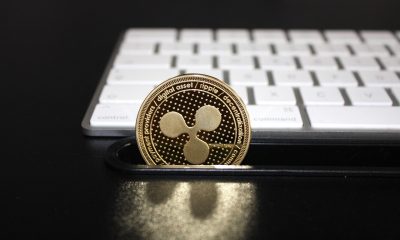
(Featured image by vvjkombajn via Pixabay)
DISCLAIMER: This article was written by a third party contributor and does not reflect the opinion of Born2Invest, its management, staff or its associates. Please review our disclaimer for more information.
This article may include forward-looking statements. These forward-looking statements generally are identified by the words “believe,” “project,” “estimate,” “become,” “plan,” “will,” and similar expressions. These forward-looking statements involve known and unknown risks as well as uncertainties, including those discussed in the following cautionary statements and elsewhere in this article and on this site. Although the Company may believe that its expectations are based on reasonable assumptions, the actual results that the Company may achieve may differ materially from any forward-looking statements, which reflect the opinions of the management of the Company only as of the date hereof. Additionally, please make sure to read these important disclosures.
First published in BLOCK-BUILDERS.DE. A third-party contributor translated and adapted the article from the original. In case of discrepancy, the original will prevail.
Although we made reasonable efforts to provide accurate translations, some parts may be incorrect. Born2Invest assumes no responsibility for errors, omissions or ambiguities in the translations provided on this website. Any person or entity relying on translated content does so at their own risk. Born2Invest is not responsible for losses caused by such reliance on the accuracy or reliability of translated information. If you wish to report an error or inaccuracy in the translation, we encourage you to contact us.














Crypto Markets Edge Up as Caution Persists and April Fools’ Scams Loom
Bitcoin and Ethereum rise slightly amid geopolitical easing and renewed ETF inflows, with BTC near $68,000 and ETH above $2,100....


Lowryder: The Autoflowering Revolution in Cannabis Cultivation
Lowryder is a groundbreaking cannabis strain that introduced autoflowering, allowing plants to flower automatically without light changes. Created by The...


Casablanca Climbs the Global Financial Ranks
Casablanca has risen to 49th in the Global Financial Centres Index, strengthening its position as Africa’s top financial hub. It...


Crypto Lending Hits $30 Billion, Becomes Key DeFi Pillar
The decentralized crypto lending market has surpassed $30 billion, signaling a structural shift in capital use. Protocols like Aave and...


Advances in LDL Cholesterol Management for Familial Hypercholesterolemia: From Statins to Innovative PCSK9 and CETP Inhibitors
PCSK9 inhibitors have transformed LDL cholesterol management in familial hypercholesterolemia, with new antibodies and CETP inhibitors like obicetrapib expanding options....
 |
|
 |  |
 |
|
-

 Africa1 week ago
Bank Al-Maghrib Launches Reforms to Boost Credit via Non-Performing Loan Market
-

 Africa2 weeks ago
Modernizing Traditional Commerce in Fes-Meknes Through Financial Inclusion
-

 Cannabis2 days ago
Poland Proposes Cannabis Decriminalization: 15 Grams and One Plant Without Penalties
-

 Business2 weeks ago
The TopRanked.io Weekly Digest: What’s Hot in Affiliate Marketing [NiftyPM Affiliate Program Review]