Biotech
Alternative Protein Sector Calls for Clear EU Biotech Law II Frameworks
The European Commission’s draft Biotech Law II has drawn input from alternative protein and industrial biotech firms seeking clearer rules for fermentation, cultured biomass, and precision fermentation. Companies like The Protein Brewery, ÄIO, and Bene Meat Technologies highlight regulatory uncertainty, labeling issues, and inconsistent frameworks. They urge harmonization, risk-based rules, and stronger EU competitiveness against the US and China.

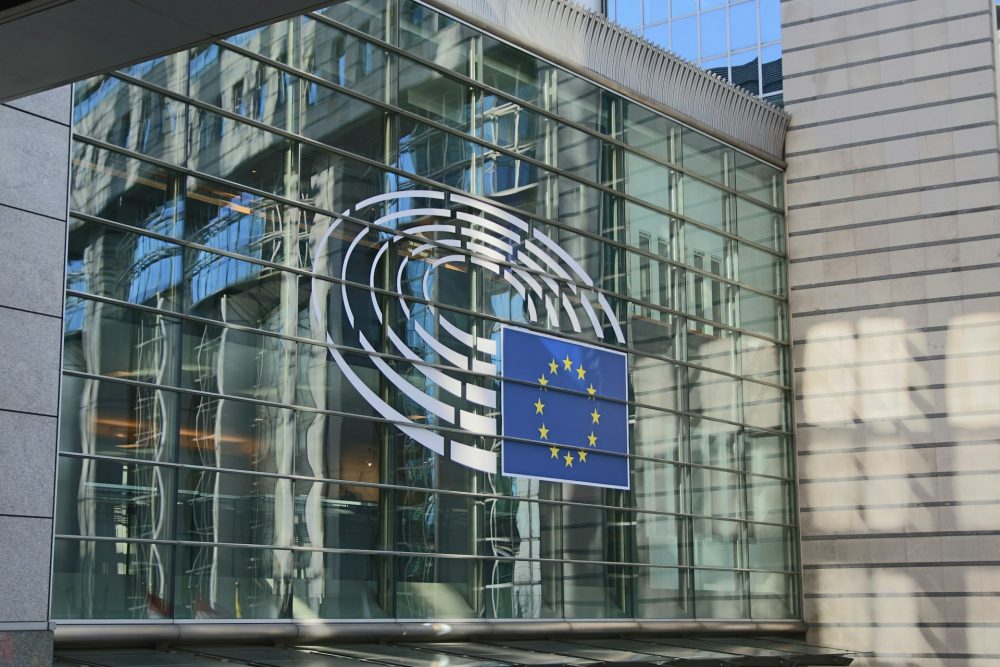
The European Commission’s call for comments on its draft Biotech Law II has prompted reactions from the alternative protein and industrial biotech sectors. Ahead of the June 10th deadline, companies called for clearer regulatory pathways for fermented ingredients, cultured biomass, and precision fermentation.
The regulation, expected to be presented as a legislative proposal in the fourth quarter of 2026, would extend the EU legal framework for biotech beyond health biotech to include industrial biotechnology and biological manufacturing. The Commission has identified the fragmentation of legislation, weak price competitiveness vis-à-vis established fossil-fuel-based technology providers, and pressure from the US and China as the main issues requiring intervention.
Companies in the fields of fermentation and novel proteins are advocating for inclusion in teh Biotech Law
The Protein Brewery, a Netherlands-based company involved in the fermentation of fungal biomass, submitted an opinion urging the Commission to ensure that advanced microbial fermentation technologies are explicitly included in the scope of the law and treated as a strategic priority.
Beyond the structural problems identified by the Commission, the biotech company has identified further obstacles specific to novel microbial proteins: labelling requirements based on an unclear Latin nomenclature, overly restrictive limitations on food categories, and safety assessment frameworks which it deemed unsuitable for this product category.
Protein Brewery also raised the question of whether the novel food status should be permanent and wanted to know if a product could eventually be reclassified as a conventional ingredient once sufficient safety data is available.
The Estonian company ÄIO, which produces lipids as an alternative to animal and tropical fats using yeast fermentation, called for “clear, harmonized frameworks that support the transition to high-quality, circular, bio-based production, including the use of waste-derived and CO-based feedstocks,” adding that “sound sustainability criteria, traceability, and fair market conditions for EU and imported products will be crucial to ensuring environmental integrity and global leadership.”
Companies point to regulatory grey areas
In its statement, Czech developer of cultured biomass, Bene Meat Technologies, urges explicit consideration of non-microbial applications of biomanufacturing, including cultured animal cells and cellular agriculture. The company warned that without clear regulations for organisms developed using new genome techniques, including CRISPR-based methods, companies in the cultured biomass sector risk remaining in “regulatory gray areas or being split across different, unlinked sectoral sets of rules.”
Bene Meat called on the Commission to adapt the risk-based logic of Biotech Act I to the structure of Biotech Act II and to ensure a uniform treatment of genetic engineering techniques in plant, microbial and animal applications.
Concerns regarding the competitiveness of the EU
The Danish biotech company Novonesis put the situation into a broader context, warning that without appropriate framework conditions, Europe “will remain a strong innovation hub, but value creation and large-scale deployment will increasingly take place in other regions.”
__
(Featured image by Guillaume Perigois via Unsplash)
DISCLAIMER: This article was written by a third party contributor and does not reflect the opinion of Born2Invest, its management, staff or its associates. Please review our disclaimer for more information.
This article may include forward-looking statements. These forward-looking statements generally are identified by the words “believe,” “project,” “estimate,” “become,” “plan,” “will,” and similar expressions. These forward-looking statements involve known and unknown risks as well as uncertainties, including those discussed in the following cautionary statements and elsewhere in this article and on this site. Although the Company may believe that its expectations are based on reasonable assumptions, the actual results that the Company may achieve may differ materially from any forward-looking statements, which reflect the opinions of the management of the Company only as of the date hereof. Additionally, please make sure to read these important disclosures.
First published in vegconomist. A third-party contributor translated and adapted the article from the original. In case of discrepancy, the original will prevail.
Although we made reasonable efforts to provide accurate translations, some parts may be incorrect. Born2Invest assumes no responsibility for errors, omissions or ambiguities in the translations provided on this website. Any person or entity relying on translated content does so at their own risk. Born2Invest is not responsible for losses caused by such reliance on the accuracy or reliability of translated information. If you wish to report an error or inaccuracy in the translation, we encourage you to contact us.




Urbanitae Drives Spain’s Real Estate Crowdfunding Boom with Record Growth and Investor Returns
Spain’s real estate crowdfunding market is expanding rapidly, with Urbanitae processing €158 million in transactions in the first half of...


French Fintech in 2026: A More Selective Market Driven by Mega-Rounds, Consolidation, and Sector Maturity
French fintech reached a new phase in 2026, with €1.25 billion raised despite fewer deals, reflecting stronger investor selectivity. Major...


Cameroon’s 2026 Economic Outlook: Growth, Debt Strategy, and Policy Priorities
Cameroon economy in early 2026 was shaped by budgetary and monetary signals, including a fiscal roadmap prioritizing IMF engagement, debt...

Germany’s Cannabis Clubs Enter New Phase as Legal Harvests Begin
Germany’s cannabis legalization is entering a practical phase as cultivation associations begin producing legal cannabis flowers. In Thuringia, clubs have...


Morgan Stanley Launches Crypto ETFs as AI and Security Risks Rise
Crypto markets showed modest moves, with Bitcoin near $64,000 and ETF outflows continuing. Morgan Stanley launched Ethereum and Solana ETFs...
 |
|
 |  |
 |
|
-
 Business1 week ago
The $40 Trillion Trap: Disinflation Is Not Deliverance
-

 Africa6 days ago
Bank of Africa Launches BOA MDM Network to Boost Diaspora Investment in Morocco
-

 Crypto2 weeks ago
Bitcoin’s Price Drops as Investors Turn to Layer 2 Solutions
-

 Fintech2 days ago
Payhawk Automates Invoice Retrieval with AI Agent to Streamline Finance Operations