Africa
Cameroon’s 2026 Economic Outlook: Growth, Debt Strategy, and Policy Priorities
Cameroon economy in early 2026 was shaped by budgetary and monetary signals, including a fiscal roadmap prioritizing IMF engagement, debt sustainability, PPPs, and investment. Growth is projected around 3.5–3.7%, inflation easing near targets. High financing needs persist, with external borrowing and ESG-linked loans planned. Trade gains from China and expanding money supply support outlook cautiously.


During the first half of 2026, Cameroon’s economy was marked by two public policy signals that structured the national situation. The Autonomous Sinking Fund (CAA), which mentions them in its monthly public debt outlook at the end of June 2026, recalls “the Budgetary Orientation Debate (DOB), which set the budgetary course for the 2027-2029 three-year period, and the holding of the Monetary Policy Committee of the Bank of Central African States (BEAC).”
In this regard, the DOB has outlined a roadmap structured around four priorities. These are “the conclusion of a new program with the International Monetary Fund (IMF), maintaining public debt on a sustainable trajectory, increased use of public-private partnerships, and continued investment in key infrastructure and productive sectors.”
The macroeconomic framework projects growth of 3.5% in 2026, then 3.7% in 2027, driven primarily by the non-oil sector, which is expected to grow by 4.3% in 2027. On the price front, average twelve-month inflation stood at 2.6% in June 2026, compared to 4.1% a year earlier, thus falling below the EU convergence threshold of 3%. Projections for Cameroon’s economy indicate 3.2% in 2027, before a gradual slowdown to 2.8% in 2029, assuming contained global inflation and successful implementation of import substitution policies.
The financing need in Cameroon remains substantial, however. The 2026 Finance Law maintains an overall requirement of 3,197 billion CFA francs (nearly USD 5.5 billion), representing approximately 8.8% of Gross Domestic Product (GDP), 67% of which is covered by external resources. The rise in international yields now calls for a cautious sequencing of the external component of the borrowing program, while the monetary easing decided by the BEAC strengthens the relative attractiveness of regional debt denominated in CFA francs.
Cameroon is nevertheless continuing its 2026-2028 debt strategy on international markets
Having already raised 474 billion FCFA (approximately USD 815 million) externally, the Cameroonian government plans to secure a 400 billion FCFA (approximately USD 690 million) loan with environmental, social, and governance (ESG) components, with the support of several international financial partners. This operation aims to diversify funding sources, reduce the cost of debt, and broaden access to sustainable financing through guarantee and risk-sharing mechanisms.
In terms of foreign trade, Cameroon could benefit from increased access to the Chinese market, as Beijing has decided to grant duty-free access to several export sectors, particularly agriculture and fisheries. This measure should improve the competitiveness of Cameroonian products, support the diversification of non-oil exports, and increase foreign exchange earnings.
The CAA also indicates that the monetary sphere should experience continued expansion. Indeed, the money supply is expected to grow by an average of 9.8% over 2027-2029, driven by an 8.1% increase in foreign assets and a 12.9% increase in credit to the economy, a sign of dynamism in bank financing that remains to be confirmed in the statistics of the coming quarters.
__
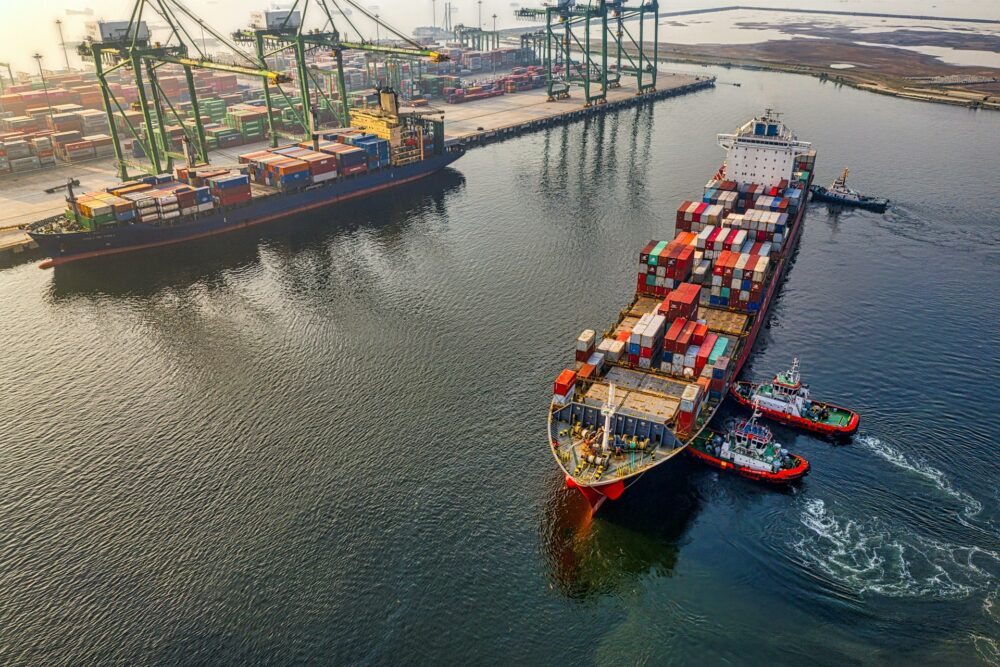
(Featured image by Ariel Nathan ADA MBITA via Unsplash)
DISCLAIMER: This article was written by a third party contributor and does not reflect the opinion of Born2Invest, its management, staff or its associates. Please review our disclaimer for more information.
This article may include forward-looking statements. These forward-looking statements generally are identified by the words “believe,” “project,” “estimate,” “become,” “plan,” “will,” and similar expressions. These forward-looking statements involve known and unknown risks as well as uncertainties, including those discussed in the following cautionary statements and elsewhere in this article and on this site. Although the Company may believe that its expectations are based on reasonable assumptions, the actual results that the Company may achieve may differ materially from any forward-looking statements, which reflect the opinions of the management of the Company only as of the date hereof. Additionally, please make sure to read these important disclosures.
First published in Financial Afrik. A third-party contributor translated and adapted the article from the original. In case of discrepancy, the original will prevail.
Although we made reasonable efforts to provide accurate translations, some parts may be incorrect. Born2Invest assumes no responsibility for errors, omissions or ambiguities in the translations provided on this website. Any person or entity relying on translated content does so at their own risk. Born2Invest is not responsible for losses caused by such reliance on the accuracy or reliability of translated information. If you wish to report an error or inaccuracy in the translation, we encourage you to contact us.










French Fintech in 2026: A More Selective Market Driven by Mega-Rounds, Consolidation, and Sector Maturity
French fintech reached a new phase in 2026, with €1.25 billion raised despite fewer deals, reflecting stronger investor selectivity. Major...


Cameroon’s 2026 Economic Outlook: Growth, Debt Strategy, and Policy Priorities
Cameroon economy in early 2026 was shaped by budgetary and monetary signals, including a fiscal roadmap prioritizing IMF engagement, debt...


Germany’s Cannabis Clubs Enter New Phase as Legal Harvests Begin
Germany’s cannabis legalization is entering a practical phase as cultivation associations begin producing legal cannabis flowers. In Thuringia, clubs have...


Morgan Stanley Launches Crypto ETFs as AI and Security Risks Rise
Crypto markets showed modest moves, with Bitcoin near $64,000 and ETF outflows continuing. Morgan Stanley launched Ethereum and Solana ETFs...


TotalEnergies Challenges Landmark Climate Ruling and Disputes Customer Liability for Emissions
The French energy company TotalEnergies is appealing a decision by the Paris Judicial Court, which, for the first time in...
 |
|
 |  |
 |
|
-

 Fintech1 week ago
FinTech Matures as AI and Infrastructure Drive the Next Growth Phase
-

 Cannabis7 days ago
Switzerland’s Medical Cannabis Reform Advances Access, But Barriers Remain
-

 Biotech2 weeks ago
Emily.AI: Personalized Oxygen Therapy Earns Global AI Recognition
-
 Africa2 days ago
BMCE Capital Markets Launches Carbon Market Offering for Moroccan Transport Operators