Impact Investing
Closing the Gap: From Climate Commitments to Urgent Action
Deloitte analysis warns urgent action is needed to close the gap between climate commitments and implementation. Emissions hit record levels in 2024, impacts intensify, and global coordination remains insufficient. Despite rising clean energy investment, adaptation lags. Climate change is already reshaping economies, supply chains, and societies, requiring immediate, systemic, and collective responses worldwide today now.

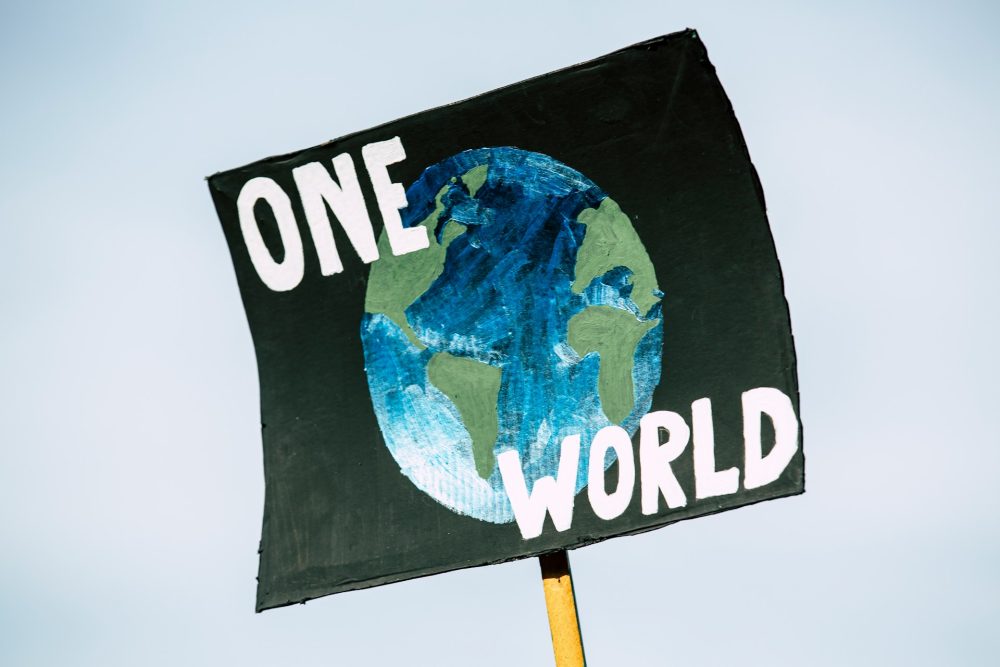
The analysis presented by Deloitte experts highlights the urgency of bridging the gap between commitments and concrete actions to address the climate crisis.
Global greenhouse gas emissions reached a record high of 57.7 billion tons of CO₂ equivalent in 2024 , while climate-related disasters caused over $328 billion in damages and approximately 16,000 deaths. This is the picture outlined by Deloitte experts in an analysis published at the NEXT Milan Forum 2026 (scheduled for May 4-6), which forcefully calls for immediate action to address climate change. This message resonates even more forcefully on Earth Day.
How climate change is redefining investments, supply chains and political priorities
2025 has confirmed its place among the hottest years on record, with temperatures exceeding pre-industrial levels by nearly 1.5 degrees Celsius. This is no longer an isolated anomaly: the decade from 2015 to 2024 was the hottest in modern history, and projections from the World Meteorological Organization indicate an 86% probability that at least one year in the five-year period from 2025 to 2029 will exceed the critical threshold for a 1.5°C increase.
These data are no longer just a matter of scientific debate, but already represent concrete, measurable, and in many cases irreversible impacts on ecosystems, economies, and the living conditions of hundreds of millions of people. Stefano Pareglio , President of Deloitte Climate & Sustainability, Andrea Poggi, Head of Public Policy & Stakeholder Relations Centre of Deloitte Central Mediterranean and Alessandro De Luca, Head of Public Policy & Stakeholder Relations Centre of Deloitte Italy, explain how climate change is redefining investments, supply chains and political priorities at a global level.
The analysis highlights how, despite scientific evidence and intensifying impacts, emissions trends show no signs of reversing. In 2024, emissions increased by 2.3% compared to the previous year, confirming a still-wide gap between commitments and their actual implementation. Between January 2024 and September 2025, only 64 countries submitted updated climate plans, covering approximately 30% of global emissions.
“To manage this delicate phase, we need to adopt a new awareness: the climate crisis is no longer a probable risk, to be addressed in the future, but a real condition, to be managed in the present and which, in any case, will have permanent long-term effects,” the experts observe. “A paradigm shift is needed that integrates the climate dimension into strategic choices, investment decisions, supply chain planning, asset valuation, and relationships with local areas and communities.”
In this context, international governance is also seeking to evolve. COP30 established a Global Implementation Accelerator, recognizing the need to move from the negotiation phase to the implementation phase. However, the scale of the challenges requires a collective effort.
“Effective responses cannot come from individual actors, no matter how ambitious and determined,” emphasize Pareglio, Poggi, and De Luca. “The scale and complexity of the challenges at hand—from implementing national climate plans to reorienting financial flows, from building resilient raw material supply chains to protecting the most vulnerable ecological and social systems—require coordination that crosses sectors, borders, and decision-making levels.”
The impacts of climate change are already evident and growing. In 2024, approximately 295 million people experienced acute food insecurity, rising for the sixth consecutive year and up 5% from the previous year, while nearly a third of cases are directly linked to extreme weather events. At the same time, forced displacement has reached record levels: 46 million people were forced to migrate due to natural disasters in the same year. The analysis highlights that global infrastructure and supply chains are built on climate-related assumptions that are no longer guaranteed.
Financially, there are signs of transformation. “In 2025, global investments in clean energy will reach $2.154 trillion, compared to $1.148 trillion in fossil fuels. This ratio of nearly 2 to 1 demonstrates a structural reallocation of capital in the energy sector,” experts note. “But this progress has a limit: it focuses almost entirely on mitigation, i.e., reducing future emissions, with still insufficient results, neglecting adaptation, i.e., the capacity of systems, communities, and infrastructure to withstand the impacts already underway.”
Critical issues also concern the availability of resources . Estimates indicate that by 2035, financing needs for adaptation in developing countries will be at least twelve times greater than the current international public finance flows dedicated to this purpose. This is not just a problem of global resource scarcity: a structural overhaul of the financial system’s architecture and policy priorities is urgently needed.
Finally, experts draw attention to an emerging challenge related to the energy transition: “We face another challenge, less visible but equally strategic: the growing dependence of the energy transition on a small number of critical raw materials, geographically concentrated in just a few countries.” In 2024, demand for lithium grew by nearly 30%, while demand for copper is set to increase significantly in the face of declining supply. “The three countries with the highest concentrations of mining for key energy minerals— China, Indonesia, and the Democratic Republic of Congo —currently control 77% of global supply.”
“The transition to a new energy system, based on renewable sources, brings with it new geopolitical dependencies that require, with the same urgency as decarbonization objectives, strategies of diversification, circularity, and international cooperation along supply chains,” the experts conclude.
The response cannot be limited to sectoral or emergency interventions, but requires a structured dialogue between multiple stakeholders to introduce integrated strategies capable of connecting industrial, financial, energy, and trade policies. This shift not only determines the ability to address the impacts of climate change, but also the opportunity to build more resilient, inclusive, and competitive growth models over the long term.
—
(Featured image by Markus Spiske via Unsplash)
DISCLAIMER: This article was written by a third party contributor and does not reflect the opinion of Born2Invest, its management, staff or its associates. Please review our disclaimer for more information.
This article may include forward-looking statements. These forward-looking statements generally are identified by the words “believe,” “project,” “estimate,” “become,” “plan,” “will,” and similar expressions. These forward-looking statements involve known and unknown risks as well as uncertainties, including those discussed in the following cautionary statements and elsewhere in this article and on this site. Although the Company may believe that its expectations are based on reasonable assumptions, the actual results that the Company may achieve may differ materially from any forward-looking statements, which reflect the opinions of the management of the Company only as of the date hereof. Additionally, please make sure to read these important disclosures.
First published in ESG NEWS. A third-party contributor translated and adapted the article from the original. In case of discrepancy, the original will prevail.
Although we made reasonable efforts to provide accurate translations, some parts may be incorrect. Born2Invest assumes no responsibility for errors, omissions or ambiguities in the translations provided on this website. Any person or entity relying on translated content does so at their own risk. Born2Invest is not responsible for losses caused by such reliance on the accuracy or reliability of translated information. If you wish to report an error or inaccuracy in the translation, we encourage you to contact us.












Virginia Cannabis Market Could Reshape Regional Competition
Virginia’s planned recreational cannabis market could reshape the Washington region’s economic landscape. With nine million residents, it may draw consumers...


Bitcoin’s Price Drops as Investors Turn to Layer 2 Solutions
Bitcoin fell toward $63,000 after leveraged liquidations erased recent gains, while geopolitical tensions between the US and Iran pressured risk...


Emily.AI: Personalized Oxygen Therapy Earns Global AI Recognition
Emily.AI, Quirónsalud’s explainable AI medical device, became a global finalist at the AI for Good Summit 2026 after competing with...


Advanced Blockchain Under Pressure Amid Crypto Market Shifts
The crypto market shows diverging trends: Advanced Blockchain faces heavy pressure despite restructuring, weak finances, and ongoing transformation, though analysts...


Cannabis Regulation in Germany and Switzerland Shows Early Benefits of Legalization Models
Germany and Switzerland’s cannabis reforms suggest regulated access can reduce criminalization without increasing consumption. Germany saw fewer cannabis-related prosecutions, while...
 |
|
 |  |
 |
|
-

 Markets1 week ago
Rice Prices Rise as Supply Outlook Tightens and Demand Stays Mixed
-
 Cannabis7 hours ago
Virginia Cannabis Market Could Reshape Regional Competition
-

 Biotech6 days ago
BIP Sells BIC Incubator to Innova, Refocuses on Core Innovation Areas
-

 Fintech2 days ago
Robinhood Chain Surges with Rapid Adoption and Billion-Dollar Trading Volume