Impact Investing
World Environment Day: Warming Risks and Clean Energy Breakthroughs
WMO forecasts warn of continued record global temperatures through 2030, with rising chances of surpassing 1.5°C and intensifying extremes, especially in the Arctic. Yet UNEP highlights hopeful tipping points: renewables, electric vehicles, efficiency, and reduced waste are becoming cheaper and scalable, enabling rapid decarbonization if investments and policies accelerate within this critical decade ahead globally.

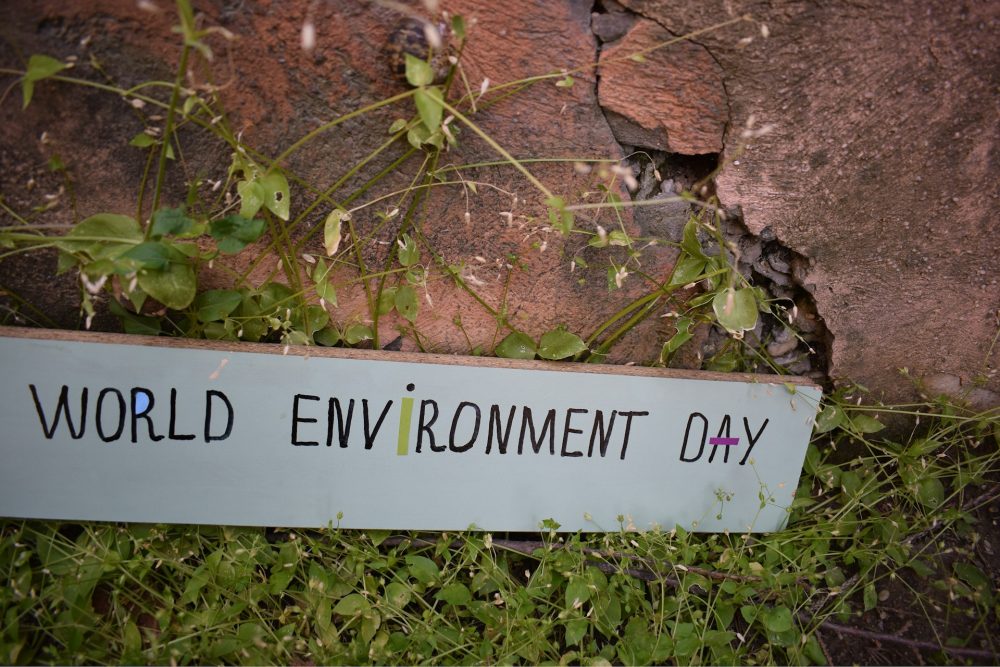
The World Meteorological Organization’s forecasts indicate that the planet will continue to experience record temperatures over the next five years. But a new UNEP report highlights how renewable energy, electric mobility, and energy efficiency are reaching tipping points capable of accelerating decarbonization. Here’s an update on World Environment Day.
World Environment Day highlights rising climate risks alongside accelerating renewable energy and decarbonization progress
June 5th marks World Environment Day, the main United Nations event dedicated to sustainability and ecosystem protection. Established in 1972 at the Stockholm Conference, it today represents one of the most important moments for taking stock of the planet’s health and the prospects for the ecological transition.
The 2026 edition of teh World Environment Day, however, arrives in a particularly complex context. On the one hand, science continues to send increasingly clear warning signals: global warming is accelerating, extreme weather events are increasing, and the symbolic 1.5°C threshold set by the Paris Agreement appears ever closer. On the other hand, however, encouraging signs are emerging that some of the technologies needed to reduce emissions are finally entering a phase of mass deployment .
This is the picture emerging from two reports published in recent days. The first, produced by the World Meteorological Organization (WMO), describes a planet destined to experience further years of record heat; the second , published by the United Nations Environment Programme (UNEP), identifies a series of “positive turning points” that could accelerate the decarbonization of the global economy. The game is, therefore, far from over.
The climate continues to warm: another five years close to record highs
Global temperatures will remain at or near record levels until at least 2030, according to the World Meteorological Organization’s new “Global Annual to Decadal Climate Update.”
Projections indicate that each year between 2026 and 2030 will have a global average temperature between 1.3°C and 1.9°C above pre-industrial levels from 1850 to 1900. This is an extremely high range, confirming that Earth’s climate system is entering a new normal characterized by consistently higher temperatures than those observed for thousands of years before the industrial era.
The most significant data, however, concerns the 1.5°C threshold. Scientists assign a 91% probability that at least one of the next five years will temporarily exceed this limit. Even more significant is the fact that the probability that the entire five-year period 2026-2030 will see an average temperature above 1.5°C has risen to 75%.
Just a few years ago, such a prospect seemed much less likely. A historical comparison shows how rapidly global climate conditions are changing. In the report published in 2020, the probability of at least one year temporarily exceeding 1.5°C was less than 25%. Today, it exceeds 90%.
The WMO also estimates that there is an 86% chance that at least one year between 2026 and 2030 will be the warmest on record, surpassing the record set in 2024 (1.55°C). However, it remains extremely unlikely, with a probability of less than 1%, that the 2°C threshold will be exceeded within the next five years.
Experts emphasize that temporarily exceeding 1.5°C does not automatically equate to failure to achieve the goals of the Paris Agreement, which are assessed over multi-decade periods. However, it represents an unequivocal indicator of the trajectory along which the global climate system is moving.
The return of El Niño -like conditions in the tropical Pacific could also contribute to rising temperatures. Forecasts show an increasing likelihood of this phenomenon developing between 2027 and 2028. As has happened in the past, El Niño could provide a further boost to global temperatures, increasing the risk of new records.
Arctic, precipitation and extreme weather: the most worrying signs highlighted on World Environment Day
Among the most alarming aspects of the report released on the occasion of the World Environment Day, is once again the situation in the Arctic, which continues to warm much faster than the global average. The WMO predicts that over the next five long Northern Hemisphere winters, from November to March, Arctic temperatures will average 2.8°C higher than the 1991-2020 average.
This is more than three and a half times higher than the global average for the same time period. This phenomenon is known as “Arctic amplification” and is one of the most obvious indicators of climate change. Melting ice reduces the Earth’s surface’s ability to reflect solar radiation, further accelerating warming.
Forecasts also show a continued decline in sea ice concentration in the Barents Sea, Bering Sea, and Sea of Okhotsk, areas critical to the climate balance of the Northern Hemisphere.
The global precipitation cycle also continues to shift. According to the report released on the World Environment Day, the period 2026-2030 is expected to see above-average precipitation in the Sahel, northern Europe, Alaska, and Siberia, while the Amazon is at risk of drier- than-normal conditions. This trend is consistent with what climate models have predicted for years: a warmer atmosphere retains greater quantities of water vapor, increasing the risk of extreme events and accentuating the differences between wetter and drier areas.
For southeastern Europe, a region that has experienced severe droughts in recent years, forecasts point to a possible return to wetter conditions in the period 2026–2030, although the reliability of regional estimates remains lower than that of global projections.
World Environment Day: The turning points that fuel hope
While the WMO report captures the gravity of the situation, the UNEP report attempts to identify the reasons why the fight against climate change should not be considered lost. The document, significantly titled “Cheaper. Cleaner. Unstoppable,” begins with a fundamental observation: many clean technologies are no longer emerging solutions, but are reaching market thresholds that could make their diffusion increasingly rapid and self-sustaining .
UNEP calls these processes “positive tipping points,” which occur when a technology becomes sufficiently affordable, accessible, and socially accepted to trigger exponential growth in demand. This is the classic S-curve pattern: a slow initial phase, followed by a sudden acceleration, and finally large-scale diffusion.
According to the report, three factors make the current moment particularly relevant. The first is that many clean technologies have reached or are reaching cost parity with fossil fuel alternatives . The second is that these technologies are modular and easily replicable at scale . The third is that the period between 2026 and 2030 represents a crucial window for guiding investments, industrial policies, and climate finance .
From renewables to electric vehicles: the transition accelerates
Renewable energy is probably the most obvious example. Within a decade, the cost of producing solar and wind energy has plummeted, and today, in much of the world, building new photovoltaic plants is cheaper than building new coal- or gas-fired power plants. It’s no surprise, then, that over 75% of new electricity capacity installed since 2020 comes from renewable sources.
Investment in the sector reached approximately $450 billion in 2024 and continues to grow. Since the electricity sector generates approximately one-third of global greenhouse gas emissions, the pace of energy transformation will be crucial to achieving climate goals.
The same is true for electric mobility. By 2025, over a quarter of new cars sold worldwide will be electric, compared to less than 3% in 2019. In countries like Norway, new registrations are now almost entirely electric, China continues to rapidly expand production and the entire supply chain (the Chinese domestic market alone accounts for 57% of total global electric vehicle sales since 2010, amounting to 22.4 million units), and Ethiopia, where electric vehicles make up 60% of new registrations, is at the forefront among developing countries.
According to UNEP, the electrification of transport could generate benefits that go far beyond reduced emissions, such as reduced energy dependence, reduced urban pollution, increased energy security and increasing integration with systems powered by renewable sources.
The building sector also represents a crucial front. Passive cooling strategies , such as shading, insulation, natural ventilation, and the use of reflective materials, can reduce internal building temperatures by up to 6-9°C, while the combination of efficient buildings and urban green infrastructure could reduce city emissions by up to 25%.
Buildings are responsible for approximately 21% of global emissions, and much of this is related to heating and cooling. Heat pumps , already widespread in several Northern European countries, are becoming increasingly competitive with traditional fossil-fuel boilers. This transformation could prove decisive, especially in emerging economies, where demand for cooling is expected to grow rapidly in the coming decades.
Finally, the report published on the World Environment Day identifies reducing food waste as one of the fastest and least costly opportunities to reduce global emissions. Considering that approximately one-third of food produced is lost or wasted and that the food system is responsible for approximately 30% of global emissions, there remains enormous room for improvement. Many cities are already experimenting with innovative initiatives to recover surplus food, improve food distribution, and reduce waste.
These interventions, in addition to climate benefits, generate social, economic, and food security benefits.
In short, while climate change continues to outpace the world’s ability to reduce emissions, for the first time, many of the solutions needed to reverse the trend no longer appear as future technologies but as already competitive economic realities. The challenge of the next five years will therefore be to transform this opportunity into an irreversible transition.
__
(Featured image by Marija Zaric via Unsplash)
DISCLAIMER: This article was written by a third party contributor and does not reflect the opinion of Born2Invest, its management, staff or its associates. Please review our disclaimer for more information.
This article may include forward-looking statements. These forward-looking statements generally are identified by the words “believe,” “project,” “estimate,” “become,” “plan,” “will,” and similar expressions. These forward-looking statements involve known and unknown risks as well as uncertainties, including those discussed in the following cautionary statements and elsewhere in this article and on this site. Although the Company may believe that its expectations are based on reasonable assumptions, the actual results that the Company may achieve may differ materially from any forward-looking statements, which reflect the opinions of the management of the Company only as of the date hereof. Additionally, please make sure to read these important disclosures.
First published in ESG NEWS. A third-party contributor translated and adapted the article from the original. In case of discrepancy, the original will prevail.
Although we made reasonable efforts to provide accurate translations, some parts may be incorrect. Born2Invest assumes no responsibility for errors, omissions or ambiguities in the translations provided on this website. Any person or entity relying on translated content does so at their own risk. Born2Invest is not responsible for losses caused by such reliance on the accuracy or reliability of translated information. If you wish to report an error or inaccuracy in the translation, we encourage you to contact us.













Cannabis Regulation in Germany and Switzerland Shows Early Benefits of Legalization Models
Germany and Switzerland’s cannabis reforms suggest regulated access can reduce criminalization without increasing consumption. Germany saw fewer cannabis-related prosecutions, while...


Insight Foto Festival Launches €4,500 Crowdfunding Campaign to Support 2026 Edition
Insight Foto Festival in Varese has launched a €4,500 crowdfunding campaign to sustain its free 2026 edition. Organized by Gattabuia...
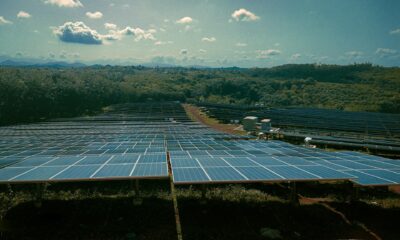

Vexuvo Secures €39M UniCredit Financing to Drive Agrivoltaic and Storage Expansion in Italy
UniCredit has provided €39.3 million financing to vexuvo to support four agrivoltaic plants totaling about 33 MW across Italy, advancing...


Alzheimer’s Study Reveals Immune Pathway Behind Women’s Higher Vulnerability and Potential New Treatment Approach
A CSIC-UMH study identifies heightened interferon signaling as a key factor in women’s greater Alzheimer’s vulnerability. Analysis of human brain...


Bitcoin Rally Faces Tests from Fed, ETFs, and Market Fear
Bitcoin rebounds above $64,000 after a short squeeze and whale accumulation, but remains far below its record high amid cautious...
 |
|
 |  |
 |
|
-
 Crowdfunding2 weeks ago
Spanish Crowdfunding Market Reaches Record €761.6M in 2025, Driven by Real Estate and Crowdlending Growth
-
 Cannabis2 days ago
Germany Tightens Cannabis Reimbursement Rules: Approved Medicines Must Come First
-

 Crowdfunding1 week ago
Lemonaid Offers Shares to Consumers for the First Time
-

 Crowdfunding6 days ago
East Crema Coffee Launches €3.5M Crowdfunding Campaign