Africa
Geopolitical Tensions and Trade Disruptions Reshape Global Commodities Markets
Geopolitical tensions and disrupted trade routes, especially around the Strait of Hormuz, are reshaping global commodities markets. Agriculture faces supply chain risks, energy remains central with rising oil prices, and refining margins are strained. Metals reflect higher energy costs and mixed demand. Markets are now driven by logistics stability, costs, and selective demand across sectors.

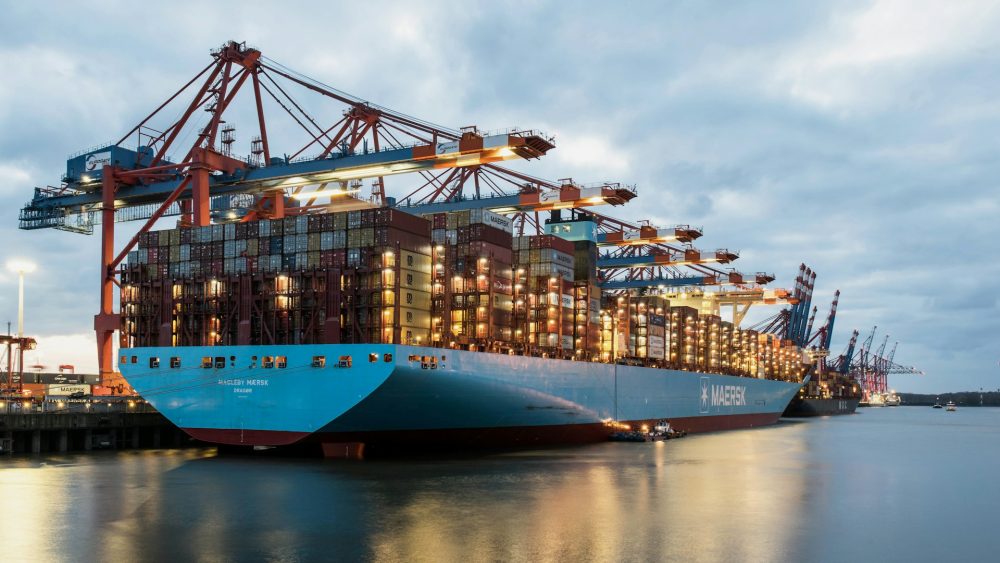
The global commodities market has been profoundly reconfigured by geopolitical tensions and the disruption of trade routes, with a direct impact on energy, agricultural products and metals.
The global commodities market is entering a new phase of tension. In its Commodity Weekly report, BKGR shows that the current shock is no longer limited to a classic rise in input prices or a simple speculative surge. Trade routes themselves are now being disrupted by persistent disturbances around the Strait of Hormuz.
For investors as well as for manufacturers, the issue is therefore no longer just the level of prices, but the ability of global trade to continue to absorb successive disruptions without causing new imbalances in the commodities sector.
Agricultural markets are being impacted by disrupted supply chains
This is particularly evident in agricultural commodities. BKGR points out that maritime blockades are affecting both fertilizer flows and grain trade, fundamentally altering market dynamics. Wheat, for example, is benefiting from a return of the risk premium, driven by concerns about the robustness of supply chains.
Corn prices remain supported by concerns about the smooth flow of access to nitrogen inputs, which are highly vulnerable to logistical disruptions. Soybeans are evolving in a different direction, more influenced by a reallocation of demand toward Brazil in export markets. In other words, agricultural prices no longer reflect solely the fundamentals of harvests or stocks, but rather the ability of each origin to remain deliverable in a more unstable environment.
Among commodities, energy remains the epicenter of tensions
The heart of the tension lies in energy. BKGR describes a market dominated by a forced reorganization of flows since the beginning of the conflict, with a near-prolonged closure of the Strait of Hormuz lengthening delays, increasing transport costs and tying up alternative logistics capacities.
In this context, Brent crude reached $108.3 per barrel and WTI $110.6, with weekly gains of 0.81% and 7.55% respectively, according to the commodities report’s price chart. US natural gas bucked the trend, falling 2.92% to $2.8 per MMBtu over the week, confirming that its market remains primarily driven by domestic factors.
Refining is becoming a point of vulnerability
One of the most significant findings of the report on commodities markets concerns refined products. BKGR notes that gasoline in Rotterdam is trading around $145 a barrel, while diesel exceeds $185. Crucially, the refining margin is now between $30 and $35 per barrel, a level that reflects the growing difficulty refineries are having in securing regular crude oil supplies while demand for finished products remains strong.
This means that the pressure is no longer concentrated solely on oil extraction. It extends up the entire value chain, to processing and distribution capacities. This explains the persistence of a geopolitical premium that BKGR now considers sustainable rather than temporary.
Base metals, caught between energy costs and hesitant demand, tell another story of the current shock. The global energy crisis is driving up production costs, particularly for the most energy-intensive facilities. Aluminum has thus risen to $3,468.5 per ton, showing a 15.77% increase since the beginning of the year. Lead gained 2.08% over the past week to $1,937.1 per ton.
Copper remains more hesitant, at $5.60 per pound in the price chart, a sign of still mixed industrial demand. Nickel holds steady around $17,100 per ton, while cobalt remains stable at $56,290. Here again, according to BKGR, the market no longer operates according to a single industrial cycle logic. It is now driven by two factors: energy costs and final demand, which remains selective across different segments.
The outlook for the rest of the year remains positive for several assets, according to the summary of forecasts compiled by BKGR. Aggregate estimates from foreign banks predict Brent crude at $124.1 per barrel by the fourth quarter of 2026 and WTI at $128.2.
Gold is expected to reach $5,104.8 per ounce and silver at $88.5, while aluminum is projected to rise to around $3,677 per ton. Conversely, corn is expected to decline gradually, while wheat and soybeans are projected to maintain their upward trend.
__
(Featured image by Wolfgang Weiser via Unsplash)
DISCLAIMER: This article was written by a third party contributor and does not reflect the opinion of Born2Invest, its management, staff or its associates. Please review our disclaimer for more information.
This article may include forward-looking statements. These forward-looking statements generally are identified by the words “believe,” “project,” “estimate,” “become,” “plan,” “will,” and similar expressions. These forward-looking statements involve known and unknown risks as well as uncertainties, including those discussed in the following cautionary statements and elsewhere in this article and on this site. Although the Company may believe that its expectations are based on reasonable assumptions, the actual results that the Company may achieve may differ materially from any forward-looking statements, which reflect the opinions of the management of the Company only as of the date hereof. Additionally, please make sure to read these important disclosures.
First published in LES ECO.ma. A third-party contributor translated and adapted the article from the original. In case of discrepancy, the original will prevail.
Although we made reasonable efforts to provide accurate translations, some parts may be incorrect. Born2Invest assumes no responsibility for errors, omissions or ambiguities in the translations provided on this website. Any person or entity relying on translated content does so at their own risk. Born2Invest is not responsible for losses caused by such reliance on the accuracy or reliability of translated information. If you wish to report an error or inaccuracy in the translation, we encourage you to contact us.













The TopRanked.io Weekly Digest: What’s Hot in Affiliate Marketing [LiveChat Affiliates Review]
Quick Disclosure: We’re about to tell you how LiveChat Affiliates run a top-notch affiliate program. And we really mean it....


German SMEs Face Tighter Bank Lending, Turn to Alternatives
Access to bank loans for German SMEs is tightening despite strong financing needs. About 37.8 percent face restrictive lending, driven...


Bitcoin Stalls as Geopolitical Risks and Crypto Industry Tensions Persist
Bitcoin is moving sideways near $72,000 amid ongoing Iran tensions, while ETF inflows remain strong. Quantum security debates continue. Ethereum...

Geopolitical Tensions and Trade Disruptions Reshape Global Commodities Markets
Geopolitical tensions and disrupted trade routes, especially around the Strait of Hormuz, are reshaping global commodities markets. Agriculture faces supply...

Germany Sees 413 Cannabis Cultivation Clubs Two Years After Partial Legalization
Two years after partial cannabis legalization in Germany, 413 cultivation clubs have been established nationwide. Lower Saxony leads in clubs...
 |
|
 |  |
 |
|
-
 Crowdfunding1 week ago
Democratizing Farmland Investment: The Rise of Farm Fractions in Agritech
-

 Biotech4 days ago
Biobanks Drive Progress in Rare Disease Research Through Collaboration and Ethical Practice
-
 Business2 weeks ago
Markets Volatility, Geopolitics, and Signals of a Potential Trend Shift
-
 Cannabis17 hours ago
Germany Sees 413 Cannabis Cultivation Clubs Two Years After Partial Legalization