Impact Investing
Edison Accelerates Renewable Growth and ESG Impact in 2025
Edison reports strong 2025 sustainability progress, boosting renewable investments by 90% to reach 2.3 GW toward a 4 GW 2030 goal, while avoiding 2.5 million tons of CO2. The group hired 300 people and strengthened Italian supply chains. Renewables and services now generate 53% of EBITDA within an integrated ESG-driven strategy and social impact focus.

In 2025, investments in renewables will grow by 90% compared to the previous year, bringing installed green capacity to 2.3 GW and progressing toward the 4 GW target by 2030. Overall, Edison avoided 2.5 million tons of CO₂ across all its business activities this year. More than 300 new hires were made this year, half of whom were recent high school and university graduates.
Renewables, supply chain, and human capital. These three pillars underpin Edison’s sustainable growth strategy. By 2025, it had increased green investments, reached 2.3 GW of installed capacity from renewable sources, and allocated €1.2 billion to over 4,000 suppliers, almost all of them Italian.
“The 2025 results confirm the solidity of our development path and the full integration of sustainability policy into the company’s strategy. In a complex and challenging environment, we reaffirm our commitment to supporting the country in its energy transition,” said Nicola Monti, Edison’s CEO.
Strong 2025 Results Drive Edison’s Energy Transition Forward
Over the last twelve months, 86% of the group’s investments have been aligned with the United Nations Sustainable Development Goals (SDGs), an increase of almost 20% compared to 2024. A way of doing business in which value creation is also measured by the ability to generate shared and widespread benefits throughout the country: in 2025, Edison made purchases worth 1.2 billion euros, 97% of which went to companies based in Italy, activating over 4,000 suppliers, and hired over 300 people during the year.
Edison’s growth plan, however, is focused on the Italian peninsula and envisions an average annual investment of between €1 and €1.5 billion over the next 10 years. The plan is structured along three axes (development of renewables and flexibility, strengthening the gas and green gas portfolio, and growth in value-added energy services for customers and local communities) to ensure the security of the Italian energy system and support its evolution, in line with the objectives set in the PNIEC (National Integrated Energy and Climate Plan).
In 2025, Renewables and the Customers and Services area generated more than half (53%) of Edison’s EBITDA, helping to avoid the emission of 2.5 million tons of CO₂.
“We are evolving our industrial portfolio to contribute to the country’s decarbonization goals by increasing our renewable capacity and our positive impact on the entire ecosystem through solutions and services for our customers. This journey is made possible by the daily work of our people and by collaborating with our stakeholders, with whom we share the responsibility of making the energy system more secure, sustainable, and inclusive for the country,” Monti continued.
Environment: the industrial route to decarbonization (E)
Last year, Edison reached 2.3 GW of renewable capacity across photovoltaic, wind, and hydroelectric power, generating 4.4 TWh of green energy, avoiding the emission of approximately 1.9 million tons of CO₂. Since 2006, the group has reduced its direct CO₂ emissions (Scope 1) by over 70%, a decarbonization trajectory built through the progressive shift in its electricity generation mix toward green sources. In 2025 alone, 200 MW of wind and photovoltaic projects were completed, with further development planned for over 500 MW in 2026-2027.
The goal is to increase installed renewable capacity to 4 GW, covering approximately 40% of the group’s generation mix and limiting emissions from all electricity generation to 200-210 gCO2/kWh by 2030 (278 gCO2/kWh in 2025). The company’s climate objectives are also summarized in the Climate Transition Plan and integrated into its Industrial Plan. Edison has defined a decarbonization trajectory that envisions a 28% reduction in direct emissions (Scope 1) by 2030 and 32% by 2035 compared to 2017, and an 11% reduction in significant indirect emissions (Scope 3) by 2035 compared to 2019 emissions.
Alongside renewables, gas and green gas are an essential source for the transition as they ensure the security and flexibility of the energy system. Through the Ravenna Knutsen LNG carrier and the coastal Liquefied Natural Gas (LNG) depot in Ravenna, the central hub of Italy’s first integrated LNG logistics chain, Edison is helping replace diesel with natural gas in heavy road and maritime transport, resulting in a 15-20% reduction in CO2 emissions compared to traditional fuels. In 2025, emissions of over 11 tons of nitrogen oxides and almost 1 ton of fine particulate matter were avoided.
The group is also committed to increasing the share of green gas in its portfolio through the production and procurement of biomethane and hydrogen for the decarbonization of “hard to abate” industrial sectors. Today, Edison owns two plants powered by OFMSW, with a third soon to be operational, and one powered by agricultural waste. It also sources its energy from third-party plants through short- and long-term agreements for the collection and resale of biomethane, becoming one of the main Italian operators in the sector.
In the Customers and Services segment, where low-carbon self-generation by its industrial customers has exceeded 280 MW, last year the group, with Edison Next, completed, among other projects, one of the largest and most innovative photovoltaic systems on a parking lot in Italy, intended for industrial self-consumption at the Avio Aero production site in Rivalta di Torino.
The project was carried out via an on-site PPA at no cost to the customer, using structures that avoided excavation and accelerated installation times, maximizing available areas and creating 1,000 covered parking spaces for employees. Edison’s energy transition is taking place while respecting natural capital. This includes some activities the group will continue to pursue in 2025, such as the Mosaico Verde project promoted together with Edison Energia to create green oases in the cities of Catania, Lecce, Livorno, and Cisterna di Latina through the planting of 4,000 tree species.
People, communities and supply chains at the heart of growth (S)
The group employs 5,800 people and expects approximately 300 new hires per year until 2030. By 2025, women will represent 23% of the total, with 25% in management roles and 32% in middle management, supported by certified gender equality policies. The centrality of human capital is confirmed by the initiatives launched by Edison to attract and retain new generations.
Last year, the group launched the “A Home for Young People” program, giving recent graduates the opportunity to live in a furnished two-room apartment with a financial contribution from the employee equal to one-third of their salary, thus eliminating the differences in rent costs across Italy. Since its launch in late 2025, the program has already allowed more than 40 recent graduates to own their own home, thus starting a path of personal and professional growth.
With ” Primi Passi,” Edison has also strengthened its support for parenting, offering financial contributions for children aged 0 to 6 (€4,500 for each child aged 0 to 3 and €1,200 for each child aged 4 to 6) and extending mandatory paternity leave to up to 14 days.
Last year, Edison involved more than 5,000 students and young people in orientation and professional training programs for energy professions, including through the Scuola Edison program and the Scuola dei Mestieri dell’Energia project , to develop technical skills and create employment opportunities in the areas where the company operates.
Aware of the importance of its supply chain to corporate objectives, the group has created the Sustainable Procurement Academy, an e-learning platform that helps suppliers transform sustainability from regulatory compliance to a concrete opportunity for growth and competitiveness. One year after its launch, 42% of qualified suppliers are enrolled in the Academy, with the goal of reaching 95% by 2026.
Edison’s commitment also extends to initiatives to combat energy poverty, with the development of Renewable and Solidarity Energy Communities (CERS) for third-sector organizations. One example is the one inaugurated last year in Rome, in collaboration with Banco dell’Energia and the Opera Salesiana Borgo Ragazzi Don Bosco.
Similarly, Edison Energia, in collaboration with Legacoop Abitanti, an association of over ten thousand cooperatives operating throughout the country, has launched a collective self-consumption model in six condominiums in the province of Reggio Emilia. Edison Next has also launched urban lighting upgrade programs in Belluno, Massa Lombarda (Ravenna), and Rosignano Marittimo (Livorno), generating significant energy savings and reducing CO2 emissions.
In the healthcare sector, it partners with approximately 800 hospitals and last year inaugurated a new trigeneration plant at the Palermo Polyclinic, capable of simultaneously generating electricity, heating, and cooling. With an active approach to relationships with local communities and territories, the group supports sports, socio-cultural projects, such as “Grande Arte in Brianza,” and educational projects, helping to strengthen the socio-economic fabric of the areas in which it operates.
Fondazione EOS – Edison Orizzonte Sociale also contributes to this dimension , having launched 30 projects and allocated €3 million to adolescent well-being initiatives since its establishment in 2021. Last year, it involved 11,000 adolescents from six Palermo neighborhoods in the “Traiettorie Urbane” project and transformed an educational initiative into a stable local network, which has led to the creation of a socially impactful energy community and a youth social enterprise.
ESG in strategy, finance, stakeholder engagement and processes (G)
Edison integrates ESG principles into its strategy, finance, and decision-making processes, recognizing that the energy transition requires shared responsibility between the company, institutions, supply chains, and communities, according to a statement. In 2025, the group continued its dialogue with the Stakeholder Advisory Board, a body that brings together representatives of the main stakeholder categories and regularly engages with top management on strategically relevant sustainability issues.
This experience consolidates external engagement and strengthens the group’s ability to implement the transition inclusively. Furthermore, Edison has joined the UN Global Compact Forward Faster program, with particular reference to the Finance & Investment and Just Transition targets, confirming its concrete, transparent, and measurable commitment to the goals of the UN 2030 Agenda.
Finally, the commitment to developing technologies related to the energy transition is demonstrated by the increase in investments aligned with the EU Environmental Taxonomy Regulation, which reached 62% in 2025, a significant increase compared to 48% in 2024. Through the results achieved in 2025 (reported according to the CSRD in the Annual Integrated Financial Report and summarized in the sets of sustainability performance indicators on the company website), Edison confirms and emphasizes the integration of sustainability into all its business lines and into its financial trajectory.
This approach, as announced in a press release, allows the group to lead the energy transition for its customers and suppliers and create value for civil society and the communities in which it operates.
__
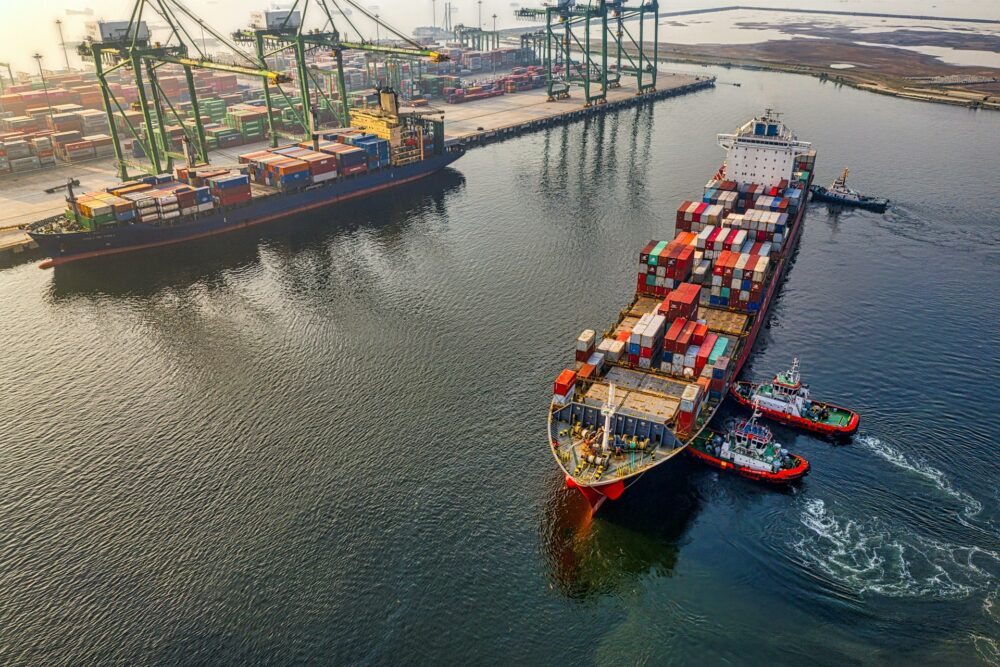
(Featured image by Олег Мороз via Unsplash)
DISCLAIMER: This article was written by a third party contributor and does not reflect the opinion of Born2Invest, its management, staff or its associates. Please review our disclaimer for more information.
This article may include forward-looking statements. These forward-looking statements generally are identified by the words “believe,” “project,” “estimate,” “become,” “plan,” “will,” and similar expressions. These forward-looking statements involve known and unknown risks as well as uncertainties, including those discussed in the following cautionary statements and elsewhere in this article and on this site. Although the Company may believe that its expectations are based on reasonable assumptions, the actual results that the Company may achieve may differ materially from any forward-looking statements, which reflect the opinions of the management of the Company only as of the date hereof. Additionally, please make sure to read these important disclosures.
First published in ESG NEWS. A third-party contributor translated and adapted the article from the original. In case of discrepancy, the original will prevail.
Although we made reasonable efforts to provide accurate translations, some parts may be incorrect. Born2Invest assumes no responsibility for errors, omissions or ambiguities in the translations provided on this website. Any person or entity relying on translated content does so at their own risk. Born2Invest is not responsible for losses caused by such reliance on the accuracy or reliability of translated information. If you wish to report an error or inaccuracy in the translation, we encourage you to contact us.











Tilray Brands Hits Multi-Year Lows as Cannabis Investors Await Regulatory Clarity
Tilray Brands shares have fallen 57% this year amid cannabis sector weakness and uncertainty over US regulatory reform. While potential...

Ethereum Between ETF Inflows, Price Risks and a Strong July
Ethereum faces mixed signals as ETF inflows and a strong July performance support recovery, while technical resistance and downside risks...


Mercedes-Benz Accelerates EV Decarbonization With Recycled Aluminum
Mercedes-Benz expands its partnership with Hydro to accelerate supply chain decarbonization. Future electric vehicles will use Hydro CIRCAL aluminum containing...


Evotec and BioGaia Boost Biotech, while Vitrolife Disappoints
European stocks moved on earnings and broker actions. Evotec, BioGaia, Plus500, Pharming, Inwido, Amundi and Julius Baer rallied on upgrades,...


BMW Hit by China Slowdown as Samsung Profits Soar and Adidas Gains World Cup Boost
BMW faces falling profits due to China’s auto market crisis, while cutting costs. Lufthansa competes for a stake in Portugal’s...
 |
|
 |  |
 |
|
-

 Fintech2 weeks ago
FinTech Matures as AI and Infrastructure Drive the Next Growth Phase
-
 Business2 days ago
BMW Hit by China Slowdown as Samsung Profits Soar and Adidas Gains World Cup Boost
-

 Cannabis1 week ago
Switzerland’s Medical Cannabis Reform Advances Access, But Barriers Remain
-
 Africa4 days ago
BMCE Capital Markets Launches Carbon Market Offering for Moroccan Transport Operators