Biotech
EU Biotechnology Law Aims to Boost Innovation and Cut Trial Delays
EU Commissioner Olivér Várhelyi proposed a Biotechnology Law to boost competitiveness, cut clinical trial times, and reduce fragmentation. Measures include streamlined regulations, AI-driven research acceleration, and incentives like extended protection certificates. The plan aims to attract investment, support startups, address funding gaps, improve multi-country trials, and strengthen Europe’s position against the United States and China.

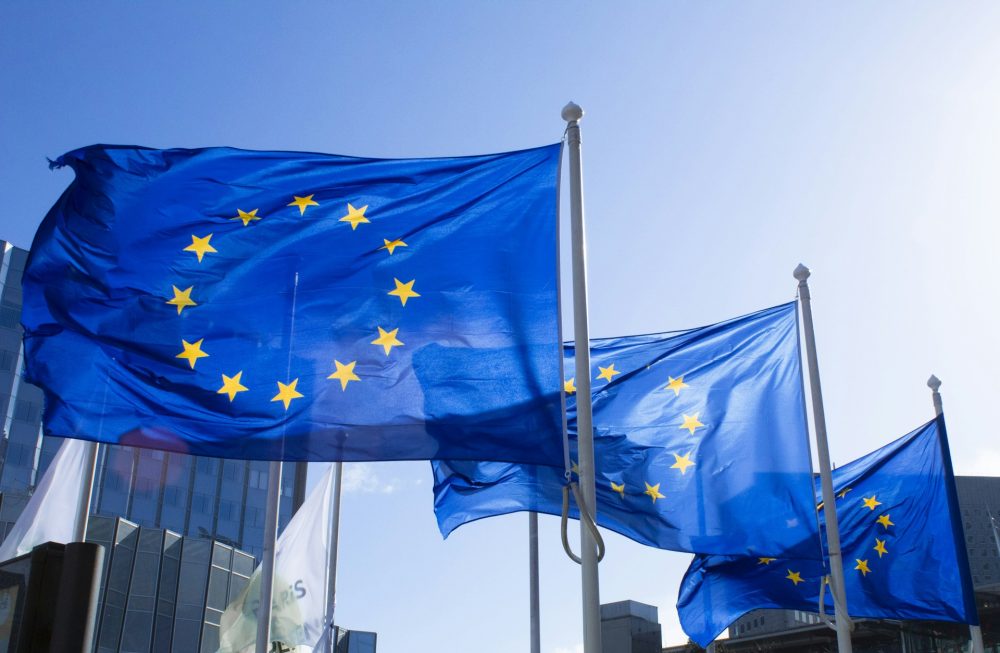
The European Commissioner for Health, Olivér Várhelyi , has presented a proposal for a European Union Biotechnology Law to the European Parliament’s Committees on Public Health (SANT) and Industry (ITRE). This technical initiative aims to prevent legislative fragmentation and ensure that biotechnology investment and production remain within the continent.
According to data provided by the Commissioner, the European share of biotechnology trials has fallen from 18 to 9 percent in the last decade, while China has risen to occupy 30 percent of the global market.
The proposal places clinical trials at the heart of competitiveness. Várhelyi pointed out that the authorization time in Europe is much longer than in competitors such as the United Kingdom or the United States.
To reverse this trend, the European Commission’s proposal introduces a drastic simplification of timelines, streamlining rules and eliminating red tape. The main objective is to reduce the timeframe for trials conducted in multiple countries from the current 106 days to a maximum of 65 days. For trials carried out in a single Member State, the authorization period will be reduced from 75 to 47 days.
This reduction in timeframes, which “will not compromise safety or scientific quality,” will rely on greater coordination among member states. Várhelyi explained that the system must evolve toward a model based on “trusting member state reports and ethical reviews.” With this measure, Brussels seeks to eliminate the legislative fragmentation that currently hinders the sector.
During his address to the European Parliament’s Health and Industry committees, Várhelyi stressed that the legislation will not be a mere regulatory exercise, but a tool to “generate real economic value” that will allow European biotechnology companies to attract global investors and retain innovation on the continent.
One of the most significant announcements has been the commitment to Artificial Intelligence (AI) to optimize research design. According to the commissioner, applying this technology in phase 2 of clinical trials—specifically in the chemical phase, considered the most expensive and time-consuming—would reduce the average execution time from the current five or six years to less than two.
This acceleration would be accompanied by a drastic reduction in operating costs, which Várhelyi has estimated at up to 2 percent of total expenditure, a figure with a significant impact given the volume of investment required for these processes.
Market value incentives
To strengthen the startup and scale-up ecosystem, the Commission proposes extending the Supplementary Protection Certificate as a “fundamental economic incentive.” This mechanism, which grants additional market value to intellectual property, will be conditional on developments presenting a novel biotechnological mechanism or a novel active substance.
Várhelyi has argued that these incentives are “absolutely necessary” for European science, which often ends up being commercially exploited in the United States, to generate wealth within the European Union.
The commissioner also addressed the issue of multi-country trials, acknowledging that Europe “is losing the global race.” The new strategy aims to eliminate bottlenecks in the design of these studies to prevent excessive regulation by member states from acting as a barrier. In this regard, Brussels has opted for a regulation to ensure uniform application of the rules and prevent countries from creating additional conditions that hinder competitiveness.
Orphan and critical drugs
Regarding drugs for rare diseases, the Commission’s approach will shift towards market creation. Várhelyi explained that, with orphan drugs, the main challenge is not the length of development, but the size of the market.
Therefore, the Biotechnology Act will be linked to the future Critical Medicines Act to promote a commercial environment that incentivizes the entry and continued availability of these products in the European healthcare system. “We are doing everything possible to put Europe back on the map for clinical trials.”
Strategic investment and advanced therapies
Funding is another key pillar of the reform. The Commissioner noted that the United States invests nine times more in biotechnology startups than the European Union. To address this capital gap, the Commission and the European Investment Bank (EIB) plan to mobilize € 10 billion this year and next through the Biotech EU program.
This funding will bridge the gap to the next Multiannual Financial Framework (MFF) funding period. Furthermore, the law establishes a new framework for designating strategic biotechnology projects, which will receive specific incentives and protection through intellectual property certificates.
Reactions to the new Biotechnology Law from parliamentary groups
During the debate, the speakers and parliamentary spokespeople expressed their support for the robustness of the proposal, although they pointed out remaining challenges. W. Beke, spokesperson for the European People’s Party ( EPP ) Group in ITRE, emphasized that the legislation has great potential to make Europe a hub for innovation, but noted that none of the ten best-selling products belong to a European company.
In this regard, he stated that “investment in clinical trials is increasingly leaving Europe” and that a “Made in Europe” approach is essential to guarantee patients’ rapid access to effective treatments.
On behalf of the Progressive Alliance of Socialists and Democrats ( S&D ), Dario Nardella welcomed the reduction in timeframes for multinational clinical trials. However, he stressed the importance of maintaining ethical standards and supporting small businesses.
Nardella questioned whether the regulatory simplification would be accompanied by easier access to funding, noting that “intellectual property must have effective protection because, without it, there is no investment.” He also called for guarantees that SMEs can navigate complex regulatory processes without losing competitiveness.
Fragmentation and strategic autonomy
Concern about the brain drain and the loss of capital was a recurring theme in the debate. Margarita de la Pisa Carrión , representing the Health and Industry parliamentary groups, welcomed the focus on improving the connection between research and the market.
The MEP inquired about specific instruments to strengthen innovative capacity and how it would be ensured that “applicable environmental legislation does not become an obstacle to innovation and competitiveness in the biotechnology sector.” She also emphasized the need to strengthen manufacturing capacity within Member States in the context of critical medicines.
Speaking on behalf of Renew Europe , rapporteur Christophe Grudler warned that the European Union cannot afford any more mistakes after witnessing how successful businesses are leaving the EU for the United States. Grudler emphasized that biotechnology is not an abstract concept, but a tool that offers hope to patients with diseases that until recently were considered incurable. The MEP urged a shift from a fragmented response to a coherent strategy that links research with the goals of global leadership.
Finally, Commissioner Várhelyi reiterated that the implementation of the European Health Data Area will be crucial for improving the success rates of clinical trials. The Commission hopes that the Biotechnology Act will pave the way for ideas to be translated into real cures at an accelerated pace. “If we want innovation to stay in Europe, we must act now to create the most appropriate conditions,” the Commission representative concluded.
__
(Featured image by ALEXANDRE LALLEMAND via Unsplash)
DISCLAIMER: This article was written by a third party contributor and does not reflect the opinion of Born2Invest, its management, staff or its associates. Please review our disclaimer for more information.
This article may include forward-looking statements. These forward-looking statements generally are identified by the words “believe,” “project,” “estimate,” “become,” “plan,” “will,” and similar expressions. These forward-looking statements involve known and unknown risks as well as uncertainties, including those discussed in the following cautionary statements and elsewhere in this article and on this site. Although the Company may believe that its expectations are based on reasonable assumptions, the actual results that the Company may achieve may differ materially from any forward-looking statements, which reflect the opinions of the management of the Company only as of the date hereof. Additionally, please make sure to read these important disclosures.
First published in diariofarma A third-party contributor translated and adapted the article from the original. In case of discrepancy, the original will prevail.
Although we made reasonable efforts to provide accurate translations, some parts may be incorrect. Born2Invest assumes no responsibility for errors, omissions or ambiguities in the translations provided on this website. Any person or entity relying on translated content does so at their own risk. Born2Invest is not responsible for losses caused by such reliance on the accuracy or reliability of translated information. If you wish to report an error or inaccuracy in the translation, we encourage you to contact us.














Argentina Introduces Automatic Authorization to Boost Crowdfunding and Investment Growth
The national government introduced automatic authorization for crowdfunding platforms, simplifying registration under CNV rules to speed investments and reduce bureaucracy....


Gilead’s $5 Billion Tubulis Deal Boosts Evotec Stake
Gilead is acquiring German biotech firm Tubulis for up to $5 billion, benefiting Evotec, which holds a 3.14 percent stake...


Switzerland Aligns Corporate Sustainability Rules with EU Standards
Switzerland proposes new sustainability rules to align with European Union standards. The law targets large companies, requiring ESG reporting and...


Bitcoin Leads Crypto Rally as Iran Ceasefire Boosts Markets
The US and Iran agreed to a two-week ceasefire, boosting crypto markets. Bitcoin surged above $71,500, Ethereum topped $2,200, while...


ECSP Crowdfunding vs. eWpG Bonds: Overcoming SME Financing Limits
The ECSP Regulation limits annual crowdfunding per project promoter to €5 million, requiring a full prospectus for higher amounts, which delays...
 |
|
 |  |
 |
|
-

 Business3 days ago
Dow Jones Rebounds as Markets Shrug Off Iran Conflict
-

 Crypto2 weeks ago
Tether Seeks Big Four Audit to Boost USDT Transparency
-
 Impact Investing6 hours ago
Switzerland Aligns Corporate Sustainability Rules with EU Standards
-

 Cannabis1 week ago
Lowryder: The Autoflowering Revolution in Cannabis Cultivation