Africa
Foreign Exchange Markets Walk a Tightrope Amid Geopolitical Tensions and Policy Uncertainty
Foreign exchange markets remain fragile amid geopolitical tensions, monetary shifts, and persistent volatility. The dollar stayed a safe haven without surging, the euro rose modestly, and the pound weakened. Mixed economic data and policy caution limited clear trends, while the dirham edged lower. Volatility is easing but still reflects uncertainty and short-term risk sensitivity overall.

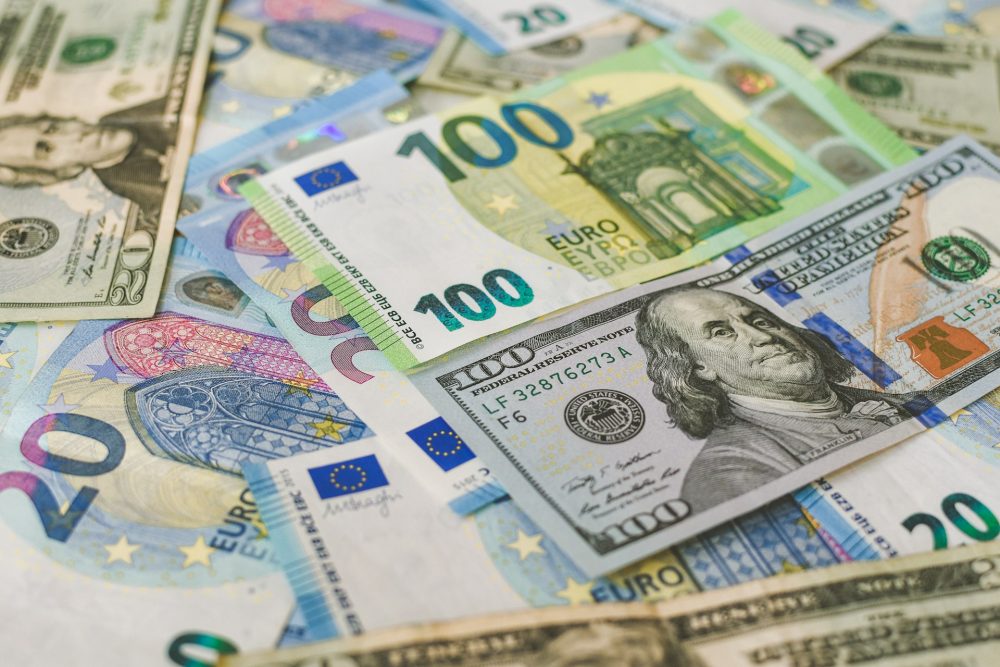
Between geopolitical tensions, monetary adjustments and still high volatility, the foreign exchange market is moving forward in a precarious balance which BKGR deciphers through the movements of the dollar, the euro, the pound sterling and the dirham.
The currency market hasn’t broken out, but it’s now walking a tightrope. In its weekly report, BKGR describes a week dominated less by macroeconomic indicators than by the fluctuations of geopolitical risk, particularly in the Middle East. As a result, the dollar maintained its safe-haven status without any real surge, the euro gained some ground, the pound sterling lost some, and the dirham ended the period slightly lower against the two major reference currencies.
Foreign exchange: The dollar remains the defensive anchor of the currency market
According to BKGR, the greenback remained broadly stable over the week, with a limited variation of -0.12%. This apparent inertia actually masks a nervous foreign exchange market. Episodes of de-escalation initially eased the dollar’s pressure, but Donald Trump’s statements regarding a possible prolongation of the conflict and the conditions for a ceasefire around the Strait of Hormuz quickly revived a risk-averse bias.
Meanwhile, US statistics continued to send a mixed but robust signal, with 62,000 ADP jobs created in March, retail sales up 0.6% and a manufacturing PMI rising to 52.3, while weekly jobless claims fell to 202,000. For BKGR, this mix of geopolitical support for the dollar and a more accommodative tone from the Fed, after Jerome Powell’s intervention, prevented any clear acceleration of the US currency.
The euro rebounds, but European vulnerabilities remain unresolved
Against the dollar, the euro appreciated by 0.44% over the week. BKGR sees this less as a genuine return of confidence than as a positioning adjustment in a market that has remained highly tactical. The single currency on the foreign exchange market that has certainly benefited from moments of respite on the geopolitical front. However, it remains exposed to a more structural constraint: rising energy costs, which continue to weigh on the European outlook. Data published in the eurozone also reflect a mixed picture.
The manufacturing PMI rose to 51.6 in March, inflation accelerated again to 2.5% while core inflation eased slightly to 2.3%, and unemployment climbed to 6.2% in February. In Germany, the manufacturing PMI reached 52.2 and inflation 2.7%, while retail sales remained in negative territory at -0.6%. In other words, the euro is holding up, but in an environment where the ECB remains caught between anti-inflationary discipline and caution in the face of the energy shock.
The pound sterling falls, the dirham absorbs the shock
The British currency lost 0.26% against the dollar and 0.88% against the euro. BKGR links this decline to the revision of monetary policy expectations in the UK, following comments from Governor Andrew Bailey urging caution against overinterpreting the tightening scenario. The domestic context also does not support a firm stance, with GDP growth set to fall to 1% in the fourth quarter of 2025 and retail sales declining to 2.5% for the overall aggregate and 3.4% for the core.
In this context, the dirham also experienced slight pressure. BKGR notes a 0.16% increase in the USD/MAD pair and a 0.18% increase in the EUR/MAD pair over the period. Data shows that as of April 2nd, the USD/MAD exchange rate stood at 9.3623 and the EUR/MAD at 10.7922, with the EUR/USD at 1.1527.
Volatility is normalizing on the foreign exchange market, but not yet calm
While the tension hasn’t disappeared, it’s changing form. Three-month implied volatility on EUR/USD remains well below the peaks observed earlier this year, but it’s still at a significant level, close to recent realized volatility. The term structure reveals a much more pronounced risk premium on very short maturities, before gradually flattening out from one month onwards.
Another notable signal, on the foreign exchange market, is that the three-month risk reversal 25 delta is below its indicated average of 0.300 and has clearly turned negative towards the end of the period. This suggests a foreign exchange market more inclined to hedge against the risk of a euro decline against the dollar than to bet on a continued, linear rebound of the single currency. Ultimately, BKGR’s interpretation is that of a market that has not yet chosen its fundamental direction. The dollar remains the natural safe haven whenever geopolitical risk increases.
Another imprtant thing on the foreign exchange market is that the euro is holding up thanks to technical rebounds rather than solid macroeconomic conviction. The pound sterling is suffering from a more visible slowdown in its cycle. As for the dirham, it continues to absorb external shocks with contained fluctuations, but these are indicative of a more unstable international monetary environment.
__
(Featured image by Ibrahim Boran via Unsplash)
DISCLAIMER: This article was written by a third party contributor and does not reflect the opinion of Born2Invest, its management, staff or its associates. Please review our disclaimer for more information.
This article may include forward-looking statements. These forward-looking statements generally are identified by the words “believe,” “project,” “estimate,” “become,” “plan,” “will,” and similar expressions. These forward-looking statements involve known and unknown risks as well as uncertainties, including those discussed in the following cautionary statements and elsewhere in this article and on this site. Although the Company may believe that its expectations are based on reasonable assumptions, the actual results that the Company may achieve may differ materially from any forward-looking statements, which reflect the opinions of the management of the Company only as of the date hereof. Additionally, please make sure to read these important disclosures.
First published in LES ECO.ma. A third-party contributor translated and adapted the article from the original. In case of discrepancy, the original will prevail.
Although we made reasonable efforts to provide accurate translations, some parts may be incorrect. Born2Invest assumes no responsibility for errors, omissions or ambiguities in the translations provided on this website. Any person or entity relying on translated content does so at their own risk. Born2Invest is not responsible for losses caused by such reliance on the accuracy or reliability of translated information. If you wish to report an error or inaccuracy in the translation, we encourage you to contact us.









Ortus Secures €97M Green Loan to Expand Solar Portfolio in Italy
Ortus Power Resources Italy secured a €97 million green, non-recourse loan to refinance 23 MW of operating solar plants and...

Foreign Exchange Markets Walk a Tightrope Amid Geopolitical Tensions and Policy Uncertainty
Foreign exchange markets remain fragile amid geopolitical tensions, monetary shifts, and persistent volatility. The dollar stayed a safe haven without...

Crypto Holds Steady as Tensions Rise and Regulatory Concerns Grow
Crypto markets remained cautious as a US ultimatum to Iran nears expiry. Bitcoin and Ethereum traded sideways despite strong ETF...


Toss Explores Blockchain Mainnet to Power Next-Generation Financial Services
Fintech company Toss, serving 30 million users, is exploring a blockchain mainnet to expand into on-chain financial services. It is...


Biobanks Drive Progress in Rare Disease Research Through Collaboration and Ethical Practice
Biobanks are vital for advancing rare disease research by enabling access to scarce biological samples. Experts highlighted their role in...
 |
|
 |  |
 |
|
-

 Crowdfunding2 weeks ago
Cyberpunk Trading Card Game Surges Past Goals on Kickstarter
-
 Biotech1 day ago
Biobanks Drive Progress in Rare Disease Research Through Collaboration and Ethical Practice
-
 Business1 week ago
Markets Volatility, Geopolitics, and Signals of a Potential Trend Shift
-
 Impact Investing6 days ago
EU Taxonomy 2025: Progress in ESG Reporting, Gaps in True Sustainability