Africa
Middle East Crisis Threatens Africa’s Growth and Economic Stability
Middle East crises since February 2026 could cut Africa’s growth by 0.2 points, driven by surging energy, fertilizer, and food prices, supply disruptions, and currency volatility. Heavy reliance on Gulf imports worsens impacts on inflation, agriculture, and households. Despite resilience, experts urge fiscal discipline, diversification, and stronger regional trade to mitigate ongoing economic risks.

The crises that have shaken the Middle East since February 2026 threaten to cost Africa up to 0.2 percentage points of its economic growth, according to a joint report by the African Union Commission, the African Development Bank, the ECA, and the UNDP.
Presented on April 15th in Washington on the sidelines of the IMF and World Bank Spring Meetings, the report warns of the transmission channels of the shock: soaring prices for energy, fertilizers, and food; disruptions to supply chains; and volatile foreign exchange markets.
Africa is already paying the price for the conflict in the Middle East
Since February 28, 2026, the de facto closure of the Strait of Hormuz has sent shockwaves through the continent’s economies. According to a joint report released Tuesday, April 15, in Washington, African growth could decline by 0.2 percentage points in 2026 if the crisis continues.
This loss would wipe out some of the hard-won gains achieved after the COVID-19 pandemic, the war in Ukraine, and the tariff shocks of 2025. The document, entitled “Impacts of the Middle East Conflict on African Economies,” was prepared by the African Union Commission, the African Development Bank Group, the United Nations Economic Commission for Africa (ECA), and the United Nations Development Programme (UNDP).
Multiple and already active transmission channels
The report identifies five main channels through which the Middle East conflict is affecting the continent. First, commodity prices are skyrocketing. Between February 27 and April 6, 2026, the price of Brent crude oil jumped by more than 51%, from $72.87 to $109.77 a barrel. Natural gas and urea—essential fertilizer for African agriculture—also saw dramatic increases of 35% over the same period. Second, disruptions to supply chains are worsening. The diversion of shipping routes to the Cape of Good Hope is lengthening journeys by 10 to 15 days and increasing freight costs by 20 to 40%.
The Freightos Baltic index (FBX13), which measures the cost of transporting containers from China to the Mediterranean, has already risen by 16.8% since the start of the conflict in the Middle East. A third channel: the volatility of the foreign exchange markets.
According to Claver Gatete, Executive Secretary of the ECA, 31 African countries are already experiencing currency depreciation against the US dollar. This depreciation increases debt servicing costs and raises the price of imports, fueling an inflationary spiral. Fourth, capital flows and remittances are threatened. More than 3.6 million African migrants live and work in the Gulf States. Their remittances, which amounted to $28.3 billion from the Gulf Cooperation Council, are a lifeline for many countries such as Egypt, Ethiopia, Kenya, and Nigeria.
An interruption or decline in these flows would have immediate consequences for foreign exchange reserves and household consumption. Finally, tourism—a key source of foreign exchange for countries like Cape Verde, Mauritius, Seychelles, and Tunisia—is also suffering the repercussions of regional instability.
80% of Africa’s imported oil comes from the Gulf region
The report highlights a key structural fact: 80% of Africa’s imported crude oil comes from the Gulf region, as well as 50% of its refined petroleum products. In total, 19 African countries have imports from the Middle East exceeding 10% of their total purchases, well above the continental average of 8.9%.
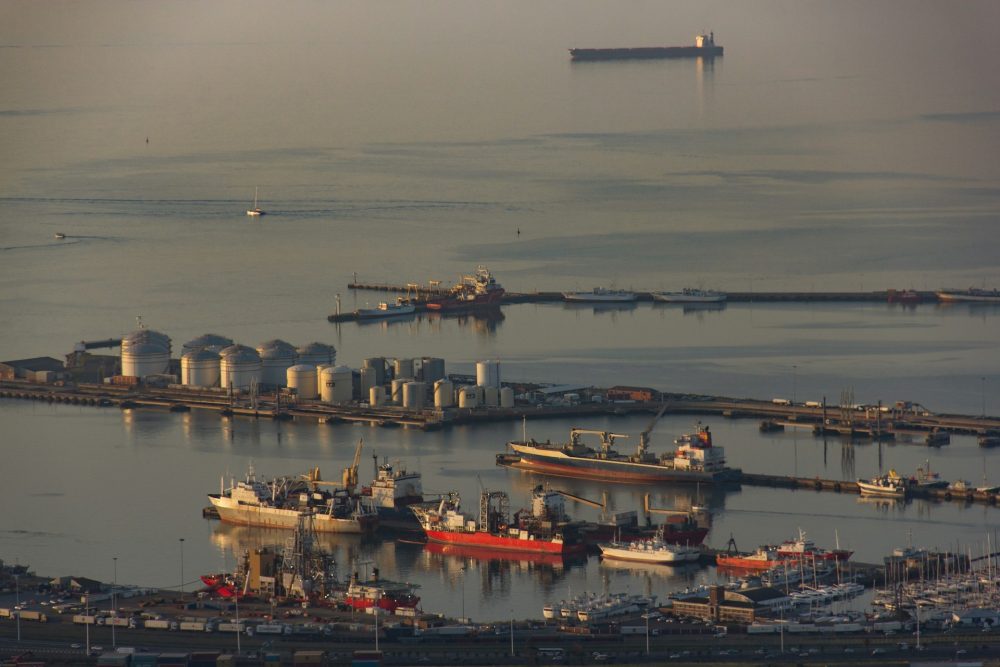
This energy dependence makes the continent vulnerable to any disruption in the Strait of Hormuz, where maritime traffic plummeted from nearly 109 ships per day before the conflict to a near standstill by March 22, 2026. The consequences are already being felt at the pump. Between February 23 and March 23, 2026, gasoline prices rose by 13.9% in Morocco, 14.3% in Egypt, 12.3% in Sierra Leone, and 39.1% in Zimbabwe. Diesel saw even more dramatic increases: 21.4% in Morocco, 22.8% in Sierra Leone, and 34.9% in Zimbabwe.
These price increases are placing a heavy burden on households and businesses, especially since transportation accounts for between 30% and 50% of final costs in domestic food markets. The report particularly highlights the impact of the conflict on the fertilizer sector. Five of the ten largest importers of fertilizers from the Gulf region are African countries: Sudan, Tanzania, Somalia, Kenya, and Mozambique.
The 35% increase in urea prices, coupled with logistical disruptions, threatens agricultural production as planting season approaches (March-May). For some African countries, the fertilizer shock is more consequential than the oil shock itself, as it directly impacts food security. A fertilizer shortage will lead to lower yields, higher food prices, and worsening hunger and malnutrition across the continent, where the poorest households already spend 50 to 60% of their income on food.
African Resilience to Preserve
Despite these shocks, the report highlights that Africa has demonstrated remarkable resilience in recent years. By 2025, the continent was home to 12 of the world’s 20 fastest-growing economies, and 22 countries were posting GDP growth exceeding 5%.
Kevin Urama, chief economist of the African Development Bank Group, urged governments not to panic and to avoid hasty decisions that could jeopardize their fiscal balances. Francisca Tatchouop Belobe, African Union Commissioner for Economy and Development, noted that “the continent is demonstrating remarkable resilience.”
The Middle East crisis: The report’s recommendations
To address the crisis in the Middle East, the joint document makes several recommendations. In the short term, it advocates strategic inflation management to stabilize price expectations, rigorous fiscal discipline (prudent management of windfall revenues for oil-exporting countries, strengthening debt control), and the deployment of temporary and targeted social protection measures to safeguard the most vulnerable populations. It warns against widespread subsidies, which would exacerbate long-term budget deficits. It also calls for diversifying sources of energy, fertilizers, and food supplies, and strengthening regional and intra-African trade.
In the medium and long term, the report emphasizes the need to accelerate the implementation of the African Continental Free Trade Area (AfCFTA), strengthen domestic capital mobilization, and diversify Africa’s energy mix by accelerating investments in renewable energy and the gas sector. It also calls on African financial actors to accelerate the implementation of the New African Financial Architecture (NAFA) to strengthen the continent’s role in global financial markets.
__
(Featured image by Benjamin le Roux via Unsplash)
DISCLAIMER: This article was written by a third party contributor and does not reflect the opinion of Born2Invest, its management, staff or its associates. Please review our disclaimer for more information.
This article may include forward-looking statements. These forward-looking statements generally are identified by the words “believe,” “project,” “estimate,” “become,” “plan,” “will,” and similar expressions. These forward-looking statements involve known and unknown risks as well as uncertainties, including those discussed in the following cautionary statements and elsewhere in this article and on this site. Although the Company may believe that its expectations are based on reasonable assumptions, the actual results that the Company may achieve may differ materially from any forward-looking statements, which reflect the opinions of the management of the Company only as of the date hereof. Additionally, please make sure to read these important disclosures.
First published in LES ECO.ma. A third-party contributor translated and adapted the article from the original. In case of discrepancy, the original will prevail.
Although we made reasonable efforts to provide accurate translations, some parts may be incorrect. Born2Invest assumes no responsibility for errors, omissions or ambiguities in the translations provided on this website. Any person or entity relying on translated content does so at their own risk. Born2Invest is not responsible for losses caused by such reliance on the accuracy or reliability of translated information. If you wish to report an error or inaccuracy in the translation, we encourage you to contact us.













Ecobnb Turns Sustainable Tourism Into Measurable Impact
Ecobnb’s sustainable tourism platform generated significant environmental and social impact in 2025, avoiding 58,207 kg of CO₂ and adding 583...


Sugar Markets Balance Biofuel Demand and Global Supply
Sugar markets in New York and London were mostly unchanged as the Iran conflict renewed interest in biofuels. Drought concerns...

The $40 Trillion Trap: Disinflation Is Not Deliverance
U.S. debt has reached $40 trillion, with $24 billion weekly interest, while deficits accelerate. Despite disinflation in CPI, from cooling...


FinTech Matures as AI and Infrastructure Drive the Next Growth Phase
Fintech markets are entering a mature phase, shifting from rapid growth to consolidation, specialization, and sustainable business models. Zurich and...

Bitcoin, and Ethereum Rise, While Cardano Enters Transition
Bitcoin and Ethereum posted modest weekend gains, supported by ETF inflows. A new proposal may protect Bitcoin from quantum threats....
 |
|
 |  |
 |
|
-

 Cannabis2 weeks ago
Virginia’s Cannabis Journey: A Lesson in Why Legalization Requires More Than a Law
-
 Impact Investing4 days ago
Pictet Raises $253 Million for Environmental Investment Fund
-

 Fintech2 weeks ago
Payhawk Reaches $100M ARR Milestone with AI-Driven Growth
-

 Impact Investing1 week ago
Italy’s Startup Ecosystem Shrinks but Becomes More Digital and Specialized