Biotech
Universal Nanoparticle Platform Enables Multi-Isotope Cancer Diagnosis and Therapy
Scientists developed a universal iron oxide nanoparticle platform that can incorporate multiple radioisotopes for cancer diagnosis and treatment in a single step. Tested in animal models, it successfully detected tumors, delivered radiotherapy, and identified blood clots. The nanoparticles remain stable in the body and are rapidly eliminated by the kidneys, reducing toxicity risks.

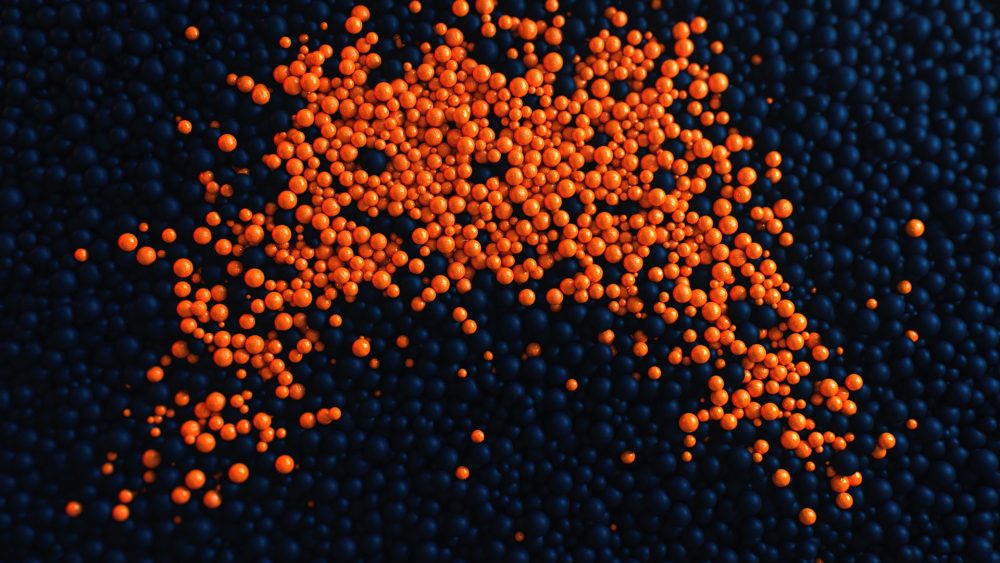
A new universal iron oxide nanoparticle platform has the capacity to unify processes that previously required different chemical strategies for each radioactive element into a single material. This tool, developed by the Institute of Medicinal Chemistry of the Spanish National Research Council ( IQM-CSIC ), incorporates, in a single step, a dozen radioisotopes used in both cancer diagnosis and treatment.
The breakthrough, published in the journal NPJ Imaging , has demonstrated its effectiveness in various medical imaging and therapy applications in animal models. This study addresses a classic limitation of nuclear medicine: the lack of a universal molecule for radioisotopes with very different chemical properties.
New Nanoparticle Platform Combines Multiple Radioisotopes for Imaging and Cancer Treatment
Radiopharmaceuticals combine radioactive substances (radioisotopes) with biological molecules that act as a vehicle to deliver the drug to specific organs or tissues. One of the main challenges lies precisely in stably binding the radioisotope to the molecule that guides it to the target tissues . Among the various approaches used for this purpose, the use of chemical substances called chelating agents is prevalent in the clinical setting.
The strategy used is based on incorporating the isotopes into the core of iron oxide nanoparticles
Chelating agents are designed to firmly bind to a metal atom that has lost one or more electrons (a metal ion), such as a radioisotope.
“One of the main obstacles is the lack of suitable chelating agents for each isotope that can be used safely in the body. Developing universal chelating agents capable of binding to several radioisotopes is a key objective, but so far none exist. Our study demonstrates that the use of nanomaterials can provide a robust solution to this challenge,” explains Fernando Herranz , lead author of the study and head of the Nanomedicine, Imaging and 3D Modeling group at the IQM-CSIC.
Nanoparticles for universal chelating agents
Researchers have created nanoparticles that can incorporate a wide variety of radiometals. The strategy involves embedding the isotopes directly into the core of iron oxide nanoparticles , as previous findings have shown that this compound is ideal for integrating a broad range of different radiometals while also exhibiting high stability in the body.
The team selected ten radiometals used in nuclear imaging techniques and radiotherapy, and synthesized ten different types of nanoradiopharmaceuticals. Three of these are for the medical technique positron emission tomography (PET), four for single-photon emission computed tomography (SPECT), and three for radiotherapy.
The results confirm that this platform allows for the effective visualization and treatment of tumors with the same drug in solid tumors
To demonstrate the platform’s efficacy and versatility, several in vivo studies were conducted . First, it was found that the nanoparticles accumulated in aggressive brain tumors, such as glioblastoma, indicating their potential use in diagnosing this disease. The studies also confirmed that the platform allows for the delivery of radiotherapy directly into the tumor and, furthermore, that the nanoparticles are suitable for detecting blood clot formation (thrombosis).
These results confirm the platform’s potential as a radiotheranostic agent, allowing for the effective visualization and treatment of tumors with the same type of drug in solid tumors . However, excessive accumulation of nanoparticles in the body could pose a health risk, both due to high doses of radioactivity and the potential for iron overload. For this reason, it was found that the nanoparticles are rapidly eliminated via the kidneys , preventing accumulation, reducing toxicity, and enabling safer, repeated therapies—essential when combining diagnosis and treatment in a single radiotheranostic agent.
__
(Featured image by Mike Uderevsky via Unsplash)
DISCLAIMER: This article was written by a third party contributor and does not reflect the opinion of Born2Invest, its management, staff or its associates. Please review our disclaimer for more information.
This article may include forward-looking statements. These forward-looking statements generally are identified by the words “believe,” “project,” “estimate,” “become,” “plan,” “will,” and similar expressions. These forward-looking statements involve known and unknown risks as well as uncertainties, including those discussed in the following cautionary statements and elsewhere in this article and on this site. Although the Company may believe that its expectations are based on reasonable assumptions, the actual results that the Company may achieve may differ materially from any forward-looking statements, which reflect the opinions of the management of the Company only as of the date hereof. Additionally, please make sure to read these important disclosures.
First published in iSanidad. A third-party contributor translated and adapted the article from the original. In case of discrepancy, the original will prevail.
Although we made reasonable efforts to provide accurate translations, some parts may be incorrect. Born2Invest assumes no responsibility for errors, omissions or ambiguities in the translations provided on this website. Any person or entity relying on translated content does so at their own risk. Born2Invest is not responsible for losses caused by such reliance on the accuracy or reliability of translated information. If you wish to report an error or inaccuracy in the translation, we encourage you to contact us.















Why 2026 Could Mark a Turning Point for Sustainability
Amid geopolitical crises and climate pressures, companies must seek alternative strategies, as sustainability becomes a key driver of value. By...


Dow Jones Rebounds as Markets Shrug Off Iran Conflict
A shortened trading week saw the Dow Jones rebound from a 10 percent correction, closing between key BEV levels. Outlook...


Iran War Drives Oil Surge and Rising Financial Risks
The war continues pushing oil prices higher, with Brent above 140 while futures lag. Energy stocks weakened despite highs. Headline...


TopRanked.io Weekly Affiliate Digest: What’s Hot in Affiliate Marketing [Bovada Affiliate Program]
This week, we're mashing up 80s tech with 2020s private messaging apps. Why? Because Big Tech just dropped a big...


Euro Stablecoins Struggle to Compete with Dollar Dominance in Crypto Markets
Euro stablecoins remain marginal despite the euro’s global importance, with minimal trading volume compared to dollar rivals like USDT and...
 |
|
 |  |
 |
|
-

 Business1 week ago
Markets Volatility, Geopolitics, and Signals of a Potential Trend Shift
-

 Impact Investing5 days ago
EU Taxonomy 2025: Progress in ESG Reporting, Gaps in True Sustainability
-

 Africa2 weeks ago
Bank Al-Maghrib Launches Reforms to Boost Credit via Non-Performing Loan Market
-

 Cannabis1 week ago
Poland Proposes Cannabis Decriminalization: 15 Grams and One Plant Without Penalties