Impact Investing
The Sustainability Revolution: Driving a Net-Zero, Nature-Positive Economy
The global economy is undergoing a Sustainability Revolution, driven by technological innovation, private capital, and industrial transformation. Renewable energy, storage, AI, and automation are accelerating efficiency, productivity, and environmental benefits. Beyond energy, social and ecological systems are evolving. Despite political fragmentation, economic incentives and cost reductions are advancing a net-zero, nature-positive, digitally enabled economy across sectors.


The transition isn’t slowing down: technological innovation, private capital, and new industrial approaches are laying the foundations for the new sustainable economy. In this historical period, we are witnessing a profound transformation of the global economy. Structural transformations are reshaping markets, the industrial and commercial landscape, and society as a whole. What we might call the Sustainability Revolution is gradually leading the world toward a new economic state: a net-zero, nature-positive, and digitally enabled system.
Politically, we observe greater fragmentation and a less favorable environment for climate debate. Economically, however, the transition trajectory toward sustainability continues. Structural reductions in costs, the increasing tangibility of economic returns, and the acceleration of private capital flows strengthen the case for investing in sustainability-related opportunities. This separation between political dynamics and economic forces is one of the defining features of the current era: amid institutional turbulence, the sustainable economy continues to advance.
History teaches us that industrial revolutions take hold when new technologies offer equal or superior quality at lower costs than existing solutions. This is precisely the dynamic we’re seeing today. Three structural accelerators are strengthening this momentum.
Technological transformations that are reshaping the economy
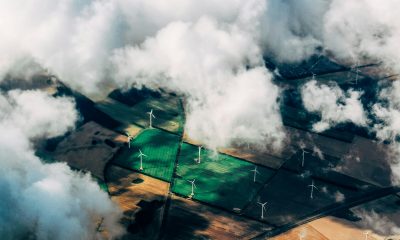
The first accelerator concerns deflationary modular technologies. The cost of photovoltaics has fallen by approximately 90% since 2010, and in several parts of the world, large-scale plants are producing electricity at record costs. Batteries have also seen a marked decline in price, driving the widespread adoption of storage systems. Solar, wind, storage, and transportation electrification have passed significant adoption tipping points, transforming the transition to net zero from an aspiration to an industrial reality.
The second element is represented by productivity multipliers. Technologies such as automation and robotics, initially introduced to increase efficiency, also generate environmental co-benefits. Greater asset utilization, reduced waste, and lower energy intensity are producing significant productivity gains in advanced factories, accompanied by significant cuts in emissions. Economic efficiency and environmental efficiency are converging: competitiveness and sustainability are no longer in opposition.
The third accelerator is the levels of “intelligence” that are being superimposed on production systems. Artificial Intelligence and the Internet of Things are accelerating innovation in numerous sectors: from the discovery of new materials to the optimization of energy networks, from medical diagnostics to agricultural resource management. While the growth of data centers and computing power is increasing energy demand, the same technologies are making the economic system more efficient, precise, and resilient overall. A clear step toward sustainability.
AI is emerging as a powerful accelerator of innovation, capable of accelerating the discovery of next-generation materials, optimizing power line flows, and enabling real-time detection of anomalies in energy networks.
We are entering what could be called a new “electric era.” Renewables and storage are transforming volatile operating costs into more predictable capital expenditures, offering businesses greater stability and long-term planning capabilities. At the same time, electricity demand is increasing, necessitating significant investments in energy networks and infrastructure.
Beyond Energy: A Broader Transition toward Sustainability
The ongoing change extends far beyond the energy system. On the nature front, while biodiversity loss has yet to be reversed, new technologies are opening up concrete prospects. Automation can help reduce the material footprint of industry and transportation; in food production, modular fermentation and cultured proteins could free up vast swathes of land, counteracting the agricultural expansion that has fueled biodiversity loss.
Alongside the environmental transition, a social transition is also unfolding. The platform economy has expanded access to markets and financial services, while in healthcare, we are witnessing a shift from treatment to prevention. Therapeutic innovations and digital monitoring tools are redefining the approach to health risk.
In this context, private markets play a central role. Much of the capital needed to transform infrastructure, networks, and production systems will come from long-term investments capable of replacing real assets and building new economic foundations. The transition to sustainability is not a simple financial reallocation, but a material transformation of the economy.
The sustainability revolution is not a niche topic
Sustainability is a cross-cutting transformation that cuts across sectors, geographies, and asset classes, redefining the way we produce energy, grow food, build infrastructure, and organize essential services. The emerging vision is one of prosperity achievable without exceeding planetary boundaries. It’s not about sacrificing growth or well-being, but about building a more efficient, resilient, and productive economic system.
Sustainability is no longer just a moral or regulatory imperative: it has become a structural competitive factor, supported by economic fundamentals. And it is precisely this economic strength that explains its continued advance.
__
(Featured image by Singkham via Pexels)
DISCLAIMER: This article was written by a third party contributor and does not reflect the opinion of Born2Invest, its management, staff or its associates. Please review our disclaimer for more information.
This article may include forward-looking statements. These forward-looking statements generally are identified by the words “believe,” “project,” “estimate,” “become,” “plan,” “will,” and similar expressions. These forward-looking statements involve known and unknown risks as well as uncertainties, including those discussed in the following cautionary statements and elsewhere in this article and on this site. Although the Company may believe that its expectations are based on reasonable assumptions, the actual results that the Company may achieve may differ materially from any forward-looking statements, which reflect the opinions of the management of the Company only as of the date hereof. Additionally, please make sure to read these important disclosures.
First published in ESG NEWS. A third-party contributor translated and adapted the article from the original. In case of discrepancy, the original will prevail.
Although we made reasonable efforts to provide accurate translations, some parts may be incorrect. Born2Invest assumes no responsibility for errors, omissions or ambiguities in the translations provided on this website. Any person or entity relying on translated content does so at their own risk. Born2Invest is not responsible for losses caused by such reliance on the accuracy or reliability of translated information. If you wish to report an error or inaccuracy in the translation, we encourage you to contact us.














ECSP Crowdfunding vs. eWpG Bonds: Overcoming SME Financing Limits
The ECSP Regulation limits annual crowdfunding per project promoter to €5 million, requiring a full prospectus for higher amounts, which delays...


Germany’s Cannabis Reform Shows Limited Risks but Calls for Regulatory Adjustments
Two years after Germany’s partial cannabis legalization, an evaluation finds no significant rise in consumption and some reduction in the...

Ortus Secures €97M Green Loan to Expand Solar Portfolio in Italy
Ortus Power Resources Italy secured a €97 million green, non-recourse loan to refinance 23 MW of operating solar plants and...


Foreign Exchange Markets Walk a Tightrope Amid Geopolitical Tensions and Policy Uncertainty
Foreign exchange markets remain fragile amid geopolitical tensions, monetary shifts, and persistent volatility. The dollar stayed a safe haven without...


Crypto Holds Steady as Tensions Rise and Regulatory Concerns Grow
Crypto markets remained cautious as a US ultimatum to Iran nears expiry. Bitcoin and Ethereum traded sideways despite strong ETF...
 |
|
 |  |
 |
|
-

 Business3 days ago
Dow Jones Rebounds as Markets Shrug Off Iran Conflict
-

 Crypto2 weeks ago
Tether Seeks Big Four Audit to Boost USDT Transparency
-

 Cannabis1 week ago
Lowryder: The Autoflowering Revolution in Cannabis Cultivation
-
 Biotech2 weeks ago
SPECT-CT: Advanced Imaging for Precise Cardiac Assessment