Business
The TopRanked.io Weekly Digest: What’s Hot in Affiliate Marketing [LiveChat Affiliates Review]


Quick Disclosure: We’re about to tell you how LiveChat Affiliates run a top-notch affiliate program. And we really mean it. Just know that if you click on a LiveChat Affiliates link, we may earn a small commission. Your choice.
Fellow affiliates.
This week, we’re going to talk about AI and humans.

Why?
Because there’s money to be made, of course.
Topranked.io Affiliate Program of the Week — LiveChat Affiliates
Pretty soon, we’re going to outline an affiliate opportunity combining AI and humans.
But before we get to that, you’re going to need a great program to monetize with.
So on that note, let me introduce you to LiveChat Affiliates.
And here’s why you’ll love LiveChat Affiliates.
LiveChat Affiliates — The Product
As the name suggests, the product behind LiveChat Affiliates is live chat.
But get your mind out of the gutter — it’s not that kind of live chat (we’ve got other affiliate programs for that — see our CamSoda Affiliate Program review, for instance.)
LiveChat Affiliates is all about the customer service variety of live chat. And on this front, LiveChat Affiliates is one of the market leaders.
Now, obviously I’m not going to do a full product review. We’re here to talk about the LiveChat Affiliates program, not whether the product is a match for you.
But I do want to make 2 comments about the product behind the LiveChat Affiliates program before we move on.
First, as I said, LiveChat Affiliates is more or less a market leader in terms of live chat customer service products. Their reputation is great. Their products are well developed (and comprehensive). And that means, you can count on LiveChat Affiliates to convert.
The other thing I wanted to mention (because it’s relative to this week’s affiliate opportunity), is that the product behind LiveChat Affiliates is heavily geared towards ‘hybrid’ human + AI workflows.
Pay attention to that — it’ll be important if you want to use what comes later once you’re a LiveChat Affiliates member.
LiveChat Affiliates — The Commissions
Alright, now for the good bit — the LiveChat Affiliates commission rates.
I’ll keep this part quick.
LiveChat Affiliates pays a 20% commission on all sales you refer.
And as for what that actually means in dollar terms… well, that depends on what people arriving via your LiveChat Affiliates links actually buy.
In terms of standard, off-the-shelf plans, LiveChat Affiliates sells products from $19-$89 per-seat, per-month. So, for the sake of illustration, if you sell a 1 year subscription to the $89 plan to a company with 10 agents, thats 10 x $89 * 12 = $10680 worth of revenue which, at a 20% commission rate, works out to $2136 in your pocket.
See, I told you you’d like LiveChat Affiliates.
LiveChat Affiliates — Next Steps
Alright, that’s enough about LiveChat Affiliates for now. If you’d like a bit more information before committing, then head on over to TopRanked.io for our detailed LiveChat Affiliates review.
Alternatively, if you know a good thing when you see it and want to get started now, head here to sign up with LiveChat Affiliates today.
Affiliate News Takeaways
This week, I ran across this report that was just published this week by Gladly — a self-described “AI-powered, people-centered customer service platform.“
And yes, in case you were wondering, that is a lot like the platform behind LiveChat Affiliates.
As for why I’m telling you how the company describes itself — that’s simple… even if I’m probably going to overcomplicate the explanation…

Any time a company puts out a report, it’s always worth taking what they say with a big grain of salt. After all, these reports are made to do one thing (sell whatever the company’s selling).
Therefore, there’s a good chance it’ll always be biased one way or the other… not that “trust me bro” can’t sometimes be a valid source.

So with that disclaimer out of the way, let’s take a look at the report itself.
Unsurprisingly, given this report comes from an “AI-powered, people-centered customer service platform”, the report is about AI and humans in customer service.
So, what were the findings?
Well, here are three main headlines:
- “59% of customers prefer AI-powered support as their starting point.”
- “57% expect a clear path to a human within five [AI] exchanges.”
- “40% gave up entirely or purchased elsewhere” [When blocked from transferring to a human.]
Now, all of those numbers/findings mostly make sense. But remember that disclaimer before — the bit about remembering where this report is coming from…?
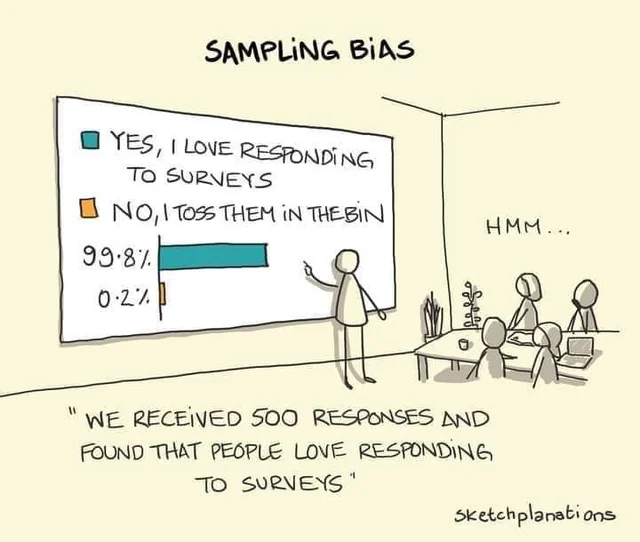
Right. This report is by a “AI-powered, people-centered customer service platform”, so it makes sense that their findings support that narrative… which they do.
So, since we have a good reason to distrust the findings, let’s see what other research is out there.

Here, the best I could find in terms of research with no obvious interests in pushing one narrative or another (whether it be “all-in on AI” / “all-in on humans” / “blend the two”) was Survey Monkey.
Why them in particular?
Easy. They’re not selling customer service tools (so they don’t care which way findings go). And they’re well placed to actually observe how this kinda stuff is playing out — after all, they’re the ones creating the survey tools people deploying customer service tools are using when they want to survey post-support satisfaction.

Yeah — they’re those guys.
Anyway, that out of the way, here’s the report.
And now for the most interesting number here. The NPS score — the result of that infamous “how would you rate your experience” survey you tend to get at the end of any customer service interaction.
Here, the findings couldn’t have been more stark. To quote the Survey Monkey report:
“Our research found that the average Net Promoter Score (NPS®) for human customer service engagement is +6 (slightly positive), while the average NPS for an AI-driven customer service engagement is -66 (very negative).”
That’s a 72-point difference, which is kinda huge…

This number’s also kinda interesting.
Why?
Well, unlike the Gladly report, this one’s not about what people say they prefer, but about how people actually react. (After all, as we all know, there’s often a difference between what people claim they do/want/think, and what they actually do/want/think.)
Now, of course, that’s not to say there aren’t any caveats with that number. There are.
The big caveat here is that the report was done back in late 2023, way back when ChatGPT was just a year old.

Obviously, that means there’s a good chance that customer service chatbots people were “rating” back then weren’t quite at the same level as they are now.
In any case, it’s still a pretty clear finding — a 72-point gap in NPS isn’t exactly nothing. And while chatbots have presumably gotten better since then, it’s hard to imagine that such a dramatic gap has come close to being closed yet.
As for how much that gap remains open, I couldn’t find any numbers here, so the best I can offer is some basic anecdotal evidence.

Yeah. I know. Anecdotes are anecdotes, and never really pluralize to data. But, they’re still kinda useful. Especially when they come from a company that’s presumably using data to determine its behavior.
Here, one of the more prominent stories is the famous Klarna one. If you don’t know it, it was a classic three act story — fire the humans in customer support, sit back and watch customers leave, rehire whatever humans they could…
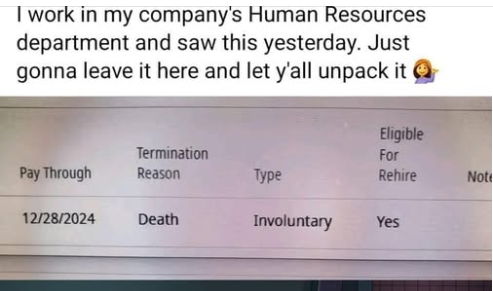
Now, there are a few things that make this anecdote particularly interesting.
- Klarna came to its realization that it still needed humans around mid-2025. (Which is more up-to-date than the 2023 survey numbers we saw before.)
- Klarna is a tech company, so presumably its AI customer service rollout was slightly more competent than the average deployment.
- Klarna isn’t exactly an amateur shop — there’s a good chance their decisions were data-driven, even if they didn’t publish the data.
Now, as for why Klarna’s customers weren’t quite as open to AI chatbots as the company had initially hoped, there are many theories we can entertain here.
The most obvious one would be the whole “AI hallucinates” thing.
Now sure, sometimes that works out in favor of the customer. (E.g., by now most of us know of the infamous Air Canada case. For those who don’t, Air Canada’s chatbot hallucinated something. Air Canada later said “nope, we don’t care what our chatbot said”. Dude sued Air Canada. Dude won.)
But most of the time, it just results in annoyance/frustration and a complete waste of time. One famous example of this is probably NYC’s chatbot. Launched in late 2023 to much fanfare, it went on to tell NYC business owners a bunch of stuff that was just plain wrong.
Like really wrong.
In any case, the only real numbers I could find here come courtesy of Gartner.
Here, Gartner surveyed 5,728 customers and found:
- 64% would prefer companies didn’t use AI
- “Difficulty reaching a person” was the main concern (60%)
- Of the other concerns people expressed, no others achieved a majority (50%+) score. Even the infamous ability of chatbots to confidently hallucinate only concerned 42% of respondents (well, it was actually phrased as “AI might provide the wrong answer” in the survey…)
And with that final piece of data, about the only thing I can conclude here is that customer service is likely to become very “hybrid” for quite some time.
Now let’s get to the takeaway.
Takeaway
So, why am I telling you all about AI in customer service? After all, as affiliates, we’re rarely doing customer service.
Well, here’s why.
Remember our affiliate program of the week — LiveChat Affiliates?
Notice how all this data works in favor of their product? You know, all that “people are okay with AI, so long as they can eventually reach a human” type stuff?
If you package all that up into the right formats — social media posts, “reports”, and other stuff — and distribute it to the right audience with your LiveChat Affiliates links, then there’s a good chance you’ll be able to sell some subscriptions.
As for who you’ll sell these subscriptions to, think of this as two markets:
- Businesses who are considering adopting AI in customer service flows, but are still hesitant.
- Businesses who went all in on AI in customer service and are suddenly realizing they maybe need scale it back.
This data should help you sell some subscriptions with your LiveChat Affiliates links. Now, I’ll leave the rest up to you.
Closing Thought
Most weeks, we like to close things out with a quote.
This week, I’m changing it up and going with a proverb that’s kinda in keeping with a theme in the affiliate news takeaways section.
That proverb goes a little like this:
“Look before you leap.”
Obviously, I’m thinking of the likes of Klarna, NYC, DPD, Air Canada, and the countless other companies that’ve been burned by their rollouts of AI chatbots. And I think this proverb is particularly appropriate here.
After all, it’s not saying “don’t do it”.
It’s simply saying “don’t go all-in without testing the waters first.”
And the same applies to many things we do.
Don’t blow your entire ad budget on an untested campaign.
Don’t change out all your affiliate links without first testing whether the new program converts.
Etc.
Etc.
And speaking of affiliate links, I have one final note to make — you should definitely test out some links from LiveChat Affiliates.
__
(Featured image by SevenStorm JUHASZIMRUS via Pexels)
DISCLAIMER: This article was written by a third party contributor and does not reflect the opinion of Born2Invest, its management, staff or its associates. Please review our disclaimer for more information.
This article may include forward-looking statements. These forward-looking statements generally are identified by the words “believe,” “project,” “estimate,” “become,” “plan,” “will,” and similar expressions, including with regards to potential earnings in the Empire Flippers affiliate program. These forward-looking statements involve known and unknown risks as well as uncertainties, including those discussed in the following cautionary statements and elsewhere in this article and on this site. Although the Company may believe that its expectations are based on reasonable assumptions, the actual results that the Company may achieve may differ materially from any forward-looking statements, which reflect the opinions of the management of the Company only as of the date hereof. Additionally, please make sure to read these important disclosures.







The TopRanked.io Weekly Digest: What’s Hot in Affiliate Marketing [LiveChat Affiliates Review]
Quick Disclosure: We’re about to tell you how LiveChat Affiliates run a top-notch affiliate program. And we really mean it....


German SMEs Face Tighter Bank Lending, Turn to Alternatives
Access to bank loans for German SMEs is tightening despite strong financing needs. About 37.8 percent face restrictive lending, driven...


Bitcoin Stalls as Geopolitical Risks and Crypto Industry Tensions Persist
Bitcoin is moving sideways near $72,000 amid ongoing Iran tensions, while ETF inflows remain strong. Quantum security debates continue. Ethereum...


Geopolitical Tensions and Trade Disruptions Reshape Global Commodities Markets
Geopolitical tensions and disrupted trade routes, especially around the Strait of Hormuz, are reshaping global commodities markets. Agriculture faces supply...


Germany Sees 413 Cannabis Cultivation Clubs Two Years After Partial Legalization
Two years after partial cannabis legalization in Germany, 413 cultivation clubs have been established nationwide. Lower Saxony leads in clubs...
 |
|
 |  |
 |
|
-

 Business2 weeks ago
Markets Volatility, Geopolitics, and Signals of a Potential Trend Shift
-
 Cannabis9 hours ago
Germany Sees 413 Cannabis Cultivation Clubs Two Years After Partial Legalization
-

 Impact Investing1 week ago
EU Taxonomy 2025: Progress in ESG Reporting, Gaps in True Sustainability
-

 Fintech3 days ago
Toss Explores Blockchain Mainnet to Power Next-Generation Financial Services