Impact Investing
EU Weighs More Free Emission Permits in ETS Review to Boost Industry Competitiveness
The EU is considering expanding free ETS emission permits for energy-intensive industries as part of a 2026 review to improve competitiveness against global rivals. The Commission may adjust allocation rules and “fall-back benchmarks,” benefiting sectors like chemicals and refineries. The move responds to industry pressure but risks weakening decarbonization incentives and drawing climate policy criticism.

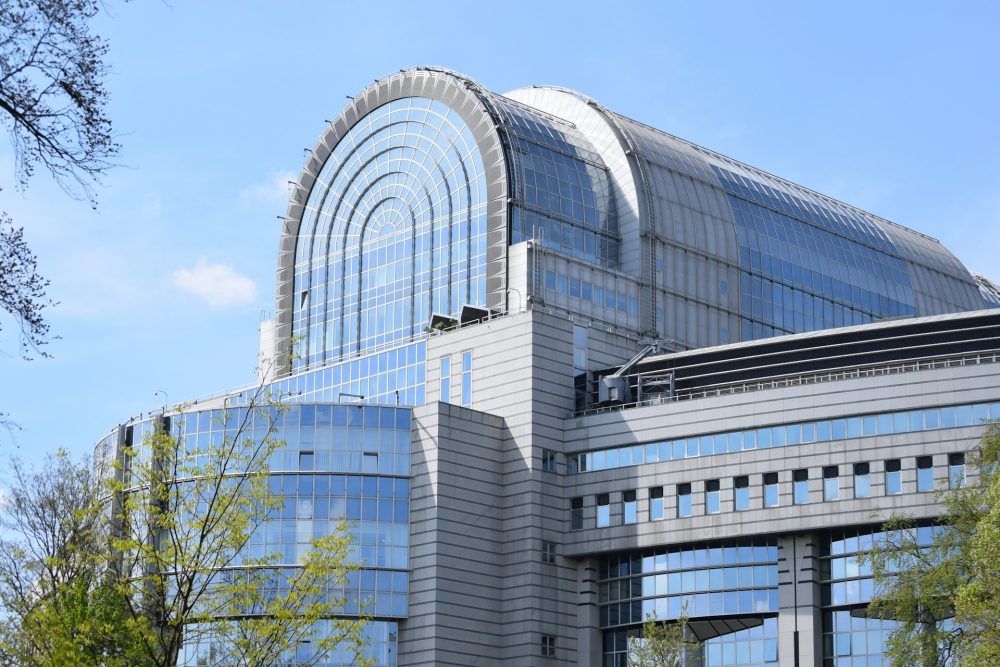
Brussels is considering increasing free permits as part of the ETS review to strengthen the competitiveness of European companies against international competitors.
The EU is preparing to temporarily relax some rules on its emissions market to boost the competitiveness of European industry. According to a draft of the conclusions of the upcoming summit of European leaders and diplomatic sources reported by Reuters, Brussels intends to grant more free emission allowances to energy-intensive companies starting in 2026.
EU Considers Expanding Free Emission Allowances Under ETS Review to Support Industry Competitiveness
The measure is part of the review process of the Emissions Trading System (ETS), Europe’s main instrument for reducing greenhouse gas emissions. The mechanism requires industries in particularly “brown” sectors to purchase CO₂ emission permits, creating an economic incentive to invest in cleaner technologies.
In addition to permits purchased on the market, some companies already receive free allowances to prevent production from being relocated to countries with less stringent environmental regulations. The European Commission is now considering expanding this free allocation, accepting requests from several member states, including Greece, Poland, and the Czech Republic.
The intervention would specifically concern the criteria used to calculate the number of free allowances allocated to companies. The changes would affect the so-called “fall-back benchmarks,” technical parameters that take into account energy consumption and heat production in certain industrial sectors.
According to documents circulated in Brussels, the Commission will present a specific proposal alongside the broader ETS review scheduled for July. The aim is to provide rapid support to certain industrial sectors complaining of increasing competitive pressure from foreign producers subject to lower environmental costs.
Potential beneficiaries include energy-intensive industries such as chemicals, refineries, and other sectors with high carbon emissions.
The proposal, however, could spark criticism among supporters of stricter climate policies . Increasing free allowances would reduce the cost of emissions for the companies involved and could weaken the economic incentives to invest in decarbonization.
The discussion reflects the delicate balance Brussels is trying to maintain between climate objectives and the need to preserve the competitiveness of European industry in an increasingly complex international context. In recent months, several governments have called for greater flexibility in European environmental policies, arguing that the costs of the ecological transition risk penalizing companies compared to competitors in other parts of the world.
The European Commission did not provide further details on the proposal, limiting itself to confirming the existence of a preliminary agreement that provides for the submission of amendments to the allocation of free allowances.
__
(Featured image by Jannik via Unsplash)
DISCLAIMER: This article was written by a third party contributor and does not reflect the opinion of Born2Invest, its management, staff or its associates. Please review our disclaimer for more information.
This article may include forward-looking statements. These forward-looking statements generally are identified by the words “believe,” “project,” “estimate,” “become,” “plan,” “will,” and similar expressions. These forward-looking statements involve known and unknown risks as well as uncertainties, including those discussed in the following cautionary statements and elsewhere in this article and on this site. Although the Company may believe that its expectations are based on reasonable assumptions, the actual results that the Company may achieve may differ materially from any forward-looking statements, which reflect the opinions of the management of the Company only as of the date hereof. Additionally, please make sure to read these important disclosures.
First published in ESG NEWS. A third-party contributor translated and adapted the article from the original. In case of discrepancy, the original will prevail.
Although we made reasonable efforts to provide accurate translations, some parts may be incorrect. Born2Invest assumes no responsibility for errors, omissions or ambiguities in the translations provided on this website. Any person or entity relying on translated content does so at their own risk. Born2Invest is not responsible for losses caused by such reliance on the accuracy or reliability of translated information. If you wish to report an error or inaccuracy in the translation, we encourage you to contact us.






Cannabis Regulation in Germany and Switzerland Shows Early Benefits of Legalization Models
Germany and Switzerland’s cannabis reforms suggest regulated access can reduce criminalization without increasing consumption. Germany saw fewer cannabis-related prosecutions, while...


Insight Foto Festival Launches €4,500 Crowdfunding Campaign to Support 2026 Edition
Insight Foto Festival in Varese has launched a €4,500 crowdfunding campaign to sustain its free 2026 edition. Organized by Gattabuia...


Vexuvo Secures €39M UniCredit Financing to Drive Agrivoltaic and Storage Expansion in Italy
UniCredit has provided €39.3 million financing to vexuvo to support four agrivoltaic plants totaling about 33 MW across Italy, advancing...


Alzheimer’s Study Reveals Immune Pathway Behind Women’s Higher Vulnerability and Potential New Treatment Approach
A CSIC-UMH study identifies heightened interferon signaling as a key factor in women’s greater Alzheimer’s vulnerability. Analysis of human brain...


Bitcoin Rally Faces Tests from Fed, ETFs, and Market Fear
Bitcoin rebounds above $64,000 after a short squeeze and whale accumulation, but remains far below its record high amid cautious...
 |
|
 |  |
 |
|
-

 Fintech5 days ago
Payhawk Reaches $100M ARR Milestone with AI-Driven Growth
-

 Cannabis1 week ago
Uruguay and Brazil Deepen Medical Cannabis Cooperation
-

 Impact Investing1 day ago
Italy’s Startup Ecosystem Shrinks but Becomes More Digital and Specialized
-

 Crypto1 week ago
Crypto Platforms Expand Stock Perpetual Trading