Impact Investing
Flexibility Becomes Key as Renewable Energy Faces Pricing and Profit Challenges
BCG reports renewable energy will surpass coal by 2025, but overcapacity is driving 500 hours of negative prices in Europe and $14 billion losses. The transition is shifting from expanding capacity to improving flexibility, using storage, demand response, and digital systems to balance supply and demand, stabilize prices, and sustain investment in renewable-heavy energy markets.

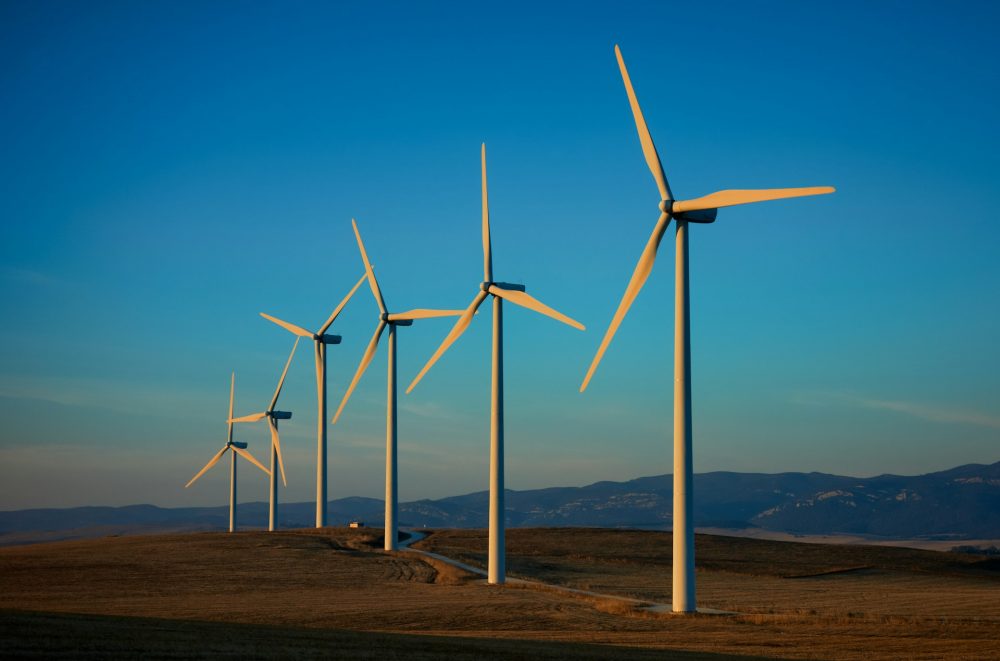
According to the Boston Consulting Group (BCG) study, Flexibility, Not Capacity, Will Decide Renewable Energy’s Future, over 500 hours of negative prices in Europe have caused more than $14 billion in losses in 2025: the transition is entering a new phase that will be played out more on flexibility than capacity.
Renewable energy will become the world’s leading source of electricity by the end of 2025, surpassing coal and marking a historic milestone in the energy transition. However, just as the sector celebrates this milestone, new challenges are emerging: over 500 hours of negative prices recorded in Europe and losses exceeding $14 billion in 2025 are putting pressure on the value of green energy.
This is according to the Boston Consulting Group (BCG) report, Flexibility, Not Capacity, Will Decide Renewable Energy’s Future , which finds that the next phase of the transition will be about flexibility rather than installed capacity. The study is based on analyses of global and European energy markets, system modeling, and assessments of flexibility technologies over various time horizons.
The price of overproduction
After decades in which the primary goal of governments and investors has been to reduce the technological costs of wind and solar through the expansion of installed capacity, the market has reached a critical threshold where the very abundance of clean energy risks compromising its financial sustainability.
The accelerated growth of solar and wind power has had an unexpected effect on electricity markets. When large quantities of energy are fed into the grid simultaneously, wholesale prices tend to fall precisely during peak production hours, squeezing operators’ revenues.
This phenomenon is particularly evident in Europe, where hours with negative prices have more than doubled, from around 200 in 2020 to over 500 in 2025. At the same time, the loss of value for producers exceeded $14 billion in the same year.
Even the so-called value factors highlight a significant compression of revenues: in the most exposed European countries, wind power captures between 55% and 65% of the average market price, while solar power stands at between 45% and 65% . In other words, a growing share of renewable energy is sold at below-average prices (capture price factor), with a direct impact on the economic sustainability of investments.
From capacity to systemic flexibility
“The energy transition is evolving from a logic of expanding renewable capacity to one of managing its variability,” explains Laura Alice Villani, Managing Director and Senior Partner at BCG.
“In this context, flexibility becomes the key enabling factor: not only as a set of technical solutions, but as a lever to efficiently orchestrate production, demand, and infrastructure in increasingly complex systems. For Europe, this shift represents both an operational challenge and an industrial opportunity, thanks to widespread networks, technical expertise, and markets already exposed to high renewable penetration.”
The key issue remains the imbalance between production and consumption . Renewable sources, intermittent by nature, generate electricity in a concentrated manner and often out of step with demand. Without tools to shift, store, and modulate this production, the system struggles to absorb it efficiently.
Systemic flexibility, as highlighted in the report, represents the most effective response to this challenge. It’s not a single technology, but an integrated ecosystem that includes batteries, active demand management, thermal storage, and digital platforms.
“Flexibility therefore becomes a lever for efficiently orchestrating production, demand, and infrastructure in increasingly complex systems,” Villani emphasizes. “Declining costs and improving performance will make individual flexibility technologies increasingly accessible and relevant. Those who can identify and adapt the optimal mix over time across different time horizons, based on the characteristics of the system in which they operate, will be able to maximize the integration of renewables and their value.”
In the short term, batteries and Virtual Power Plants (VPPs) play a key role in managing daily variability. In California, for example, storage systems cover a significant share of demand after dark, offsetting the decline in solar. The global VPP market could exceed $58 billion as early as 2026.
In the medium term , the challenge shifts to managing weekly fluctuations , which are set to grow with the increase in the renewable share. Here, the shift in industrial consumption and the integration of electricity and heat become important.
In the long term, questions related to seasonal storage and annual variability remain open , with production differences that can reach 10% between more or less windy years.
The active role of demand and the Finnish case
A concrete example comes from Finland, where wind energy accounted for approximately 27% of national electricity generation in 2025. The increasing share of renewables has led to significant price volatility, pushing the country to invest in flexibility tools.
Of these, approximately 3,000 MW of electric boilers allow energy to be absorbed during periods of overproduction and transformed into heat, improving the overall efficiency of the system.
This scenario highlights how demand can also become a strategic resource. Buildings, data centers, electric vehicles, and heating systems can modulate consumption based on price signals, helping to balance the system and reduce waste. However, this requires advanced digital infrastructure, new pricing models, and a coherent regulatory framework.
Strategic priorities for industry leaders
Finally, the BCG report emphasizes the need for a shift in approach to energy policies and investments . Until now, renewable energy development has been driven primarily by capacity targets and incentives. In the next phase, it will be crucial to plan investments based on systemic value, considering factors such as location, grid integration, and contribution to the overall balance of the system.
In the absence of flexibility mechanisms, the real risk is that investments in the sector could grind to a halt, trapped in a vicious cycle where the greater the decarbonization achieved, the less economic attractiveness of new projects.
—
(Featured image by Vidar Nordli Mathisen via Unsplash)
DISCLAIMER: This article was written by a third party contributor and does not reflect the opinion of Born2Invest, its management, staff or its associates. Please review our disclaimer for more information.
This article may include forward-looking statements. These forward-looking statements generally are identified by the words “believe,” “project,” “estimate,” “become,” “plan,” “will,” and similar expressions. These forward-looking statements involve known and unknown risks as well as uncertainties, including those discussed in the following cautionary statements and elsewhere in this article and on this site. Although the Company may believe that its expectations are based on reasonable assumptions, the actual results that the Company may achieve may differ materially from any forward-looking statements, which reflect the opinions of the management of the Company only as of the date hereof. Additionally, please make sure to read these important disclosures.
First published in ESG NEWS. A third-party contributor translated and adapted the article from the original. In case of discrepancy, the original will prevail.
Although we made reasonable efforts to provide accurate translations, some parts may be incorrect. Born2Invest assumes no responsibility for errors, omissions or ambiguities in the translations provided on this website. Any person or entity relying on translated content does so at their own risk. Born2Invest is not responsible for losses caused by such reliance on the accuracy or reliability of translated information. If you wish to report an error or inaccuracy in the translation, we encourage you to contact us.
















FinTech Matures as AI and Infrastructure Drive the Next Growth Phase
Fintech markets are entering a mature phase, shifting from rapid growth to consolidation, specialization, and sustainable business models. Zurich and...


Bitcoin, and Ethereum Rise, While Cardano Enters Transition
Bitcoin and Ethereum posted modest weekend gains, supported by ETF inflows. A new proposal may protect Bitcoin from quantum threats....


Dow Jones’ Record Run Faces Early Signs of Potential Shift
Since November 2023, the Dow Jones has logged 95 all-time highs, rising 43% from 37,090 to 53,056 over 32 months—a...


Oil Surge, Weak Stocks, and a Potential Turn for Gold
Oil surged sharply, a trend supporting waste management and energy infrastructure firms like Secure Waste Infrastructure Corp., which reported higher...


Avant Devices Moves Toward Electric Wheelchair Kit Production with New Funding Drive
Murcia-based Avant Devices is seeking €260,000 in crowdfunding to launch mass production of its electric wheelchair conversion kit. The funds...
 |
|
 |  |
 |
|
-

 Biotech2 weeks ago
BIP Sells BIC Incubator to Innova, Refocuses on Core Innovation Areas
-

 Markets2 weeks ago
Markets on Borrowed Time Amid Economic Cracks and Global Uncertainty
-

 Fintech6 days ago
Robinhood Chain Surges with Rapid Adoption and Billion-Dollar Trading Volume
-

 Cannabis2 weeks ago
Virginia’s Cannabis Journey: A Lesson in Why Legalization Requires More Than a Law