Biotech
Johnson & Johnson’s Tecvayli Combo Shows Breakthrough Results in Multiple Myeloma
Johnson & Johnson’s Phase 3 MajesTEC-3 study shows that the combination of teclistamab and subcutaneous daratumumab (tec+dara) significantly improves outcomes for relapsed or refractory multiple myeloma patients. The regimen reduces progression or death risk by 83.4%, increases response and survival rates, and maintains manageable safety. The combination could become a new second-line standard of care.


Johnson & Johnson presented new data from the Phase 3 MajesTEC-3 study demonstrating the potential of the Tecvayli (teclistamab) formulation in combination with subcutaneous (SC) daratumumab as a second-line treatment for patients with relapsed or refractory multiple myeloma (RRMM). The results show an 83.4% reduction in the risk of disease progression or death compared to standard regimens at nearly three years of follow-up. More than 90% of patients who were progression-free at six months remained progression-free at three years.
The study evaluates the efficacy and safety of the investigational immunotherapy combination teclistamab with subcutaneous daratumumab (tec+dara) versus subcutaneous daratumumab and dexamethasone with either pomalidomide or bortezomib (DPd/DVd) in patients with relapsing-remitting multiple myeloma (RRMM) who had received one to three prior lines of therapy. These results were presented as a late-breaking oral presentation at the American Society of Hematology Annual Meeting, ASH 2025, and simultaneously published in The New England Journal of Medicine .
“The combination of teclistamab and daratumumab SC offers remarkable efficacy and a safety profile consistent with existing treatments, and, together with robust infection management protocols, could represent an opportunity to improve patient outcomes. This combination regimen has the potential to become a new standard of care by reducing steroid use and being suitable for outpatient administration following the usual subcutaneous daratumumab schedule,” said María Victoria Mateos , hematologist and head of the Myeloma Unit and Clinical Trials Unit at the University Hospital of Salamanca.
“Teclistamab and daratumumab SC act in a complementary manner by targeting both BCMA and CD38 to prime and activate the immune system. This combination has been shown to prolong progression-free survival and overall survival compared to standard treatment , even in second-line therapy.”
Improvements brought by Johnson & Johnson’s new drug compared to standard treatment
Significant improvements were observed compared to standard treatment in key secondary endpoints , including response rates, negative minimal residual disease (MRD), overall survival (OS), and time to symptom worsening, revealing the comprehensive impact of the combination on various variables.
Teclistamab plus daratumumab SC achieved significantly higher overall response rates (89.0% vs 75.3%), as well as a complete response or better (≥CR) rate (81.8% vs 32.1%). The MRSE negativity rate in ≥CR in the evaluable population at the 10⁻⁵ threshold was 89.3% vs 63.0%, and at the 10⁻⁶ threshold, it was 87.5% vs 41.8% compared to standard treatment at nearly three years of follow-up.
Overall survival (OS) favored teclistamab plus daratumumab SC in all prespecified subgroups. At three years, OS rates were 83.3% and 65.0% , respectively. Furthermore, patients experienced fewer symptoms for twice as long with teclistamab plus daratumumab SC compared to standard treatment, highlighting a significant improvement in patient-reported quality-of-life outcomes.
“Daratumumab-based regimens have played a pivotal role in advancing multiple myeloma treatment. The MajesTEC-3 study builds on that legacy by evaluating the impact of a commercially available combination of the bispecific antibody teclistamab with daratumumab at an earlier stage of treatment,” said Ester in ‘t Groen, Head of the Hematology Therapeutic Area for Europe, the Middle East, and Africa at Johnson & Johnson Innovative Medicine.
“The unprecedented results we are seeing reflect our commitment to staying ahead of cancer, strengthening the evidence on how the novel combination of teclistamab and daratumumab SC could expand effective options for people living with relapsed or refractory multiple myeloma already on second-line therapy, where the medical need for durable outcomes remains high.”
In the study, teclistamab plus daratumumab SC and standard treatments had similar rates of grade 3/4 treatment-emergent adverse events (AEs) (95.1% vs. 96.6%). The most frequent grade 3/4 AEs were cytopenia and infection. Infections were observed with teclistamab and daratumumab SC (any grade, 96.5%; grade 3/4, 54.1%) and with the comparator arm DPd/DVd (any grade, 84.1%; grade 3/4, 43.4%).
Grade 3 or higher infections with teclistamab and daratumumab SC decreased after six months of treatment with the use of established immunoglobulin supplementation and infection prophylaxis protocols, along with the switch to monthly dosing. Cytokine release syndrome occurred in 60.1% of patients treated with teclistamab plus daratumumab SC. All cases were grade 1/2, did not lead to treatment discontinuation, and were effectively managed using standard therapy. Immune effector cell-associated neurotoxicity syndrome was rare, occurring in 1.1% of patients.
Serious adverse events occurred in 70.7% of patients compared with 62.4% of patients treated in the control arm, while treatment discontinuations due to adverse events were low (4.6% vs 5.5%). Similar rates of death due to adverse events were observed with teclistamab and daratumumab SC and the comparator DPd/DVd (7.1% vs 5.9%).
“With these data, we are entering a new era in the treatment of multiple myeloma with the first immunotherapy combination to demonstrate superior overall survival, even in the second line of treatment, compared to the standard of care,” explained Sen Zhuang , Vice President of Clinical Research and Development at Johnson & Johnson Innovative Medicine. “With teclistamab plus daratumumab SC, we once again have the potential to establish a new standard of care for this disease. We continue to explore how regimens within our bispecific portfolio can redefine the future for patients.”
Based on these results, Johnson & Johnson is working with regulatory agencies worldwide to bring the benefits of this combination to eligible patients as quickly as possible
The company has submitted a Supplemental Biologics License Application (sBLA) to the U.S. Food and Drug Administration (FDA) for the use of teclistamab and daratumumab SC in combination as a treatment for relapsing-remitting multiple sclerosis (RRMS). The FDA has granted Breakthrough Therapy Designation (BTD) to the combination regimen. BTD is granted to expedite the development and regulatory review of a drug intended to treat a serious or life-threatening condition and is based on preliminary clinical evidence demonstrating that the drug may offer a substantial improvement over available therapies on one or more clinically significant endpoints.
The sBLA is being reviewed through the Real-Time Oncology Review (RTOR) program, which allows the agency to begin evaluating the data before formally submitting the full application. An application has also been submitted to Brazil’s national public health agency, ANVISA (Agência Nacional de Vigilância Sanitária).
__
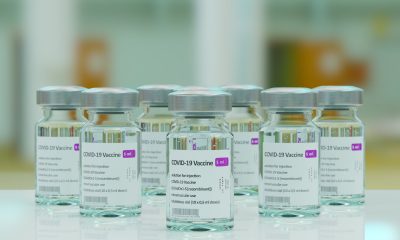
(Featured image by CDC via Unsplash)
DISCLAIMER: This article was written by a third party contributor and does not reflect the opinion of Born2Invest, its management, staff or its associates. Please review our disclaimer for more information.
This article may include forward-looking statements. These forward-looking statements generally are identified by the words “believe,” “project,” “estimate,” “become,” “plan,” “will,” and similar expressions. These forward-looking statements involve known and unknown risks as well as uncertainties, including those discussed in the following cautionary statements and elsewhere in this article and on this site. Although the Company may believe that its expectations are based on reasonable assumptions, the actual results that the Company may achieve may differ materially from any forward-looking statements, which reflect the opinions of the management of the Company only as of the date hereof. Additionally, please make sure to read these important disclosures.
First published in gacetamedica. A third-party contributor translated and adapted the article from the original. In case of discrepancy, the original will prevail.
Although we made reasonable efforts to provide accurate translations, some parts may be incorrect. Born2Invest assumes no responsibility for errors, omissions or ambiguities in the translations provided on this website. Any person or entity relying on translated content does so at their own risk. Born2Invest is not responsible for losses caused by such reliance on the accuracy or reliability of translated information. If you wish to report an error or inaccuracy in the translation, we encourage you to contact us.















Tether Seeks Big Four Audit to Boost USDT Transparency
Tether, issuer of USDT, plans a full audit by a Big Four firm to address transparency concerns over its $184...


H&M Advances Sustainability and Cuts Emissions by 2025
H&M Group reported that by 2025, 91% of materials were recycled or sustainably sourced, with recycled content reaching 32%. Emissions...


NHS Funds Breakthrough CAR-T Therapy Breyanzi for Lymphoma Treatment in Spain
Bristol Myers Squibb announced NHS funding for CAR-T therapy Breyanzi, enabling its use from April 1st in Spain for lymphoma...


Crypto Markets Volatile as Bitcoin Hovers, Solana Eyes AI Integration
Crypto markets remain volatile amid the Iran war, with Bitcoin near $70,000 and ETF inflows improving outlook. Ethereum faces declines...


Crowdfunding Evolves into Core Financial Infrastructure in Europe
European crowdfunding has matured under ECSPR, growing to 254 platforms by 2026 despite operational challenges. Key shifts include debates on...
 |
|
 |  |
 |
|
-

 Cannabis1 week ago
Germany’s Medical Cannabis Market: Legal Reform, Falling Prices, and Rapid Expansion
-

 Business3 days ago
Global Markets on Edge as Iran Conflict, Inflation Pressures, and Financial Risks Intensify
-

 Impact Investing2 weeks ago
ESG Funds Still Hold BP Despite Shift Back to Fossil Fuels
-
 Biotech6 hours ago
NHS Funds Breakthrough CAR-T Therapy Breyanzi for Lymphoma Treatment in Spain