Cannabis
Amsterdam Keeps Coffeeshops Open to Tourists While Raising Europe’s Highest Tourist Tax
Amsterdam’s new coalition agreement drops plans to ban foreign tourists from coffeeshops, keeping cannabis access open despite years of debate. Officials argued a ban would push demand to illegal street dealers. At the same time, the city will raise its tourist tax to nearly 20%, making it Europe’s highest while maintaining open cannabis tourism.

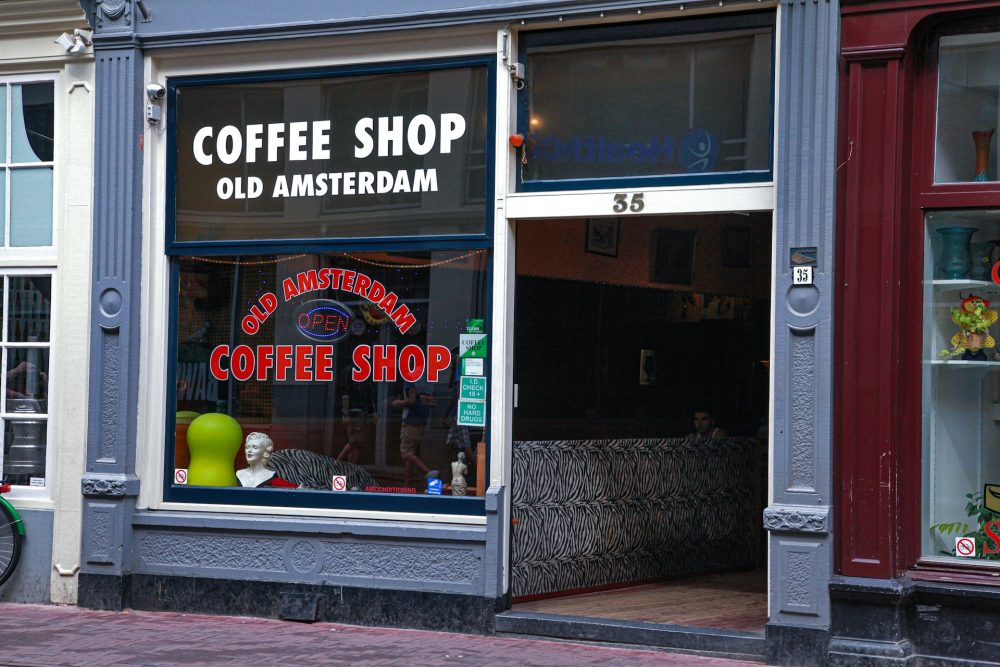
The years-long attempt to keep foreign tourists out of Amsterdam’s coffeeshops died in coalition negotiations. The new agreement keeps the doors open and sets the tourist tax at the highest in Europe.
For years it seemed Amsterdam was finally going to close its doors to smoking tourists
This week, that plan died. A ban on foreign visitors buying cannabis was not included in the new coalition agreement the city’s ruling parties presented on June 3rd, meaning the cannabis tourism mecca remains open to all.
The agreement, sealed between PRO Amsterdam, the merger of PvdA and GroenLinks, and D66, and titled “Jouw stad is mijn stad. Ons Amsterdam” (“Your city is my city. Our Amsterdam”), eliminated the so-called ingezetenencriterium, the residency criterion that would have only allowed residents to purchase cannabis in the city’s approximately 166 coffeeshops. The long-debated project for an erotic center near the RAI (Amsterdam International Airport) fell victim to the same measure.
Talk of a ban had been circulating in Amsterdam since at least 2021, championed for years by Mayor Femke Halsema, who could impose it by decree but always said she wanted the council’s approval. Last year, the PvdA included it in their platform. The catch: GroenLinks and D66 never supported it, and when the PvdA merged with GroenLinks to form PRO, the plan ultimately died within the very party that had championed it.
The argument that prevailed is the one coffeeshop owners in Amsterdam have been making for years: banning tourists doesn’t eliminate demand; it simply hands it over to street dealers. Criminologist Dirk Korf, who has studied the issue for years, found that nearly a quarter of foreign tourists would turn to the black market if locals closed their doors to them, exchanging a regulated product for whatever anyone can sell on a bridge.
The industry celebrated. Arjan Roskam, of the Green House chain, and Joachim Helms, of the BCD coffeeshop association, who spent months lobbying against the measure, interpreted the outcome as a victory for street safety as much as for their business.
What’s interesting is the timing. Cannabis tourism is cooling down almost everywhere. Germany’s partial legalization in 2024 meant Germans no longer needed to cross a border for a legal joint, Thailand’s boom is faltering, and Europe’s newer markets are maintaining their strict regulations. Amsterdam, the original, decided to keep its doors open while much of the world is backing away.
That doesn’t mean that Amsterdam is rolling out the red carpet. The same agreement raises the tourist tax from 12.5% of the nightly rate to 16% next year, climbing to nearly 20%, comfortably the highest in Europe. Amsterdam isn’t going to stop tourists from visiting its coffeeshops. It’s just going to charge them more for the bed they sleep in afterward.
__
(Featured image by Tamara Malaniy via Unsplash)
DISCLAIMER: This article was written by a third party contributor and does not reflect the opinion of Born2Invest, its management, staff or its associates. Please review our disclaimer for more information.
This article may include forward-looking statements. These forward-looking statements generally are identified by the words “believe,” “project,” “estimate,” “become,” “plan,” “will,” and similar expressions. These forward-looking statements involve known and unknown risks as well as uncertainties, including those discussed in the following cautionary statements and elsewhere in this article and on this site. Although the Company may believe that its expectations are based on reasonable assumptions, the actual results that the Company may achieve may differ materially from any forward-looking statements, which reflect the opinions of the management of the Company only as of the date hereof. Additionally, please make sure to read these important disclosures.
First published in elplanteo. A third-party contributor translated and adapted the article from the original. In case of discrepancy, the original will prevail.
Although we made reasonable efforts to provide accurate translations, some parts may be incorrect. Born2Invest assumes no responsibility for errors, omissions or ambiguities in the translations provided on this website. Any person or entity relying on translated content does so at their own risk. Born2Invest is not responsible for losses caused by such reliance on the accuracy or reliability of translated information. If you wish to report an error or inaccuracy in the translation, we encourage you to contact us.













Cannabis Regulation in Germany and Switzerland Shows Early Benefits of Legalization Models
Germany and Switzerland’s cannabis reforms suggest regulated access can reduce criminalization without increasing consumption. Germany saw fewer cannabis-related prosecutions, while...


Insight Foto Festival Launches €4,500 Crowdfunding Campaign to Support 2026 Edition
Insight Foto Festival in Varese has launched a €4,500 crowdfunding campaign to sustain its free 2026 edition. Organized by Gattabuia...


Vexuvo Secures €39M UniCredit Financing to Drive Agrivoltaic and Storage Expansion in Italy
UniCredit has provided €39.3 million financing to vexuvo to support four agrivoltaic plants totaling about 33 MW across Italy, advancing...


Alzheimer’s Study Reveals Immune Pathway Behind Women’s Higher Vulnerability and Potential New Treatment Approach
A CSIC-UMH study identifies heightened interferon signaling as a key factor in women’s greater Alzheimer’s vulnerability. Analysis of human brain...


Bitcoin Rally Faces Tests from Fed, ETFs, and Market Fear
Bitcoin rebounds above $64,000 after a short squeeze and whale accumulation, but remains far below its record high amid cautious...
 |
|
 |  |
 |
|
-
 Impact Investing1 week ago
ReLife Recycling Acquires Palcart Recycling Operations in Verona
-
 Crypto1 day ago
Bitcoin Rally Faces Tests from Fed, ETFs, and Market Fear
-
 Impact Investing1 week ago
Milione Secures €80M EIB Financing to Drive Venice Airport’s Green Transformation
-

 Impact Investing5 days ago
ECB Adds Climate Risk Factor to Collateral Rules