Biotech
Argentina Expands Flu Vaccine Production Through PAHO Partnership
Argentina is advancing local flu vaccine production through an agreement between Sinergium Biotech, CSL Seqirus, and PAHO, boosting regional supply across Latin America and the Caribbean. The deal expands manufacturing capacity, technology transfer, and investment, strengthening Argentina’s biotech sector, creating jobs, and enhancing its role as a strategic vaccine exporter in the region.

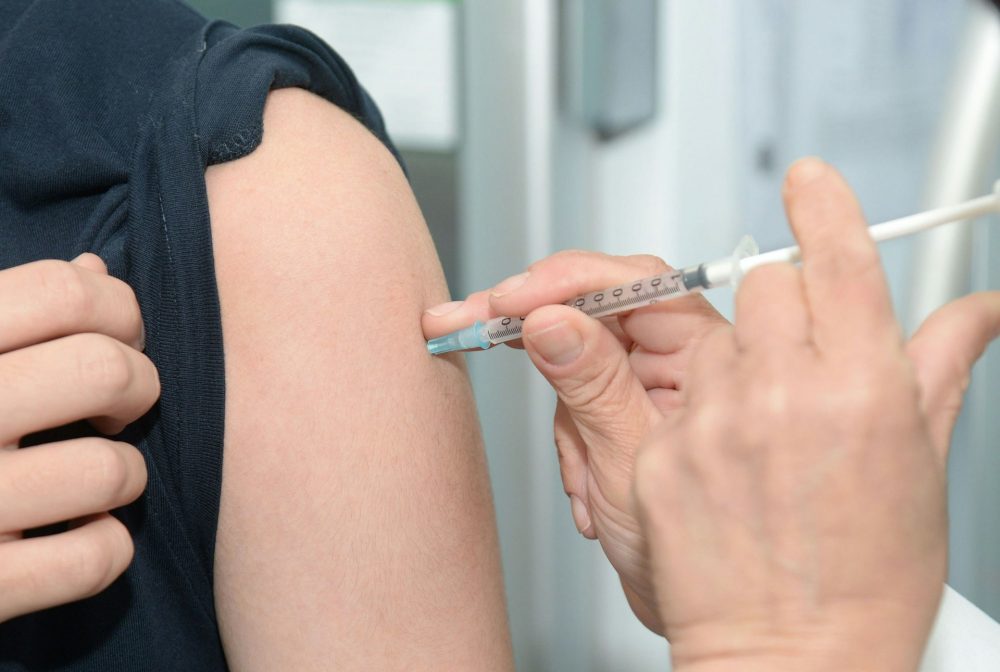
Argentina is making progress in the local production of flu vaccines for Latin America and the Caribbean following an agreement signed between Sinergium Biotech, CSL Seqirus, and the Pan American Health Organization (PAHO). This initiative will expand the country’s production capacity and strengthen its role in the regional supply of influenza vaccines.
The Minister of Health, Mario Lugones, celebrated the agreement and emphasized that this alliance represents progress for the Argentine healthcare industry. “This initiative means greater national capacity in a strategic sector that will attract investment, incorporate innovation, and generate quality employment,” he stated.
Agreement between Sinergium Biotech, CSL Seqirus and PAHO
As agreed, CSL Seqirus is committed to supplying its portfolio of influenza vaccines to countries in the region through the PAHO Revolving Fund. This mechanism will facilitate the distribution of vaccines to Latin America and the Caribbean, with the participation of Argentine industry in local manufacturing.
For its part, Sinergium Biotech will contribute the industrial capabilities of its local plant for vaccine production. With this arrangement, Argentina strengthens its role in the manufacture of influenza vaccines and expands its capacity to respond to regional immunization demand.
Lugones pointed out that the agreement demonstrates the possibility of integrating national industry into larger-scale healthcare projects. “This is a concrete example of how local industry can be integrated into regional healthcare solutions,” the official stated.
Main points of the regional agreement
The agreement envisions coordinated participation between the regional health agency, the international company, and Argentine production capacity. Key elements of the agreement include:
CSL Seqirus will supply its portfolio of flu vaccines.
The distribution will be carried out through the PAHO Revolving Fund .
Sinergium Biotech will participate in the local manufacturing of the vaccines.
Argentina will have priority access to an initial allocation of doses.
The agreement will allow for the expansion of national production for Latin America and the Caribbean.
Furthermore, the Ministry of Health in Argentina indicates that this initiative will allow Argentina to consolidate its position as a strategic player in the supply and export of complex vaccines for the region. The agreement also links local production, regional distribution, and access to influenza vaccines.
Investments to expand production capacity
To support its regional expansion, Sinergium Biotech has already invested $25 million to expand its production capacity. These resources will be used to strengthen the industrial infrastructure necessary for manufacturing influenza vaccines.
In addition, both laboratories committed to investing $10 million in technology transfer. This investment aims to adapt production processes to the quality standards required for international supply.
Minister Lugones also linked the agreement to Argentina government’s strategy to boost the health sector within the Argentine economy. “The national government is creating the conditions for health to become one of the engines of growth for the Argentine economy,” he stated.
Local sectors linked to the production chain
The signing of the agreement will promote the development of local suppliers in areas related to the manufacturing, distribution, and quality control of vaccines. The sectors mentioned in the official information include:
Packaging materials.
Pharmaceutical logistics.
Regulatory validations.
Specialized supply chain.
Services linked to international quality standards.
This process will contribute to strengthening the biotechnology ecosystem in Argentina through the incorporation of technology, the development of industrial capabilities, and the creation of high-value-added jobs. The initiative also seeks to expand the participation of national suppliers in a specialized healthcare supply chain.
Projected vaccine exports
Initiatives related to influenza vaccines are projected to generate approximately $100 million in annual exports. According to official information, more than $60 million has already been generated from this source in Argentina by 2026.
In addition, another $60 million is expected to be added before the end of the year, along with exports of the 20-valent pneumococcal conjugate vaccine derived from the agreement signed between Pfizer and PAHO in 2025.
Both initiatives strengthen the export profile of Argentina’s biotechnology industry and contribute to generating foreign exchange in sectors with high technological complexity. The influenza vaccine agreement thus joins other developments related to immunobiologicals with international potential.
Argentina strengthens its participation in the regional provision of vaccines
The agreement between Sinergium Biotech, CSL Seqirus, and the Pan American Health Organization (PAHO) will expand local production of influenza vaccines and distribute them throughout Latin America and the Caribbean. The initiative combines domestic manufacturing, technology transfer, productive investment, and participation in regional supply mechanisms.
With this alliance, Argentina is advancing its consolidation as a supplier of influenza vaccines for the region. The country seeks to strengthen its industrial capacity in biotechnology, expand its export profile, and participate in the provision of highly complex vaccines destined for the regional market.
__
(Featured image by Hyttalo Souza via Unsplash)
DISCLAIMER: This article was written by a third party contributor and does not reflect the opinion of Born2Invest, its management, staff or its associates. Please review our disclaimer for more information.
This article may include forward-looking statements. These forward-looking statements generally are identified by the words “believe,” “project,” “estimate,” “become,” “plan,” “will,” and similar expressions. These forward-looking statements involve known and unknown risks as well as uncertainties, including those discussed in the following cautionary statements and elsewhere in this article and on this site. Although the Company may believe that its expectations are based on reasonable assumptions, the actual results that the Company may achieve may differ materially from any forward-looking statements, which reflect the opinions of the management of the Company only as of the date hereof. Additionally, please make sure to read these important disclosures.
First published in consultorsalud. A third-party contributor translated and adapted the article from the original. In case of discrepancy, the original will prevail.
Although we made reasonable efforts to provide accurate translations, some parts may be incorrect. Born2Invest assumes no responsibility for errors, omissions or ambiguities in the translations provided on this website. Any person or entity relying on translated content does so at their own risk. Born2Invest is not responsible for losses caused by such reliance on the accuracy or reliability of translated information. If you wish to report an error or inaccuracy in the translation, we encourage you to contact us.
















Cannabis Regulation in Germany and Switzerland Shows Early Benefits of Legalization Models
Germany and Switzerland’s cannabis reforms suggest regulated access can reduce criminalization without increasing consumption. Germany saw fewer cannabis-related prosecutions, while...


Insight Foto Festival Launches €4,500 Crowdfunding Campaign to Support 2026 Edition
Insight Foto Festival in Varese has launched a €4,500 crowdfunding campaign to sustain its free 2026 edition. Organized by Gattabuia...

Vexuvo Secures €39M UniCredit Financing to Drive Agrivoltaic and Storage Expansion in Italy
UniCredit has provided €39.3 million financing to vexuvo to support four agrivoltaic plants totaling about 33 MW across Italy, advancing...


Alzheimer’s Study Reveals Immune Pathway Behind Women’s Higher Vulnerability and Potential New Treatment Approach
A CSIC-UMH study identifies heightened interferon signaling as a key factor in women’s greater Alzheimer’s vulnerability. Analysis of human brain...


Bitcoin Rally Faces Tests from Fed, ETFs, and Market Fear
Bitcoin rebounds above $64,000 after a short squeeze and whale accumulation, but remains far below its record high amid cautious...
 |
|
 |  |
 |
|
-

 Africa1 week ago
UCITS Funds Drive Casablanca Market Activity in Q1 2026
-

 Africa2 weeks ago
Morocco’s Growth Holds at 4.6% as Agriculture Offsets Economic Pressures
-

 Business2 days ago
Jobs Cooling Fast as a Cautious Fed Leaves Markets Without a Safety Net
-

 Business1 week ago
EU Budget for 2028–2034: Rising Pressures Drive Debate on New European Taxes