Africa
Morocco’s Record Grain Harvest Spurs Temporary Import Barriers to Protect Farmers
After years of drought, Morocco expects a record 90 million quintal grain harvest, driven by strong rainfall. To protect farmers, import duties on soft wheat will be reinstated at 170 percent in June and July 2026, then lifted in August. Storage incentives and strategic reserves aim to stabilize markets, while imports remain essential long term.

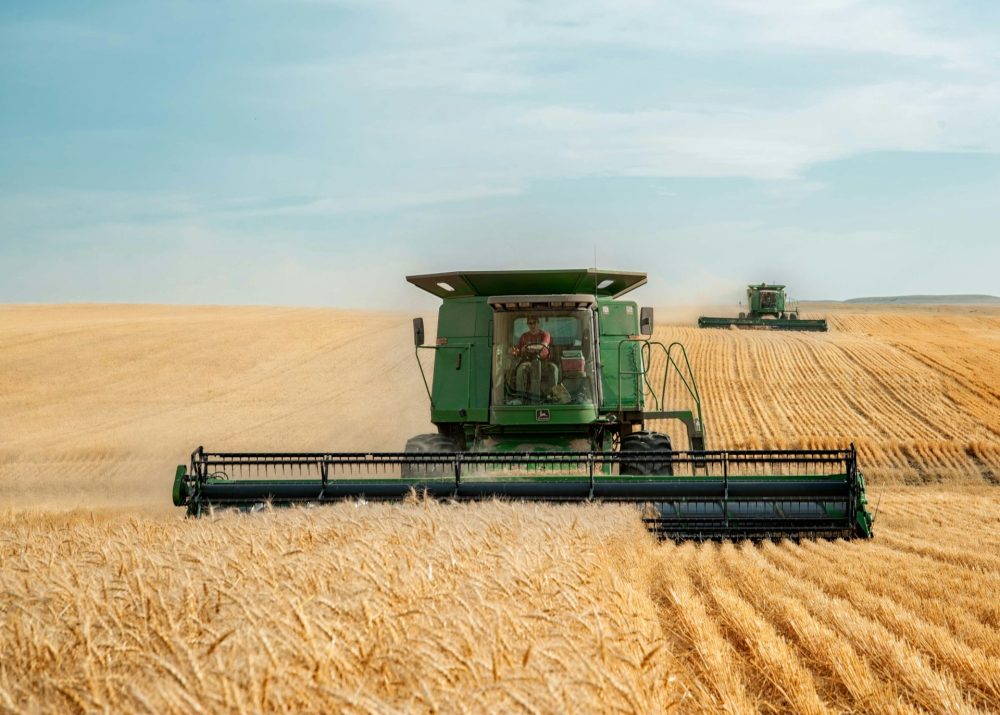
After six years of drought, Morocco is experiencing a record harvest. Nearly 90 million quintals of grain are expected, half of which will be soft wheat. To prevent a collapse in prices and support farmers, the government is temporarily reinstating import duties from June 1st to July 31st, before suspending them again from August 1st. This measure, aimed at regulating the grain market just weeks before the harvest, is detailed in a circular from the Customs Administration. Here’s a closer look.
After seven years of drought, the rains have finally returned. Between September 2025 and March 2026, rainfall reached 462 mm, 56% more than the average of the last thirty years. This return of water has benefited all agricultural regions. Dams are at approximately 75.7% capacity, and cultivated areas have increased to nearly 3.9 million hectares.
As a direct result, national cereal production for the 2025-2026 season is estimated at 90 million quintals (9 million tons). This is almost double the 44 million quintals harvested the previous season. Soft wheat alone accounts for approximately 45 million quintals. This exceptional windfall radically changes the situation for the Kingdom, which is structurally dependent on imports.
A meticulously planned system in Morocco
To ensure that this abundance primarily benefits local producers, the government has leveraged import duties. Decree No. 2.26.419, presented to the Council of Ministers and effective May 21, 2026, was supplemented by a circular from the Customs Administration dated May 26, 2026 (No. 6739/211). This document reiterates that the suspension of import duties applicable to soft wheat and its derivatives, in effect since November 1, 2021, is temporarily suspended.
Specifically, the customs duty is reinstated for June and July 2026 at a rate of 170%, then suspended again from August 1st, 2026. The products concerned fall under tariff headings 1001.99.00.19 and 1001.99.00.90. This timing is no coincidence. The harvest is in full swing between May and July.
By temporarily closing the customs border to foreign wheat, the government in Morocco aims to prevent unfair competition that would drive down domestic prices. The stated objective is to promote domestic production and improve the financial situation of farmers. Once the harvest is in, the suspension of tariffs will resume, allowing mills and manufacturers to source their wheat at lower costs on international markets, thus stabilizing flour and bread prices for consumers.
An unprecedented strategic storage plan
But curbing imports is not enough. The domestic sector in Morocco must also be able to absorb and store this influx of grain. The National Interprofessional Office for Cereals and Pulses (ONICL) therefore unveiled an ambitious incentive program at a meeting in Casablanca on May 15th, 2026. The target reference price for standard-quality soft wheat has been set at 280 dirhams per quintal. The strategic storage objective is 15 million quintals, or 17% of the projected production, enough to cover two months of national consumption.
To encourage storage facilities, two subsidies are being introduced. The first, a short-term storage subsidy of 2.5 dirhams per quintal per fortnight, is granted for eligible harvests from June 1st to July 31st. The second, a long-term storage subsidy of 3 dirhams per quintal per fortnight, aims to build up strategic reserves. As Bilal Hajjouji, Director General of ONICL, pointed out, “The 2026 grain season is shaping up to be exceptional, but logistical challenges persist.” These subsidies are specifically designed to address these challenges.
What will the repercussions be on the market?
Operators in Morocco, including importers, millers, and manufacturers, will have to adjust their purchasing plans. Importing soft wheat in June or July will be significantly more expensive than in August. A large portion of orders will therefore likely be postponed until after August 1st. This shift could create a logistical bottleneck in July, followed by a surge in imports in the fall. For consumers, the direct impact will be limited, as flour and bread prices remain subsidized or regulated by the government.
For international exporters, the signal is clear. Morocco, which imported over 2.85 million tons of soft wheat from the European Union during the 2025-2026 marketing year (making it the EU’s largest customer), will reduce its purchases over the next two months. France, the country’s historically leading supplier, will see its shipments temporarily slowed. According to the USDA, Moroccan wheat imports could fall by 28% in the 2026-2027 marketing year.
A strategic respite, not a lasting break
Should this be seen as a turning point in Moroccan grain policy? Yes, but it needs to be put into perspective. From August 1st, import duties will be suspended again and international trade will resume. Morocco remains structurally deficient in soft wheat, with local production covering between 50% and 70% of its needs, depending on the year.
Imports in Morocco will remain essential, especially during dry years. But the importance of this harvest lies elsewhere. It offers a window of opportunity to replenish strategic reserves at a lower cost, support farmers’ incomes, and reduce the grain import bill, which is usually between $1.5 and $2.5 billion annually. Agricultural GDP is expected to grow by around 15% year-on-year, a welcome boost for the entire economy in Morocco
Ultimately, the government in Morocco is skillfully walking a tightrope. It is protecting the record harvest without abandoning trade liberalization. It remains to be seen whether the rains will return next year.
Key figures for the 2025-2026 campaign
Morocco’s cereal harvest is estimated at 90 million quintals (9 million tons), nearly double the previous season’s yield of 44 million quintals. Soft wheat accounts for approximately 45 million quintals. The planted area reached 3.9 million hectares. The strategic storage target is set at 15 million quintals (17% of the projected production), which would cover two months of national consumption. The target reference price for soft wheat is 280 dirhams per quintal.
To encourage the building up of reserves, a short-term storage bonus of 2.5 dirhams per quintal per fortnight is granted from June 1st to July 31st, while a long-term storage bonus of 3 dirhams per quintal per fortnight is also implemented. Finally, agricultural GDP is expected to grow by approximately 15% year-on-year thanks to this improvement.
__
(Featured image by Darla Hueske via Unsplash)
DISCLAIMER: This article was written by a third party contributor and does not reflect the opinion of Born2Invest, its management, staff or its associates. Please review our disclaimer for more information.
This article may include forward-looking statements. These forward-looking statements generally are identified by the words “believe,” “project,” “estimate,” “become,” “plan,” “will,” and similar expressions. These forward-looking statements involve known and unknown risks as well as uncertainties, including those discussed in the following cautionary statements and elsewhere in this article and on this site. Although the Company may believe that its expectations are based on reasonable assumptions, the actual results that the Company may achieve may differ materially from any forward-looking statements, which reflect the opinions of the management of the Company only as of the date hereof. Additionally, please make sure to read these important disclosures.
First published in LES ECO.ma. A third-party contributor translated and adapted the article from the original. In case of discrepancy, the original will prevail.
Although we made reasonable efforts to provide accurate translations, some parts may be incorrect. Born2Invest assumes no responsibility for errors, omissions or ambiguities in the translations provided on this website. Any person or entity relying on translated content does so at their own risk. Born2Invest is not responsible for losses caused by such reliance on the accuracy or reliability of translated information. If you wish to report an error or inaccuracy in the translation, we encourage you to contact us.















Morocco’s Budget Execution June 2026: Deficit Narrows to 20.2 MMDH
Morocco’s Finance Law execution at end-June 2026 shows a reduced budget deficit of 20.2 billion dirhams, down from 24.9 billion...


Tilray Brands Hits Multi-Year Lows as Cannabis Investors Await Regulatory Clarity
Tilray Brands shares have fallen 57% this year amid cannabis sector weakness and uncertainty over US regulatory reform. While potential...


Ethereum Between ETF Inflows, Price Risks and a Strong July
Ethereum faces mixed signals as ETF inflows and a strong July performance support recovery, while technical resistance and downside risks...


Mercedes-Benz Accelerates EV Decarbonization With Recycled Aluminum
Mercedes-Benz expands its partnership with Hydro to accelerate supply chain decarbonization. Future electric vehicles will use Hydro CIRCAL aluminum containing...


Evotec and BioGaia Boost Biotech, while Vitrolife Disappoints
European stocks moved on earnings and broker actions. Evotec, BioGaia, Plus500, Pharming, Inwido, Amundi and Julius Baer rallied on upgrades,...
 |
|
 |  |
 |
|
-

 Impact Investing4 days ago
TotalEnergies Challenges Landmark Climate Ruling and Disputes Customer Liability for Emissions
-

 Biotech2 weeks ago
Biotech Revival: Big Pharma Bets on Innovation and Acquisitions
-
 Africa23 hours ago
Morocco’s Budget Execution June 2026: Deficit Narrows to 20.2 MMDH
-

 Business6 days ago
Rising Bond Yields Signal Potential Trouble Beneath a Calm Stock Market