Africa
Morocco’s Mining Ambitions: From Isolated Hubs to Integrated Industrial Power
An OECD report warns Morocco’s mining sector risks remaining an isolated hub without regional integration, better logistics, and tax reform. While progress in digital systems and tenders improves transparency, value capture remains limited. Building industrial ecosystems, securing geological data, and aligning policies are essential to move beyond exporting raw and semi-processed minerals toward higher-value production.


A recent OECD report indicates that Morocco is right to invest in digital infrastructure and public tenders, because the battle for information is the mother of all battles. It argues that Moroccan processing plants will remain isolated hubs if the country does not build, with its neighbors, the logistical corridors and common rules that allow for the pooling of volumes and the achievement of critical mass.
Furthermore, it specifies that the tax system, if not reformed to capture revenue while incentivizing deep transformation, will continue to make the Kingdom an exporter of powders and concentrates, at the mercy of the next technological revolution that will render its cobalt or manganese obsolete. Details follow.
If we had to remember only one sentence from the OECD report that has just been unveiled on the sidelines of the Istanbul Forum, it would be this: Africa has mineral processing plants, but they are only “isolated nodes rather than integrated industrial ecosystems capable of challenging established processors.”
Morocco is specifically mentioned, alongside Zambia, the DRC, and South Africa. This is both a recognition of its industrial lead and a stark warning. For an isolated hub in the mining economy remains easy prey: dependent on imported technologies, vulnerable to price shocks, and, above all, unable to capture the lion’s share of added value, which, from mine to battery, is concentrated in deep processing and component manufacturing.
The African Paradox
The OECD report, a background document for the Critical Minerals Forum co-chaired by Moroccan Minister Leila Benali and her Turkish counterpart, presents a stark statistical picture. Africa exports 10.6% of the world’s critical minerals, but 72% of these exports are semi-processed and 24% are raw. In short, the continent is supplying the global energy transition with concentrates and powders, while China refines 60% of the world’s cobalt and 45% of its copper.
Morocco, however, stands out as a relative exception. Its copper and base metal processing plants are operational. But what the report suggests, without explicitly stating it, is that these smoking chimneys in Moroccan territories are not yet the lifeblood of an industrial sector capable of supplying a cathode to an automaker located in Tangier or Kenitra.
This paradox of abundance without control finds its explanation in the fundamental asymmetry documented by the OECD: information. African states often negotiate their concessions “blindly,” facing mining companies that arrive with 3D seismic models, geochemical analyses, and resource estimates that national geological surveys lack the means to verify. The result? Insufficient royalties, fiscal stability clauses locked in for thirty years, and exploding arbitration disputes when the state attempts, after the fact, to renegotiate what it had failed to properly assess.
What Morocco has begun to implement, and why it is crucial
Faced with this trap of asymmetry, Morocco has activated a lever that the report presents as the sine qua non of any industrial mining policy: the geological information system. The digital mining cadastre, whose deployment is accelerating this spring of 2026, is not a mere administrative gimmick. It is the ultimate weapon against opacity. By centralizing geophysical data, mining titles, production histories, and exploration results, it reverses the balance of power: the State can finally negotiate with full knowledge of the facts and launch competitive tenders rather than awarding permits on a “first come, first served” basis.
The CADETAF program, which specifically provides for tenders for clearly defined mining areas, is a direct application of this logic. The OECD is explicit: moving from an open-door system to a competitive auction system can “generate much better deals for African governments.” This dynamic is a real game-changer for three categories of stakeholders.
First, for the state, which regains the ability to plan and select investors: a cobalt deposit is no longer awarded to a junior speculator who will resell it at an indecent profit, but to an industrial operator capable of demonstrating its financial and technical capacity, and bound by a set of specifications. Second, for serious mining operators, whether Moroccan like Managem or international, digitalization and transparency reduce the perceived “political risk,” the very risk that, according to the Fraser Institute’s annual survey, drives exploration capital away from the continent.
Finally, for local subcontractors and suppliers, a transparent registry and standardized contracts make the needs of mines for engineering, logistics and maintenance services visible, while allowing the structuring of a qualified local offer rather than enduring turnkey imports.
The isolated node and the battery factory: how to connect them
The OECD report emphasizes a fundamental truth that African industrial strategies sometimes overlook:
local transformation cannot be decreed; it must be built by fulfilling five conditions: cheap and reliable energy, logistical infrastructure, technical expertise, patient financing, and economies of scale. Morocco possesses rare advantages in all five areas.
Competitive solar and wind power can supply energy-intensive hydrometallurgical plants; the Tangier Med port complex provides a gateway to Europe; the university system trains process engineers; and European concessional financing is beginning to focus on refining, as indicated by the RESourceEU plan adopted in December 2025. The question of economies of scale remains, a congenital weakness for a country that is not a mining giant in terms of volume. This is where the regional dimension becomes crucial. The report mentions the Lobito corridor, China’s rehabilitation of the Tazara River, and the AfCFTA as a framework for integrating mineral value chains.
For Morocco, this means that its copper smelter or cobalt sulfate plant cannot operate at full capacity by processing only Moroccan ore. It must become a hub processing concentrates, perhaps from Mauritania, Guinea, or Mali. The Continental Free Trade Area then becomes a tool for industrial profitability: importing concentrates duty-free, exporting semi-finished products or battery components to neighboring countries that are developing their own assembly lines.
“Africa aspires to play an active partner role in innovation and value creation.” This statement by Leila Benali in Istanbul takes on its full meaning here. It means that Morocco does not want to be simply a cathode supplier for a European gigafactory, but a co-producer in a regional ecosystem where West African ore is processed in Casablanca and assembled in Nairobi or Accra.
What’s still holding things back?
The OECD report dedicates an entire chapter to mining taxation, and its diagnosis is unequivocal. Most African countries capture only 40% of the potential revenue from their resources, due to a toxic combination of excessively low rates, tax evasion, and an administrative inability to audit the costs declared by multinationals. The OECD recommends a modern approach: a royalty proportional to revenue (based on an intangible mining base), standard corporate income tax, a windfall profits tax that can only be applied during periods of soaring prices, and targeted reductions for companies that invest in local processing.
For Morocco, the stakes are high. Cobalt prices, of which the Kingdom is a modest but strategic producer via the Bou-Azzer deposit, have experienced wild volatility: after the Congolese embargo in 2025, prices rebounded, but this underlying trend is threatened by the accelerated development of low-profile batteries (LFPs) by Chinese and American manufacturers. An unsuitable tax regime, either too rigid or too generous, could cripple the deposit if prices plummet, or deprive the state of revenue if prices skyrocket.
The solution outlined by the OECD—a variable-rate royalty indexed to prices, coupled with a tax on the resource rent—would allow the Moroccan state to secure a minimum income while capturing a share of the profits. It would incentivize operators to invest in processing to benefit from the reduced rates.
Beyond taxation, another, more political, obstacle has been identified: the low rate of ratification of continental instruments. Only four countries have ratified the African Minerals Development Centre, and very few have adopted a genuine national strategy on critical minerals. Morocco, which has not yet published a framework document equivalent to those of Zambia or South Africa, would benefit from formalizing its doctrine.
This is not to appease the African Union, but to provide visibility for investors and align the decisions of the various government departments (energy, industry, trade, environment) around common objectives. Without this guiding principle, each ministry negotiates in isolation, and an integrated ecosystem remains a pipe dream.
What changes daily for the industrialist in Tangier and the artisanal miner in Souss?
Imagine an automotive supplier located in the Tangier free zone, which currently imports copper wire or silver-plated connectors from Asia. Tomorrow, if a Moroccan copper refinery, supplied with local and Mauritanian concentrate, produces battery-grade cathode copper, this supplier can shorten its supply chain, reduce its carbon footprint (a powerful argument for European clients subject to carbon border adjustment mechanisms), and become more responsive.
What’s changing is that the decision to locate this refinery is no longer solely based on short-term profitability calculations: it is contingent on the availability of geological data that guarantees a sustainable supply, on a clear mining contract that prevents operational disruptions, and on a competitive electricity tariff negotiated with ONEE (the National Office of Electricity and Drinking Water) within the framework of a public-private partnership.
At the other end of the chain, the artisanal miner who extracts barite or cobalt under precarious conditions will also see their status change if the formalization advocated by the OECD is successfully implemented. The creation of a traceable artisanal cobalt sector, announced by the DRC for 2025, points the way forward.
For Morocco, which has thousands of artisanal miners in the barite, lead, and zinc sectors, structuring cooperatives and providing them with access to safety equipment and clean separation processes means simultaneously reducing environmental impact, protecting human lives, and securing production that supplies export markets with increasingly stringent traceability requirements.
The issue is not philanthropic; it is about market access. A European buyer subject to the Conflict Minerals Regulation or due diligence obligations will no longer purchase a ton of concentrate whose origin they cannot certify.
Morocco: a bridge or a funnel?
The subtitle of the Istanbul Forum, “Mobilizing Investment and Growth through Partnerships,” might seem like just another slogan. But the report reveals its geopolitical substance. The United Arab Emirates and Saudi Arabia are acquiring African mining assets at a rapid pace, through companies like ADQ, Ma’aden, and Mubadala, and make no secret of their intention to position their ports as processing hubs upstream of Asian and Western markets.
The European Union, through its Critical Raw Materials Act, is seeking “strategic projects” to reduce its dependence on China, but has granted this status to only four African projects, all still under review. The United States is launching financing consortia like the $1.8 billion Orion CMC and is targeting projects with high political visibility.
In this competition, Morocco holds a unique advantage: its geographical location and free trade agreements make it the natural transit point between African resources and the European manufacturing market. But this “bridge” position can quickly become a “funnel” where raw materials merely pass through without undergoing significant processing. To avoid this scenario, the OECD report suggests, without explicitly stating it to Morocco, that the battle hinges on the ability to assemble a regional processing bloc.
Minister Benali clearly understood this when she emphasized in Istanbul the “common African framework for ESG standards” adopted in Marrakech. Harmonizing environmental and social regulations among African producing countries prevents the race to the bottom that drives minerals to the least scrupulous ports. It also creates the conditions for credible regional certification, which reassures end buyers and gives a competitive advantage to countries that prioritize transparency. Integration through standards precedes integration through pipelines and railways; Morocco has theorized this, and now it needs to operationalize it by signing mutual recognition agreements with its mining neighbors, starting with Mauritania for iron and copper, and Guinea for bauxite.
__
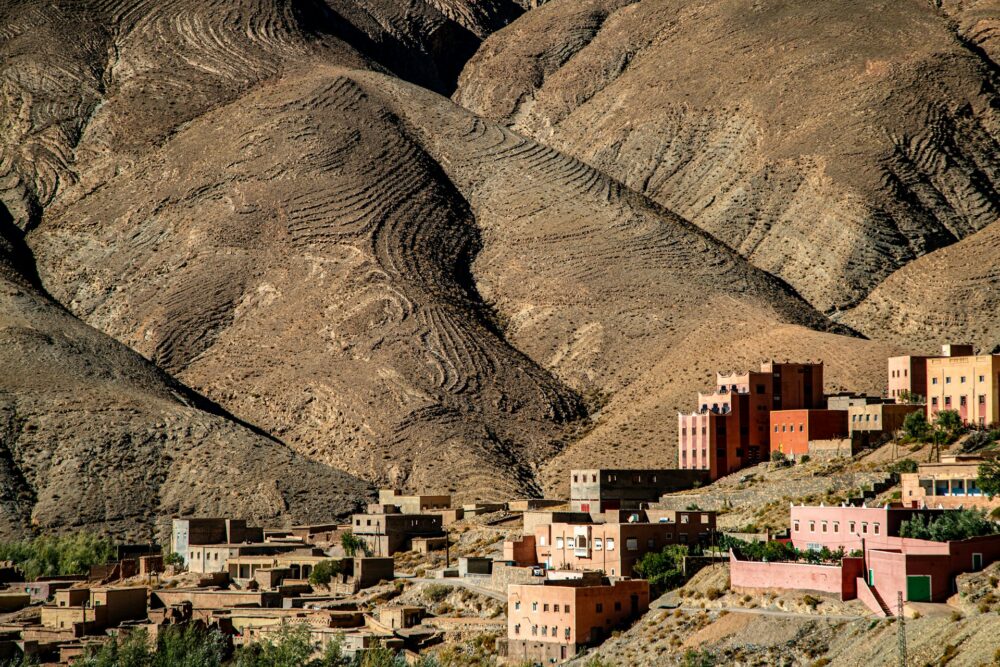
(Featured image by Shane Mclendon via Unsplash)
DISCLAIMER: This article was written by a third party contributor and does not reflect the opinion of Born2Invest, its management, staff or its associates. Please review our disclaimer for more information.
This article may include forward-looking statements. These forward-looking statements generally are identified by the words “believe,” “project,” “estimate,” “become,” “plan,” “will,” and similar expressions. These forward-looking statements involve known and unknown risks as well as uncertainties, including those discussed in the following cautionary statements and elsewhere in this article and on this site. Although the Company may believe that its expectations are based on reasonable assumptions, the actual results that the Company may achieve may differ materially from any forward-looking statements, which reflect the opinions of the management of the Company only as of the date hereof. Additionally, please make sure to read these important disclosures.
First published in LES ECO.ma. A third-party contributor translated and adapted the article from the original. In case of discrepancy, the original will prevail.
Although we made reasonable efforts to provide accurate translations, some parts may be incorrect. Born2Invest assumes no responsibility for errors, omissions or ambiguities in the translations provided on this website. Any person or entity relying on translated content does so at their own risk. Born2Invest is not responsible for losses caused by such reliance on the accuracy or reliability of translated information. If you wish to report an error or inaccuracy in the translation, we encourage you to contact us.














Tilray Brands Hits Multi-Year Lows as Cannabis Investors Await Regulatory Clarity
Tilray Brands shares have fallen 57% this year amid cannabis sector weakness and uncertainty over US regulatory reform. While potential...


Ethereum Between ETF Inflows, Price Risks and a Strong July
Ethereum faces mixed signals as ETF inflows and a strong July performance support recovery, while technical resistance and downside risks...


Mercedes-Benz Accelerates EV Decarbonization With Recycled Aluminum
Mercedes-Benz expands its partnership with Hydro to accelerate supply chain decarbonization. Future electric vehicles will use Hydro CIRCAL aluminum containing...


Evotec and BioGaia Boost Biotech, while Vitrolife Disappoints
European stocks moved on earnings and broker actions. Evotec, BioGaia, Plus500, Pharming, Inwido, Amundi and Julius Baer rallied on upgrades,...


BMW Hit by China Slowdown as Samsung Profits Soar and Adidas Gains World Cup Boost
BMW faces falling profits due to China’s auto market crisis, while cutting costs. Lufthansa competes for a stake in Portugal’s...
 |
|
 |  |
 |
|
-
 Africa1 week ago
PAASIFEJ: Results-Based Financing Driving Inclusive and Sustainable Rural Growth in Morocco
-
 Cannabis5 hours ago
Tilray Brands Hits Multi-Year Lows as Cannabis Investors Await Regulatory Clarity
-

 Fintech1 week ago
Blockchain Evolves Toward AI, Finance and Quantum Security
-
 Africa2 weeks ago
Senegal’s Debt Strategy: Choosing Between Restructuring and Financial Innovation