Business
The TopRanked.io Weekly Digest: What’s Hot in Affiliate Marketing [uMobix Affiliates Review 2026]
With the age verification movement accelerating, big tech’s trying to get back control by rolling out a bunch of “parental control” tools to convince governments there’s no need to impose such laws. And, curiously enough, this is creating a big affiliate opportunity. This week, we look at what that opportunity is, what’s driving it, and how to monetize it with uMobix Affiliates.


Quick Disclosure: We’re about to tell you how uMobix affiliates are pretty great. And we really mean it. Just know that if you click on a uMobix affiliates link, we may earn a small commission. Your choice.
Fellow affiliates.
As we all know, many parents harbor deep-seated fantasies about control.

And while many manage to suppress these urges, many don’t.
This week, we’re going to monetize that urge for big affiliate profits.
Topranked.io Affiliate Program of the Week — uMobix Affiliates
If you’re looking for product parents looking to gain a little more control over their kids will love, then you’re going to be hard-pressed to find something they’ll love more than what uMobix Affiliates has to offer.
Here’s why you’ll love uMobix Affiliates, too.

uMobix Affiliates — The Product
So, if you’re going to joining uMobix Affiliates, you’re probably going to want to know what you’ll be selling.
The short answer (copy-pasted off their website) is that uMobix Affiliates offers the “cell phone for modern parents” which let’s those modern parents “monitor everything that happens on [their] kid’s smartphone or tablet in real-time.”
And when uMobix Affiliates says “everything”, they really do mean “everything”.
The full product you’ll be selling with uMobix Affiliates includes everything, from full visibility into messaging apps, all usage of all apps, full access to browser history, the ability to control various elements (e.g., delete apps, block wifi, restrict calls, etc.), and even the ability to see everything the kid thought they’d deleted (contacts, messages, etc.).
In other words, with uMobix Affiliates, you’ll be offering parents maximum control over their kid’s devices. And, if you can target the right parents, then that means you’ll have no trouble converting with uMobix Affiliates.
Now let’s see what you can earn.
uMobix Affiliates — The Commissions
Much like my brain, uMobix Affiliates commissions are simple.
In short, with uMobix Affiliates, you’ll earn:
- A 45% cut of all first sales
- A 25% cut on all recurring sales
Sadly, that’s about where the simplicity with uMobix Affiliates’ commissions ends. But it’s not because uMobix Affiliates complicates their commission plans (they don’t). Rather, it’s the usual “subscription period” part that complicates it.
Basically, uMobix offers different pricing plans depending on subscription period.
There’s a $49.99/month monthly plan, a $29.99/month 3-month plan, and a $12.49/month yearly plan.
So, if you sign up someone through uMobix Affiliates for a monthly plan and they stick around for a year, your earnings will be:
- 1 x $49.99 x 45% first-sale commission =
- 11 x $49.99 x 25% recurring sales commission
That works out to about $160.
On the other hand, if you sign up someone on a $12.49/month yearly plan, your first sale’s going to be 12 x $12.49 (just shy of $150). And, as we all know, 45% of $150 is only about $67.45.
Still a very good commission for a single sale. But it’s also a big difference from the payout uMobix Affiliates would’ve sent you for the renewing monthly plan sale.
uMobix Affiliates — Next Steps
That’s enough on uMobix Affiliates for now.
If you want more details, then head on over to TopRanked.io for our in-depth uMobix Affiliates review.
Alternatively, if you want to get started right away (and why wouldn’t you!?), then head here to sign up with uMobix Affiliates today.
Affiliate News Takeaways — Parental Controls
As regular readers already know, we’ve been writing a lot about kids this year.
And for you non-regulars, no, that doesn’t mean what you think it means.

What we’ve actually been writing about is kids and social media. Or, more specifically, the massive push we’ve been seeing lately for age verification.
(Psst: If you want to get caught up here, then go check out our PureVPN Affiliate Program review and hosting.com affiliate program review editions.)
This week, we’re kinda picking up where we left off the last time we covered the whole kids thing. But this time, we’ve got a whole new angle that’s got nothing to do with states and countries imposing new laws, and everything to do with platforms and their desperate attempts to avoid age verification requirements.
So why are we covering this?
Money, of course.
There’s a chance to make some big money here.

Anyway, we’ll get to the money-making part later.
First, we need to fill you in on the background, starting with a quick tl;dr for anyone who’s been living under a rock the last year.
So here goes.
- A handful of countries and states passed age verification laws requiring various websites to verify the age of their users.
- These laws extend beyond the usual “adult content” sites (or reclassify some otherwise benign sites as “adult content”).
- This kicked off a bit of a “monkey see, monkey do” chain reaction.
- Now everyone wants in.
By this stage, it’s gotten to the point where what was once an occasional news item has suddenly turned into a torrent of daily reports.
For context, just these last couple of days we’ve seen news that Turkey’s drafting laws to ban under-15s from social media, Norway’s planning to do the same for under-16s, and the US Congress is currently considering H.R.8250 — the Parents Decide Act — which would require ID verification at the operating system level.
Yes, you read that right. Some boffins in congress want you to show ID just to be able to use your computer and smartphone.
Should be good for business for some…
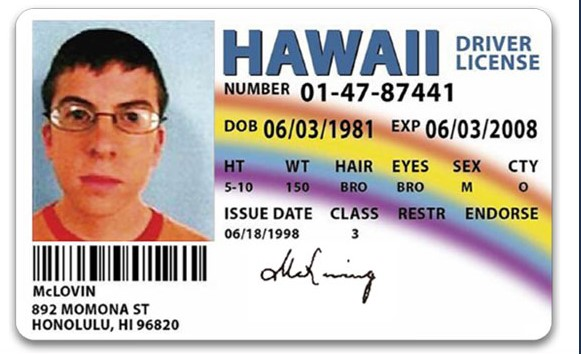
In any case, even if every link I dropped above is new news, it’s also basically old news by this point — the cascade of states and countries piling in to age verification started months ago. And it’s not showing any signs of stopping.
And that brings me to this weeks news, and its associated opportunity.
To tl;dr it, it basically goes like this:
- Age verification is bad for social media platforms’ engagement/usage numbers.
- This creates problems for any social media platform whose raison d’etre is “line go up”
- Therefore, they’re all scrambling to do what they can to limit the damage.
Now, obviously, Big Tech’s been battling Big Gov for years now. So naturally, they’ve got more than one card up their sleeve here.
But there’s one particular card we’re starting to see more and more — a card that could then set of a cascade of demand for certain types of products.
And, as an affiliate, you’re naturally going to start selling these products so you don’t end up like this guy.

So let’s pick up on a couple of items we’ve seen recently.
First, Meta literally just announced that it’s planning to “help parents understand conversations their teens are having with AI.”
Second, just a little over a week ago, Roblox also announced it was planning to offer “expanded parental controls.”
And then, there’s a hodge podge of other efforts that have been copping up here and there, like Spotify’s announcement earlier this month that it, too, is “putting families and parents in charge.”
Guess a whole bunch of dads are about to start feeling a whole lot more empowered.
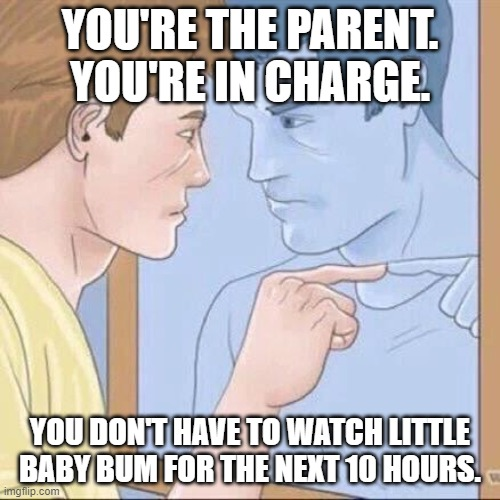
Anyway, as you can probably guess given the current climate around age verification, it’s probably no coincidence that platforms are suddenly rushing to roll parental controls out the door.
The theory, I suspect, goes a little like this:
- Show the world that we’re putting parents in control.
- Governments will then back off.
As for whether the theory actually works in practice… well, that’s another question that I don’t really want to get in to now.
Instead, there’s a better question us as affiliates should concern ourselves with. It goes a little bit like this:
- As more and more parents are handed more and more control over their child’s online activity, will more and more parents demand more and more control over their child’s online activity.
In other words, does exposure/usage to something “new” drive increased demand?
Now, there’s a bunch of theories here that suggest the answer to these questions is yes. And I think I’ll go more into these theories in the Closing Thought section that’s coming up.
But, for the sake of getting to the conclusion, I’m going to simply assume that the answer is yes — as parents gain control over their child’s online activity, parents will start to demand more control over their child’s online activity.
And, if that’s true, then there’s a big fat affiliate opportunity here.
Takeaway
While many parents will no doubt love the new “parental control” features big platforms are currently rolling out, many of them are (probably) going to be left wanting for more.
After all, why stop at controlling your kid’s activity on one platform when you could control their activity on every platform, every app, and every device?
And just in case you missed our uMobix Affiliates review, that’s exactly the sort of power you can offer parents while making a pretty penny.
Now, of course, selling what uMobix Affiliates has to offer doesn’t technically grant full control. But, with comprehensive monitoring tools that surveil just about everything on a kid’s device, you can definitely offer something approaching a true panopticon, which is pretty much the same thing.
And all you have to do is join uMobix Affiliates to get started.
Closing Thought
Earlier, I mentioned something about a bunch of theories that suggest parents will demand more and more parental control as they’re handed more and more parental control.
I thought I’d save it for the closing thought, because some of this stuff deserves your full attention.
In short, I’m going to cover a bunch of theories that help drive demand.
Now, only a few of these are directly related to the news section. But, I’ve included some extras because they’re definitely interesting, definitely powerful, and at least somewhat related.
So here goes.
Demand Theories
Theory 1: The Endowment Effect (Loss Aversion)
There’s an old sales trick door-to-door salesmen used to use. Basically, let’s say you’re selling vacuum cleaners. You leave demo a demo unit with a target for a free trial. Then, you come back in a week.
Turns out, once someone has something, it stops being “just another product” and suddenly becomes “my precious.” Suddenly, they don’t want to give it up, so they cave in and buy.
Theory 2: Habit Formation
We all know this one by now. Many of us have even fallen victim to it ourselves.
The frill goes a little like this: offer free trials, SaaS onboarding, samples, “first month free”, etc. Just enough to mae the product become part of routine before the buyer has fully priced it.
Theory 3: Latent Demand
Sometimes, people already want something, but something else is holding them back from buying it.
It could be price. It could be convenience. It could be availability. It could be any number of things, including, believe it or not, the social stigma/guilt that goes with having the thing.
If you can kill the barrier, then you unlock the demand. And, there’s a good chance here that habit formation (see above) from using platform-provided parental control tools will desensitize many parents to that pang of guilt they might feel about snooping on their kids.
If that happens, then we just unlocked a whole bunch of latent demand for what uMobix Affiliates has to offer.
Theory 4: Jevons Paradox
This is an oldy, but a goody, and it’s an interesting one worth looking out for in just about any market that depends on another. Basically, the theory says that as efficiency improves/cost per use falls, total usage of downstream products/commodities will rise instead of fall.
The canonical example here is cheaper lighting. When that hit the market, it didn’t make people use “the same amount of light for less money” — it just made people want more light, thus electricity demand went up.
Theory 5: Induced Demand
This is another classic with a canonical example. The idea here is that, as you build more roads, driving becomes easier, so more people drive, so congestion returns, so you build more roads, so more people drive, so congestion returns, so you… well, you get the point.
The same logic applies to countless other markets.
Theory 6: Demand Creation Through Capability
Sometimes, new capabilities unlock demand for downstream products. If you need an example, then think about smartphones — they didn’t just create “phone demand”. As smartphones got huge, so too did the demand for maps, cameras, mobile payments, doomscrolling, app stores, ride-hailing, etc., etc., etc.
Putting This Together
Now, as I said, these theories don’t universally apply to every situation. But, in many situations, you could benefit from at least understanding the notions here.
For instance, it was the whole notion of habit formation (theory 2) + latent demand unlock (theory 3) that led me to think there’s a possibility that demand for parental control tools could be about to increase.
And, if you look at many other emerging affiliate opportunities, you’ll realize that these theories are often what let’s you spot them.
Take last week’s edition, for instance — our Monetizing AI Agents edition.
What do you think’s going on there?
That’s right — you’ve got demand creation through capability (theory 6). With AI agents coming onto the market, suddenly demand for “technical” things like APIs and whatnot suddenly explodes as “normal people” (well, normal people’s AI agents) suddenly realize they have a need/want for such things.
And once you internalize these rules even a little, suddenly, you power up your ability to spot emerging opportunities everywhere.
So commit these theories to memory, then pay attention to what’s going on around you — you’ll be surprised what you’ll start to see.
But, before you do, go join uMobix Affiliates so you’re ready to monetize.
__
(Featured image by SevenStorm JUHASZIMRUS via Pexels)
DISCLAIMER: This article was written by a third party contributor and does not reflect the opinion of Born2Invest, its management, staff or its associates. Please review our disclaimer for more information.
This article may include forward-looking statements. These forward-looking statements generally are identified by the words “believe,” “project,” “estimate,” “become,” “plan,” “will,” and similar expressions. These forward-looking statements involve known and unknown risks as well as uncertainties, including those discussed in the following cautionary statements and elsewhere in this article and on this site. Although the Company may believe that its expectations are based on reasonable assumptions, the actual results that the Company may achieve may differ materially from any forward-looking statements, which reflect the opinions of the management of the Company only as of the date hereof. Additionally, please make sure to read these important disclosures.





Cannabis Regulation in Germany and Switzerland Shows Early Benefits of Legalization Models
Germany and Switzerland’s cannabis reforms suggest regulated access can reduce criminalization without increasing consumption. Germany saw fewer cannabis-related prosecutions, while...


Insight Foto Festival Launches €4,500 Crowdfunding Campaign to Support 2026 Edition
Insight Foto Festival in Varese has launched a €4,500 crowdfunding campaign to sustain its free 2026 edition. Organized by Gattabuia...


Vexuvo Secures €39M UniCredit Financing to Drive Agrivoltaic and Storage Expansion in Italy
UniCredit has provided €39.3 million financing to vexuvo to support four agrivoltaic plants totaling about 33 MW across Italy, advancing...


Alzheimer’s Study Reveals Immune Pathway Behind Women’s Higher Vulnerability and Potential New Treatment Approach
A CSIC-UMH study identifies heightened interferon signaling as a key factor in women’s greater Alzheimer’s vulnerability. Analysis of human brain...


Bitcoin Rally Faces Tests from Fed, ETFs, and Market Fear
Bitcoin rebounds above $64,000 after a short squeeze and whale accumulation, but remains far below its record high amid cautious...
 |
|
 |  |
 |
|
-

 Impact Investing1 week ago
ReLife Recycling Acquires Palcart Recycling Operations in Verona
-
 Crypto1 day ago
Bitcoin Rally Faces Tests from Fed, ETFs, and Market Fear
-

 Impact Investing1 week ago
Milione Secures €80M EIB Financing to Drive Venice Airport’s Green Transformation
-

 Impact Investing5 days ago
ECB Adds Climate Risk Factor to Collateral Rules