Business
The TopRanked.io Weekly Digest: What’s Hot in Affiliate Marketing [Monetizing AI Agents 2.0]
The next generation of AI agents present a serious opportunity as an affiliate. This week, we look at what’s happening with AI agents, what’s about to change (and already is changing), and how you can leverage the whole lot to generate some serious affiliate income for yourself, all while cutting the costs of your AI agent operations by a minimum of 15-16x with a minimum of effort.


Fellow affiliates.
This week, we’re going to look at the future of AI Agents.

Why?
Because there’s some big affiliate bucks to be made, of course.
Topranked.io Affiliate Program of the Week — Monetizing AI Agents
If you’re a regular around here, then you probably know we like to feature a nice little affiliate program before we get into the news/opportunity section.
This week, however, we’ve got an opportunity coming up that opens itself to an almost unlimited number of affiliate programs. So instead of picking just one program, we’re leaving the choice up to you.
But before we leave you with that choice, a quick word of advice — if you’re looking for a roundup of all the best affiliate programs out there, then head on over to TopRanked.io, where we put programs through their paces and let you know what’s what.

Affiliate News Takeaways — AI Agents 2.0
This week, I wanna start the news off by asking you to walk a mile in someone else’s shoes.

The scenario goes like this.
You’re a hopeful tech founder chasing your first exit.
Let’s say, for the sake of making this somewhat realistic, that maybe you’re Sebastian Siemiatkowski, co-founder and CEO of Klarna, and last year, you just suffered a massive downround which saw the value of your company slashed by 85%.
And now your favorite long-term VC partner just wormed its way into holding a ~20% stake in your company.
That same year, that exact same VC firm also dumped a good chunk of a change out of that $3.4 billion round they raised the year before (at about the same time they were bailing you out) into a shiny new AI company’s Series E. And they really, really, really want both of those investments to work.
And now you’re about to learn about something business types like to call “synergies”.

Of course, as one of the founders of this flashy tech company, you’re no stranger to AI — your company’s been using it since at least 2014.
And yet, for some reason your favorite VC partner doesn’t understand, you still haven’t got onboard with everyone else and replaced your customer service team with AI, despite the sheer obviousnesses of the ineptitude of human agents in customer service to everyone from serious business leaders to the sycophantic press.
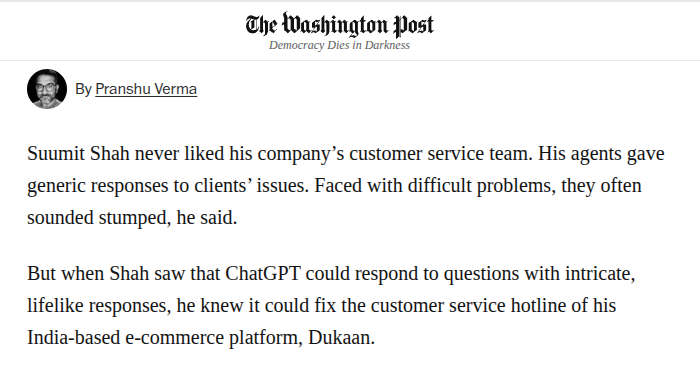
And so, your favorite VC firm — which also happens to have more than one member on your board (one of which is the president) — presumably gets you on a quick call to arrange a quick call to discuss your AI strategy.

Here’s how I imagine that call going.
VC: “Yo, what’s up? Seen all these companies with valuations popping off lately?”
CEO: “Nah, been too busy trying to recover my business from that massive down round we just suffered.”
VC: “Oh man, it’s crazy. Get this right — company announces they’re adopting AI, valuation pops off.”
CEO: “And…”
VC: “Well, you know how we’re your biggest investor and basically saved your ass when you were uninvestable… and how we hold multiple board seats… and how your valuation kinda sucks right now… and, well, you know, we were putting two and two together around here the other day and started thinking it’s probably time to pop your valuation off, too.”
CEO: “Yeah, I see what you’re saying. But we’ve been using AI for over a decade now…”

VC: “Yeah, pull the other one — I’ve seen your valuation and it sucks, so clearly you’re not using AI. So here’s the dealio. We’ve got this shiny new investment in a nice little AI company — maybe you’ve heard of them — so we want you to announce you’re laying off your customer service workforce and replacing them in a super strategic enterprise agentic AI partnership with unprecedented cross-functional synergies with this AI company mmmkay thanks we knew you’d get it say hi to your wife for me bye.”

And just like clockwork, a couple of months later you’re suddenly falling into line, then announcing some incredible results all while tell everyone that you “stopped all hiring a year ago” (despite the fact you’re still frequently posting job postings on your own website at the same time… but no one will notice that, right…) and then, when it comes time to backpedal, you minimize the apparent impact to your overheads by telling everyone you’ll actually be hiring remote teleworkers on a gig-basis that’s exactly like how Uber works (because there’s nothing like using remote gig workers to handle the “complex” cases that your AI apparently couldn’t handle…)… and hope that no one notices all those breathless articles from back in the day shouting about how superior ChatGPT was to human customer service agents.
Makes sense right?
Maybe.
So why am I telling you this (admitedly) fictional (but plausible) story?
Well, let’s take a look at another popular enterprise agentic AI solution that also made headlines — that $2-per-conversation thing Salesforce launched.
Not many people noticed it at the time, but that $2 price tag, besides already being kinda expensive for a chatbot, was just entry-level pricing with “200 AI credits”. Longer conversations (as you might experience in a “complex” financial services customer service call) “may use more tokens”.

Which sounds kinda cheap. Until you realize you can pay a human to have conversations with people for less than $10/hour. So, assuming the $2/conversation price tag is somewhat in the ballpark, you really only need your stoneage-tech meat agent to handle 5 calls an hour to be on par with the cost of an “enterprise agentic AI solution”… and your meat agent can probably handle more than that.

Now, this is just a theory here, but if I’m somewhat in the ballpark of what it costs to hire a callcenter worker, and if Salesforce’s pricing is any indication of the real costs, then there’s a pretty good chance that this whole “agentic AI customer service” thing might actually be burning a whole lot more cash than it should.
But, even if this is the case, you’re not allowed to say that, because that synergistic partner you developed your enterprise agentic solution with has got itself on the hook for $1.4T in spending commitments by now. And your favorite investor insists that we can’t let anyone think there’s a chance people won’t be able to afford these agentic products once the real pricing kicks in, because then people will start to question whether those spending commitments can even be met.
So instead, you just pull out the more palatable line — the one the general public has more or less decided is the reality by now, despite what the press was telling them 2 years ago — that AI’s just not quite ready for the “complex” needs of your business.

Now, obviously, a lot of what I just wrote out above is a work of possible fiction. But, if you look around at the landscape, it also seems semi plausible.
I mean, think about it for a minute — do you really believe AI isn’t up to the task of handling the bulk of customer service work?
I don’t know about you, but most of the conversations I’ve had whenever I’ve contacted customer service have usually been to resolve really dumb stuff. You know, stuff like, “Hey, I accidentally flushed my credit card down the toilet, what do I do?”
I’m pretty sure AI’s more than capable of telling me I’m a moron then directing me to the form where I cancel my old card and request a new one.
But, you know, that was also like a ~1 minute conversation. Probably with some offshore call center worker. And that means, assuming a $10/hour going rate, my stupidity cost the company I called something like $0.16, which is much cheaper than the ~$2 enterprise agentic AI solution.
And the cost differences here aren’t just limited to agents answering dumb questions.
Take this pricing example from our enterprise agentic AI solution — booking appointments for field service reps.
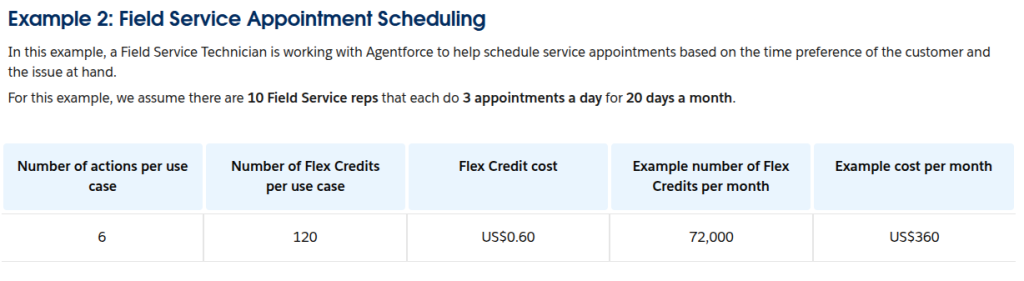
Sounds cheap, right — $0.60 cents to book an appointment with a service tech that takes into account time preference and the issue at hand.
That is, until you realize you can achieve basically the same outcome with a calendar app and a custom web form. Something that the first SaaS that shows up during a Google search will do for 7.5% of the price of our enterprise agentic AI solution.

And the outsized costs of all this agentic stuff isn’t just limited to this either. We’re starting to see stories about it everywhere.
The most prominent of these stories to blow up in recent weeks is, of course, the whole Claude Code debacle where suddenly pro plan users are eating up their allowance in a single prompt. And, of course, Anthropic’s response to the whole thing was to basically dismiss everyone and tell them they’re using it wrong.

And, in a way, they’re right.
You see, the problem with most agentic workflows is that they burn through tokens fast.
Take, for instance, a simple customer service interaction.
You ask the bot “What time do you open on Sunday”, and it responds, “We open at 10am on Sunday.”
In theory, that’s about 15 tokens worth of model usage… until you realize what it did on the backend, where it probably ingested and parsed a couple thousand tokens worth of “company/store details” on the backend to come up with that answer, and also had to deal with another couple thousand tokens of “system prompt” telling it the tone it should take, the rules it must follow, etc., etc.
Now, sure. That might still only work out to a few cents given current API pricing, which is still cheaper than the $0.16 I spent on a call center worker.

But the costs only balloon from there — as interactions get longer and more complex, token usage goes up exponentially. Even just a longer conversation without any additional context can get (relatively) pricey fast — the agent literally has to reparse the entire conversation every time a user sends a new prompt (and thus you get charged for the same tokens again, and again, and again all while the context window grows and grows and grows).
And never mind all the extra context it has to pull in from documentation and what not, the cost of tool calls, etc., etc.
And that’s probably why we’ve been seeing things like Anthropic suddenly banning use with 3rd party tools like OpenClaw — the token burn is just too much once you start doing agentic stuff.
Turns out, those generous usage limits that seemed manageable when it was just basic chats suddenly become a bit of a problem when users can burn, quite literally, 10x the equivalent API usage cost with a simple subscription.
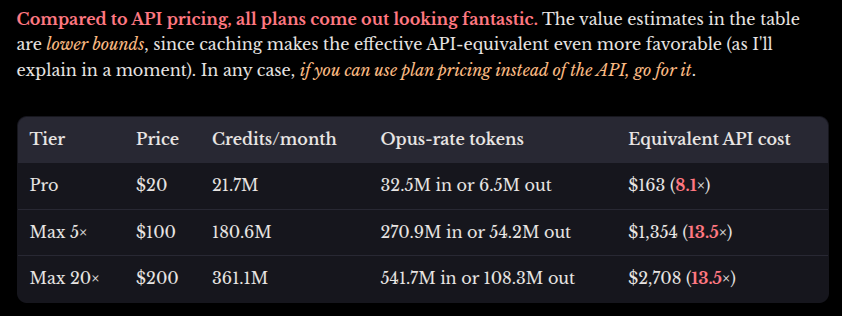
Of course, none of this “agentic workflows are expensive” stuff is particularly new. After all, Salesforce was already charging $2/conversation (at a minimum) back in the day.
And Gartner did, mid-last-year, predict that a bunch of agentic workflows would get cancelled due to costs. To quote one of their analysts, “This [the hype around agents] can blind organizations to the real cost and complexity of deploying AI agents at scale, stalling projects from moving into production.”
But the whole “this stuff could get expensive” thing is starting to become increasingly apparent now, between the whole Claude thing, and other stories we’re seeing bubbling up, like Perplexity cutting its usage limits by 30x.
And with about 50% of AI datacenters now delayed or cancelled all while some companies YOLO straight into tokenmaxxing, you know there’s a good chance this stuff’s only going to get more expensive if normal supply/demand economics kicks in.

So what’s the solution?
Simple — burn less tokens.
Now, I know. That sounds easier said than done. But I swear it’s not.
All it takes is a little thought, a couple of prompts, and a tiny bit of tooling.
Here, let me give you an example.
Let’s say I want my agent to read each week’s TopRanked Affiliate New Roundup and provide me with a summary of it.
Here, the obvious “agentic” option is to get on telegram and hit up my OpenClaw — “Yo, I need you to fetch the latest edition of the TopRanked affiliate news roundup and summarize it for me”.
Wanna guess what happens?
Well, ignoring all the planning/heartbeat/etc. stuff for now, your little agent’s about to go and burn a whole pile of unnecessary tokens.
As an example, take last week’s edition — our LiveChat Affiliates Review edition.
The actual article itself is a little under 12,000 characters long.
But you know what your little ClawdBot’s about to do?
That’s right. He’s gonna read the entire HTML source code — all 187,538 characters of it.
In other words, he’s about to burn 15-16x more tokens reading the article than is really necessary.
So what’s the solution here?
Well, maybe you consider tooling up a little bit more and getting yourself a little n8n instance or something.
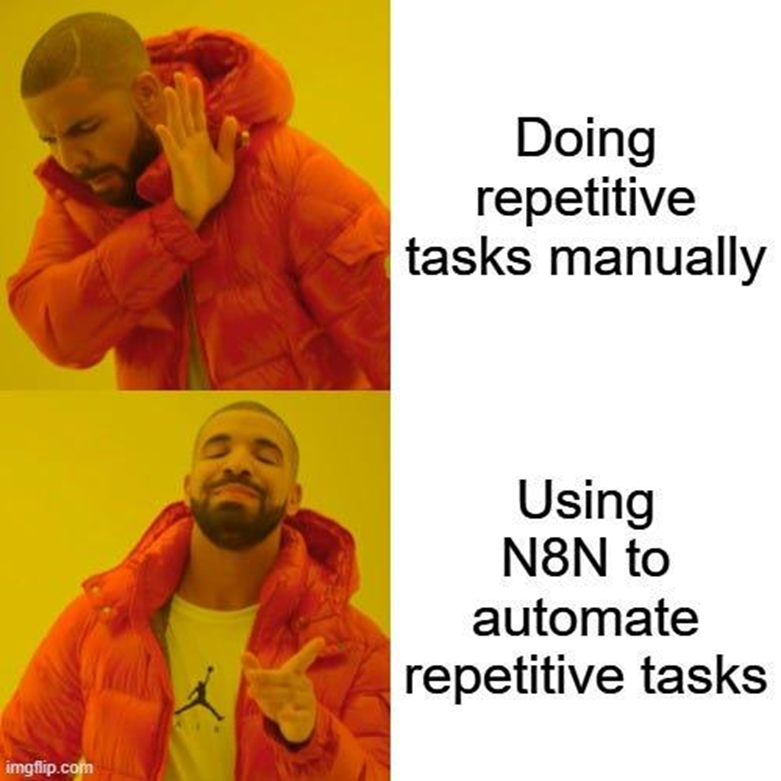
Now, I won’t bore you with the details here, but n8n and the likes are tools that allow you to build sort of hybrid agentic workflows.
What’s really nice here is that you can create your own steps and tools that your agent will follow.
So how do we use this to cut our token usage by 15-16x?
Easy.
First, I fire up your favorite chatbot and give it a prompt like this (copy-paste source code over from site you want to read).
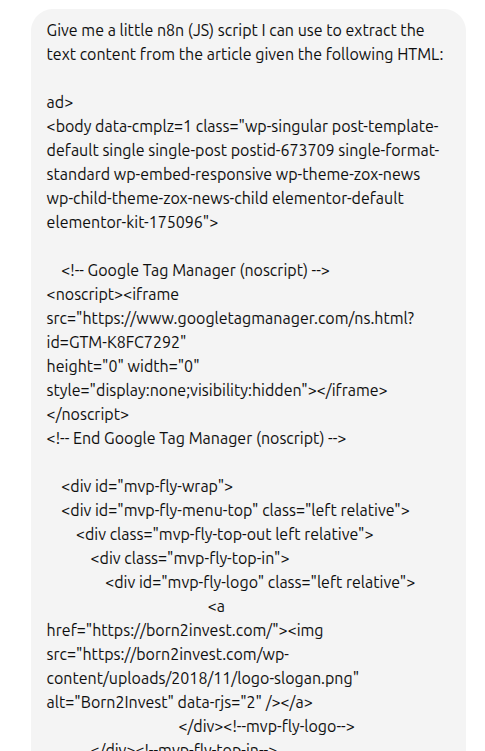
To which you should receive a response like this:
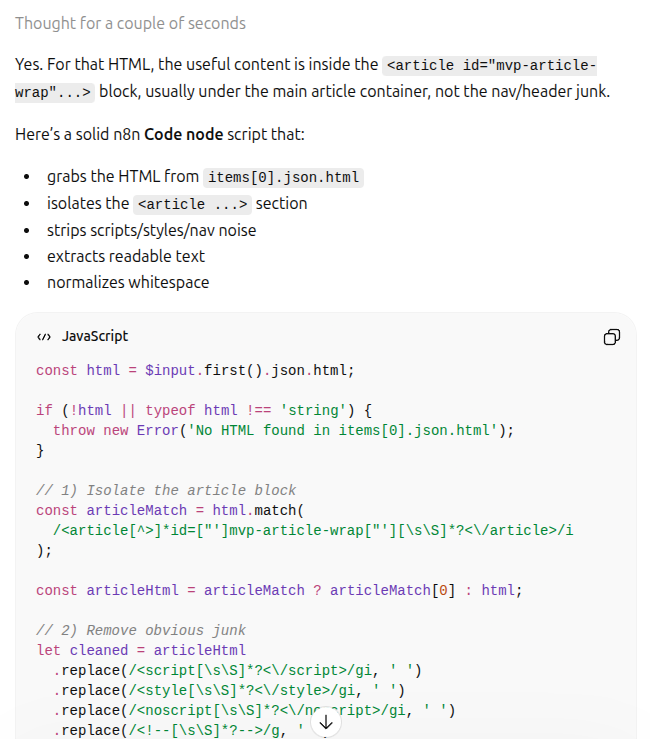
And then, copy-past the code it just gave you over into a “Code in JavaScript” step in your n8n workflow.
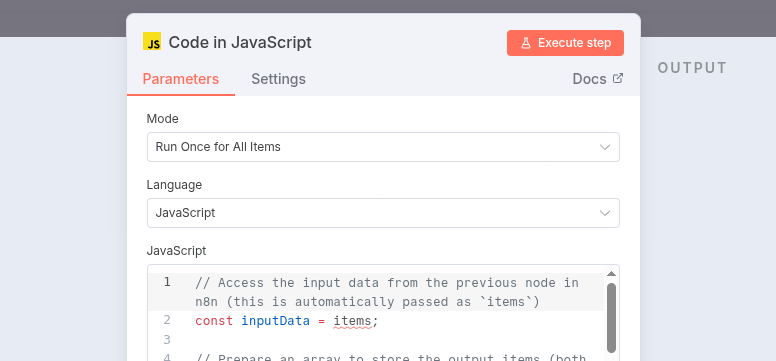
Now create a “Message a Model” step after this with a “Yo, summarize this article for me”.
And just like that, you got an agentic TopRanked article scraper + summarizer that burns, at a minimum, 15-16x fewer tokens than whatever your “fully agentic” ClawdBot was going to burn.
Plus, you can probably use a cheaper model now thanks to the much smaller context window.
And that’s just scratching the surface of what’s possible.
Takeaway
Alright. So why am I telling you about all this?
Well, there are a few reasons.
First, I care about you and your profits, so I don’t want you paying for unnecessary tokens if you don’t have to.
Second, if things keep going the way they’re going, there’s a good chance you’re going to get hit by unexpected price rises/rate limits in your AI workflows sometime in the future (if you haven’t already). So best to get prepared.
And third (and most importantly), there’s a real affiliate opportunity here.
Let me explain.
Remember how back in the day the whole “prompt engineer” thing was hot?

So hot that people actually started putting together “packs” and building massive email lists/followings/etc. with these packs?
Well, I’m telling you now, if any of the above is halfway right (it already is), then there’s a massive opportunity here.
You just take the “prompt engineer” play, and turn it into an “agentic optimization” angle.
In other words, you get an audience by coming up with and teaching people how to set up optimized agentic AI workflows.
And here’s the kicker — because this is “agentic” now and not just some stoneaged chat out of 2022, all those potential tool calls open up one giant affiliate opportunity.
That’s right. You can recommend specific tools to use in the agentic workflows you design… and include your affiliate link to help people find where to sign up.
Check out our listings of top tech affiliate programs to start getting some ideas of what you can sell.
If you need an example of the programs you can sell here, look for stuff with APIs as a good place to start (perfect for Agent integration). The SEO Powersuite affiliate program is a good example of what we’ve got listed here.
Closing Thought
For this week’s closing thought, let’s go full circle, right back to the start of the news section.
Remember how we opened with the whole thing about walking a mile in someone else’s shoes?
Turns out, it’s useful for more than just kicking off a story.
And it’s also useful for more than just the usual “empathy” thing.

Turns out, it’s also one of the best ways to figure out what someone was (or will be) thinking in a given situation.
Why’s that useful?
Think about it.
Maybe you saw another affiliate do something you didn’t understand at first. Sometimes, putting yourself in their position and trying to figure out what they were going through might help you figure it out.
Or maybe, putting yourself in your audience’s shoes and trying tbo figure out the problems they’re trying to solve might prove super helpful when it comes time to try and sell them something.
Whatever the case, there’s a million reasons why you might want to walk a mile in someone else’s shoes.
Just as there’s a million reasons why you might want to walk a mile (or more) in a given affiliate program to figure out if it’s worth it or not.
Of, if you’re too lazy to do that, you could just head on over to our authoritative affiliate reviews directory and let us walk those miles for you.
__
(Featured image by SevenStorm JUHASZIMRUS via Pexels)
DISCLAIMER: This article was written by a third party contributor and does not reflect the opinion of Born2Invest, its management, staff or its associates. Please review our disclaimer for more information.
This article may include forward-looking statements. These forward-looking statements generally are identified by the words “believe,” “project,” “estimate,” “become,” “plan,” “will,” and similar expressions, including with regards to potential earnings in the Empire Flippers affiliate program. These forward-looking statements involve known and unknown risks as well as uncertainties, including those discussed in the following cautionary statements and elsewhere in this article and on this site. Although the Company may believe that its expectations are based on reasonable assumptions, the actual results that the Company may achieve may differ materially from any forward-looking statements, which reflect the opinions of the management of the Company only as of the date hereof. Additionally, please make sure to read these important disclosures.







XRP at a Turning Point Amid Price Pressure, Regulation, and Institutional Growth
XRP faces a critical period as price pressure, regulatory uncertainty, and institutional expansion shape its outlook. Analysts debate ambitious targets...


Biodiversity Becomes a Key Driver of Value and Resilience in Real Estate
Biodiversity is becoming central to the real estate sector, driven by regulations like the Biodiversity Net Gain and the demand...


Market Faces Potential Shift as Secular Bull Ages and Gold, Oil Gain Attention
Markets alternate long secular bulls and bears; 1982–2000 bull then 2000–2009 bear. Current bull is 17 years old, raising concerns...


Rising Bond Yields Signal Potential Trouble Beneath a Calm Stock Market
This week’s market was calm, but underlying conditions may be weakening. The Dow Jones has stalled without new highs, while...


Blockchain Evolves Toward AI, Finance and Quantum Security
Blockchain is evolving beyond crypto into finance, AI applications, and digital markets, while security and regulation remain challenges. Quantum threats...
 |
|
 |  |
 |
|
-

 Impact Investing2 weeks ago
Vexuvo Secures €39M UniCredit Financing to Drive Agrivoltaic and Storage Expansion in Italy
-
 Impact Investing2 hours ago
Biodiversity Becomes a Key Driver of Value and Resilience in Real Estate
-

 Markets1 week ago
Oil Surge, Weak Stocks, and a Potential Turn for Gold
-

 Crypto4 days ago
Bitcoin ETFs Lead as German Stock Exchange Debuts Mining ETF