Impact Investing
Biodiversity Becomes a Key Driver of Value and Resilience in Real Estate
Biodiversity is becoming central to the real estate sector, driven by regulations like the Biodiversity Net Gain and the demand for resilient assets. To avoid the “brown discount” and create true value, the sector is shifting from aesthetic greenery to functional approaches using native species and urban regeneration.

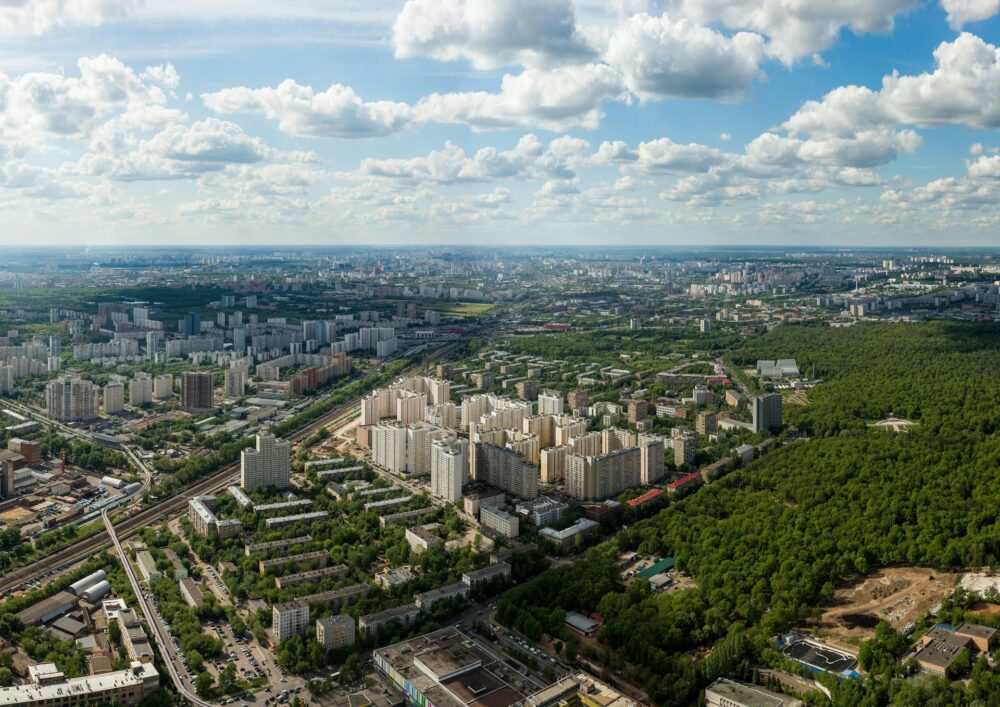
Biodiversity is becoming increasingly important for real estate companies and developers. Although the topic is still less mature than climate change issues, it is rapidly gaining prominence in light of tightening environmental regulations and growing pressure from investors and public authorities. The debate now extends far beyond carbon efficiency alone.
A company’s ability to preserve or restore urban ecosystems increasingly contributes to the attractiveness of both real estate assets and the urban contexts in which they are located, fostering the creation of more vibrant, mixed-use, and more livable environments. Such initiatives also contribute to the creation of social value and can, over time, support asset valuations.
In several countries, governments are accelerating this transition through targeted regulations and policies. In the United Kingdom, the Biodiversity Net Gain regulatory framework now requires most new real estate developments to demonstrate a minimum 10% increase in biodiversity, incentivizing developers to integrate these considerations from the early design stages.
This evolution is gradually leading the real estate sector to prioritize urban regeneration projects—the transformation or redevelopment of existing assets and brownfield sites, as well as land rewilding processes—over so-called greenfield developments. This trend is particularly evident in the office sector, where the increase in vacancy rates in peripheral areas in recent years has strengthened the economic rationale for redevelopment projects and asset repositioning strategies.
Outside Europe, some governments are also using large public investment funds as tools for urban and environmental transformation. A significant example is Saudi Arabia’s Public Investment Fund (“PIF”), which aims to exceed $3.8 trillion in assets under management by 2030. The fund is financing numerous megaprojects that integrate biodiversity and climate resilience objectives, including NEOM and The Red Sea Project, developed along the Red Sea coast.
These projects are committed to preserving 75% of the area’s natural ecosystems and ensuring a net benefit for biodiversity conservation of 30% by 2040. Beyond the strictly environmental aspects, these projects highlight how biodiversity is increasingly being used as a lever for attractiveness and territorial differentiation in large-scale real estate and tourism developments, helping to strengthen the image of destinations, the perceived quality of life, and the ability to attract investors, businesses, tourists, and high-income residents.
Biodiversity and asset valuation
Large corporate tenants are placing increasing importance on the environmental quality of their properties, access to green spaces, thermal comfort, and climate resilience. As a result, buildings with environmental certifications generally continue to attract greater rental demand, especially in key markets. Several studies by JLL and CBRE highlight a growing polarization between sustainable properties and obsolete buildings. According to these analyses, ESG-certified office buildings in Paris and London can achieve rent premiums of 6% and 11%, respectively, while lower-performing properties experience higher vacancy rates and are subject to increasing pressure on values due to the so-called “brown discount.”
Compared to carbon emissions, biodiversity is still a less developed factor in asset valuation models. The valuation premiums currently observed primarily reflect energy performance, ESG certifications, and the overall quality of properties. However, biodiversity-related aspects are gradually becoming part of valuation processes through factors such as the quality of outdoor spaces, the reduction of urban heat islands, and improved occupant well-being.
The limits of urban greenery
However, some current “renaturalization” strategies remain largely aesthetic in nature. Several recent academic studies highlight how many urban revegetation interventions are still driven primarily by aesthetic objectives or the pursuit of ESG certifications , rather than genuine ecological restoration. Some projects involve the felling of mature trees during construction, despite the climatic and ecological benefits they provide not being offset in the short term by new planting.
Several studies, including research published in PubMed Central, estimate that a mature tree can absorb up to 70 times more air pollutants than a young tree. Other interventions use non-native species, sometimes poorly suited to future climate conditions, water-intensive landscaping systems, or greenery solutions that offer little contribution to local biodiversity. Research published in the journal Diversity (MDPI) also highlights that native species generally exhibit greater climate resilience, require less irrigation, and are more beneficial to pollinators and urban ecosystems.
Excessive standardization also represents an increasingly significant limitation of urban greening strategies. Studies on urban vegetation management policies, conducted by Urban Nature and Biodiversity for Cities and ResearchGate, highlight how cities and developers frequently resort to a limited number of plant species to reduce maintenance costs and simplify management. This homogenization can compromise effective biodiversity, while also increasing vulnerability to disease outbreaks, droughts, and extreme weather events.
Several European cities have already recorded high mortality rates among newly planted trees during recent droughts, particularly when the selected species were not adequately adapted to local conditions. In urban planning, the so-called “10-20-30 rule” is gradually becoming a reference framework: no more than 10% of trees belong to the same species, 20% to the same botanical genus, and 30% to the same botanical family, in order to reduce biological and climatic risks.
Among the various projects, research on temperature regulation in urban areas highlights how the cooling effects of vegetation can vary significantly depending on tree cover density, tree maturity, species selection, and urban configuration, with benefits that, during extreme heat episodes, can range from fractions of a degree to several degrees Celsius.
Towards a more functional approach to biodiversity
This evolution reflects a broader shift in the approach to sustainability in the real estate sector : the industry is gradually moving away from visually impactful green design strategies and toward approaches that prioritize operational efficiency, climate resilience, and long-term asset optimization.
Consequently, the functional ecological quality of interventions is destined to assume an increasingly important role compared to the mere quantity of green spaces or trees planted, making biodiversity a further distinguishing factor in the quality and performance of real estate assets in the long term.
__
(Featured image by Hitory Clown via Unsplash)
DISCLAIMER: This article was written by a third party contributor and does not reflect the opinion of Born2Invest, its management, staff or its associates. Please review our disclaimer for more information.
This article may include forward-looking statements. These forward-looking statements generally are identified by the words “believe,” “project,” “estimate,” “become,” “plan,” “will,” and similar expressions. These forward-looking statements involve known and unknown risks as well as uncertainties, including those discussed in the following cautionary statements and elsewhere in this article and on this site. Although the Company may believe that its expectations are based on reasonable assumptions, the actual results that the Company may achieve may differ materially from any forward-looking statements, which reflect the opinions of the management of the Company only as of the date hereof. Additionally, please make sure to read these important disclosures.
First published in ESG NEWS. A third-party contributor translated and adapted the article from the original. In case of discrepancy, the original will prevail.
Although we made reasonable efforts to provide accurate translations, some parts may be incorrect. Born2Invest assumes no responsibility for errors, omissions or ambiguities in the translations provided on this website. Any person or entity relying on translated content does so at their own risk. Born2Invest is not responsible for losses caused by such reliance on the accuracy or reliability of translated information. If you wish to report an error or inaccuracy in the translation, we encourage you to contact us.






Biodiversity Becomes a Key Driver of Value and Resilience in Real Estate
Biodiversity is becoming central to the real estate sector, driven by regulations like the Biodiversity Net Gain and the demand...


Market Faces Potential Shift as Secular Bull Ages and Gold, Oil Gain Attention
Markets alternate long secular bulls and bears; 1982–2000 bull then 2000–2009 bear. Current bull is 17 years old, raising concerns...


Rising Bond Yields Signal Potential Trouble Beneath a Calm Stock Market
This week’s market was calm, but underlying conditions may be weakening. The Dow Jones has stalled without new highs, while...


Blockchain Evolves Toward AI, Finance and Quantum Security
Blockchain is evolving beyond crypto into finance, AI applications, and digital markets, while security and regulation remain challenges. Quantum threats...


The Italian Crowdinvesting Market Faces Sharp Decline in 2026
Italian crowdinvesting market continued to decline in 2026, with fundraising falling 36.8% year-on-year to €164.19 million. Platforms and active campaigns...
 |
|
 |  |
 |
|
-

 Biotech2 weeks ago
Emily.AI: Personalized Oxygen Therapy Earns Global AI Recognition
-
 Business6 days ago
The $40 Trillion Trap: Disinflation Is Not Deliverance
-
 Cannabis2 weeks ago
Germany Tightens Cannabis Reimbursement Rules: Approved Medicines Must Come First
-

 Africa3 days ago
Bank of Africa Launches BOA MDM Network to Boost Diaspora Investment in Morocco