Africa
BOAD Approves Major Funding Boost to Drive West African Development
At its 151st session in Lomé, BOAD approved eleven operations worth 344.577 billion FCFA, raising total financing since 1973 to 10,834.1 billion. The board reviewed debt recovery, strategic partnerships, and forecasts. Investments target agriculture, transport, energy, and industry across West Africa, reinforcing food security, infrastructure, private sector growth, and regional development priorities and resilience overall.

The West African Development Bank (BOAD) continues its offensive in favor of regional investment. Meeting on June 26th, 2026 in Lomé under the chairmanship of Serge Ekue, the institution’s Board of Directors approved eleven new operations representing a total amount of 344.577 billion FCFA, bringing the cumulative volume of financing granted by the bank since its creation in 1973 to 10,834.1 billion FCFA.
This 151st ordinary session, organized in hybrid format, also allowed the Council to issue a favorable opinion on several strategic issues, including the state of debt recovery as of May 31st, 2026, a derogation from the principle of territoriality of BOAD interventions in the context of competitions intended for the International Finance Corporation (IFC) and PROPARCO, as well as the lifting of the institution’s immunities and privileges for the implementation of a third competition for Sumitomo Mitsui Banking Corporation (SMBC).
The directors also took note of the mid-term review of the financial forecasts for the 2026 financial year, the annual report on the Principles for Responsible Banking (PRB) of the UNEP Finance Initiative, and the minutes of the last session of the WAEMU Council of Ministers.
The new funding package confirms BOAD’s strategic priorities: food sovereignty, infrastructure, energy, industrialization and private sector development
In the agricultural sector, BOAD is mobilizing 70 billion FCFA to strengthen food security with two major projects: 30 billion FCFA allocated to the National Office for Hydro-Agricultural Development (ONAHA) in Niger to increase irrigated areas, and 40 billion FCFA for the second phase of the Agricultural Mechanization and Irrigation Support Program (ProMAI) in Togo.
Transport infrastructure is also receiving significant support. Burkina Faso is securing 20 billion CFA francs for the first phase of the Ouagadougou Multimodal Dry Port, designed to facilitate trade. In Côte d’Ivoire, 50 billion CFA francs will enable Air Côte d’Ivoire to acquire four Airbus A319s to strengthen its regional network and consolidate its position as a leading airline in West and Central Africa.
The energy transition remains one of the BOAD’s main areas of intervention. Mali is receiving 44.368 billion CFA francs for the construction of a 50 MWp photovoltaic solar power plant, equipped with a 25 MW/50 MWh storage system, in the Koulikoro region. In Burkina Faso, 45 billion CFA francs will finance the fifth phase of the expansion of the Komsilga thermal power plant, while Niger is receiving 30.609 billion CFA francs to strengthen its electricity production capacity through diesel power plants and mini solar power plants with battery storage.
The productive sector is also benefiting. In Benin, 16.6 billion CFA francs will finance the expansion of production capacity at the Société des Ciments du Bénin (SCB) in the Sèmè-Podji industrial zone. Mali is receiving 48 billion CFA francs to strengthen its school infrastructure, as well as a 10 billion CFA franc refinancing line for BSIC Mali to support MSMEs, green investments, and women’s entrepreneurship. A similar allocation of 10 billion CFA francs is being granted to BSIC Burkina Faso to support Burkinabe SMEs and SMIs.
The Board of Directors also approved the sale of the debt held by BOAD against the Compagnie d’Électricité du Sénégal (CES SA), thus continuing the active management of the bank’s portfolio.
In closing the proceedings, the Chairman of the Board of Directors, Serge Ekue, commended the quality of the proposals prepared by the technical teams and reaffirmed BOAD’s commitment to supporting the Union’s structuring investments. With over 10,800 billion CFA francs committed since its inception, the WAEMU development bank confirms its role as the primary catalyst for financing regional development in a context marked by growing needs for infrastructure, energy sovereignty, and the transformation of West African economies.
__
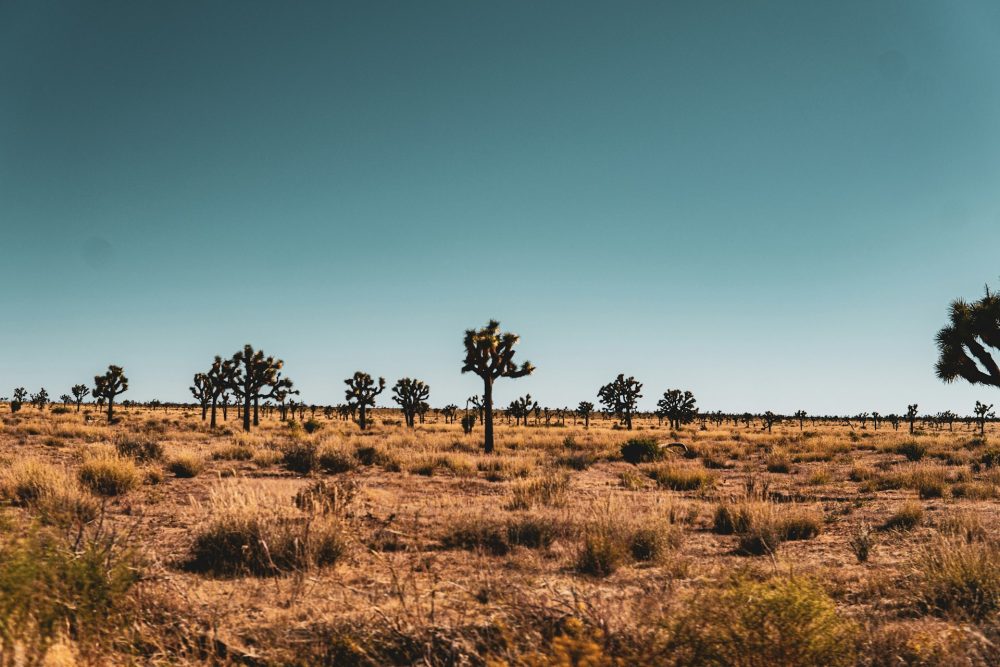
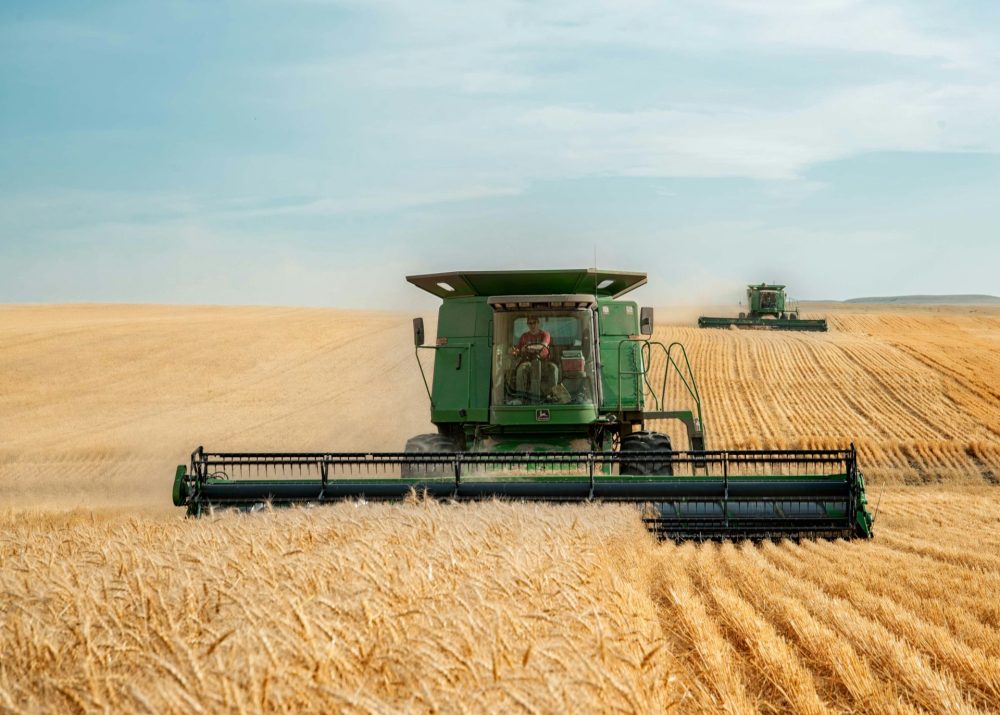
(Featured image by Dominic Chasse via Unsplash)
DISCLAIMER: This article was written by a third party contributor and does not reflect the opinion of Born2Invest, its management, staff or its associates. Please review our disclaimer for more information.
This article may include forward-looking statements. These forward-looking statements generally are identified by the words “believe,” “project,” “estimate,” “become,” “plan,” “will,” and similar expressions. These forward-looking statements involve known and unknown risks as well as uncertainties, including those discussed in the following cautionary statements and elsewhere in this article and on this site. Although the Company may believe that its expectations are based on reasonable assumptions, the actual results that the Company may achieve may differ materially from any forward-looking statements, which reflect the opinions of the management of the Company only as of the date hereof. Additionally, please make sure to read these important disclosures.
First published in Financial Afrik. A third-party contributor translated and adapted the article from the original. In case of discrepancy, the original will prevail.
Although we made reasonable efforts to provide accurate translations, some parts may be incorrect. Born2Invest assumes no responsibility for errors, omissions or ambiguities in the translations provided on this website. Any person or entity relying on translated content does so at their own risk. Born2Invest is not responsible for losses caused by such reliance on the accuracy or reliability of translated information. If you wish to report an error or inaccuracy in the translation, we encourage you to contact us.















Avant Devices Moves Toward Electric Wheelchair Kit Production with New Funding Drive
Murcia-based Avant Devices is seeking €260,000 in crowdfunding to launch mass production of its electric wheelchair conversion kit. The funds...

Legend Biotech: Growth Driven by CAR-T Innovation and Carvykti Expansion
Legend Biotech's stock reflects demand for innovative CAR-T cancer therapies. The US biotech focuses on commercializing Carvykti with partner Janssen...

Senegal’s Debt Strategy: Choosing Between Restructuring and Financial Innovation
Senegal’s upcoming choice of debt advisor, with Lazard reportedly leading the race, reflects a broader strategic decision. Rather than pursuing...


Pictet Raises $253 Million for Environmental Investment Fund
Pictet Group closed its Environment Co-Investment Fund I at $253 million, surpassing its $200 million goal. The Article 8 SFDR...


Virginia Cannabis Market Could Reshape Regional Competition
Virginia’s planned recreational cannabis market could reshape the Washington region’s economic landscape. With nine million residents, it may draw consumers...
 |
|
 |  |
 |
|
-

 Crypto2 weeks ago
Crypto Markets Shaken by Geopolitics and Industry Tensions
-

 Markets7 days ago
Dow Jones Pauses Near Record Highs as Precious Metals Lead
-
 Africa2 weeks ago
Fes-Meknes Sees Strong Recovery in Cereal Production Thanks to Increased Rainfall
-

 Fintech4 days ago
Advanced Blockchain Under Pressure Amid Crypto Market Shifts