Africa
Fes-Meknes Sees Strong Recovery in Cereal Production Thanks to Increased Rainfall
The Fes-Meknes region produced an estimated 18.4 million quintals of cereals for the 2025–2026 season, driven by a 70% increase in rainfall to 715 mm. Improved water resources revived agriculture across 762,073 hectares, mainly rainfed. Soft wheat dominated output, and harvesting reached 76% completion, supported by expanded mechanization and improved yields.

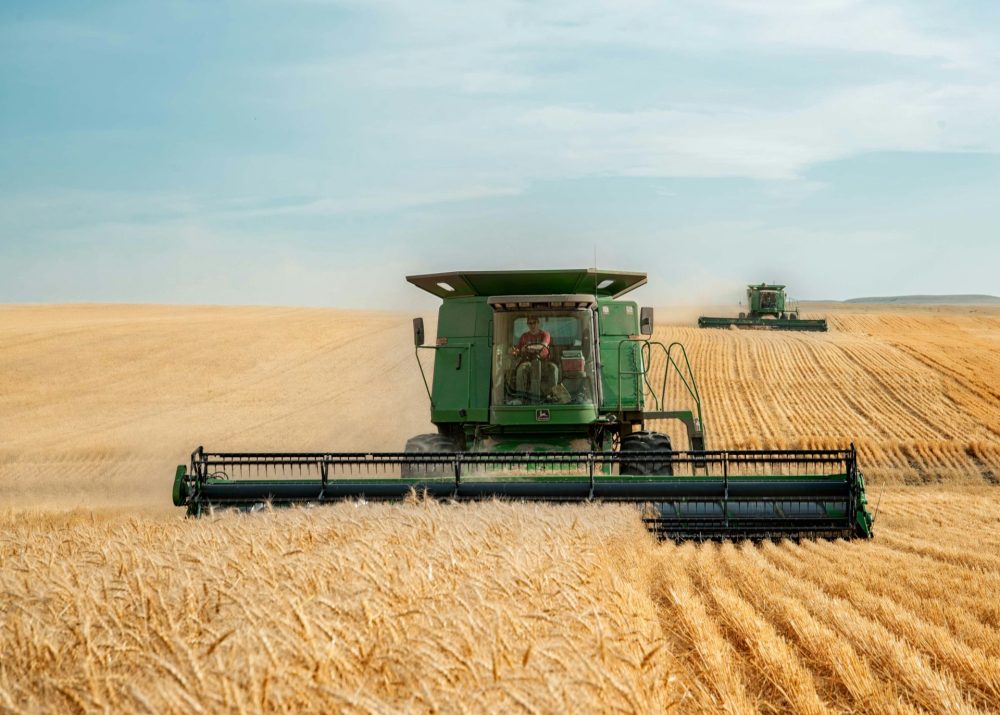
The Fes-Meknes region recorded a cereal production estimated at 18.4 million quintals for the 2025-2026 season. Increased rainfall, up 70% compared to the previous year, has allowed for the restoration of regional water resources. The institutional assessment confirms the recovery of local agricultural activity.
The return of rainfall is reshaping the agricultural landscape of the Fes-Meknes region. After several years of water shortages, the 2025-2026 cereal season is ending with significantly increased production volumes. Data released by the Regional Directorate of Agriculture (DRA) up to June 30th quantifies the direct impact of improved weather on the local rural economy. The official report details how increased rainfall has reversed the long-term trend and revived a region heavily dependent on water resources.
Total rainfall in the Fes-Meknes region reached 715 mm, a 70% increase
Meteorological data recorded during the agricultural year indicate a total rainfall of 715 mm. Comparison with the previous year highlights a 70% increase, as the 2024-2025 season saw a total of 420 mm. Analysis of the temporal distribution shows a concentration of rainfall during the winter and early spring months. Records show 185 mm in December, 189 mm in January, and 174.5 mm in March. This rainfall directly influenced the development of autumn plantings.
Regional hydrology also responded to the rainfall, with an improvement in the filling rate of the Fes-Meknes area’s dams and a recharge of groundwater reserves. The inventory of cultivated land establishes the total area dedicated to autumn crops at 762,073 hectares. The distribution of arable land places cereals in first position, followed by forage crops (75,710 hectares), legumes (45,455 hectares), and oilseed crops (598 hectares).
The improved water situation has influenced the management of rainfed farms, which depend exclusively on natural rainfall and constitute the vast majority of the Fes-Meknes region’s agricultural land.
Production is estimated at 18.4 million quintals
The area allocated to autumn cereals totals 640,310 hectares. Soft wheat is the most widely sown crop, with 304,420 hectares planted. Barley accounts for 172,540 hectares, and durum wheat covers 163,350 hectares. DRA officials also specify that 627,810 hectares of this land are rainfed, compared to only 12,500 hectares cultivated under irrigation.
The projected production volume is 18.45 million quintals (Mq) for the entire Fes-Meknes region. Soft wheat accounts for the largest share of the expected volume at 9.76 Mq. Durum wheat is expected to yield 4.42 Mq and barley approximately 4.26 Mq. Observed yields vary from 8 to 45 quintals per hectare (q/ha) depending on the variety and geographical area.
The average target yield for soft wheat is 32 quintals per hectare. As of June 30, 2026, harvesting progress had reached 76% of the overall target. Agricultural professionals have completed the harvest on 486,331 hectares, noting that the harvesting process is carried out primarily mechanically on 393,568 hectares, compared to 92,763 hectares harvested manually.
464 combine harvesters and 52,300 hectares of legumes
The harvesting operations in teh Fes Meknes region rely on the use of professional agricultural equipment. The inventory of operational equipment includes 464 functional combine harvesters distributed across the various prefectures. The province of Meknes has 132 units, followed by Taounate with 128 machines and Fes-Moulay Yacoub with 100 units.
Local market organization shows mechanical harvesting costs ranging from 500 to 700 dirhams per hectare. Manual harvesting, largely abandoned by farmers, incurs higher costs, between 1,200 and 2,000 dirhams per hectare, with daily wages for labor ranging from 120 to 200 dirhams. Alongside cereals, the pulse sector cultivates an area of 52,302 hectares. These plantations include 34,150 hectares of broad beans, 14,417 hectares of chickpeas, and 3,735 hectares of lentils.
The harvest completion rate for pulses reached 86% at the end of June. Broad beans are 98% complete, with over 33,465 hectares already harvested, while chickpeas are 55% complete. Market transactions in the Fes-Meknes region indicate selling prices for durum wheat between 240 and 360 dirhams per quintal. Soft wheat is trading between 210 and 280 dirhams per quintal, barley between 200 and 260 dirhams, and a bale of straw is selling for between 15 and 15 dirhams.
__
(Featured image by Darla Hueske via Unsplash)
DISCLAIMER: This article was written by a third party contributor and does not reflect the opinion of Born2Invest, its management, staff or its associates. Please review our disclaimer for more information.
This article may include forward-looking statements. These forward-looking statements generally are identified by the words “believe,” “project,” “estimate,” “become,” “plan,” “will,” and similar expressions. These forward-looking statements involve known and unknown risks as well as uncertainties, including those discussed in the following cautionary statements and elsewhere in this article and on this site. Although the Company may believe that its expectations are based on reasonable assumptions, the actual results that the Company may achieve may differ materially from any forward-looking statements, which reflect the opinions of the management of the Company only as of the date hereof. Additionally, please make sure to read these important disclosures.
First published in LES ECO.ma. A third-party contributor translated and adapted the article from the original. In case of discrepancy, the original will prevail.
Although we made reasonable efforts to provide accurate translations, some parts may be incorrect. Born2Invest assumes no responsibility for errors, omissions or ambiguities in the translations provided on this website. Any person or entity relying on translated content does so at their own risk. Born2Invest is not responsible for losses caused by such reliance on the accuracy or reliability of translated information. If you wish to report an error or inaccuracy in the translation, we encourage you to contact us.





Namibia Cannabis Activists Seek Political Path After Legal Setbacks
Ganja Users of Namibia is shifting its cannabis reform campaign from legal challenges to politics by proposing the Ganja Users...


XRP at a Turning Point Amid Price Pressure, Regulation, and Institutional Growth
XRP faces a critical period as price pressure, regulatory uncertainty, and institutional expansion shape its outlook. Analysts debate ambitious targets...

Biodiversity Becomes a Key Driver of Value and Resilience in Real Estate
Biodiversity is becoming central to the real estate sector, driven by regulations like the Biodiversity Net Gain and the demand...


Market Faces Potential Shift as Secular Bull Ages and Gold, Oil Gain Attention
Markets alternate long secular bulls and bears; 1982–2000 bull then 2000–2009 bear. Current bull is 17 years old, raising concerns...


Rising Bond Yields Signal Potential Trouble Beneath a Calm Stock Market
This week’s market was calm, but underlying conditions may be weakening. The Dow Jones has stalled without new highs, while...
 |
|
 |  |
 |
|
-

 Crowdfunding1 week ago
Avant Devices Moves Toward Electric Wheelchair Kit Production with New Funding Drive
-

 Cannabis5 days ago
Ali G Makes Surprise Wimbledon Appearance with Cannabis-Themed Satire
-
 Impact Investing2 weeks ago
Vexuvo Secures €39M UniCredit Financing to Drive Agrivoltaic and Storage Expansion in Italy
-
 Impact Investing5 hours ago
Biodiversity Becomes a Key Driver of Value and Resilience in Real Estate