Crypto
XRP at a Turning Point Amid Price Pressure, Regulation, and Institutional Growth
XRP faces a critical period as price pressure, regulatory uncertainty, and institutional expansion shape its outlook. Analysts debate ambitious targets like $15, while Ripple’s RLUSD initiatives and whale accumulation provide optimism. However, supply concerns, market volatility, and unclear regulation remain key challenges. XRP’s future depends on adoption, legislation, and investor confidence.

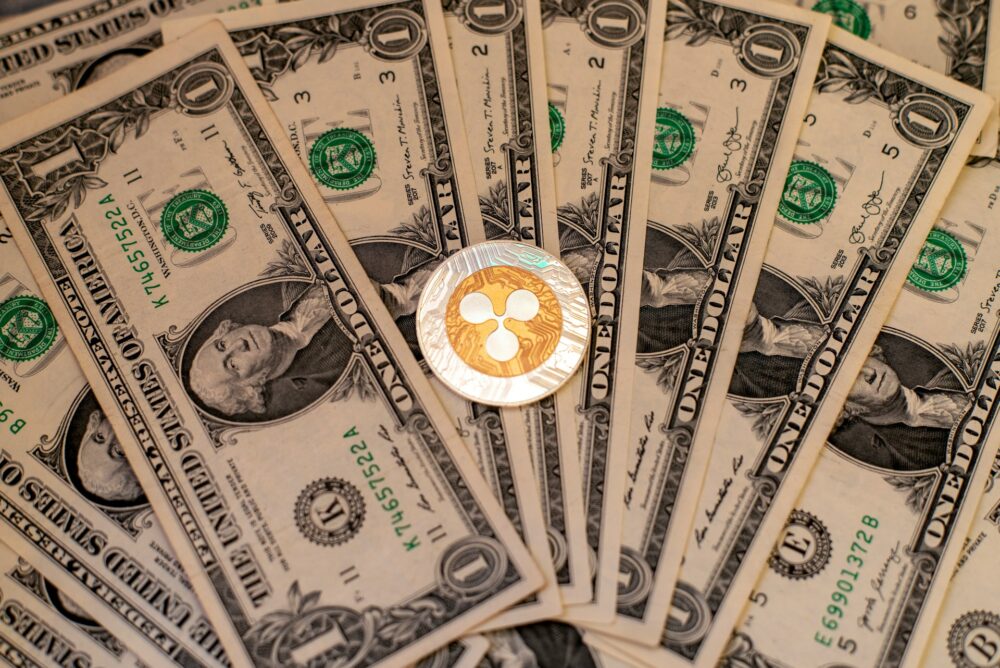
XRP is entering a decisive period as investors weigh ambitious price forecasts, regulatory developments, and increasing activity from large holders.
While Ripple continues expanding its ecosystem through RLUSD and new institutional-focused products, the token remains under pressure near key support levels. The debate surrounding potential targets of $15 or even $100 continues, although such projections remain highly speculative.
Market Pressure Meets Ambitious Forecasts and Political Uncertainty
According to multiple market reports, XRP’s recent performance has been challenged despite Ripple’s progress in product development and partnerships. Investors are closely watching whether the cryptocurrency can regain momentum while also evaluating Ripple’s influence over supply and the possibility of long-term gains.
Analyst Javon Marks recently reaffirmed a $15 price target for XRP. At the time of the report,the cryptocurrency was trading around $1.09 after declining approximately 1.27% over 24 hours. The token moved between $1.08 and $1.12 during that period and has remained near the $1 level since briefly exceeding $1.20 in early June.
Marks compared XRP’s current chart structure to a triangle pattern seen in 2017, which was followed by a significant rally. According to this analysis, reaching $15 would require XRP’s market capitalization to approach $937 billion, compared with its current valuation of roughly $69 billion. Such a move would require a substantial increase in capital entering the market.
Market conditions remain another factor influencing XRP’s outlook. Reports point to broader cryptocurrency weakness, including outflows from Bitcoin spot ETFs and uncertainty surrounding the CLARITY Act being debated in the US Senate. The proposed legislation could influence how digital assets are regulated, but its future remains uncertain as lawmakers continue negotiations.
The XRP outlook is therefore closely connected not only to technical indicators but also to regulatory decisions that could shape the future of the cryptocurrency industry.
Ripple’s XRP Holdings and the Debate Over Supply Control
A major discussion surrounding XRP involves Ripple’s control over its token reserves and whether the company could significantly reduce supply through large-scale token burns.
According to reports from Investing.com Germany, Ripple’s XRP holdings are primarily connected to escrow accounts designed to manage the release of tokens over time. Data cited from XRPScan and Ripple’s publicly available information shows that approximately 32.445 billion XRP remain locked in escrow, while around 67.53 billion XRP are circulating. A relatively small amount, approximately 14.37 million XRP, has already been permanently removed from circulation.
The report also highlights the structure of Ripple’s escrow system. In December 2017, around 55 billion XRP were placed into escrow. Since then, Ripple has released scheduled monthly portions, selling some tokens to support operations while returning unused amounts to escrow. The remaining balance has gradually declined over time.
A key question is whether Ripple has the ability to permanently destroy a large amount of XRP. According to the report, such a move is technically possible through a transaction sending tokens to an inaccessible address. However, the larger issue is whether Ripple would have an economic reason to do so.
The report challenges the common assumption that Ripple is unable to burn XRP because of decentralization concerns. Ripple operates only a portion of the network’s validators, while major protocol changes require broad approval. However, a token burn could theoretically occur without requiring a major network update.
The central issue is therefore not whether Ripple can burn XRP, but whether it would choose to do so. Since XRP reserves represent a significant financial resource for the company, a large-scale burn would conflict with Ripple’s current business model.
Whale Accumulation and Ripple’s Expanding Institutional Strategy
While XRP prices have struggled, large investors have shown increased interest. Reports indicate that major wallets have continued accumulating XRP in recent weeks, even as smaller investors have reduced their positions.
On July 25th, XRP traded near $1.09 after falling almost 2% within 24 hours. The token recorded a daily high of $1.12 and a low of $1.08, with trading volume reaching approximately $1.05 billion. Its market capitalization stood near $67.94 billion, keeping XRP ranked among the largest cryptocurrencies.
Market analysts identified inflation concerns in the United States and rising oil prices as factors affecting the broader crypto market. Technical levels remain important, with support around $1.10 and resistance near $1.15 being closely monitored by traders.
At the same time, Ripple continues developing its institutional ecosystem. The company recently expanded RLUSD payment capabilities through a partnership with Notabene and launched the Mint platform, allowing institutions to issue, redeem, and manage RLUSD.
Regulatory developments remain another major factor. The CLARITY Act, discussed in the US Senate, aims to clarify responsibilities between the Securities and Exchange Commission and the Commodity Futures Trading Commission. The outcome could influence the regulatory environment for digital assets, including XRP.
Despite growing institutional activity and whale accumulation, XRP still faces significant uncertainty. Price forecasts remain divided, with optimistic scenarios depending on increased adoption, favorable regulation, and stronger market demand. For now, XRP remains positioned between major opportunities and substantial risks as investors watch the next developments unfold.
__
(Featured image by Dmytro Demidko via Unsplash)
DISCLAIMER: This article was written by a third party contributor and does not reflect the opinion of Born2Invest, its management, staff or its associates. Please review our disclaimer for more information.
This article may include forward-looking statements. These forward-looking statements generally are identified by the words “believe,” “project,” “estimate,” “become,” “plan,” “will,” and similar expressions. These forward-looking statements involve known and unknown risks as well as uncertainties, including those discussed in the following cautionary statements and elsewhere in this article and on this site. Although the Company may believe that its expectations are based on reasonable assumptions, the actual results that the Company may achieve may differ materially from any forward-looking statements, which reflect the opinions of the management of the Company only as of the date hereof. Additionally, please make sure to read these important disclosures.
First published in Coin Kurier. A third-party contributor translated and adapted the article from the original. In case of discrepancy, the original will prevail.
Although we made reasonable efforts to provide accurate translations, some parts may be incorrect. Born2Invest assumes no responsibility for errors, omissions or ambiguities in the translations provided on this website. Any person or entity relying on translated content does so at their own risk. Born2Invest is not responsible for losses caused by such reliance on the accuracy or reliability of translated information. If you wish to report an error or inaccuracy in the translation, we encourage you to contact us.












XRP at a Turning Point Amid Price Pressure, Regulation, and Institutional Growth
XRP faces a critical period as price pressure, regulatory uncertainty, and institutional expansion shape its outlook. Analysts debate ambitious targets...


Biodiversity Becomes a Key Driver of Value and Resilience in Real Estate
Biodiversity is becoming central to the real estate sector, driven by regulations like the Biodiversity Net Gain and the demand...


Market Faces Potential Shift as Secular Bull Ages and Gold, Oil Gain Attention
Markets alternate long secular bulls and bears; 1982–2000 bull then 2000–2009 bear. Current bull is 17 years old, raising concerns...

Rising Bond Yields Signal Potential Trouble Beneath a Calm Stock Market
This week’s market was calm, but underlying conditions may be weakening. The Dow Jones has stalled without new highs, while...


Blockchain Evolves Toward AI, Finance and Quantum Security
Blockchain is evolving beyond crypto into finance, AI applications, and digital markets, while security and regulation remain challenges. Quantum threats...
 |
|
 |  |
 |
|
-
 Crypto2 weeks ago
Bitcoin Rally Faces Tests from Fed, ETFs, and Market Fear
-
 Business4 hours ago
Rising Bond Yields Signal Potential Trouble Beneath a Calm Stock Market
-

 Biotech1 week ago
Legend Biotech: Growth Driven by CAR-T Innovation and Carvykti Expansion
-

 Crowdfunding5 days ago
Medelon Shooting Club Restores Hall After Successful Crowdfunding Campaign