Fintech
The German Fintech Market Shows Resilience and Strong Investment Growth in 2026
Germany’s fintech sector remained resilient in 2026 despite economic crisis and rising insolvencies. Investments reached €14.2 billion, showing strong investor confidence and a shift toward sustainable business models. AI, regulation, and consolidation drive transformation, while fintechs scale alongside banks. Growth continues through selective funding, pension reform opportunities, and emerging digital finance technologies across Europe markets.

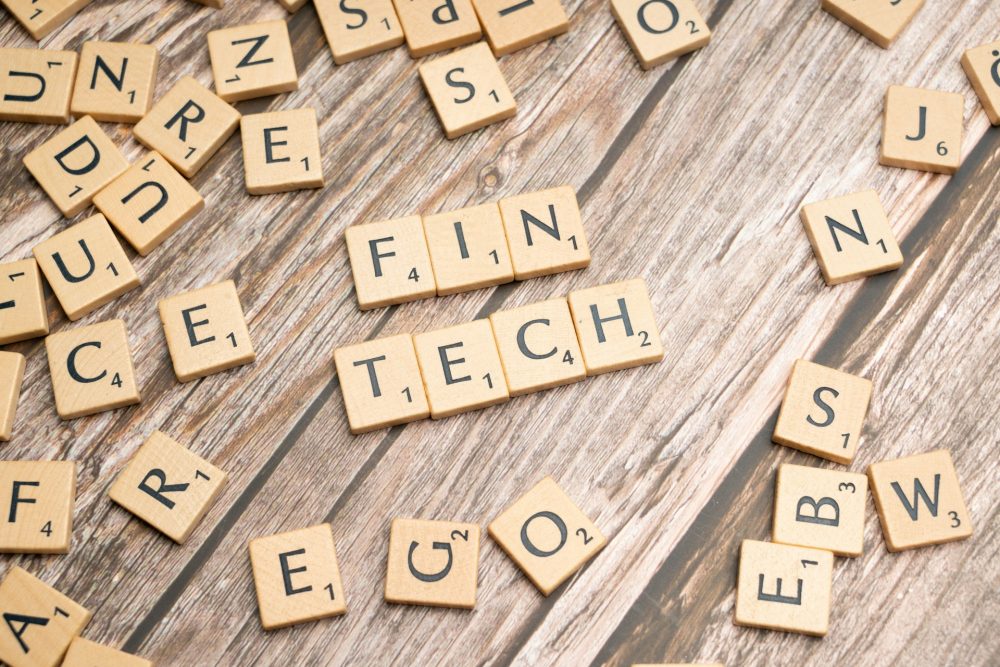
2026 was a true crisis year for the German economy. While the overall economy reached its highest level in ten years with almost 24,000 insolvencies, the German fintech market proved surprisingly resilient. According to media estimates, investors poured around €14.2 billion into German fintech and insurtech companies – a clear indication that the market has more substance than many had assumed.
This has also shifted the narrative: The “German discount” in valuations, lamented for years, is transforming into a premium, as our annual Contextual Solutions Banking & Fintech Report shows. Global capital is no longer seeking hypergrowth at any cost, but rather rewarding business models that have survived the interest rate turnaround, regulatory pressure, and operational stress tests.
This is evident in two camps: the “super-specialists”, such as Pliant, Upvest or Raisin, who dominate individual segments with surgical precision, and the “platform titans”, such as Trade Republic.
The fintech mrket: Growth despite consolidation
The largest investment rounds of 2025 underscore where investors have confidence. Munich-based Scalable Capital secured €155 million, closely followed by Solaris with €140 million as part of a majority acquisition by Japan’s Sbi Holdings. Wefox (€76 million), Hawk (US$56 million), and Nelly (€50 million) also demonstrated that investments are getting bigger again .
In the early-stage segment, Berlin led the way: The start-up Tapline secured 20 million euros for its revenue-based financing, followed by the AI accounting start-up Integral with 6.3 million euros.
At the same time, players such as Dock Financial or Ride Capital disappeared from the market – a cleansing effect that results in a reorganization: talent, licenses and technology migrate to stronger players.
Artificial intelligence will become part of the infrastructure
The most exciting development in the German fintech market in 2026 lies in agentic artificial intelligence (AI). While 2024 was the year of pilot projects and 2025 the phase of internal rollouts, German banks are now switching to productive operation.
In the fintech sector, things are going a step further: Instead of chatbots that only talk, agents are emerging that take action. They determine loan terms in real time, optimize savings plans using platforms like Raisin, and execute cross-border trades autonomously. AI is thus transforming from a front-end gimmick into the operational backbone and, according to industry estimates, can reduce compliance costs by up to 50 percent.
Regulation sets the pace: The EU AI Act will apply to high-risk systems, such as creditworthiness checks, from August 2026. Those who fail to invest in governance early on risk becoming losers in the next wave. At the same time, digital identity (EIDAS 2.0) will open up a vast field for AI-supported onboarding in seconds and without video calls from November 2026.
The year of upheavals
2026 will be the year in which several trends ignite simultaneously. The digital euro will enter its next preparatory phase, stablecoins will find their way into the treasury departments of German corporations, and embedded finance will shift from the retail to the B2B sector. IPOs could also increase again. Upcoming listings will be “quality listings,” focusing on profit rather than revenue multiples.
Anyone wanting to understand the German fintech market should also be prepared for the crypto mainstream: With the expiration of the MiCa transition period in July 2026, it will become clear who will be allowed to continue operating within the EU. The Sparkassen-Finanzgruppe (Savings Banks Finance Group) also plans to offer crypto trading to its approximately 50 million customers – a moment that will finally bring the asset class out of its niche. The most exciting phase of the decade has only just begun.
Experts expect growth and consolidation
The dominant theme among experts is that the German fintech market is leaving its early disruption phase and, according to Achim Oelgarth (Berlin Finance Initiative and House of Finance & Tech Berlin), entering the “scale-up phase,” with Berlin as the leading European hub. Capital is flowing more selectively, but in a more targeted way, into viable business models. Oliver T. Bussmann (Bussmann Advisory) echoes this sentiment, describing 2026 as a phase of “rigorous industrialization,” particularly in wealth management, in which “the era of winning and dining will be replaced by the demand for digital maturity.”
Continued consolidation is the second major prediction: Constantin Fabricius of the Digital Lending Association points to a broad contraction process in non-bank digital lending in Europe since 2025, characterized more by insolvencies than by mergers and acquisitions, with the survivors now competing directly with banks under Basel IV and open lending. Karolina Decker (finmarie) sums up the result: By the end of 2026, “Fintech in Europe will no longer operate independently at scale, but will build on or with banks,” with the leading players being licensed, compliance-native from the ground up, and deeply embedded in enterprise workflows.
AI as a differentiator
As in the previous year, AI is a topic addressed by all experts, but with a significantly clearer focus. Jochen Siegert (Payment & Banking – PBA Experts GmbH) expects established institutions to use AI to improve their cost-to-income ratio, while fintechs will use it to operate more leanly.
Decker predicts that 2026 will be the year in which AI “clearly separates the true scale players from the hype.” Birgit Hass (Sopra Financial Technology, Finfluencer Circle) provides the human counterpoint, arguing that technology alone is no longer the differentiating factor. Trust, transparency, and credible thought leadership will determine the winners.
Retail Investment and Pension Reform
Several experts see the retail investment business and Germany’s pension plans as the next major growth area. Oelgarth directly links the fintech dynamics to the German government’s plan to close the pension gap.
Tobias Auferoth of Upvest expects the upcoming reform of the retirement savings account to bring millions of new private investors to the capital markets, with corresponding demand for seamless, instantly available app experiences, dynamically scalable infrastructure, and API-first investment platforms.
Stablecoins as a key
Jochen Biedermann (Fintech Consult Ltd.) similarly highlights the “early start pension,” CBDCs, stablecoins, tokenized securities, and the EU Savings and Investment Union as entry points for new fintech offerings. However, he also warns that while the German ecosystem has matured, it has not closed the gap with the world’s leading hubs and that Asian fintechs are increasingly pushing into the EU market.
Stablecoins and digital currencies are receiving special attention. Siegert sees stablecoin use cases moving from the pure crypto environment into the mainstream. These are supported by pilot projects involving consumers, businesses, and institutions. Tobias Tenner from the German Banking Association expects AI, digital currencies, and programmable finance to transition from pilot initiatives to regular operations within banks, with competitiveness depending on execution, an open risk culture, and ecosystem-oriented collaboration.
Finally, Dr. Sebastian Schäfer (House of Finance & Tech Berlin) argues that 2026 will be the year in which financial wellbeing makes the leap from a CSR topic to a strategic KPI and a serious business model. Karsten Wenzlaff (German Association for Digital Investments) reinforces this overall picture with the key metric that the ecosystem has mobilized more than €5 billion in financing over the past ten years. This, he says, is clear proof that digital financial services work.
Overall, the experts paint a picture of 2026 that will be characterized by scaling rather than innovation, by convergence between banks and fintechs rather than rivalry, by AI that is evolving from a buzzword to secure production processes, by a surge in demand driven by private investors and pension reform, and by financial wellbeing as a new competitive field.
__
(Featured image by Markus Winkler via Unsplash)
DISCLAIMER: This article was written by a third party contributor and does not reflect the opinion of Born2Invest, its management, staff or its associates. Please review our disclaimer for more information.
This article may include forward-looking statements. These forward-looking statements generally are identified by the words “believe,” “project,” “estimate,” “become,” “plan,” “will,” and similar expressions. These forward-looking statements involve known and unknown risks as well as uncertainties, including those discussed in the following cautionary statements and elsewhere in this article and on this site. Although the Company may believe that its expectations are based on reasonable assumptions, the actual results that the Company may achieve may differ materially from any forward-looking statements, which reflect the opinions of the management of the Company only as of the date hereof. Additionally, please make sure to read these important disclosures.
First published in Payment & Banking. A third-party contributor translated and adapted the article from the original. In case of discrepancy, the original will prevail.
Although we made reasonable efforts to provide accurate translations, some parts may be incorrect. Born2Invest assumes no responsibility for errors, omissions or ambiguities in the translations provided on this website. Any person or entity relying on translated content does so at their own risk. Born2Invest is not responsible for losses caused by such reliance on the accuracy or reliability of translated information. If you wish to report an error or inaccuracy in the translation, we encourage you to contact us.













Ali G Makes Surprise Wimbledon Appearance with Cannabis-Themed Satire
Sacha Baron Cohen revived his iconic Ali G character at Wimbledon’s men’s final, blending satire with British high society. Dressed...


Medelon Shooting Club Restores Hall After Successful Crowdfunding Campaign
The St. Engelbertus Shooting Club in Medelon raised €10,260 through crowdfunding to renovate its shooting hall after unexpected dry rot...


Biotech Revival: Big Pharma Bets on Innovation and Acquisitions
After a downturn, biotechnology is regaining attention as major pharmaceutical companies invest heavily in innovative platforms to offset patent losses...


PAASIFEJ: Results-Based Financing Driving Inclusive and Sustainable Rural Growth in Morocco
Morocco’s PAASIFEJ program, funded with 2.4 billion dirhams, supports smallholder farmers, women entrepreneurs, and youth across seven regions while promoting...


Ecobnb Turns Sustainable Tourism Into Measurable Impact
Ecobnb’s sustainable tourism platform generated significant environmental and social impact in 2025, avoiding 58,207 kg of CO₂ and adding 583...
 |
|
 |  |
 |
|
-

 Africa2 weeks ago
UCITS Funds Drive Casablanca Market Activity in Q1 2026
-

 Business2 days ago
Dow Jones’ Record Run Faces Early Signs of Potential Shift
-

 Business1 week ago
Jobs Cooling Fast as a Cautious Fed Leaves Markets Without a Safety Net
-

 Cannabis1 week ago
Cannabis Regulation in Germany and Switzerland Shows Early Benefits of Legalization Models