Biotech
Johnson & Johnson Expands U.S. Biomanufacturing Amid Policy Shifts and Rising Demand
Johnson & Johnson announced a new investment as part of its $55 billion US expansion, including a Montgomery County biomanufacturing site creating 500 permanent jobs and 4,000 construction roles. The move aligns with US tariff threats and MFN pricing policy, while expanding capacity for cell therapies like Carvykti and addressing ongoing global industry supply constraints.

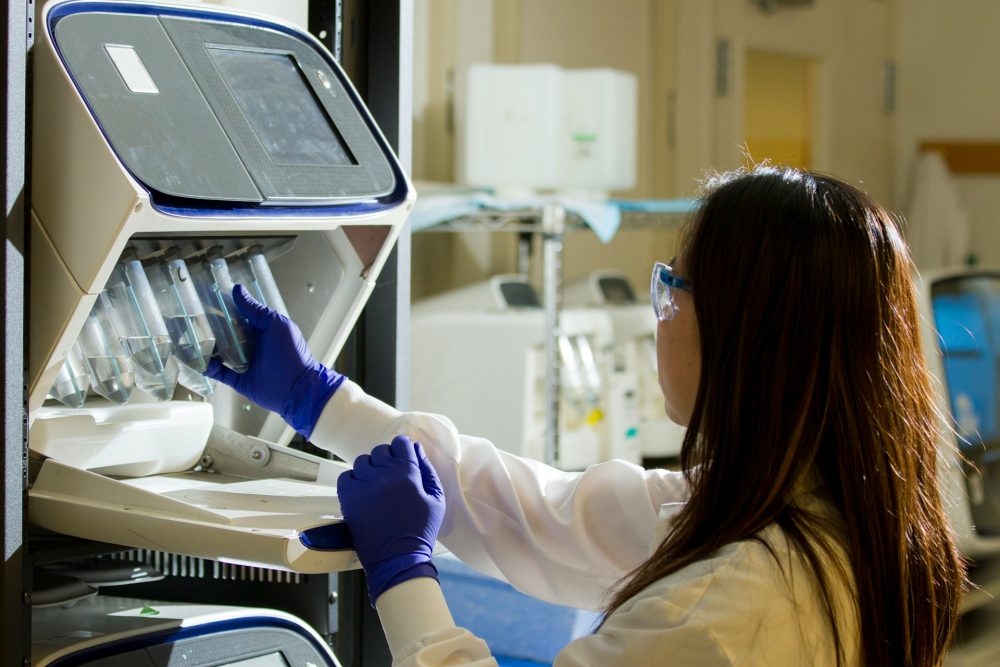
The announcement is another building block in Johnson & Johnson’s large US investment program: In March 2025, the company announced $55 billion for the expansion of manufacturing and infrastructure in the US , including three new production sites as well as expansions in the existing pharmaceutical and medtech network.
Johnson & Johnson plans to build a “next-generation” cell therapy production facility in Montgomery County, Pennsylvania, for more than $1 billion
The Montgomery County site is expected to create approximately 500 permanent biomanufacturing jobs, according to the company. During the construction phase, Johnson & Johnson also anticipates more than 4,000 jobs in related construction activities. The company did not provide a timeline for completion or commissioning.
The expansion of US production capacity coincides with a period in which the Trump administration has repeatedly threatened additional import tariffs on pharmaceuticals as an industrial policy tool – sometimes with phased increases, sometimes as very high rates on specific drug imports.
At the same time, the White House is pursuing the “Most Favored Nation” (MFN) approach to drug pricing: An Executive Order dated May 12, 2025, aims to align US prices for certain medications more closely with prices in comparable industrialized countries, supplemented by voluntary manufacturer agreements and new procurement/distribution channels. Germany is explicitly listed as one of these “comparable industrialized countries.”
MFN deals between pharmaceutical companies and the US government
With its “Most Favored Nation” (MFN) policy, the US government aims to bring pharmaceutical prices closer to the price levels of other wealthy countries. Import tariffs, from which cooperating manufacturers can be exempted, also serve as a lever here.
In parallel with the Pennsylvania project, Johnson & Johnson points to other US projects, including a new factory in North Carolina and the construction of a $2 billion biologics facility. Furthermore, J&J secured long-term capacity at contract manufacturer Fujifilm Biotechnologies’ biomanufacturing campus in Holly Springs, also in North Carolina, through a $2 billion deal.
For Johnson & Johnson, the capacity expansion is also linked to its own cell therapy portfolio: The company markets the CAR-T cell therapy Carvykti together with Legend Biotech. Carvykti has been approved since 2022 and, according to the report, reached $1.9 billion in sales in 2025; at the same time, cell therapies across the industry have repeatedly been characterized by supply and capacity bottlenecks.
Johnson & Johnson and Legend invested, among other things, in additional capacity in New Jersey and also partnered with the pharmaceutical company Novartis for commercial manufacturing. Furthermore, a capacity expansion in Ghent, Belgium, with approximately $150 million in additional investment, was announced in Europe; the project is scheduled for completion in 2028.
__
(Featured image by National Cancer Institute via Unsplash)
DISCLAIMER: This article was written by a third party contributor and does not reflect the opinion of Born2Invest, its management, staff or its associates. Please review our disclaimer for more information.
This article may include forward-looking statements. These forward-looking statements generally are identified by the words “believe,” “project,” “estimate,” “become,” “plan,” “will,” and similar expressions. These forward-looking statements involve known and unknown risks as well as uncertainties, including those discussed in the following cautionary statements and elsewhere in this article and on this site. Although the Company may believe that its expectations are based on reasonable assumptions, the actual results that the Company may achieve may differ materially from any forward-looking statements, which reflect the opinions of the management of the Company only as of the date hereof. Additionally, please make sure to read these important disclosures.
First published in Pharma+Food. A third-party contributor translated and adapted the article from the original. In case of discrepancy, the original will prevail.
Although we made reasonable efforts to provide accurate translations, some parts may be incorrect. Born2Invest assumes no responsibility for errors, omissions or ambiguities in the translations provided on this website. Any person or entity relying on translated content does so at their own risk. Born2Invest is not responsible for losses caused by such reliance on the accuracy or reliability of translated information. If you wish to report an error or inaccuracy in the translation, we encourage you to contact us.










Ecobnb Turns Sustainable Tourism Into Measurable Impact
Ecobnb’s sustainable tourism platform generated significant environmental and social impact in 2025, avoiding 58,207 kg of CO₂ and adding 583...


Sugar Markets Balance Biofuel Demand and Global Supply
Sugar markets in New York and London were mostly unchanged as the Iran conflict renewed interest in biofuels. Drought concerns...


The $40 Trillion Trap: Disinflation Is Not Deliverance
U.S. debt has reached $40 trillion, with $24 billion weekly interest, while deficits accelerate. Despite disinflation in CPI, from cooling...


FinTech Matures as AI and Infrastructure Drive the Next Growth Phase
Fintech markets are entering a mature phase, shifting from rapid growth to consolidation, specialization, and sustainable business models. Zurich and...


Bitcoin, and Ethereum Rise, While Cardano Enters Transition
Bitcoin and Ethereum posted modest weekend gains, supported by ETF inflows. A new proposal may protect Bitcoin from quantum threats....
 |
|
 |  |
 |
|
-

 Africa2 weeks ago
Bank of Africa Launches SME Pact to Boost Business Growth
-
 Impact Investing6 days ago
Vexuvo Secures €39M UniCredit Financing to Drive Agrivoltaic and Storage Expansion in Italy
-

 Cannabis2 weeks ago
Legal Cannabis Generates $28.4B in U.S. State Tax Revenue
-

 Markets1 day ago
Oil Surge, Weak Stocks, and a Potential Turn for Gold