Impact Investing
Transition to a Sustainable Economy as a Strategic Global Shift in a Fragmented World
The sustainable transition is entering a decisive phase where climate, nature, resources, and social systems are converging into a single structural economic shift. Despite geopolitical divergence, momentum continues through China, emerging markets, and corporate action. Energy demand, electrification, nuclear revival, AI-driven efficiency, circularity, and regenerative agriculture are reshaping economies, turning sustainability into a strategic driver of resilience, competitiveness, and long-term investment opportunity beyond environmental goals.

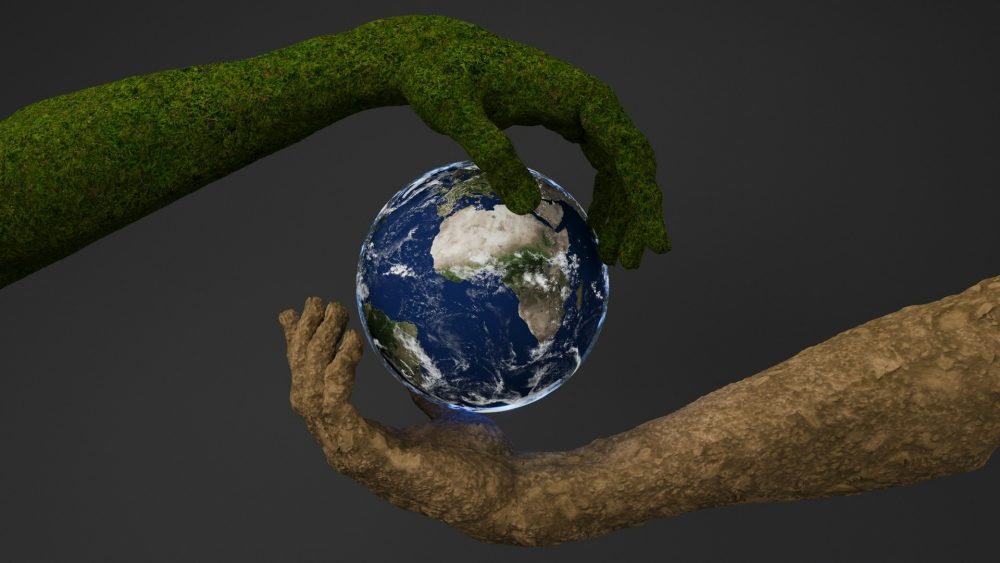
The transition is entering a decisive phase, where climate, nature, resources, and social systems are converging, requiring an integrated shift toward a sustainable economy. Despite political divergences, global momentum remains strong, led by China, emerging markets, and corporate commitments. Rising energy demand, electrification, the return of nuclear power, AI-driven efficiency, and circularity are redefining entire economic systems.
In an era marked by geopolitical tensions, the transition has become a matter of strategic security, opening up long-term investment opportunities in energy independence, critical resources, food resilience, and industrial competitiveness, far beyond a simple environmental agenda.
Rethink transition
In a global economy marked by geopolitical tensions and resource constraints, the sustainable transition is becoming a crucial competitive advantage. Challenges such as energy sovereignty, access to critical materials, and food security are highlighting the limitations of traditional economic models. By strengthening resilience, reducing dependencies, and fostering innovation, sustainability offers a way to address uncertainty and create long-term value.
The last 12 months have highlighted a stark paradox. While the United States has strengthened its support for fossil fuels and an “old economy” agenda, major emerging economies—China first and foremost—have accelerated their transition to sustainable models. Europe and Japan, constrained by economic dependencies and security concerns, continue to struggle to reconcile geopolitical alliances and climate ambitions.
Meanwhile, the time available for climate action is increasingly short. 2025 was the third warmest year on record, putting the world on track for a temperature rise of 2.8°C, or between 2.3°C and 2.5°C even if all national commitments were met. Yet corporate climate commitments remain robust, with a growing number of companies adopting Science-Based Targets despite shifting political priorities (see chart 1).
The cost of inaction also continues to rise. According to S&P Global, physical risks related to climate change could cost the world’s largest companies up to $1.2 trillion annually by 2050. At the same time, green technologies are advancing rapidly, driven largely by China’s leadership in low-cost clean solutions. At the same time, geopolitical tensions are reinforcing the urgency of the transition.
Energy: Renewables and nuclear power return to the forefront
A clear trend emerged in 2025: the global energy system is gradually moving out of the fossil fuel era. The vulnerabilities exposed by the recent conflict in the Middle East could further accelerate this process.
Electricity demand is growing twice as fast as overall energy demand, driven by artificial intelligence, data center expansion, and advanced manufacturing. These sectors currently account for approximately two-thirds of global energy investments, signaling a structural transformation, not a slowing transition.
In the United States, political resistance to some green technologies has intensified, particularly offshore wind. Permitting delays and grid connection limitations continue to weigh on solar and wind, despite recent legal decisions reopening a limited number of projects. However, in 2025, big tech companies recorded record levels of clean energy purchases: Meta and Alphabet alone contracted renewable energy equivalent to Denmark’s needs, a trend that continued in 2026.
Outside the United States, renewables are meeting much of the new global energy demand thanks to their economic competitiveness. Utility-scale solar remains the world’s least expensive energy source, followed by onshore wind, while more expensive technologies like geothermal are gaining ground. India and other emerging countries are accelerating large-scale investments, supported by abundant resources and declining technology costs.
Europe continues to increase its clean energy capacity while strengthening its climate ambitions. In March 2026, the European Union adopted a 90% emissions reduction target by 2040 and confirmed a minimum target of 42% renewable energy by 2030. After the 2022 energy crisis, clean energy has also become a geopolitical and industrial strategy for the continent.
Globally, many countries are returning to nuclear power. Japan is restarting reactors, and Germany has recognized the limits of the nuclear phase-out. In 2025, over 70 gigawatts of new nuclear capacity were under construction—the highest level in thirty years—primarily in China, Russia, India, and South Korea. One of the most significant developments of 2025 was the commercial emergence of small modular reactors (SMRs), highlighted by the first power supply agreement between Alphabet and Kairos Power to power data centers.
In Asia, China dominates the entire clean energy value chain—from solar to wind, from batteries to critical minerals to storage systems—de facto setting the price and speed of the global transition. Expanding battery production, chemical innovation, and mineral diversification represent the new competitive frontier. The United States and Europe are seeking to develop domestic production capacity through targeted industrial strategies. In March 2026, Europe and Australia concluded a historic free trade agreement to strengthen critical mineral supply chains.
Electric mobility: a new acceleration
2025 has been a year of stark contrasts for the electric vehicle industry. In the United States, new EV sales fell 40% in the final quarter compared to the previous year following the elimination of federal tax incentives. Despite this, charging infrastructure development has continued, and with fuel prices above $4 a gallon, 2026 could mark a market recovery. The rapid expansion of robotaxi programs in several US states could also usher in a new phase of demand for electric vehicles.
In Europe, policymakers have relaxed the rules on the phase-out of internal combustion engines to protect European automakers, but consumer demand has remained resilient: battery-electric vehicles have reached a 17.4% market share, set to grow further after the conflict in the Middle East. The EU’s Carbon Border Adjustment Mechanism could also protect European manufacturers and incentivize Chinese companies to relocate production in Europe, particularly in Hungary, Turkey, and Spain.
China has further consolidated its role as a global electric vehicle superpower, also driving growth in emerging markets. EV sales have increased rapidly in Indonesia, Vietnam, and Mexico, while BYD has become the world’s largest electric vehicle manufacturer. Globally, 20.7 million EVs will be sold in 2025, accounting for 25% of new registrations.
The sector’s fundamentals also continue to strengthen. New battery technologies are reducing dependence on critical materials and increasing the lifespan of storage systems, while battery prices are expected to decline significantly over the next five years, allowing electric vehicles to achieve—or exceed—economic competitiveness with traditional engines.
In addition to road transport, the rail sector also made a significant technological leap in 2025. Operators have accelerated digital automation, predictive maintenance, and autonomous systems for rail line maintenance. Multimodal freight transport is expanding, with railways increasingly integrated into global logistics networks. With 45% of global rail activity already electrified with clean energy—compared to just 2-3% in the United States—rail transport is decarbonizing much more rapidly than aviation, road haulage, and maritime transport.
Efficiency and circularity to reduce dependencies
The transition to a clean, efficient, inclusive, and circular economy (CLIC®) increasingly relies on the pillars of efficiency and circularity, especially in resource-scarce regions like Europe. Supply chain disruptions caused by war, trade tariffs, or other tensions have demonstrated the vulnerability of current models. Energy efficiency, recycling, and circular design must therefore move from incremental improvements to standard practices.
Artificial intelligence is emerging as a powerful accelerator of this change. Applied to energy systems, food, and mobility, AI could reduce global CO2 emissions by 3.2–5.4 gigatons per year by 2035, more than three times offsetting projected emissions from data centers. The regulatory environment is also supporting this transformation, while also fostering industrial development. In France, for example, battery recycling plants are contributing to the redevelopment of former industrial areas in the north of the country, in the Rhône-Alpes region, and in the southwest.
At the same time, companies are adopting artificial intelligence, robotics, and digital twins to improve production efficiency, reduce energy consumption, and cut direct and indirect emissions. Circularity is increasingly being viewed not as an environmental constraint, but as a driver of competitiveness and resilience.
Feeding 10 billion people on a warming planet
While energy and mobility policies are fragmenting along geopolitical lines, food production remains one of the few issues on which there is still broad global consensus. With the world population expected to approach 10 billion by 2050 and changing dietary habits increasing pressure on resources, agricultural production will need to grow rapidly. According to the U.S. Department of Agriculture, production will need to increase by nearly 50% compared to 2011 levels.
However, the agricultural model that once guaranteed increased productivity is now showing its limits. Decades of intensive monocultures have degraded soils, reduced biodiversity, and increased pollution, while climate change—through droughts, floods, and heatwaves—is further exacerbating the problems.
Regenerative agriculture is emerging as one of the most credible solutions, even in a context of reduced access to fertilizer. Farmers who combine no-till techniques and cover crops can achieve yields approximately 20% higher than conventional agriculture, with benefits that tend to be exacerbated during drought years (see chart 3). At the same time, production costs are reduced, soil health is improved, and biodiversity is increased.
The adoption of these models is already significant. It is estimated that between 250 and 270 million hectares—almost a fifth of global agricultural land—are currently managed according to conservation agriculture principles, a share that could reach 50% by 2050. During COP28, 26 agri-food companies committed to converting 160 million hectares by 2030, allocating over €2 billion.
The economic rationale also appears increasingly sound. Farmers who adopt no-till and cover crop systems can achieve yields 10% to 30% higher than their traditional competitors, while simultaneously reducing production costs. For companies in the food supply chain, supporting this transition means building more productive, resilient supply chains that are less exposed to climate risks.
In the food sector, as in the energy sector, the transition does not represent a cost but a competitive advantage for those who move first.
__
(Featured image by Bhautik Patel via Unsplash)
DISCLAIMER: This article was written by a third party contributor and does not reflect the opinion of Born2Invest, its management, staff or its associates. Please review our disclaimer for more information.
This article may include forward-looking statements. These forward-looking statements generally are identified by the words “believe,” “project,” “estimate,” “become,” “plan,” “will,” and similar expressions. These forward-looking statements involve known and unknown risks as well as uncertainties, including those discussed in the following cautionary statements and elsewhere in this article and on this site. Although the Company may believe that its expectations are based on reasonable assumptions, the actual results that the Company may achieve may differ materially from any forward-looking statements, which reflect the opinions of the management of the Company only as of the date hereof. Additionally, please make sure to read these important disclosures.
First published in ESG NEWS. A third-party contributor translated and adapted the article from the original. In case of discrepancy, the original will prevail.
Although we made reasonable efforts to provide accurate translations, some parts may be incorrect. Born2Invest assumes no responsibility for errors, omissions or ambiguities in the translations provided on this website. Any person or entity relying on translated content does so at their own risk. Born2Invest is not responsible for losses caused by such reliance on the accuracy or reliability of translated information. If you wish to report an error or inaccuracy in the translation, we encourage you to contact us.
















Ecobnb Turns Sustainable Tourism Into Measurable Impact
Ecobnb’s sustainable tourism platform generated significant environmental and social impact in 2025, avoiding 58,207 kg of CO₂ and adding 583...


Sugar Markets Balance Biofuel Demand and Global Supply
Sugar markets in New York and London were mostly unchanged as the Iran conflict renewed interest in biofuels. Drought concerns...


The $40 Trillion Trap: Disinflation Is Not Deliverance
U.S. debt has reached $40 trillion, with $24 billion weekly interest, while deficits accelerate. Despite disinflation in CPI, from cooling...


FinTech Matures as AI and Infrastructure Drive the Next Growth Phase
Fintech markets are entering a mature phase, shifting from rapid growth to consolidation, specialization, and sustainable business models. Zurich and...


Bitcoin, and Ethereum Rise, While Cardano Enters Transition
Bitcoin and Ethereum posted modest weekend gains, supported by ETF inflows. A new proposal may protect Bitcoin from quantum threats....
 |
|
 |  |
 |
|
-

 Crypto2 weeks ago
Crypto Markets Shaken by Geopolitics and Industry Tensions
-
 Crypto1 day ago
Bitcoin, and Ethereum Rise, While Cardano Enters Transition
-

 Markets1 week ago
Dow Jones Pauses Near Record Highs as Precious Metals Lead
-

 Africa2 weeks ago
Fes-Meknes Sees Strong Recovery in Cereal Production Thanks to Increased Rainfall